
−20 m · Stone · Maya Ruins · Oaxaca
Mitla, Oaxaca: Zapotec Palaces, Stone Fretwork, Place of the Dead
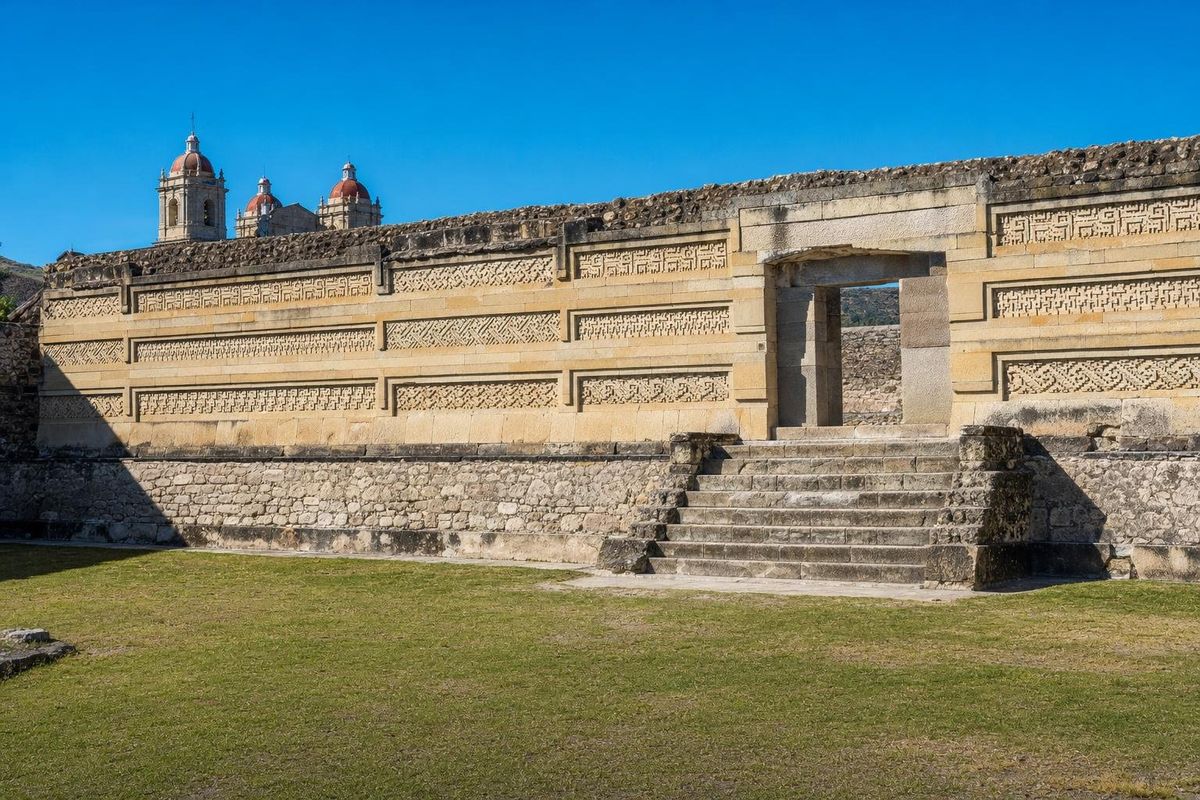
Mitla, about 45 km southeast of Oaxaca city, was the most important Zapotec religious center in the centuries before the Spanish conquest, and its palace walls carry the finest stone mosaic fretwork in Mesoamerica. The ruins sit inside the living town of San Pablo Villa de Mitla, some of them under and beside a sixteenth-century church built from their stones.
The place of the dead
The name Mitla comes from the Nahuatl Mictlan, the place of the dead or the underworld. In Zapotec the site was called Lyobaa (also written Liobaa), usually translated as place of rest or burial place. Both names point to the same idea: early colonial accounts describe Mitla as a sacred site where Zapotec rulers and high priests were buried, and where a powerful high priest held authority.
Zapotec religion recognized a lord and lady of the underworld, and colonial sources and later scholars name the god of death Coqui Bezelao (also given as Pitao Bezelao), associated with Mitla and its tombs. How exactly these figures were worshipped is not well documented, and modern descriptions draw on fragmentary sixteenth-century records, so readings vary.
People lived in this part of the valley for a very long time, but the buildings seen today date mostly to the Late Postclassic, from about the thirteenth century until the arrival of the Spanish in the 1520s. This was after the decline of Monte Albán, when power in the Oaxaca Valley had broken into smaller Zapotec kingdoms. Some archaeologists see Mixtec influence in the painted decoration and in parts of the architecture; others stress continuity with older Zapotec forms. The question is still debated.
The fretwork
Mitla is famous for its grecas: geometric panels of stepped frets, zigzags and spirals set into the walls of its palaces. Each design is built from thousands of small, precisely cut stones fitted together and set into a mortar backing, so the patterns stand out as a relief that catches the light. Commonly counted, there are fourteen distinct fret designs at the site. They contain no figures, gods or glyphs, an unusual choice in Mesoamerican architecture.
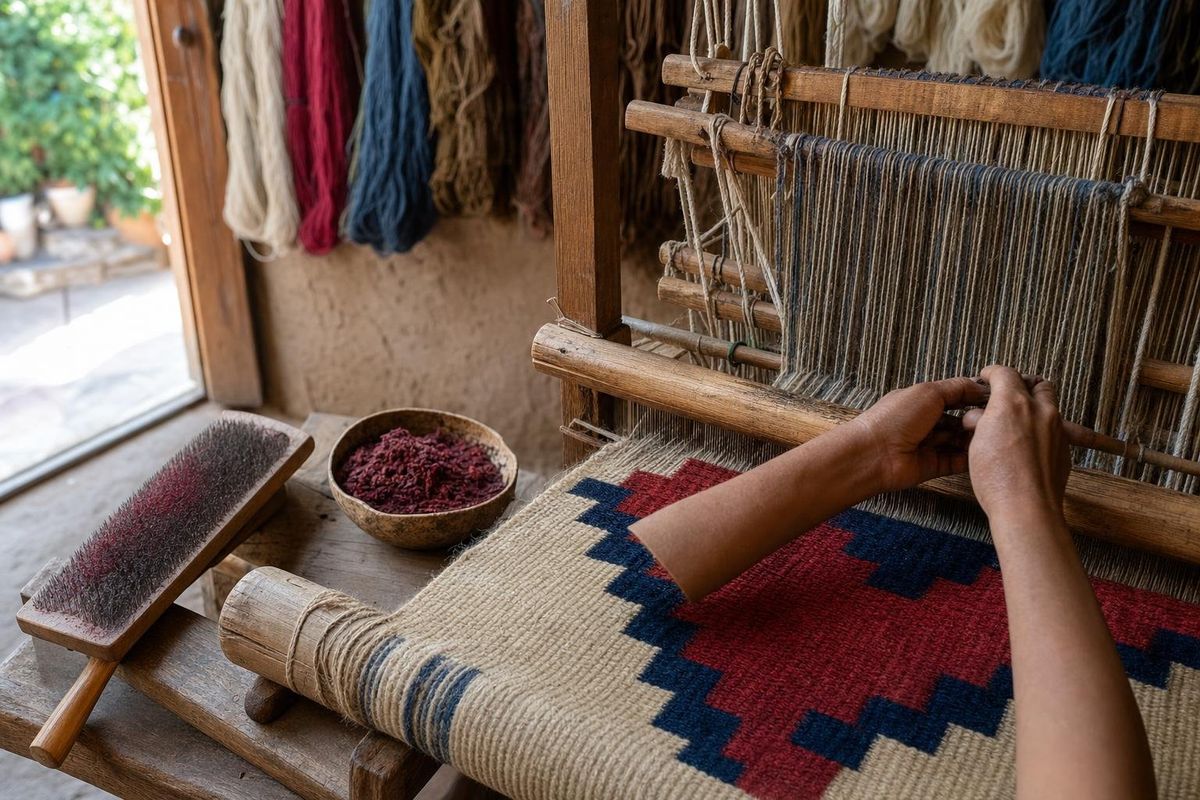
What the patterns meant is open to interpretation. Many writers connect the stepped fret with the xicalcoliuhqui, a widespread Mesoamerican motif often read as a symbol of lightning, the serpent or the movement of the heavens; others see links to textile designs. The same frets are still woven into rugs in the nearby village of Teotitlán del Valle.
What to see at Mitla
The ruins are divided into several groups spread across the town. Two of them are inside the main fenced area and account for most visits.
Group of the Columns
This is the core of the site: two large patios surrounded by raised palaces. On the north side, a broad stair leads to the Hall of Columns, a long room once roofed with beams resting on six massive stone columns. A narrow, dark passage behind it opens into a small inner courtyard whose walls are entirely covered with fretwork panels, the most complete in Mitla. The scale and precision here are the reason to come.
Note the doorways. Their lintels are single blocks of stone, some of them several meters long and weighing many tons, quarried in the hills nearby and set in place without metal tools or draft animals. The walls behind the mosaics have a core of rubble and clay, faced with cut stone and once finished with plaster painted red. Little of that paint survives, so the bare stone seen today gives a quieter impression than the original buildings would have.
The tombs
Beneath the buildings of the Group of the Columns lie cruciform tombs, chambers in the shape of a cross lined with fretwork. In one, a single stone pillar stands in the center. Local tradition calls it the column of life and says that someone who embraces it can tell from the gap between their hands how many years they have left. Access to the tombs is restricted at times for conservation.
Church Group
North of the main area, the colonial church of San Pablo was raised in the sixteenth century on top of an ancient platform, using cut stone from the palaces. Behind it, patios of the old complex survive. Look under the eaves for traces of red paintings on the lintels, in a style similar to the painted codices of the period.
The other groups (the Adobe Group, the Arroyo Group and the South Group) are smaller and less restored, scattered among houses and fields.
Getting to Mitla
From Oaxaca city, follow Highway 190 east through Tlacolula and take the Mitla turn-off; the drive takes roughly an hour. Buses and colectivos run from Oaxaca city to Mitla throughout the day, and many day tours include it. Routes and departure points change, so check locally.
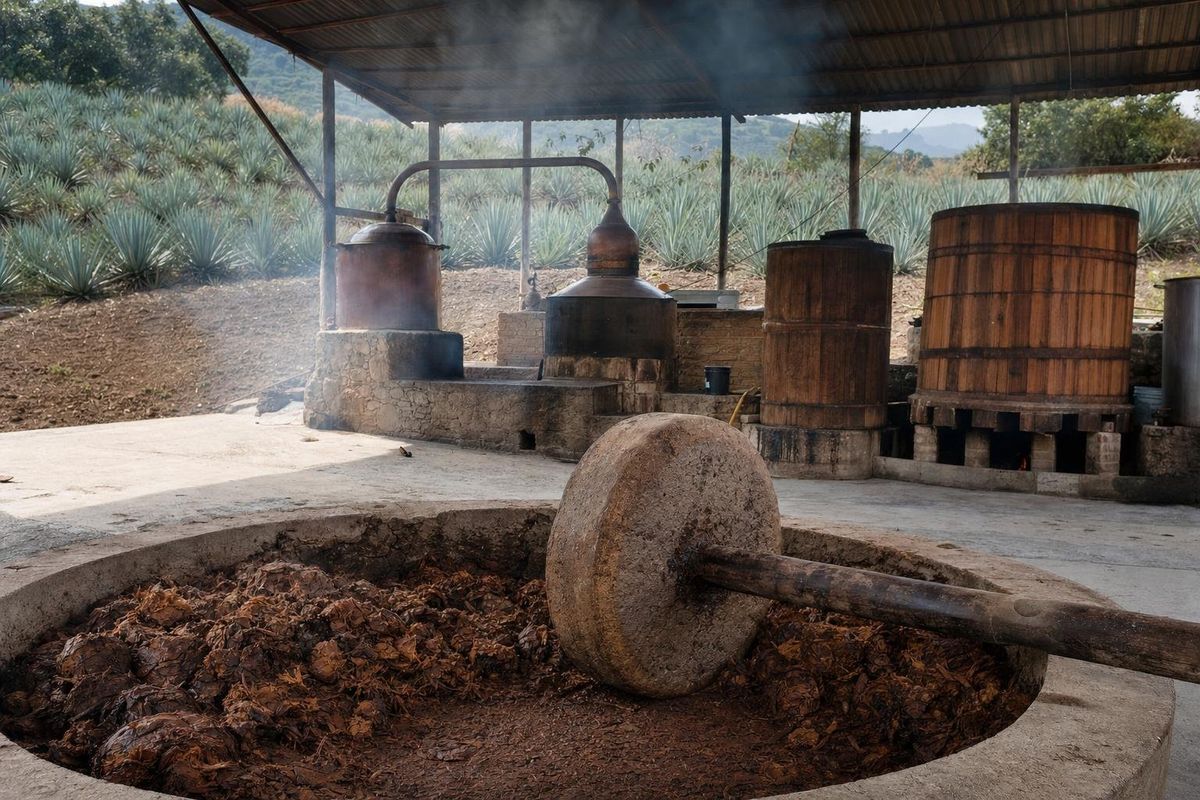
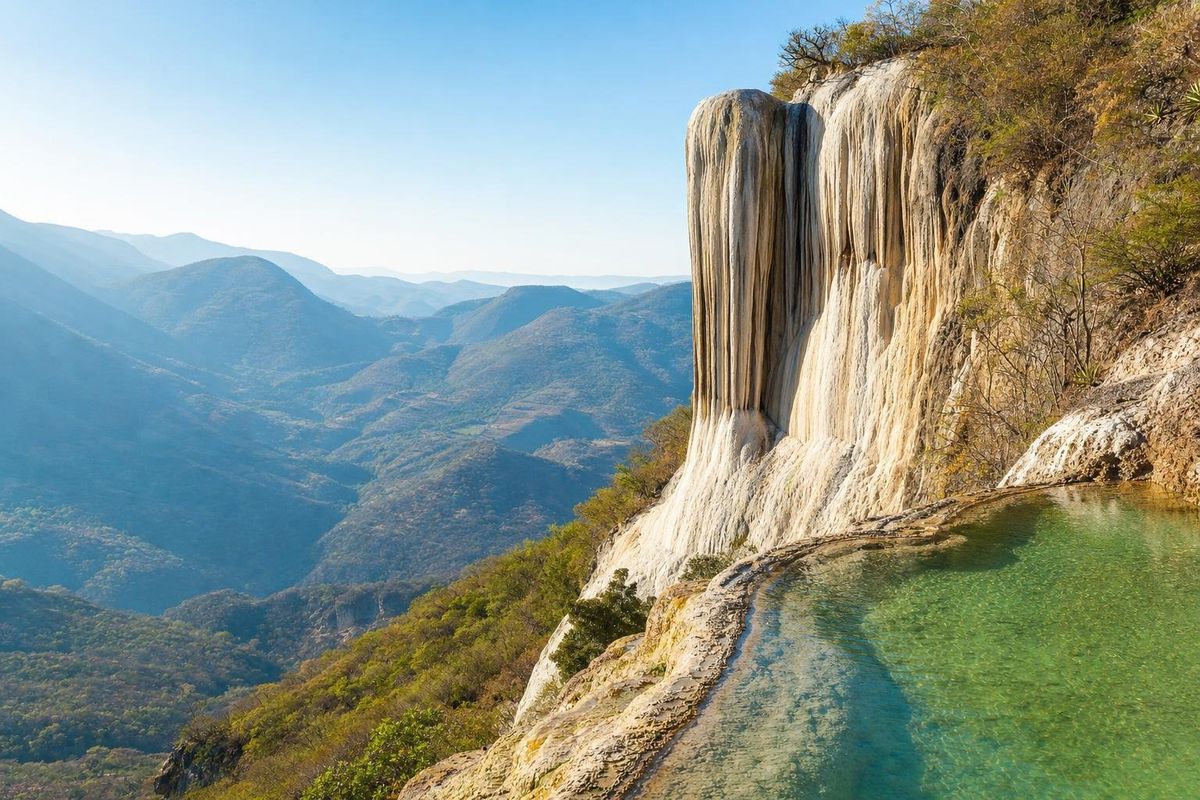
Mitla sits on a well-trodden route. The same road passes the weaving village of Teotitlán del Valle, Tlacolula's Sunday market and the ruins of Yagul, and continues to the mezcal palenques of Santiago Matatlán. The mountain road to the mineral springs of Hierve el Agua starts near Mitla.
Practical notes
- The site is managed by INAH, Mexico's national institute of anthropology and history; check current hours and fees on the INAH website or locally.
- Allow an hour to an hour and a half for the main groups, more if you walk to the outlying ones.
- The inner patios are shaded in the morning; the fretwork reads best in raking light early or late in the day.
- Do not touch or lean on the mosaic panels: the small stones are held by old mortar and come loose easily.
- The streets between the site and the church are lined with stalls selling textiles and mezcal. Quality varies.
San Pablo Villa de Mitla is a working town, not only a gateway to the ruins. Zapotec is still spoken by many residents, and weaving and mezcal are important local trades. Around the Day of the Dead in early November, families decorate home altars and cemeteries, as across Oaxaca; it is a family observance, so any visit to a cemetery calls for quiet and discretion.
Mitla's frets reappear in modern crafts; the page on Zapotec art follows the motif from ancient walls to contemporary work. Other archaeological sites are listed in the ruins section.
Mitla: frequently asked questions
What does the name Mitla mean?
It comes from the Nahuatl Mictlan, the place of the dead. The Zapotec name, Lyobaa, is usually translated as place of rest or burial place.
Who built Mitla?
The Zapotecs. Most of the visible buildings date to the Late Postclassic, between roughly the thirteenth century and the Spanish conquest. Possible Mixtec influence is debated.
Who was Coqui Bezelao?
The Zapotec god of death or lord of the underworld, as named in colonial sources, associated with Mitla and its tombs. Details of his cult are poorly documented.
How far is Mitla from Oaxaca city?
About 45 km southeast, roughly an hour by road on Highway 190.
Can you combine Mitla with Hierve el Agua?
Yes. The road to Hierve el Agua starts in the Mitla area, and many day trips from Oaxaca city visit both.
Nearby on the map
AI-generated image Towns & Villages · Oaxaca
Matatlán
AI-generated image Lakes & Rivers · Oaxaca
Hierve el Agua
AI-generated image People of Mexico · Oaxaca
Zapotec rugs
AI-generated image Towns & Villages · Oaxaca
San Martín Tilcajete