
−5 m · Shallows · Cenotes · Quintana Roo
Cenote Las Mojarras: a Lake-Sized Jungle Cenote near Puerto Morelos
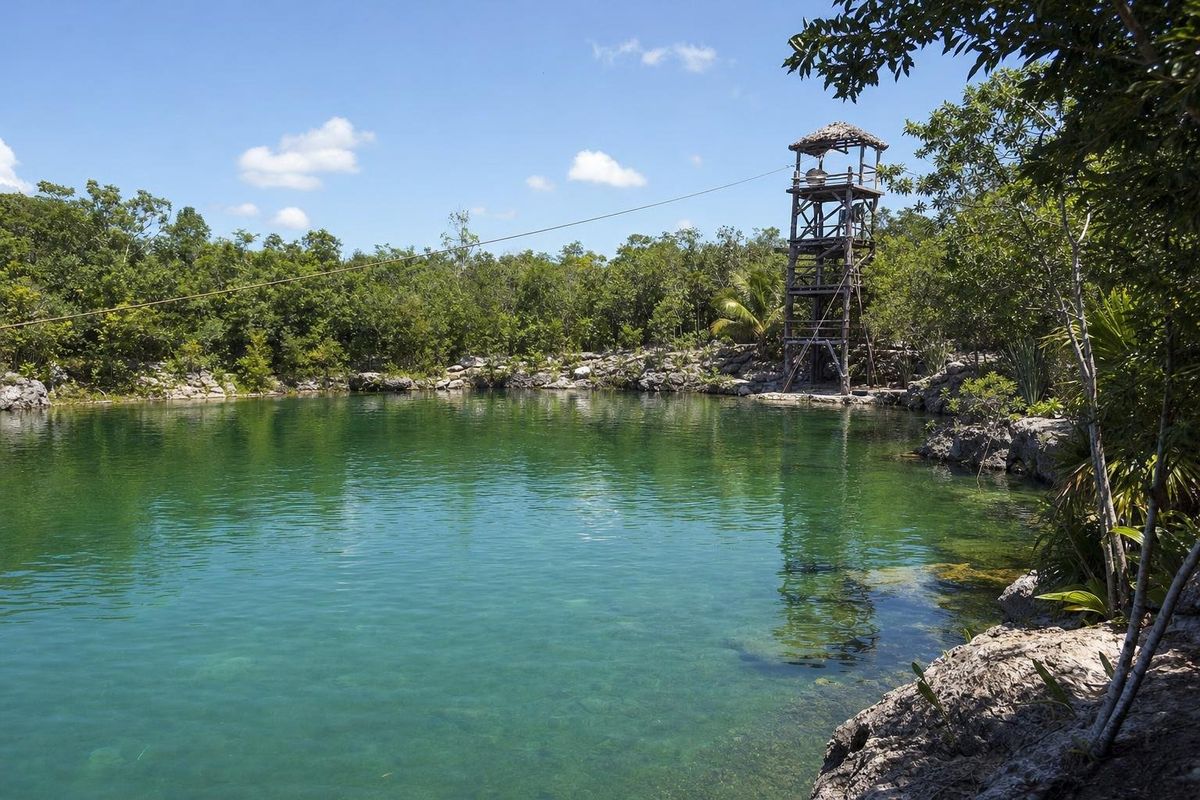
Cenote Las Mojarras is a wide open cenote that looks more like a jungle lake, about 12 km inland from Puerto Morelos on the Ruta de los Cenotes. Its green water is fringed with trees and crossed by a zipline, and the park around it adds jumping platforms, a rope course and ATV tracks. The name comes from the mojarras, the fish that live in it.
A lake in the forest
Unlike the cave pools further along the route, Las Mojarras is fully open to the sky. It is broad, often described as more than 60 m across, and its water is green and fairly opaque rather than glass-clear. That color comes from the sunlight it receives all day, which also means the water is warmer than in cave cenotes. Under the surface it is still a true cenote, fed by groundwater, and depths of around a dozen meters or more are commonly given for the center.
Wooden stairs and stepping stones lead into the water from different points on the bank. The last steps can be worn or uneven, so it pays to go slowly. Away from the platforms the banks are low and rocky, and the forest grows right to the edge, which gives the whole place the feel of a pond rather than a sinkhole.
What is a mojarra?
In Mexican Spanish, mojarra is a loose name for a number of perch-like fish. In the sea and in coastal lagoons, it usually refers to the family Gerreidae, silvery fish of shallow water. In fresh water in southeastern Mexico, the word is used above all for cichlids, and the most common one in Yucatán's cenotes and lagoons is the Mayan cichlid (Mayaheros urophthalmus, long known as Cichlasoma urophthalmus), a deep-bodied fish with a dark spot near the tail and, in breeding fish, bright orange and red colors. Regional common names recorded for it include mojarra castarrica and mojarra del sureste.
Fried mojarra is a common dish in markets and family restaurants across the region, served whole with lime, tortillas and salsa. In the cenote the fish are protected by the simple fact that nobody fishes a swimming hole, and they gather near the platforms where the light is good.
Jumping, ziplines and the jungle park
Las Mojarras is one of the parks on the route set up for adventure. Two jumping platforms, one of them a tall tower, stand over the deep water, and a zipline drops riders across the cenote. A Tyrolean traverse and rope bridges have been built in the trees, and ATVs run on jungle tracks around the property. Several of these activities have been sold as packages, while a simpler entry for swimming has also been offered; what is available and the prices vary, so check at the entrance.
For a quieter visit, the picnic area under the trees has tables, chairs and hammocks, and a palapa kitchen has served simple food cooked by local families, sometimes using the pib, the traditional Yucatec earth oven. The word means a pit in the ground: food wrapped in leaves is set on hot stones and covered with earth, the same method behind cochinita pibil. The park has had toilets with running water, drawn from a well that taps the same groundwater as the cenote.
On the Ruta de los Cenotes
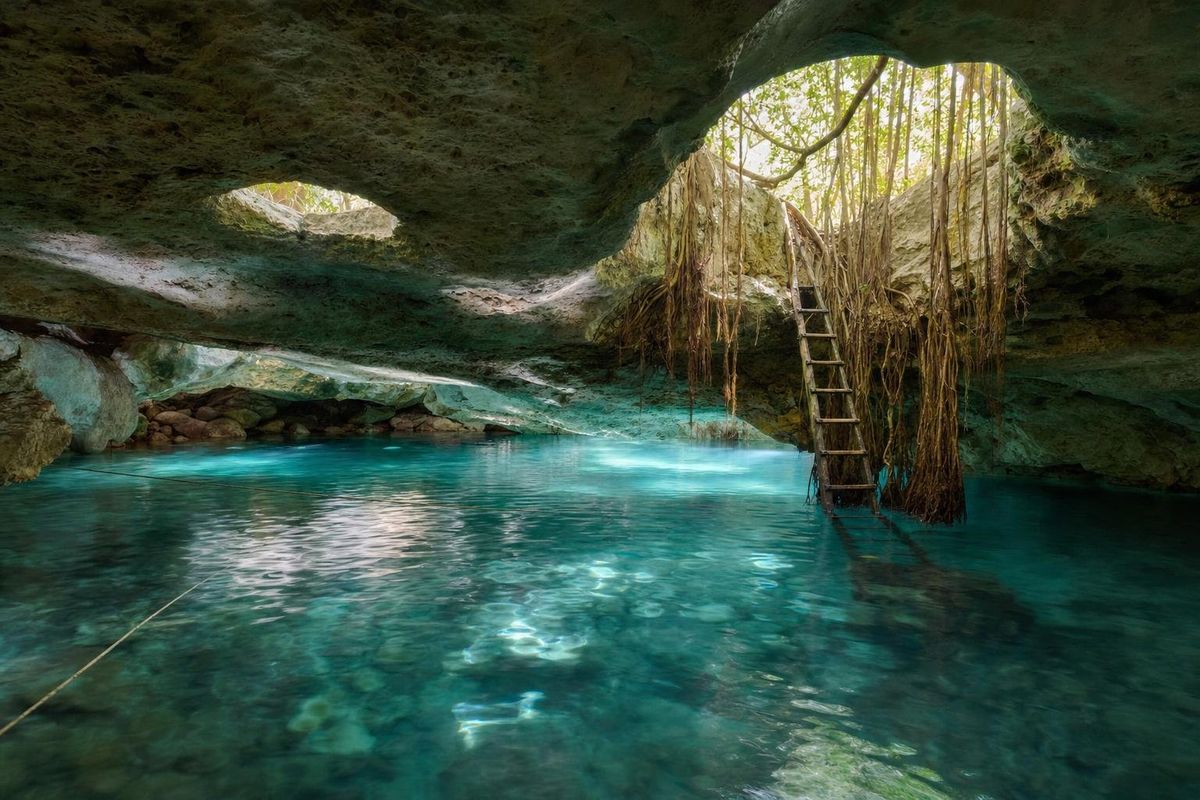
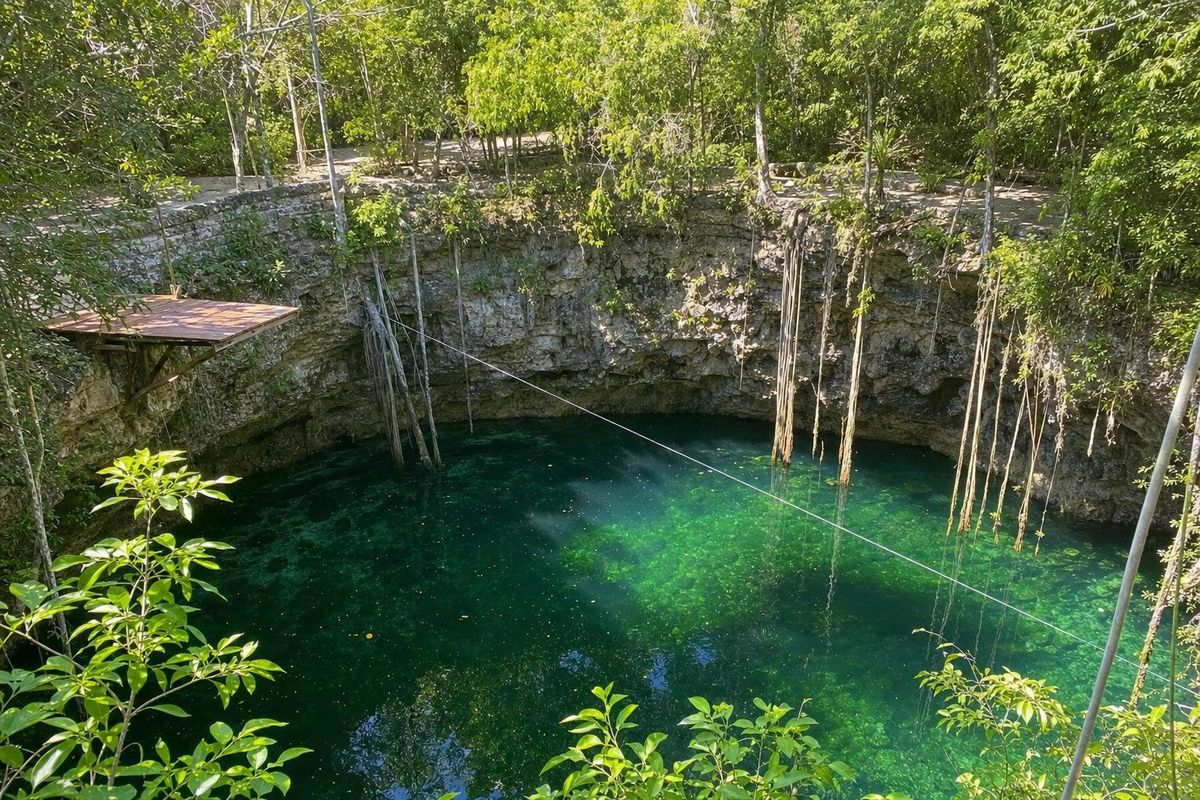
The Ruta de los Cenotes is the road from highway 307 at Puerto Morelos west toward Leona Vicario. Its first 35 km or so pass a string of cenotes run by ejidos and private owners, from simple swimming holes to full adventure parks, and open, semi-open and underground pools. Las Mojarras is one of the first big ones heading inland. Further along lie Cenote 7 Bocas, a cave with seven openings, and Cenote Verde Lucero, a round green pool with jumping platforms of its own.
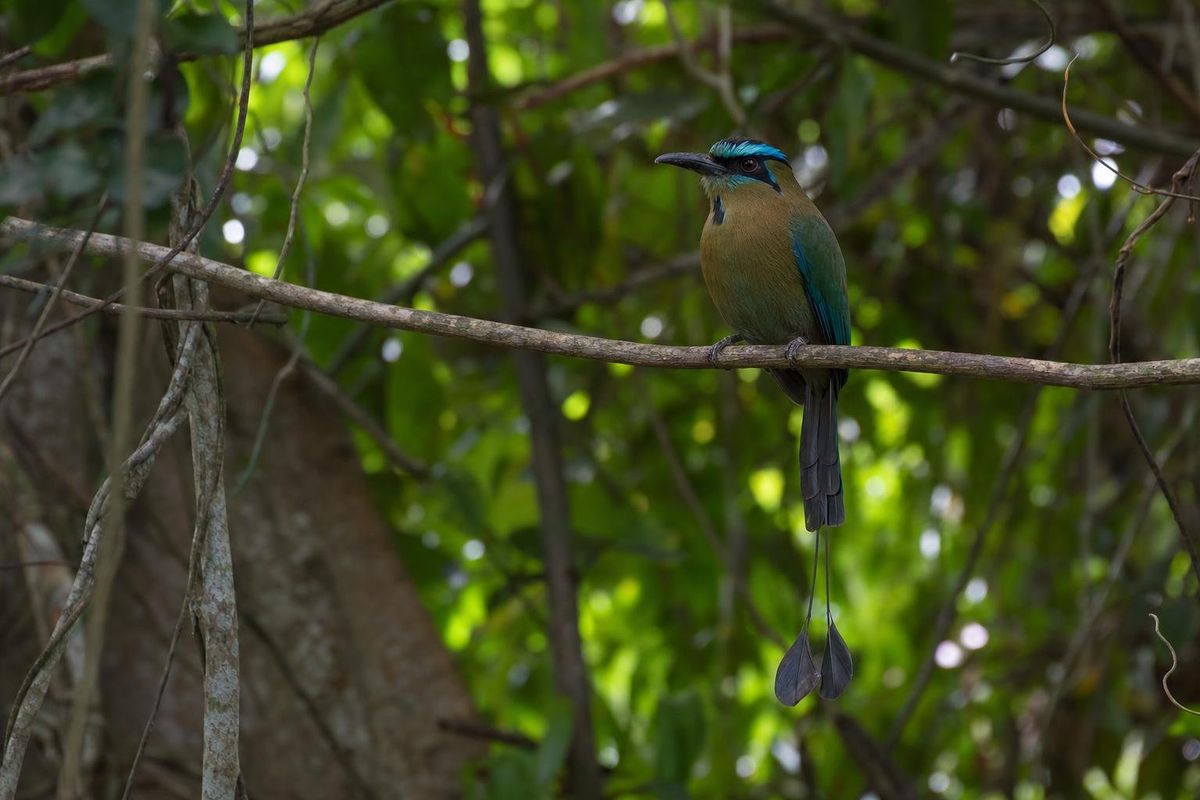
Near Las Mojarras, the Reserva Toh offers guided walks in the forest and good birding; more swimming holes are listed on the cenotes page. The toh, or turquoise-browed motmot, with its racket-shaped tail, is a symbol of the Yucatán.
Getting there
From Cancún or Playa del Carmen, take highway 307 to Puerto Morelos and turn west at the big sign for the Ruta de los Cenotes. Las Mojarras is signed at around kilometer 12. From the entrance a dirt road of a little under 2 km, decorated with carved wooden masks, leads through the forest to the cenote; it is passable in an ordinary car at low speed.
Public transport along the cenote road is sparse. A rental car, a taxi from Puerto Morelos with a return arranged in advance, or a bicycle are the practical options. Tours sell the adventure packages, but independent visits are easy.
When to go and practical notes
Weekdays are calm; weekends draw local families, groups and noise from the zipline. Because the cenote is open, sun and heat are part of the visit: late morning to mid-afternoon is warm and bright, and the water is pleasant for longer swims. The dry season from about November to April is the most comfortable; the rainy season brings heat and storms, and the hurricane season runs from June to November.
- Shower before swimming and enter without sunscreen or repellent; wear a hat and shirt on land.
- Life jackets are worth taking; the water is deep away from the edges.
- Bring cash in pesos; packages and entry prices change.
- Closed shoes are needed for the ATV and rope activities.
The afternoon is often the time to sit in a hammock and watch the jumpers. The bravest go off the top of the tower; most people settle for the lower platform and a second try.
Cenote Las Mojarras: questions
Where is Cenote Las Mojarras?
On the Ruta de los Cenotes, about 12 km inland from Puerto Morelos in Quintana Roo, then a short dirt road from the entrance.
Why is it called Las Mojarras?
After the mojarra fish that live in it. In fresh water in Yucatán the name usually means cichlids such as the Mayan cichlid.
Is the water clear?
Not especially. It is an open, sunlit cenote with green water, more like a lake than a cave pool.
Can you just swim without the adventure activities?
A swim-only entry has been offered alongside the packages. Check the options at the entrance.
Is Las Mojarras good for children?
Yes, with life jackets. The picnic area, hammocks and lower jumping platform are popular with families.
Nearby on the map
AI-generated image Cenotes · Quintana Roo
7 Bocas
AI-generated image Jungles · Quintana Roo
Reserva Toh
AI-generated image Cenotes · Quintana Roo
Verde Lucero
AI-generated image Beaches · Quintana Roo
Punta Maroma