
−5 m · Shallows · Beaches · Quintana Roo
Playa Chac Mool in Cancún's Hotel Zone: Beach, History and Tips
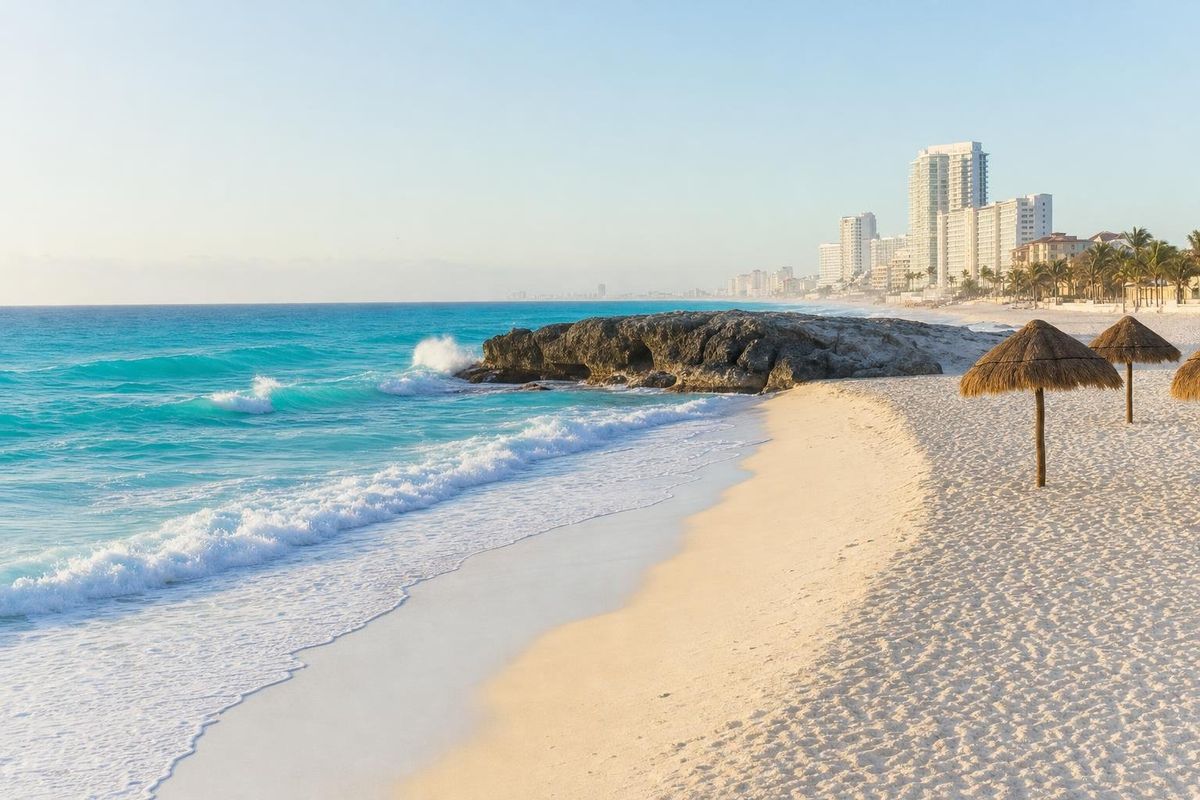
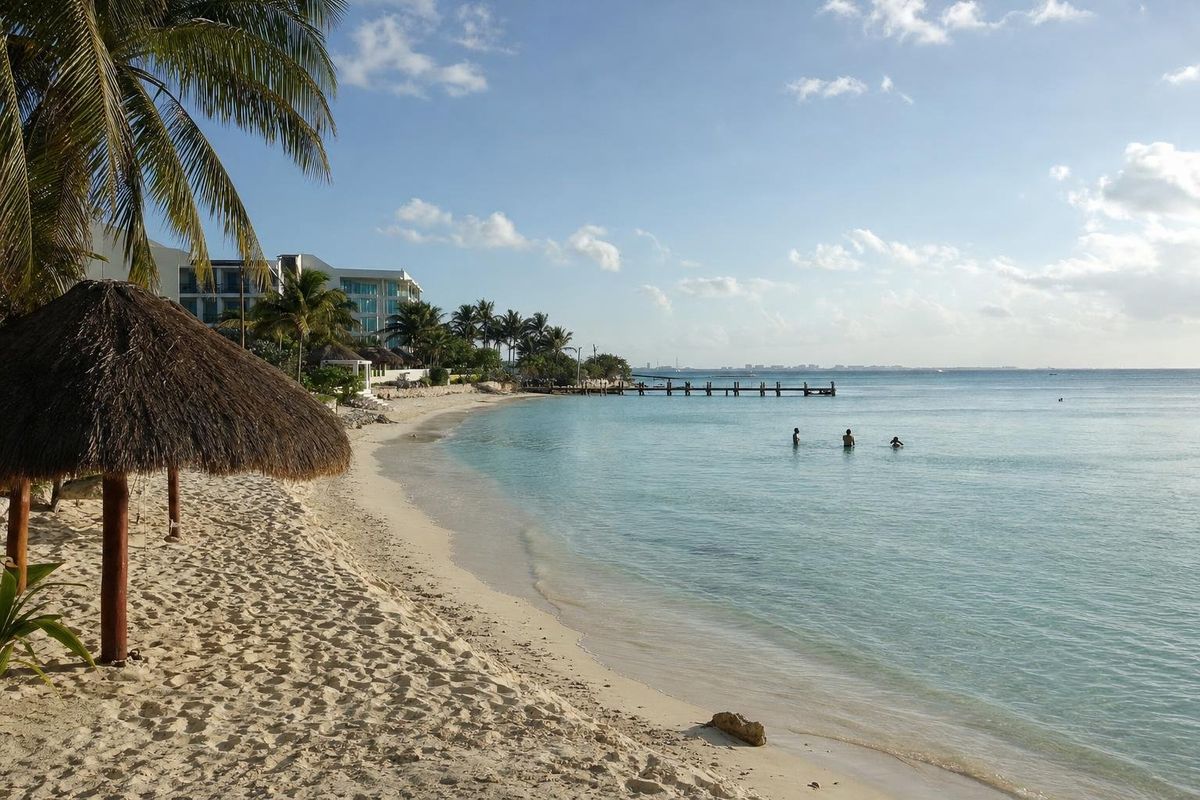
Playa Chac Mool is a public beach at kilometer 10 of Cancún's Hotel Zone, on the open Caribbean side, just south of the busy nightlife strip around Punta Cancún. Playa Chac Mool has lifeguards, free palapa shade and a sea that turns deep blue within a few strokes of the shore, plus a rocky point where a small Maya settlement once stood.
Why Playa Chac Mool is worth a stop
Most of the Hotel Zone's sand sits in front of resorts. The handful of public access points, Chac Mool among them, are where Cancún residents actually go to the beach, and on weekends the crowd here is mostly local families who come by bus. The public section is small, squeezed between hotels and clubs, but the sand runs on for kilometers in both directions and it is all walkable.
The water is the draw. On the eastern side of the Hotel Zone the sea is open ocean rather than the sheltered bay further north, and it shades from clear turquoise to a dark, saturated blue. The bottom also shelves quickly; the water is over head height a short way out, and lifeguards keep an eye on swimmers who drift too far.
The beach has carried Blue Flag certification in recent years, an international eco-label that looks at water quality, safety, services and environmental information. Status is renewed annually, so the flag may or may not be flying when you visit.
A beach named after a stone figure
A chac mool is a type of Mesoamerican sculpture: a reclining man propped on his elbows, knees drawn up, head turned sharply to one side, holding a bowl or disc on his stomach. The best-known examples come from Chichén Itzá in Yucatán and from Tula in central Mexico, and similar figures turned up in the ceremonial precinct of the Aztec capital. The name itself is modern. The nineteenth-century explorer Augustus Le Plongeon dug one up at Chichén Itzá in 1875 and called it Chaacmol, and the label stuck.
Nobody knows exactly what the figures meant. Most scholars read the bowl as a receptacle for offerings, possibly blood or hearts in a sacrificial setting, and some see the reclining man as a captive, a fallen warrior or an intermediary carrying gifts to the gods. The sculpture at the Temple of the Warriors at Chichén Itzá is the one most visitors have in mind.
There is no statue on this beach. The name fits a Hotel Zone habit of giving beaches Maya or natural names, and the sign on Boulevard Kukulcán is the only place it appears. Locals sometimes call the stretch Playa Forum after the hotel beside it.
The Maya on the rocks
The Cancún island was well populated in the centuries before the Spanish arrived, with a scatter of small settlements tied into the coastal canoe trade. The largest surviving site, El Rey, lies further south in the Hotel Zone.
The rocky outcrop at the northern end of Playa Chac Mool has been identified as the site of a much smaller settlement, recorded under the Spanish name El Conchero, after the shell middens found there. Excavations turned up a burial, pottery and the remains of fish and shellfish. The ceramics point to a short, probably seasonal occupation during the Late Formative period, roughly 400 BC to AD 200, which would make it far older than the other Hotel Zone ruins. Why people came here seasonally, and from where, is still an open question. Nothing remains to see except the rock itself.
Turtles on a city beach
Despite the hotels, sea turtles still nest on this coast. Loggerhead and green turtles come ashore at night, mainly from about May to October, and the city protects nests in cordoned-off areas on several beaches, including Chac Mool. Daytime visitors will not see nesting, but they may see the marked enclosures. Stay out of them, keep the sand free of holes and litter, and avoid shining lights on the beach at night.
Getting to Chac Mool beach
The beach access is on the seaward side of Boulevard Kukulcán at kilometer 10, roughly opposite the shopping malls and bars of the central Hotel Zone. The small car park fills early and is often closed off with a rope when full, so arrive in the morning if you are driving.
The R1 and R2 city buses run the length of the Hotel Zone day and night, and most will stop near the beach access on request. A taxi from downtown Cancún takes about twenty minutes, depending on traffic. Fares and routes change, so ask locally.
When to visit and what to bring
December to April brings dry weather and steady breezes. Summer is hotter and calmer, with turtle nesting in full swing. Sargassum seaweed can reach the Hotel Zone in heavy years, usually between about April and October, although Cancún's eastern beaches are often less affected than parts of the Riviera Maya. Hurricane season runs from June to November.
Public facilities are basic: toilets near the car park, a few free palapas and lifeguard towers. Staff usually pack up loungers in the late afternoon. There is no restaurant on the public section itself, though there are plenty of places to eat across the road.
- Bring water, snacks and sun protection; shade is limited to a handful of palapas.
- Watch the flags. Red means no swimming, and currents can be strong on this exposed side.
- Do not leave valuables unattended on the sand.
For calmer water with children, the bay-side beaches such as Playa Langosta are a better choice. Further south, Playa Ballenas is another open-water public beach. Every beach covered so far is listed in the beaches section. INAH, Mexico's archaeology institute, publishes information on the Hotel Zone sites on its official website.
Walk north to the rocks at sunrise and the hotel towers are still in shadow while the sea has already turned blue.
Playa Chac Mool: frequently asked questions
Where is Playa Chac Mool in Cancún?
At kilometer 10 of Boulevard Kukulcán in the Hotel Zone, on the Caribbean side, just south of the central party area around Punta Cancún.
Is Playa Chac Mool good for swimming?
Yes on calm days, but the water gets deep quickly and waves can build. Swim near the lifeguard towers and follow the flag system.
Is there a Chac Mool statue on the beach?
No. The beach is named after the reclining Mesoamerican sculpture type, best known from Chichén Itzá, but there is no statue on the sand.
Are there Maya ruins at Chac Mool beach?
A rocky outcrop at the north end was the site of a small, probably seasonal Maya settlement, but there are no standing structures. The El Rey ruins further south are the nearest visitable site.
Which buses stop at Playa Chac Mool?
The R1 and R2 Hotel Zone buses pass the beach access on Boulevard Kukulcán. Ask the driver to stop near kilometer 10.
Nearby on the map
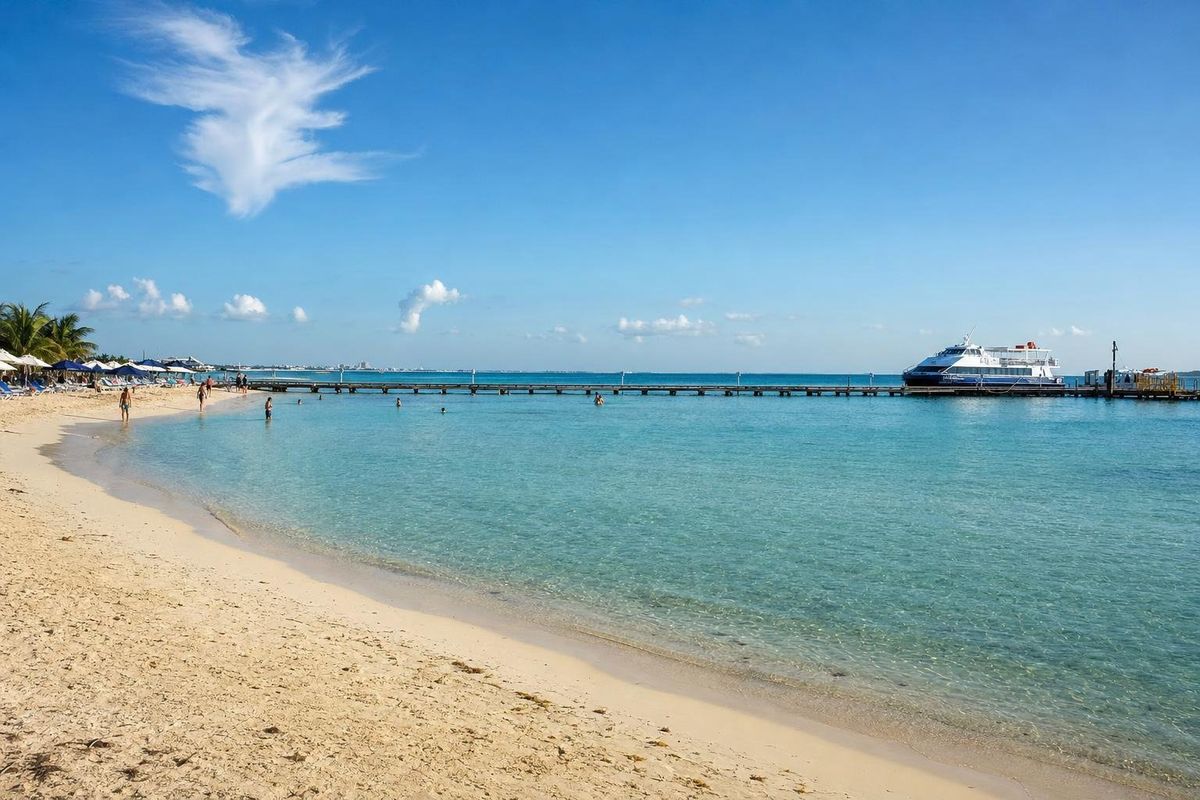
AI-generated image Beaches · Quintana Roo
Playa Tortugas
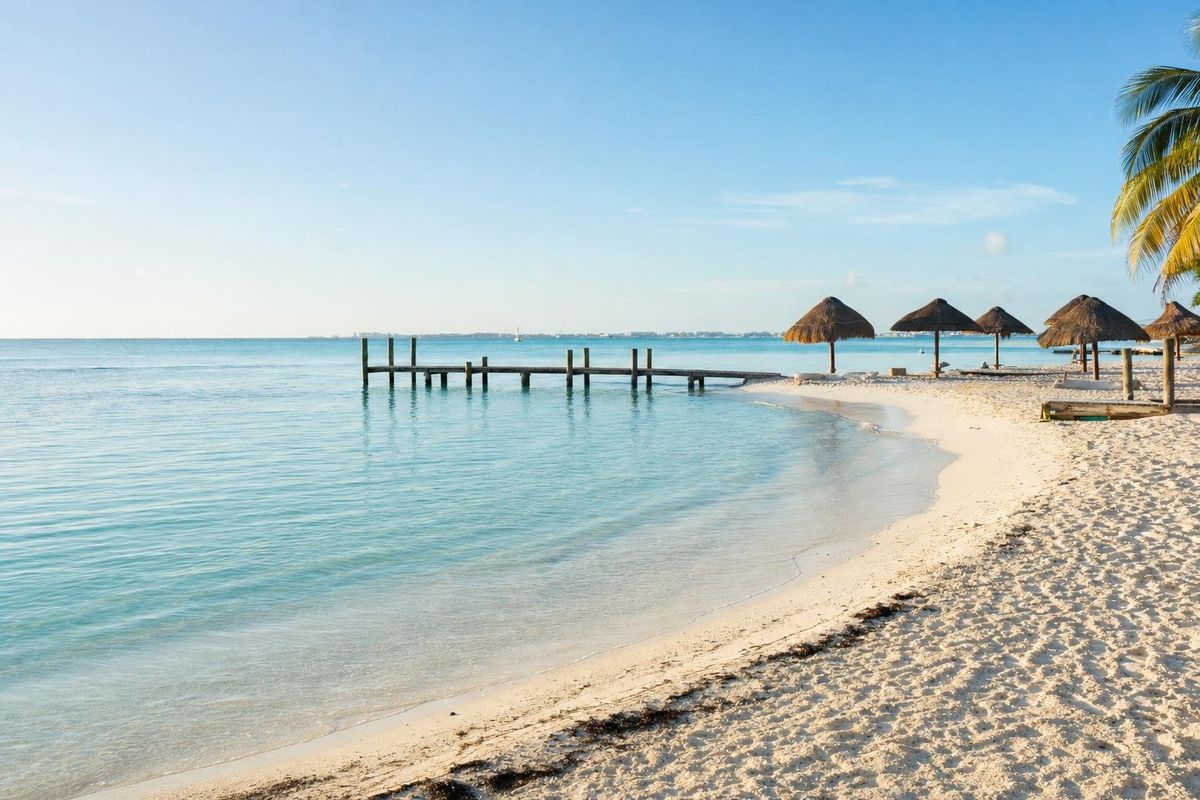
AI-generated image Beaches · Quintana Roo
Playa Langosta
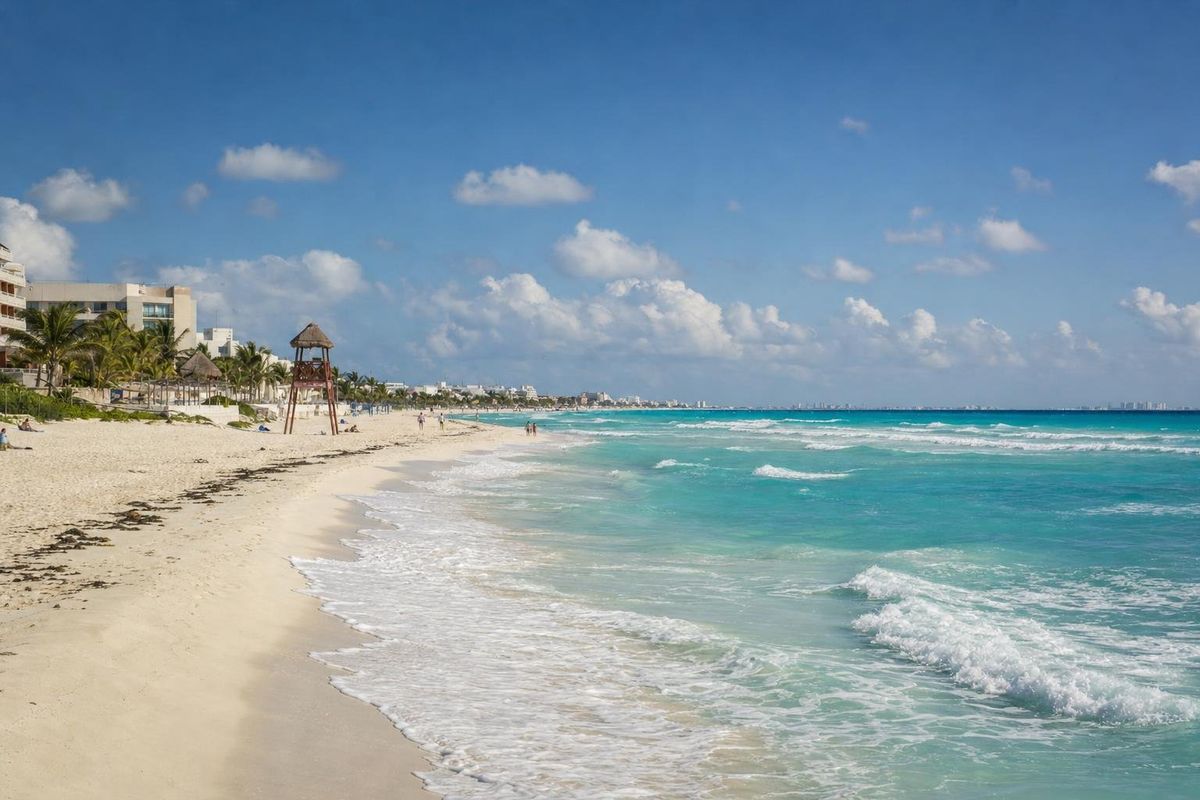
AI-generated image Beaches · Quintana Roo
Playa Ballenas
AI-generated image Beaches · Quintana Roo
Las Perlas