
−5 m · Shallows · Cenotes · Quintana Roo
Cenote Escondido, Tulum: a Long Jungle Pool Opposite Cenote Cristal
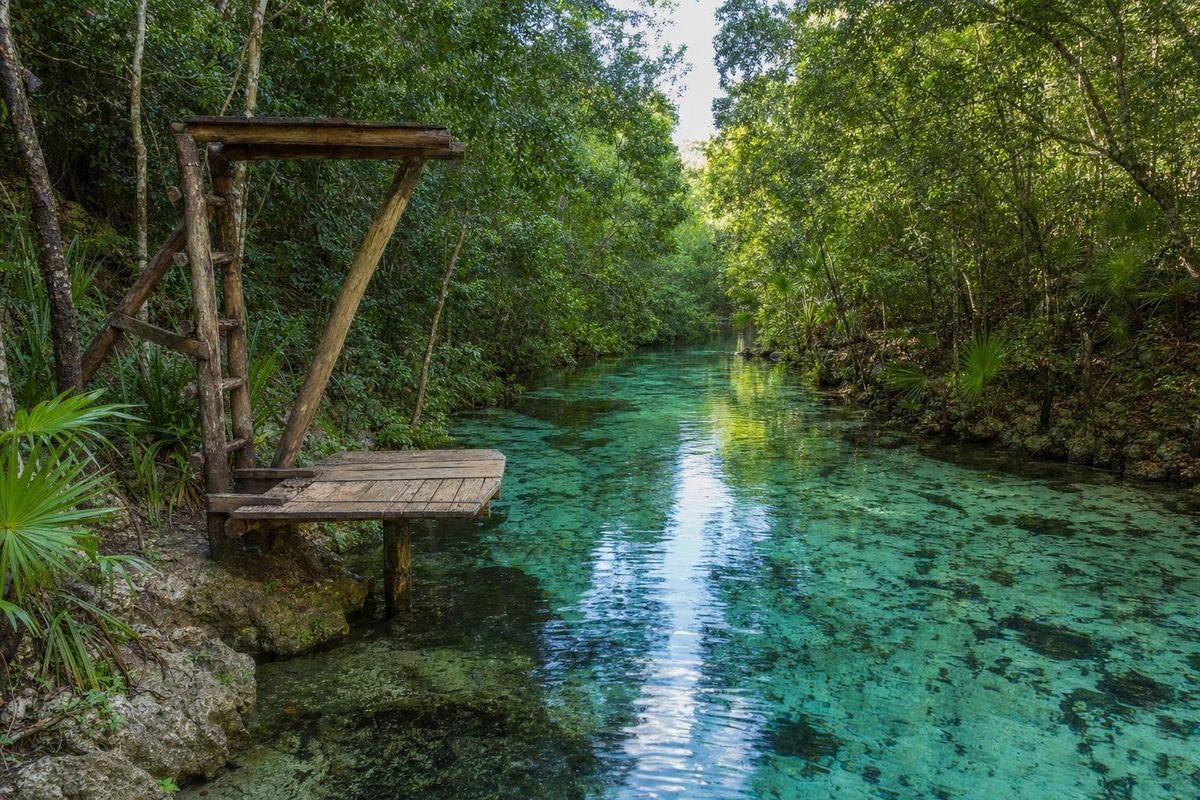
Cenote Escondido is an open cenote in the forest a few kilometers south of Tulum, off highway 307 toward Chetumal. It is a long, narrow pool of very clear water, edged by jungle, with deeper cavern sections at either end that draw divers. Across the highway lies Cenote Cristal, and the two are usually visited together on one ticket.
What Cenote Escondido is like
Escondido means "hidden" in Spanish, and the name fits. From the highway there is little to see: a ticket booth, a parking area and a path into the trees. A short walk later the forest opens onto a strip of water that looks more like a jungle river than a sinkhole, long and slender, with limestone ledges below the surface and trees leaning over both banks.
The water is remarkably clear. Over the shallower stretches the bottom is plainly visible, pale rock with a scatter of leaves and small fish, and toward the ends the floor drops away into blue-black openings where the cenote continues underground. Open to the sky along its whole length, Cenote Escondido gets full sun in the middle of the day, and the colors shift from green to turquoise as the light moves.
It is generally quieter than the famous cenotes north of Tulum, which is the main reason to choose it. On a weekday morning the only sounds may be birds in the canopy and the occasional splash of a fish. The setting is simple: a dock or platform or two, a ladder, maybe a rope swing over the water, and forest all around.
Swimming, snorkeling and jumping
For swimmers the appeal is a long, uninterrupted swim in fresh, clear water. The cenote is deep enough in most places that there is no standing, and life jackets are a sensible choice for anyone who tires easily. Snorkel gear shows the limestone shelves, fish and turtles that sometimes live in the pool, and the light falling into the deeper sections.
A platform or rope swing has typically been in place for jumping into the deeper water. Check the depth before trying it, and jump only where others are clearly using the spot.
Certified divers come for the cavern sections, which link into the wider flooded cave networks south of Tulum. As everywhere in the region, cavern diving requires a qualified local guide, and penetration beyond the daylight zone requires cave certification.
The land south of Tulum sits above some of the longest underwater cave systems known anywhere. Ox Bel Ha, which runs beneath the forest in this direction, has been surveyed by cave divers over hundreds of kilometers, and new passages are still being mapped. Open cenotes like Escondido and Cristal are the windows into that network: places where the roof of a flooded passage has fallen in and the groundwater flowing slowly toward the Caribbean comes into daylight before disappearing underground again.
Cenote Escondido and Cenote Cristal
Cenote Cristal sits directly across highway 307 from Escondido, and the two are run together: the ticket counter on the Cristal side has sold entry for both, with a single-cenote option offered at some times and not at others. Cristal, sometimes also called Naharon, is a rounder, more open pool with a sandy edge and a jumping platform, popular with local families on weekends.
The pairing is one of the better value outings around Tulum. Many visitors swim in Cristal first, cross the highway carefully on foot, and finish in Escondido, where it is usually quieter. Entry prices and conditions change and should be checked at the booth.
Getting there from Tulum
From Tulum town, follow highway 307 south toward Felipe Carrillo Puerto and Chetumal. After roughly 3 to 4 km, the signs and parking for Cenote Cristal appear on one side of the road, with Escondido directly opposite. The drive takes a few minutes.
Without a car, the options are easy: a bicycle along the highway shoulder (the traffic is fast, so care is needed), a taxi from Tulum, or a colectivo heading south from town, which can drop passengers at the entrance. Coming back, colectivos heading north can be flagged down on the highway.
When to go
Opening time or late morning are best. Mornings are quiet and the light through the trees is soft; around midday, the sun reaches the water directly and the color is at its most intense. Weekend afternoons are busier, especially at Cristal.
The dry season, roughly November to April, is the most comfortable time in the Tulum area. The rainy months bring heat, humidity and afternoon showers, and the Atlantic hurricane season runs from June to November. Because the water comes from underground, sargassum on the Caribbean beaches has no effect on the cenote, which makes Escondido a good plan B on days when the shore is covered in seaweed.
Practical notes
- No sunscreen or repellent in the water; showering first is expected.
- Bring cash in pesos for tickets, which change in price.
- Facilities are simple; bring water and a snack.
- Wear sandals or water shoes on the paths and ladders.
- Mosquitoes can be busy in the shade; long sleeves help on land.
Small turtles and fish live in the cenote; watching them is part of the visit, feeding them is not. Shoreline vegetation is fragile, and climbing on roots or ledges damages them.
Further south, the ruins of Muyil sit on the edge of the Sian Ka'an biosphere reserve, about 20 km on along the same highway. North of town, Casa Cenote offers a mangrove swim beside the sea, and Cenote Caleta Tankah combines a small cenote with a beach. The cenotes page lists many more.
Cenote Escondido, Tulum: questions
Where is Cenote Escondido?
On highway 307 a few kilometers south of Tulum town, directly across the road from Cenote Cristal.
Does one ticket cover Cenote Escondido and Cenote Cristal?
Usually, yes. Tickets are sold at the Cristal side and have generally covered both, though conditions change.
Is Cenote Escondido good for snorkeling?
Yes. The water is very clear, with limestone ledges, fish and deeper cavern openings to look into.
Can you reach it without a car?
Yes. Colectivos heading south from Tulum can stop at the entrance, and taxis or bicycles work well too.
Is it crowded?
Less than most cenotes around Tulum, especially in the morning. Weekend afternoons are the busiest time.
Nearby on the map
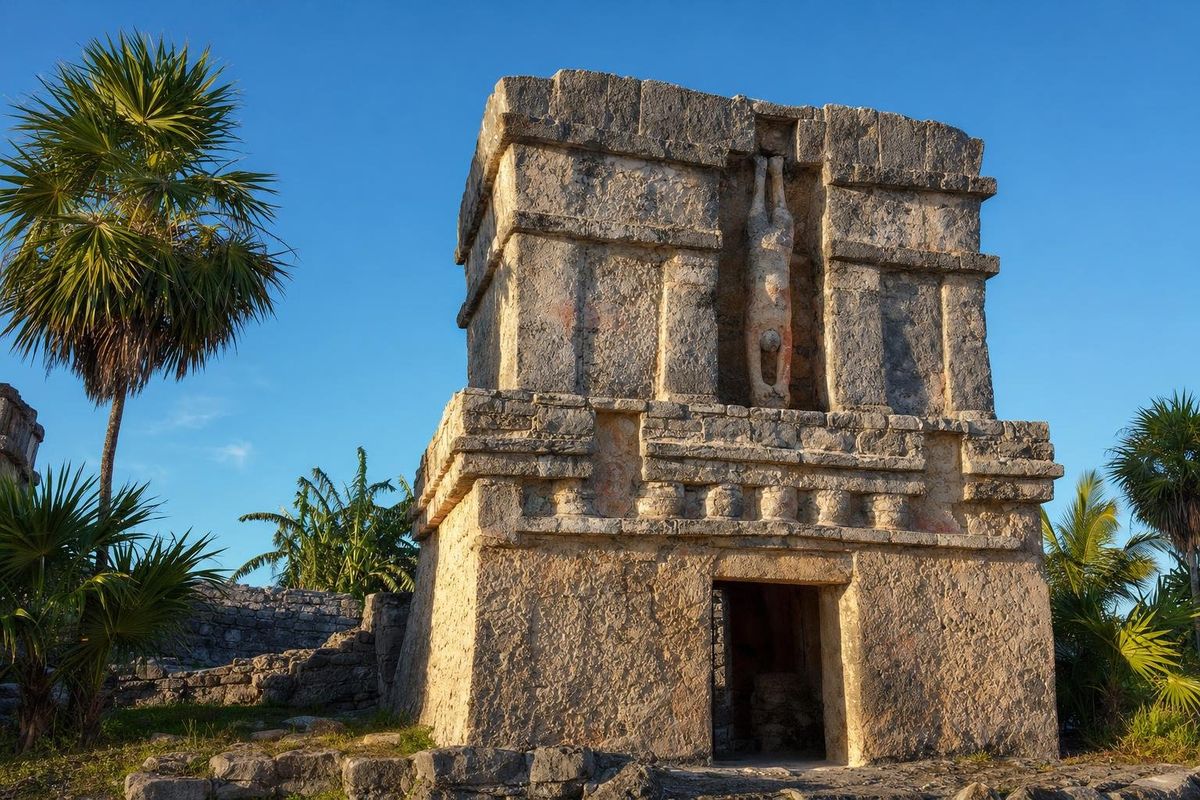
AI-generated image Maya Mysteries · Quintana Roo
Descending God
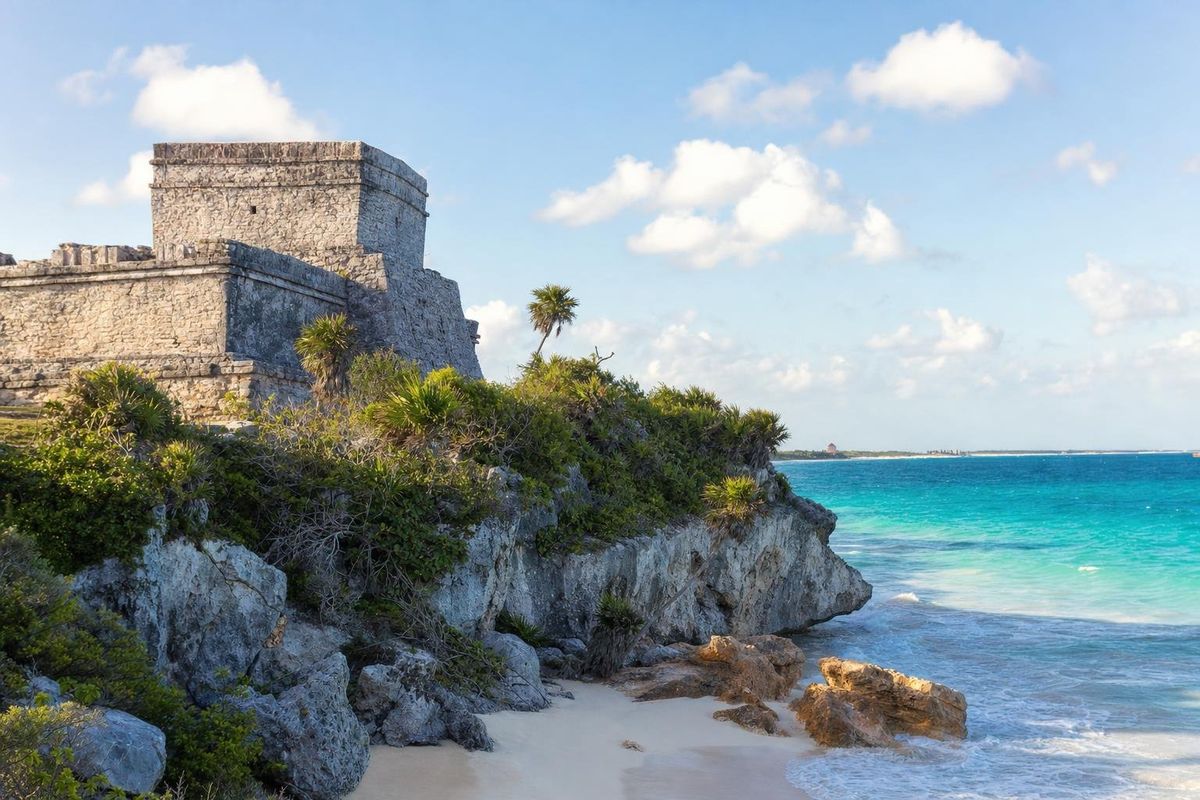
AI-generated image Maya Ruins · Quintana Roo
Tulum Ruins
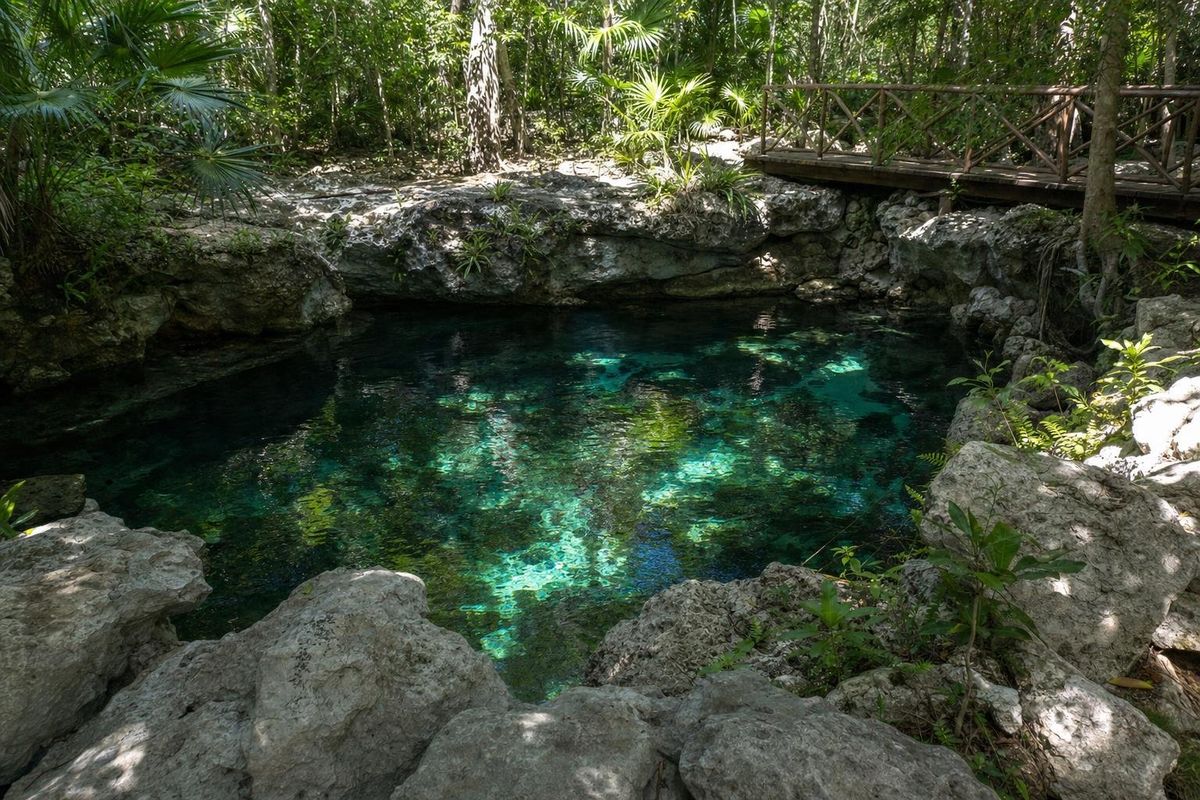
AI-generated image Cenotes · Quintana Roo
Caleta Tankah
AI-generated image Beaches · Quintana Roo
Tankah Bay