
−5 m · Shallows · Beaches · Quintana Roo
Playa Las Perlas, Cancún: a Calm Public Beach on the Bay Side
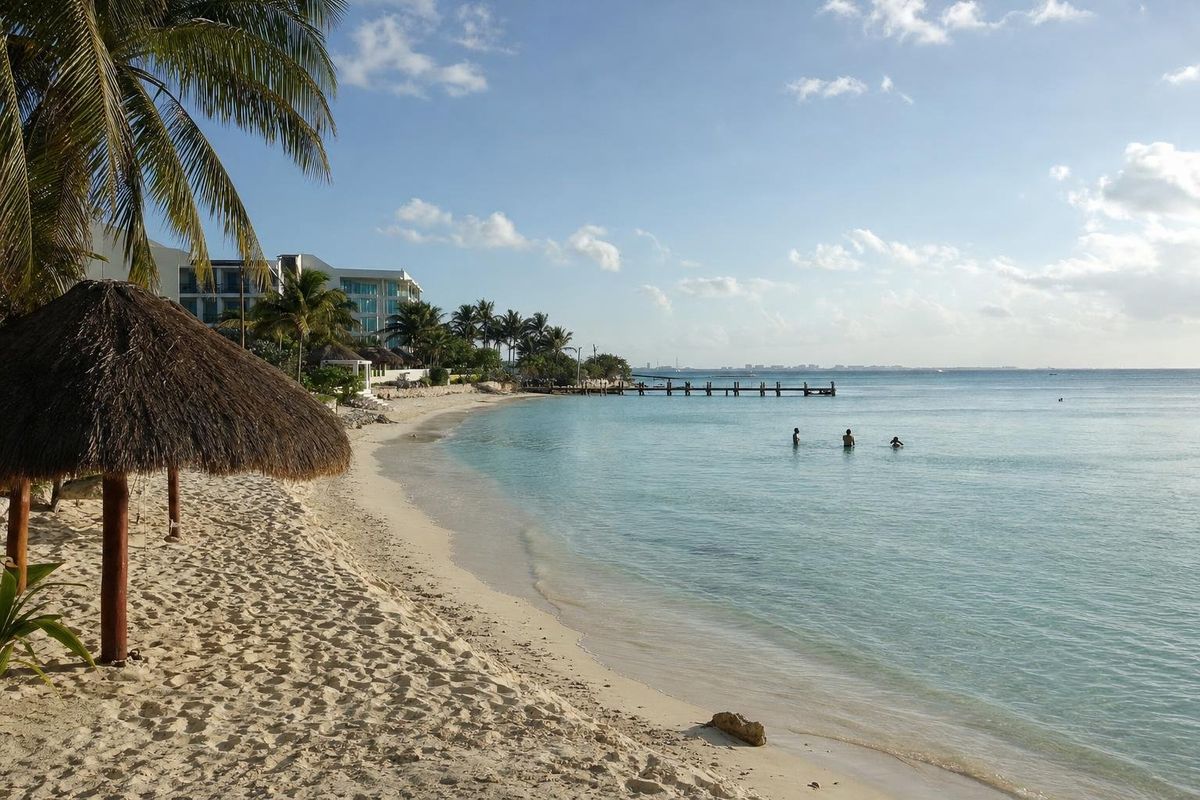
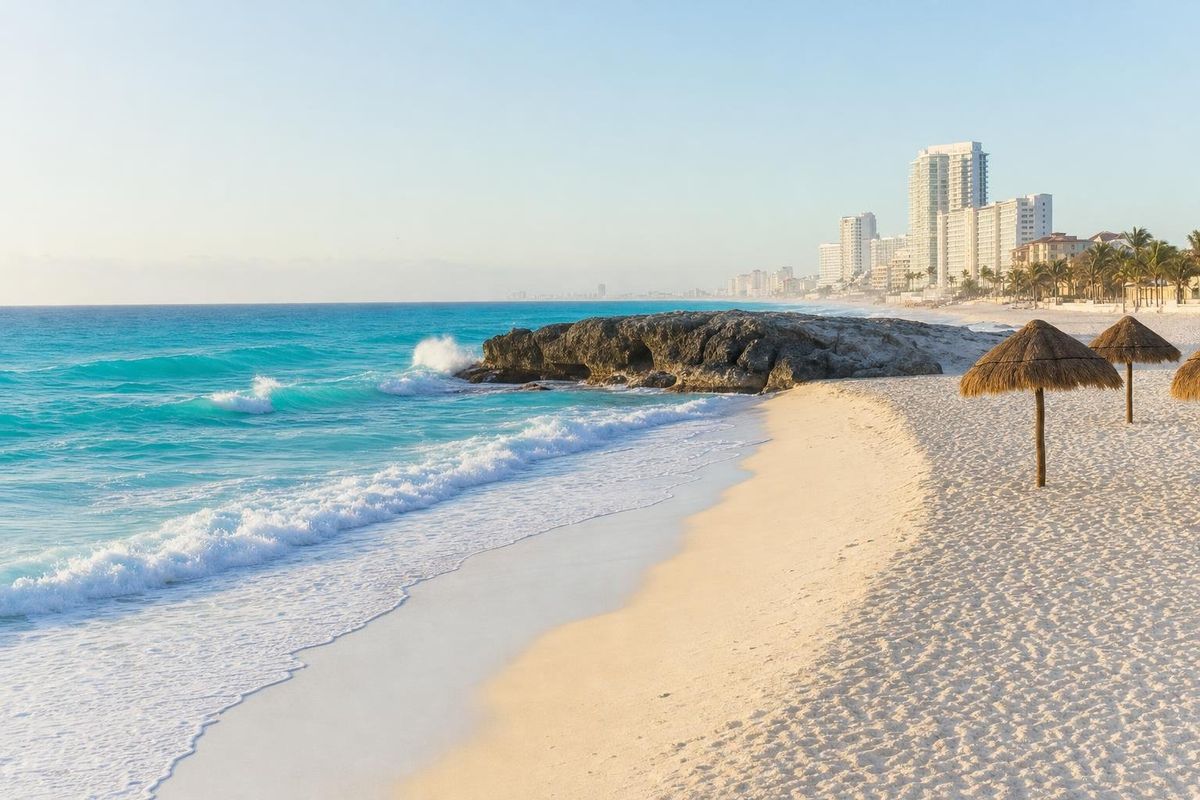
Playa Las Perlas is a small public beach near the start of Cancún's hotel zone, on the north-facing stretch of Boulevard Kukulcán that looks across the bay toward Isla Mujeres. The water here is sheltered, shallow and nearly flat, which makes it one of the easiest places in Cancún for children and hesitant swimmers. It is free, it has shade, and it is used far more by people who live in Cancún than by visitors.
Where Las Perlas fits on the Cancún map
Cancún's hotel zone is built on a long, narrow island shaped like a figure seven. The first arm runs east from the city along the shore of Bahía de Mujeres, the bay between the mainland and Isla Mujeres; the second runs south along the open Caribbean. The beaches on the long Caribbean arm, such as those around Punta Nizuc and the middle of the strip, take the full force of the swell and often fly red flags. The beaches on the bay arm, including Las Perlas, Playa Langosta and Playa Tortugas, are sheltered and gentle.
Las Perlas sits near the western, city end of that bay arm, a short ride from downtown. The beach is small: a curve of sand between hotel properties, with a public access from the boulevard, a few palapa shelters and basic facilities. Behind it run the boulevard and the bus route; in front, the bay is wide open toward Isla Mujeres, whose low outline sits on the horizon.
A beach older than the resorts
Before the hotels, the island that now carries the hotel zone was a thin strip of dunes, scrub and coconut palms with a few fishing families, separated from the mainland by the Nichupté lagoon system. In 1970 the Mexican government chose the site for a planned resort, and the first hotels opened in the mid-1970s. Within a couple of decades the bay-side shore near the city, where Las Perlas lies, was lined with buildings, and the small public beaches along it became the places where people working in Cancún could still reach the sea.
That history shows. The bay-side beaches are smaller and more local than the wide sands further south, and on a weekend Las Perlas feels more like a neighborhood park than a resort beach, with grandparents in the shade, teenagers on the pier and vendors walking the sand.
The Maya were here long before either. The small temple at El Rey and the remains at El Meco on the mainland shore show that the area was settled in the Postclassic period, when canoes traded along the whole coast.
Swimming, snorkeling and a slow afternoon
The main reason to come is the water. The sea floor shelves very gently, the bay is protected from the open swell, and on most days the surface is calm. Children can paddle a long way out before it gets deep. The bottom is mostly sand, with occasional patches of seagrass and rock near the edges of the beach.
Snorkeling is modest: around rocks and pier pilings you may see sergeant majors, small snappers and, now and then, a ray or a needlefish, but there is no coral reef close to the shore. For reef snorkeling, take a boat trip to the reefs off Punta Nizuc or Isla Mujeres instead.
Las Perlas is also a good place to watch the sunset in Cancún, since the bay arm faces north and west across the water, and the low evening light runs along the shore. Weekday afternoons are quiet; weekends bring families with coolers, picnics and music.
The difference from the Caribbean side is worth understanding. On the open beaches further south, strong currents and steep drop-offs can be dangerous, and the red flag flies often. Here, the main risks are sunburn, the occasional jellyfish in warm months and boats near the piers.
Getting to Playa Las Perlas
From downtown Cancún, the hotel-zone buses run along Boulevard Kukulcán day and night and pass the beach entrance; tell the driver where you want to get off, or watch for the public access sign by the road. A taxi from downtown takes only a few minutes. Parking along the boulevard is limited and fills up on weekends.
The kilometer markers along Kukulcán are the easiest way to find any hotel-zone beach, and Las Perlas lies in the low numbers near the start of the boulevard. Public accesses are set by law, but they can be narrow and squeezed between hotels, so look carefully.
When to go
The beach is pleasant year-round. The driest and most comfortable months are roughly December to April. Summer is hotter and more humid, with short afternoon storms, and the hurricane season runs from June to November. Sargassum, which can pile up on the Caribbean-facing beaches in some years, tends to reach the bay side less often, though it is never ruled out.
The water is warm all year. Winter cold fronts (nortes) occasionally blow from the north, and since this beach faces north, those are the days when the bay becomes choppy and murky.
Practical notes
- Mexican beaches are public; you never have to pay to use the sand, though hotel loungers belong to hotels.
- Bring your own shade or arrive early for a palapa on weekends.
- Use mineral or reef-safe sunscreen; it is good practice on every Caribbean beach.
- Check the flag at the lifeguard post if one is staffed; even calm beaches change in a norte.
- Keep an eye on belongings, as on any busy city beach.
Combine Las Perlas with other bay-side beaches such as Playa Langosta and Playa Tortugas, a short ride further along the boulevard; Tortugas is also one of the ferry departure points for Isla Mujeres. Further south in the hotel zone, the small Maya site of El Rey sits beside the lagoon. Other beaches of the coast are collected in the beaches section.
Playa Las Perlas questions
Where is Playa Las Perlas in Cancún?
It is near the start of the hotel zone, on the bay side of Boulevard Kukulcán facing Isla Mujeres, a short bus or taxi ride from downtown Cancún.
Is Playa Las Perlas free?
Yes. It is a public beach, and access to the sand is free, as on every beach in Mexico.
Is Playa Las Perlas good for children?
Yes. The bay is sheltered, the water is shallow for a long way out and waves are usually small, which makes it one of the easier beaches in Cancún for families.
Can you snorkel at Playa Las Perlas?
Only casually, around rocks and pilings. There is no coral reef close to shore; reef trips leave for Punta Nizuc and Isla Mujeres.
How do you get to Playa Las Perlas by bus?
Hotel-zone buses run along Boulevard Kukulcán from downtown Cancún and pass the beach entrance. Ask the driver to stop at Las Perlas.
Nearby on the map
AI-generated image Beaches · Quintana Roo
Playa Langosta
AI-generated image Beaches · Quintana Roo
Playa Tortugas
AI-generated image Maya Ruins · Quintana Roo
El Meco
AI-generated image Beaches · Quintana Roo
Playa Chac Mool