
−20 m · Stone · Maya Ruins · Yucatán
Uxmal Ruins in Mexico: the Puuc Capital, Kabah and the Puuc Route
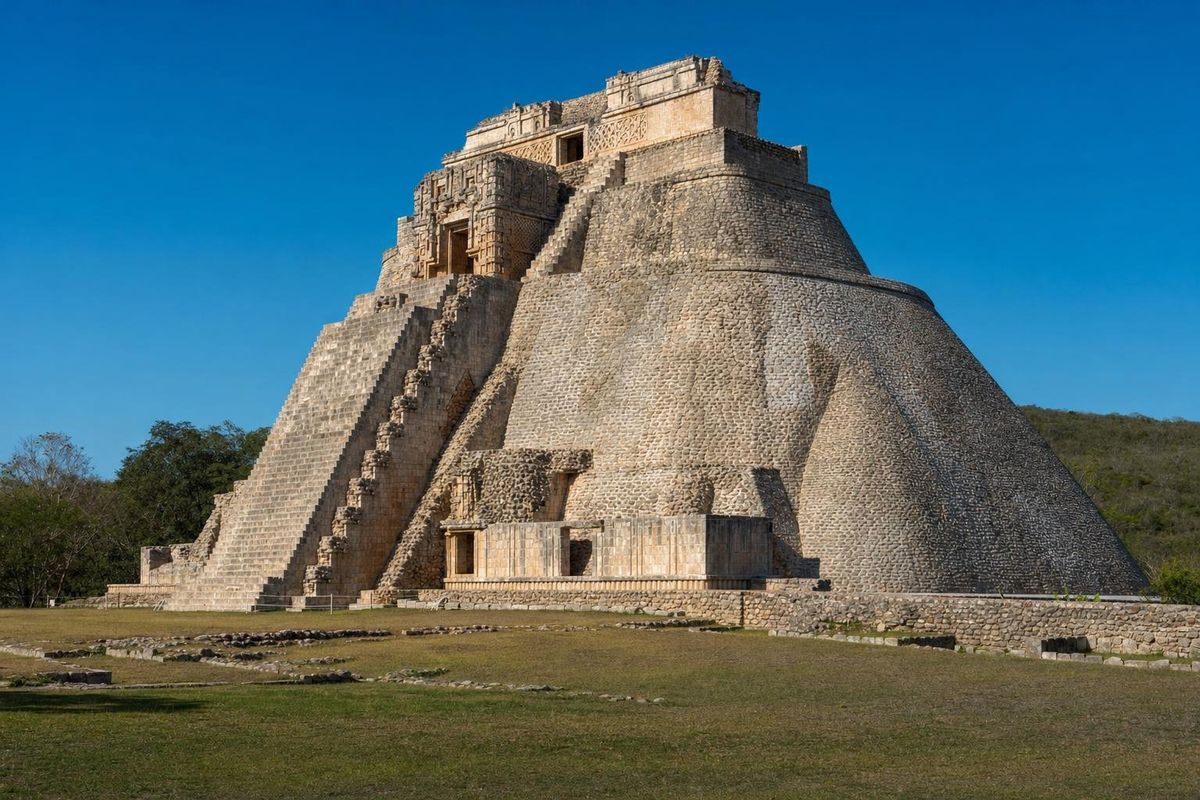
The Uxmal ruins stand in the low Puuc hills of Yucatán, a little over an hour's drive south of Mérida, and they are the finest example of Puuc architecture anywhere in the Maya world. The city peaked in the ninth and tenth centuries, when it was the capital of a regional state, and its buildings are covered in stone mosaics, lattice panels and stacked masks. A raised causeway linked Uxmal to Kabah, the next stop on the Puuc route.
What Uxmal was
Uxmal (pronounced roughly "oosh-mahl") grew in a region with good soils and almost no surface water. Rain drains straight into the limestone, so people here dug bottle-shaped cisterns called chultunes into the rock and plastered them to hold the summer rains through the dry months. Several can still be seen around the site. Farming households were spread across the countryside between gardens and maize fields, which is why the Puuc cities look less crowded than the urban cores of the south.
The name is usually explained as "built three times" in Yucatec Maya, though the etymology is disputed, and inscriptions may refer to the city by a different name. Settlement in the Puuc goes back many centuries before Christ, but most of what stands today was built between roughly 850 and 925. The ruler best known from those years appears in the texts as Chan Chak K'ak'nal Ajaw, often shortened to Lord Chak. He is credited with the Governor's Palace, the ballcourt and the Nunnery Quadrangle, and Stela 14, now shown near the entrance, portrays him in full regalia above bound captives.
At its height Uxmal dominated the western Puuc and was connected by a sacbe, a raised white causeway, to Nohpat and Kabah. Inscriptions name people from Chichén Itzá, and many researchers think the two cities were allied for a time. A defensive wall, built late around the ceremonial core, points to less settled conditions toward the end. Major construction stopped in the tenth century. Colonial chronicles tie Uxmal to the Xiu family, who later governed from Maní and joined the revolt that brought down Mayapán in the fifteenth century.
The ruins were described by Jean-Frédéric Waldeck in the 1830s and then by John Lloyd Stephens and Frederick Catherwood, whose drawings from 1841 made the Governor's Palace famous abroad. UNESCO inscribed the city as a World Heritage Site in 1996; the UNESCO entry for the Pre-Hispanic Town of Uxmal explains why.
The key buildings at the Uxmal ruins
The Pyramid of the Magician
The first structure on entering is also the most unusual: a pyramid about 35 meters high with rounded, oval sides, a shape almost unknown elsewhere in Maya architecture. Excavation has shown that it holds five building phases, one inside another, and the temple on the western stairway has a doorway framed as the open mouth of a giant mask. A Yucatec legend says a dwarf born from an egg raised the whole pyramid in one night and became king of Uxmal, which is why it is also called the House of the Dwarf. Climbing is not permitted.
The Nunnery Quadrangle
Four long buildings enclose a courtyard west of the pyramid. The Spanish name suggested nuns to early visitors; scholars today read the complex as a royal or ceremonial compound, perhaps tied to the ruler's council or to the ordering of the cosmos. Each façade is different. Look for the lattice panels, the miniature thatched huts carved in stone, the feathered serpents whose bodies run along the friezes, and the towers of masks at the corners.
The Governor's Palace and the House of the Turtles
South of the ballcourt, on a huge artificial platform, stands the Governor's Palace, a low building roughly 100 meters long whose upper façade is a single mosaic of thousands of cut stones. A figure of the ruler sits above the central doorway, and in front of the building is a two-headed jaguar throne. Next to it, the small House of the Turtles carries a band of carved turtles, animals the Maya linked with water and rain.
The Great Pyramid and the House of the Doves
The Great Pyramid can usually be climbed by its restored stairway, and the view from the top takes in the whole site and the Puuc hills. The House of the Doves, further west, is only partly restored: a long building topped by a row of triangular, comb-like gables that give it its name. Behind the Pyramid of the Old Woman lies a small temple once decorated with stone phalluses, part of a fertility imagery found across the Puuc and explained in the article on the phallic cult.
Reading the masks
The long-nosed masks stacked on corners and doorways are the signature of Uxmal. For most of the twentieth century they were identified as Chaak, the rain god, and many guidebooks still say so. Research since the 1980s has added other readings. Many scholars now see at least some of them as witz, the animated "mountain" that turned a building into a sacred hill, while others identify a great celestial bird, Itzamnaaj's avian form, on the Nunnery façades. The features that separate the types (headbands, eyebrows, the shape of the snout) are subtle, and the debate is far from closed. Uxmal is a good place to look at them closely, because the façades are at eye level and the Nunnery courtyard lets you walk around all four sides.
Kabah and the Puuc route
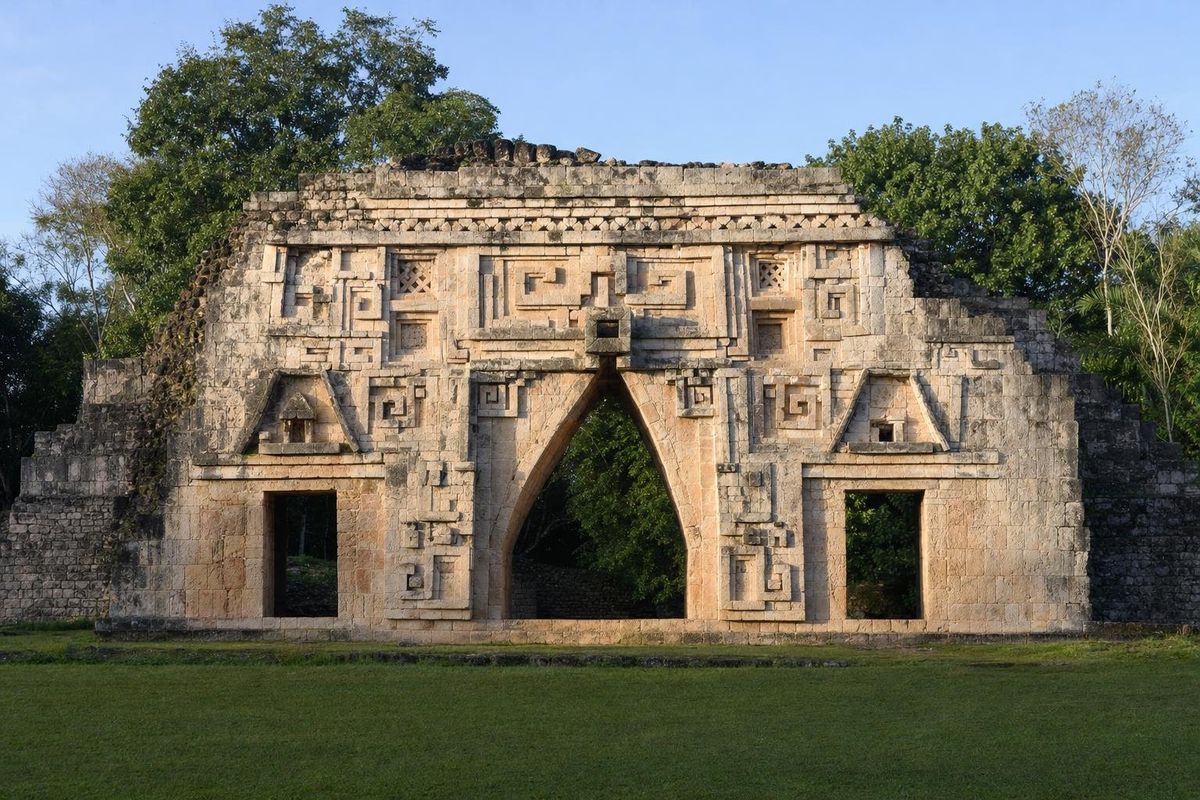
Uxmal is the start of the Ruta Puuc, a loop of smaller cities in the same architectural style. Kabah lies about 20 kilometers south along the old causeway line and is the closest of them. Its Codz Poop, the Palace of the Masks, has a façade covered entirely in hundreds of long-nosed masks, and a free-standing arch marks where the sacbe to Uxmal began. Further on are Sayil with its three-story palace, the small site of Xlapak, Labná and its famous arch, and finally the Loltún caves near Oxkutzcab. The Puuc hills route gathers them into a day or two of driving.
Getting to Uxmal
From Mérida, the usual road heads south through Umán and Muna; the distance is around 80 kilometers and the drive takes a little over an hour. Uxmal sits just off the highway, with the village of Santa Elena a few kilometers further south and Muna and Ticul to the north and east. Second-class buses toward Ticul or Campeche can drop passengers at the site, but schedules change and should be checked in Mérida. With a car, Uxmal, Kabah and one other Puuc site fit comfortably into one day.
Practical notes
The site is run by INAH; fees and opening times change, so confirm them locally or on the INAH website. There is very little shade, and the Puuc can be hotter than the coast, so arrive early with water and a hat. Allow at least two and a half hours for Uxmal alone. An evening light-and-sound show has been staged in the Nunnery in some years; whether it is running is worth asking on arrival. Iguanas sun themselves on almost every wall, and in the late afternoon the Governor's Palace façade turns gold. More cities of the region are listed under Maya ruins.
Near the site entrance on the highway, a small privately run chocolate museum, Choco-Story, tells the history of cacao from Maya drinks to the modern bar, a short stop for anyone curious about how chocolate began in this region.
Uxmal: common questions
How far is Uxmal from Mérida?
Roughly 80 kilometers by road to the south, a drive of a little over an hour through Umán and Muna.
Can you climb the Pyramid of the Magician?
No. The pyramid is closed to climbing. The Great Pyramid on the south side of the site has generally been open to climb by its restored stairway, though rules can change.
What does Uxmal mean?
It is usually translated as "built three times", but the origin of the name is disputed, and the city may have had a different name in its own inscriptions.
How far is Kabah from Uxmal?
About 20 kilometers to the south. In ancient times a raised causeway connected the two cities, and today they are the first two stops on the Puuc route.
Are the masks at Uxmal the rain god Chaak?
That was the standard reading for a long time. Many researchers now argue that a good number of them represent the sacred mountain, witz, or a celestial bird, and the question is still debated.
How much time does Uxmal need?
Two and a half to three hours covers the main buildings at an easy pace. Add a few hours if you plan to continue to Kabah and the rest of the Puuc route.
Nearby on the map
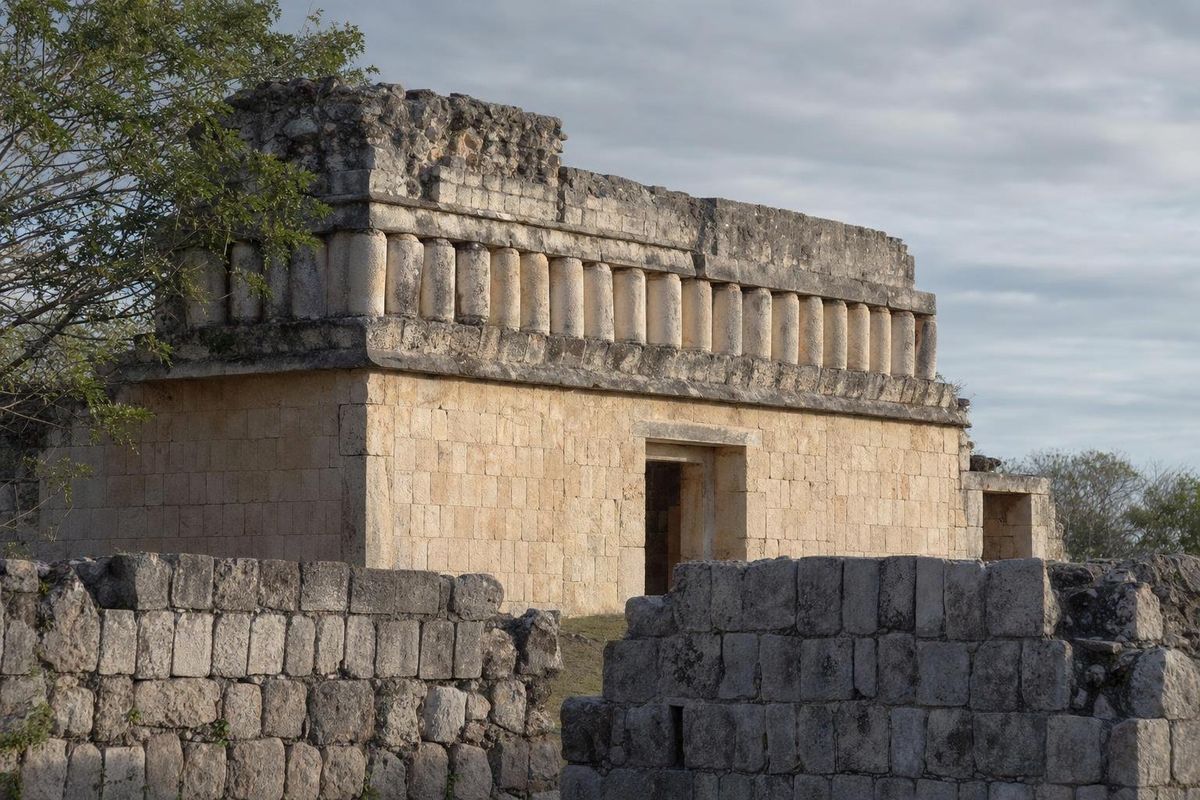
AI-generated image Maya Mysteries · Yucatán
Phallic Cult
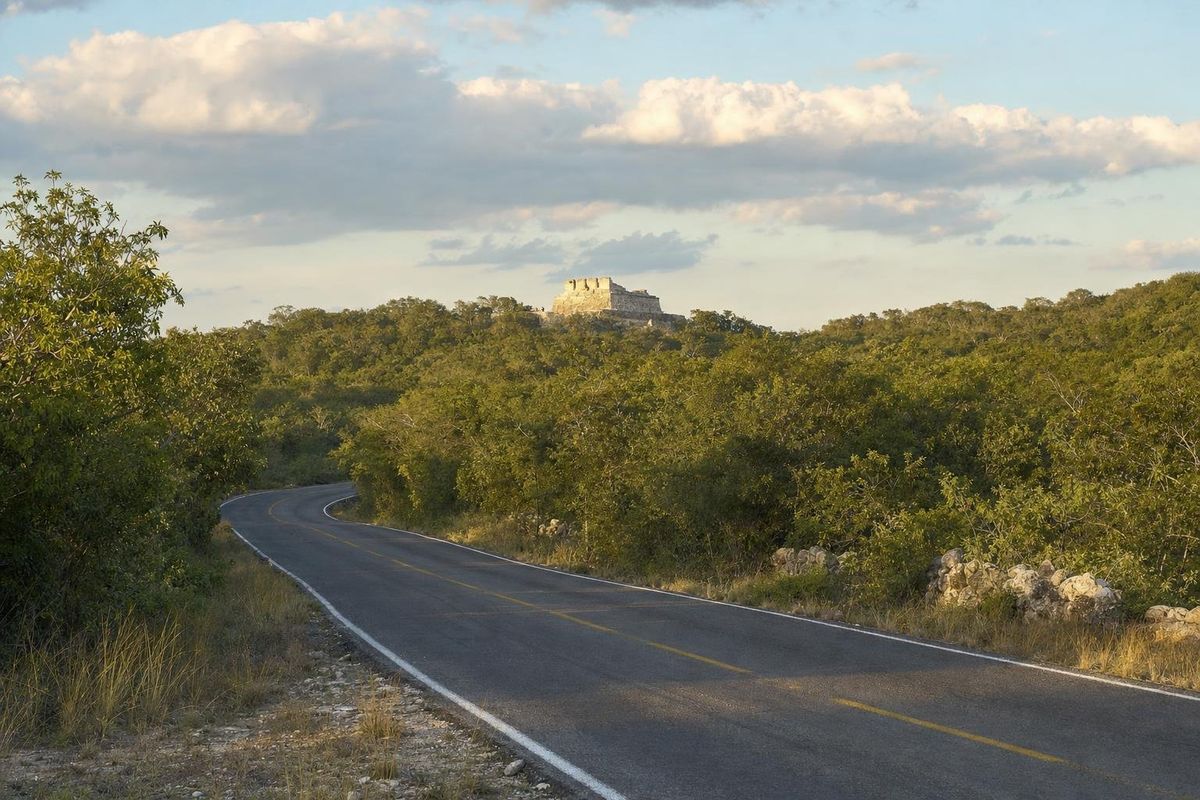
AI-generated image Trips · Yucatán
Puuc Hills
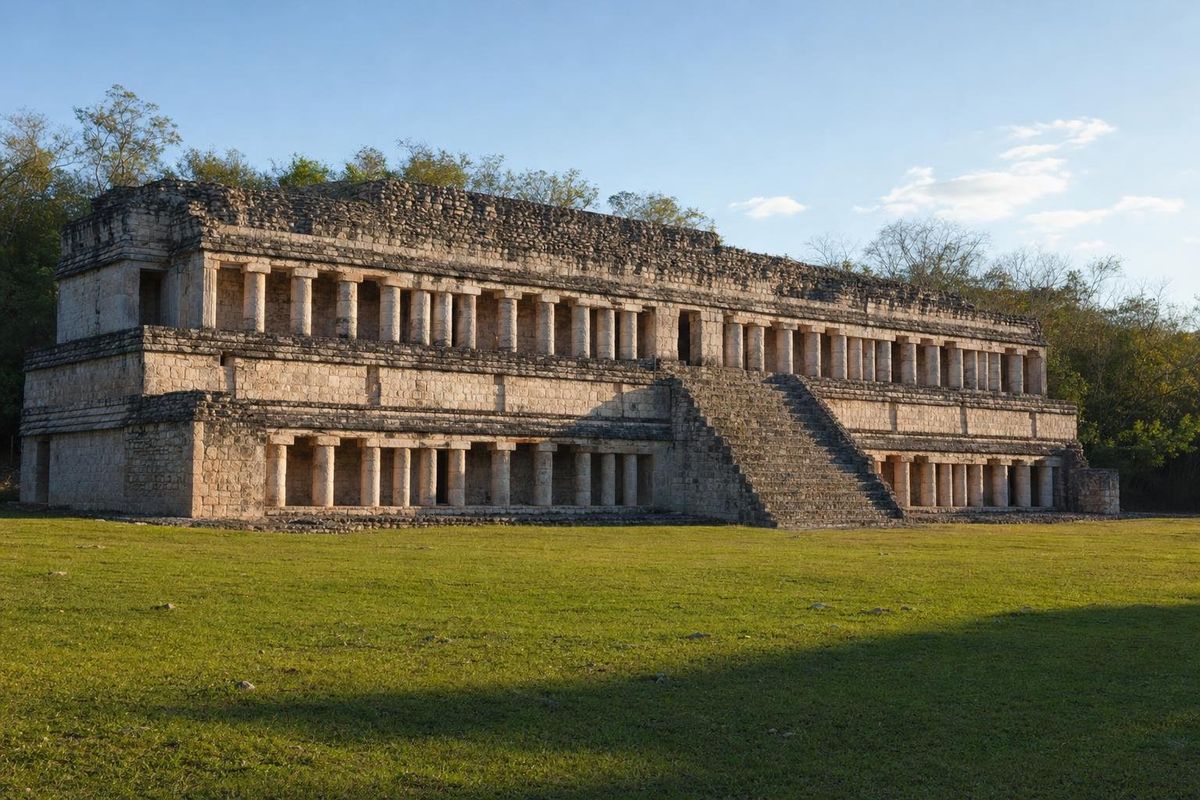
AI-generated image Maya Ruins · Yucatán
Sayil
AI-generated image Maya Ruins · Yucatán
Labná