
−5 m · Shallows · Cenotes · Quintana Roo
Cenote Caleta Tankah: a Jungle Cenote Behind a Spring-Fed Cove
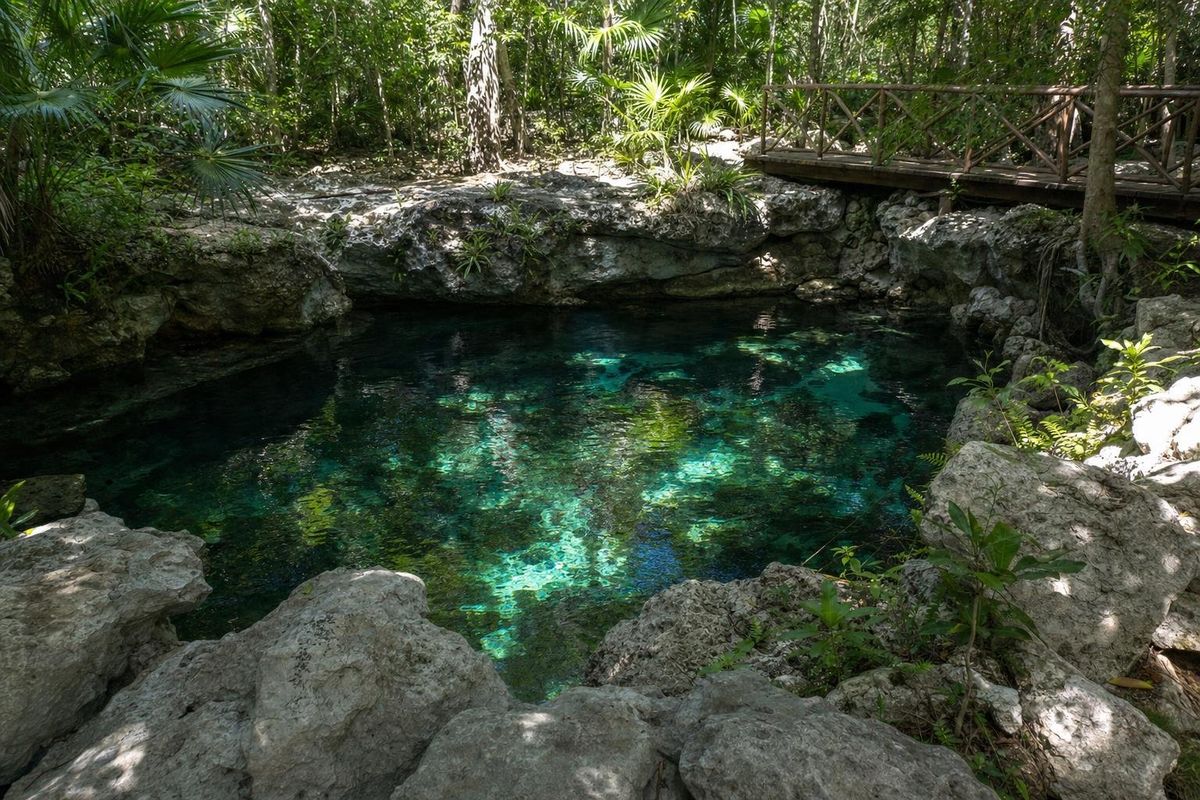
Caleta Tankah is a small cove on the coast a few kilometers north of Tulum where fresh spring water flows into the Caribbean, and a short path from the beach leads to a little round cenote in the jungle. The cenote is too small for a long swim, but it is clear, shaded and calm, and it turns a beach day into something more. Both are reached through the same beach club entrance off highway 307.
The cenote in the trees
The cenote sits a few minutes' walk inland from the sand, along a path through low coastal forest. It is a single round pool ringed by limestone and foliage, with a wooden bridge and steps for getting in and a couple of benches for towels. The edges are shallow enough to rest on the rocks, which can be slippery, while the center is deep enough that swimmers need to float or tread water.
What it lacks in size it makes up for in calm. Fewer people visit the cenote than the beach, so it is often empty. Fish of several kinds move between the rocks, more variety than in many inland cenotes, and egrets sometimes stand on the rim. Iguanas bask on the stones nearby.
The path itself is worth slowing down for. It is lined with the plants of the Yucatán coastal forest, including palms, sapodilla and strangler figs. Two trees often grow side by side here and tell a local story: chechem, or black poisonwood, whose sap causes painful blisters, and chakah, the gumbo-limbo, whose red peeling bark is traditionally used as a remedy for those blisters. Look but do not touch the chechem. Tree roots cross the path, so watch your footing.
The cove at Caleta Tankah
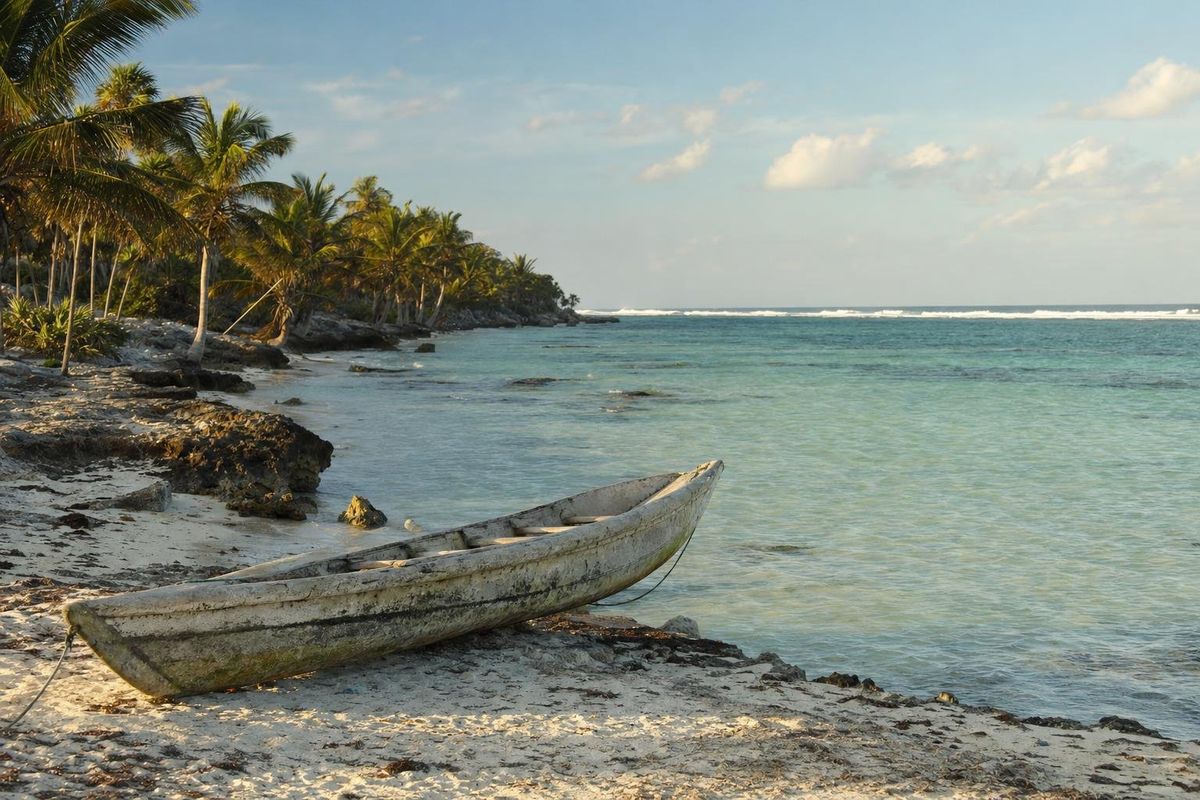
Caleta is Spanish for a small cove, and the one at Tankah is the main draw for most visitors. Fresh water from another cenote flows into it, creating a gentle current and keeping the water notably clear and cool. Swimmers drift with the flow, children paddle in the shallows, and snorkelers find fish in the rocky edges where fresh and salt water mix.
The constant outflow has a practical benefit. When sargassum seaweed washes onto this coast, which happens most in the warmer months, the spring water flowing out of the cove tends to keep that part of the beach cleaner than its neighbors. The spring itself is the visible end of the same underground drainage that feeds every cenote on this coast: rainwater soaks into the limestone inland, travels through flooded caves and finally emerges at the shoreline, sometimes in the cove, sometimes from vents on the seabed. On calm days the fresh water can be seen as a shimmer where it mixes with the salt. Further along, the beach has coconut palms, dune plants such as sea grape and beach morning glory, and space to walk.
A beach club controls access to the cove and the cenote. It has charged an entry fee or a minimum spend, with bathrooms, loungers, a restaurant and kayak rental for guests. Prices and arrangements change, so confirm them at the gate.
Tankah, Tankah Bay and Caleta Tankah
The name Tankah covers several places along this stretch of coast, which causes confusion. Caleta Tankah is the cove described here, closest to Tulum. Tankah Bay is the next bay north, a reef-protected beach lined with houses, and that is where the much larger Casa Cenote (also known as Cenote Manatí) runs through the mangroves. Across the highway there are further cenotes in the Tankah area run as small adventure parks. They are all worth a visit, but they are separate places with separate entrances.
The coast here was settled long before the tourist era. The walled Maya city of Tulum, a short drive to the south, is believed to have been known in the Late Postclassic period as Zamá, roughly "dawn", and smaller Maya sites dot the shoreline in both directions. Cenotes near the coast supplied fresh water to these settlements and, in Maya belief, were places to approach the rain god Chaak.
How to get to Caleta Tankah
From Tulum, drive north on highway 307 toward Playa del Carmen. The sign for Caleta Tankah appears a few kilometers out of town, on the sea side of the highway; from there a short road leads through the forest to the beach club. From Playa del Carmen the drive is about an hour.
Colectivos running along highway 307 between Playa del Carmen and Tulum can drop passengers at the turn-off. From the highway it is a walk of roughly a kilometer on a shaded road to the beach. A taxi from Tulum is quick and inexpensive, and bicycles can manage the trip from town, though the highway shoulder carries fast traffic.
When to go and what to bring
Weekday mornings are quietest. The cove is at its prettiest when the sun is high and the water glows, and the cenote is shaded for much of the day. The dry season from about November to April brings calmer seas and lower humidity; the warmer, wetter months bring heat, possible sargassum and the hurricane season from June to November.
- Skip sunscreen and repellent before entering the cenote; mosquitoes like the jungle path, so cover up instead.
- There are no bathrooms at the cenote itself; use those at the beach club.
- Water shoes help on slippery rocks in both the cenote and the cove.
- Bring cash in pesos; fees change.
For a ruins-and-water day, combine the cove with the archaeological zone of Tulum, the Xaman-Ha remains up the coast at Playa del Carmen, or a swim at Cenote Escondido south of Tulum. The cenotes page lists more.
Caleta Tankah: questions
How big is the cenote at Caleta Tankah?
Small: a single round pool, good for a cooling dip rather than a long swim. The cove on the beach offers more room.
Is Caleta Tankah the same as Tankah Bay?
No. Caleta Tankah is the cove closest to Tulum; Tankah Bay, with Casa Cenote, is the next bay north.
How far is Caleta Tankah from Tulum?
A few kilometers north of town on highway 307, a short drive or taxi ride.
Is there an entry fee?
Access is through a beach club, which has charged an entry fee or minimum spend. Prices change; check at the gate.
Is the cove safe for children?
The cove is sheltered and has shallow edges, though the spring creates a current. Children should be watched and wear life jackets in deeper water.
Nearby on the map
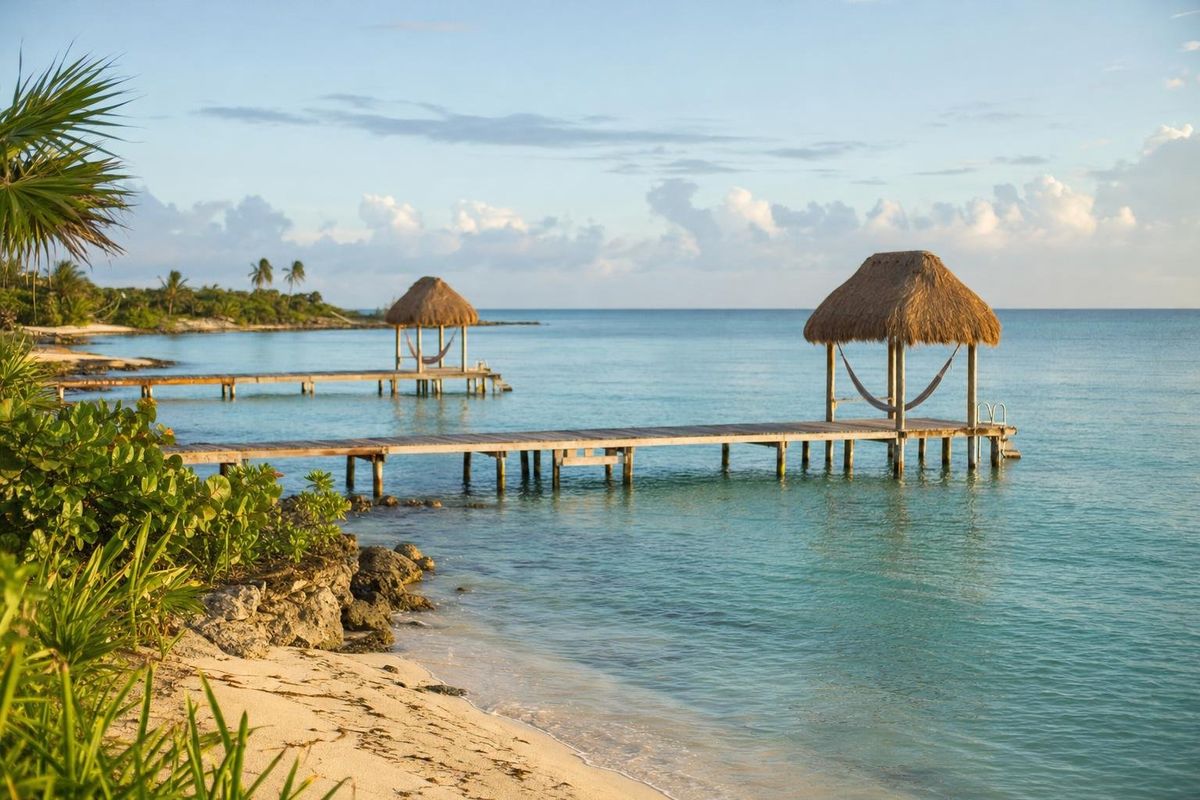
AI-generated image Beaches · Quintana Roo
Tankah Bay
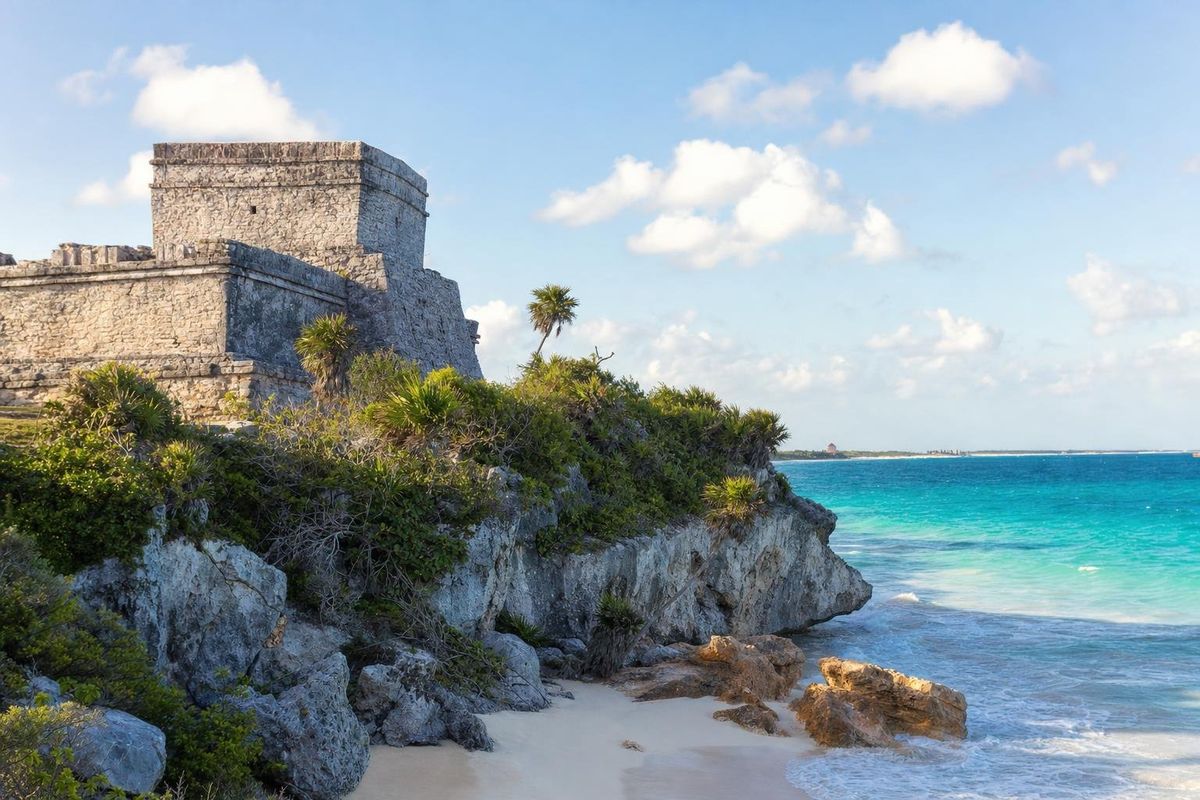
AI-generated image Maya Ruins · Quintana Roo
Tulum Ruins
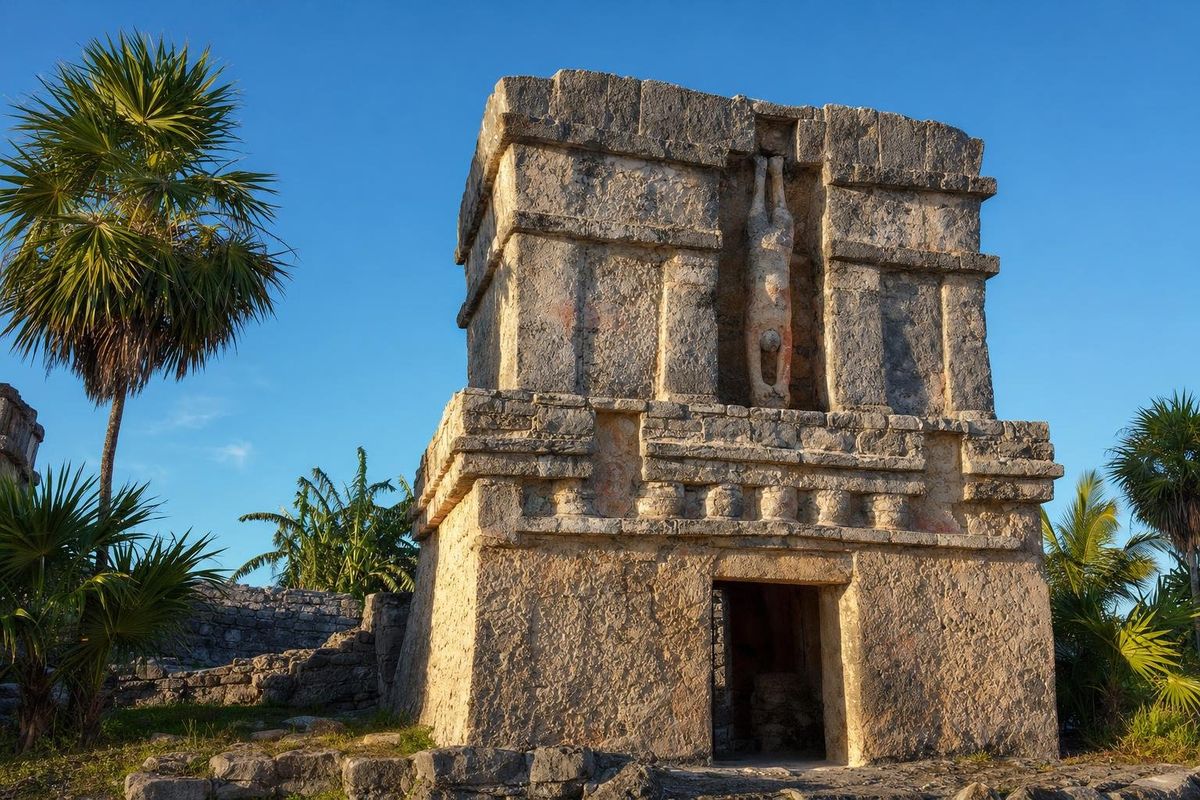
AI-generated image Maya Mysteries · Quintana Roo
Descending God
AI-generated image Beaches · Quintana Roo
Soliman Bay