
−5 m · Shallows · Towns & Villages · Yucatán
Izamal, Yucatán: the Yellow City of Maya Pyramids and a Convent
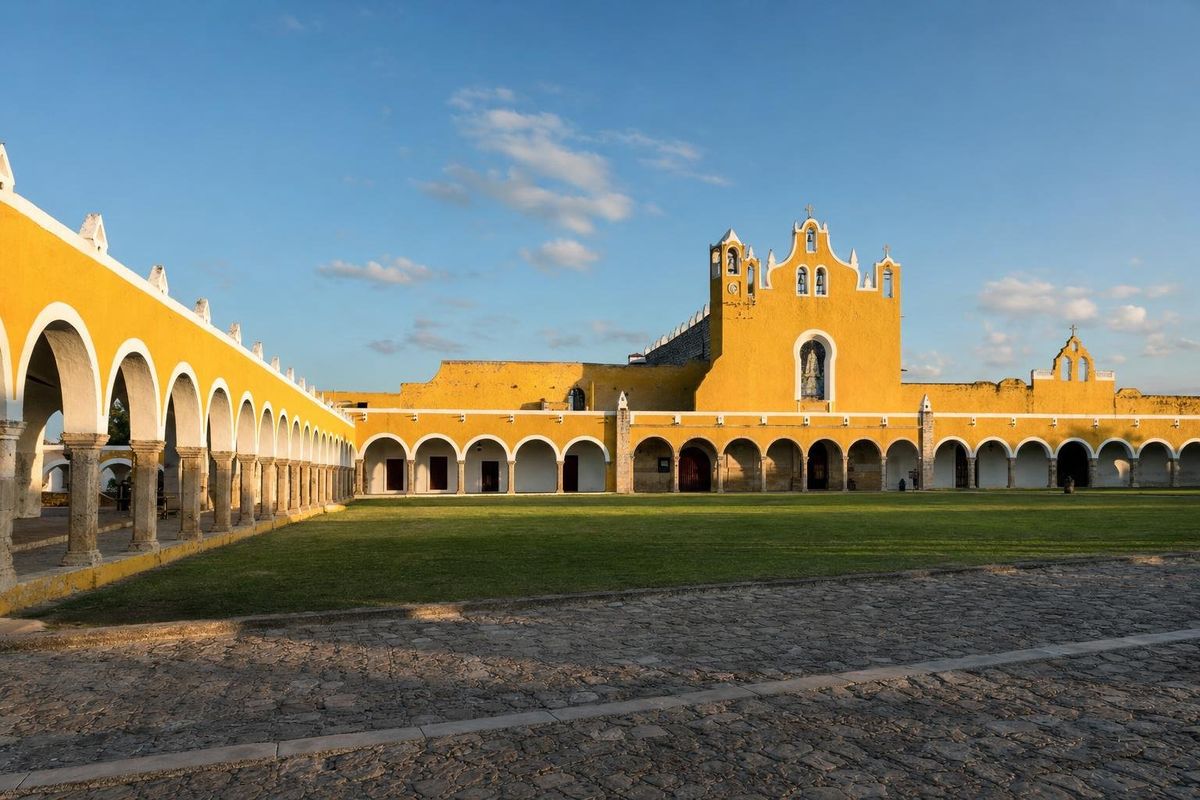
Izamal is a small town in the state of Yucatán, about 70 km east of Mérida, where almost every building in the center is painted the same deep yellow. A Franciscan convent from the sixteenth century sits on top of a Maya pyramid platform, and further pyramids rise between houses and side streets, including Kinich Kak Moo, one of the largest ancient structures in the peninsula. Few places in Mexico show the meeting of the Maya and Spanish worlds so plainly.
Why Izamal, Yucatán is worth a stay
Izamal earns its nicknames. It is the Yellow City for its painted facades and arcades, and the City of Hills because the "hills" around town are in fact the overgrown mounds of Maya pyramids. Mexico's tourism authorities made it a Pueblo Mágico in 2002, one of the first in the program, and the center has been kept with unusual care: cobbled streets, wrought-iron lamps, horse-drawn carriages and very little traffic.
The town is small enough to see in a day from Mérida, but it is at its best in the evening and early morning, when day-trippers have gone and the yellow walls turn orange in the low sun. A night in town also makes room for the convent's illuminated facade after dark and a slower look at the pyramids.
The Maya city beneath the town
Long before the Spanish arrived, Izamal was one of the main cities of northern Yucatán. Archaeologists date its great building phase mostly to the Early Classic period, roughly the third to sixth centuries AD, although the site was settled earlier and stayed sacred long after. Raised causeways, the white roads called sacbeob, linked it to other centers; one runs roughly 30 km west to the site of Aké.
Colonial writers recorded that Izamal was a place of pilgrimage dedicated to Itzamná, the creator god and sky deity of the Yucatec Maya, and to a sun deity worshipped on its largest pyramid. Most scholars treat the town's name as derived from Itzamná, though the exact meaning is debated.
Kinich Kak Moo
The largest of the pyramids stands a few blocks north of the convent. Its base platform measures roughly 200 meters on a side, which places it among the most massive structures in the Maya world by volume, and a smaller pyramid sits on top of it. The name is usually translated along the lines of "sun-faced fire macaw", after the deity said to descend to it to receive offerings. A path and partly restored steps lead to the summit, from where the convent and the town spread out below.
Itzamatul, Habuk and the other mounds
Itzamatul, east of the center, is the second-largest pyramid and also climbable. Smaller structures such as Habuk and El Conejo stand among houses and yards, and Kabul, on the edge of the main square, survives as a large mound with traces of a stucco mask once described by nineteenth-century travelers. A walk joining them takes a couple of hours and shows how completely the colonial town was laid over the ancient one.
The convent of San Antonio de Padua
When Franciscan friars arrived in the 1540s they chose Izamal deliberately. Work on the convent began around 1549 on top of a great Maya platform, partly with stone taken from the pyramid that stood there. The message was plain: the new faith was built on the old one. The friar Diego de Landa, later bishop of Yucatán and author of the Relación de las cosas de Yucatán, was among those based here. He is remembered both for that account of Maya life, which later helped scholars in deciphering the script, and for the burning of Maya books at Maní in 1562.
The convent's atrium is the sight everyone comes for: a vast lawn enclosed by an arcade of yellow arches, often described as the largest enclosed atrium in the Americas. Ramps lead up from the square. Inside the church, look for the gilded altarpiece and the image of the Virgin of Izamal, brought to the town in the sixteenth century. She is the patron of Yucatán, and on her feast day, 8 December, pilgrims from across the state come to the convent.
Pope John Paul II visited in August 1993, and the town was freshly painted for the occasion. The yellow had been used before, but since then it has become Izamal's signature.
Crafts, carriages and slow afternoons
Izamal has a strong crafts tradition, and many workshops in town open their doors to visitors: hammocks, embroidery, carved wood, papier-mâché, jewelry made from henequen fiber, and traditional herbal medicine. A small museum of popular art on the main square shows work from communities across Mexico. Buying directly from workshops keeps the money in the town.
The horse-drawn carriages waiting by the convent offer a gentle tour past the pyramids and colonial chapels. Agree on the route and the fare before setting off. In the evening the main square fills with families, and the illuminated convent facade is a good spot to watch the town wind down.
Getting to Izamal
By car from Mérida, the drive east takes a little over an hour. Izamal is also an easy detour on the way between Mérida and Chichén Itzá or Valladolid: the town lies north of the main highway, and well-signposted roads lead up to it. Buses run from Mérida and from Valladolid; schedules change, so check them at the terminal.
Izamal pairs well with Mérida, with the market town of Motul to the northwest, or with a full day at Chichén Itzá.
When to go and practical notes
The dry season, roughly November to April, is the most comfortable time to walk around town and climb the pyramids. Early December is lively because of the feast of the Virgin, with a fair on the main square and processions; rooms book up then. From about June to October the weather is hot and humid with afternoon storms, and the Atlantic hurricane season runs through the same months.
Climb Kinich Kak Moo early, before the heat, and wear shoes with grip: the restored steps are narrow and uneven. Dress modestly inside the convent church, where Mass is regularly held. Opening times of the convent museum and the pyramids change and should be checked locally. More towns of the peninsula are collected on the towns and villages page.
Izamal: questions before going
Where is Izamal?
In the state of Yucatán, Mexico, about 70 km east of Mérida, north of the highway to Chichén Itzá and Valladolid.
Why is Izamal painted yellow?
Yellow had been used on the town's buildings before, and the whole center was repainted for the visit of Pope John Paul II in 1993. The color has defined Izamal ever since.
Can you climb the pyramids in Izamal?
Kinich Kak Moo and Itzamatul have been open to climb. The steps are steep and uneven, so go early and wear good shoes.
Is Izamal a day trip from Mérida?
Yes, it is a little over an hour's drive. An overnight stay gives the town's quieter evening and early morning hours.
What is Izamal known for?
Its yellow colonial center, the Franciscan convent of San Antonio de Padua with its huge arcaded atrium, and the Maya pyramids within the town, above all Kinich Kak Moo.
When is the fiesta in Izamal?
The main feast honors the Virgin of Izamal, patron of Yucatán, on 8 December, with pilgrims, processions and a fair around the convent.
Nearby on the map
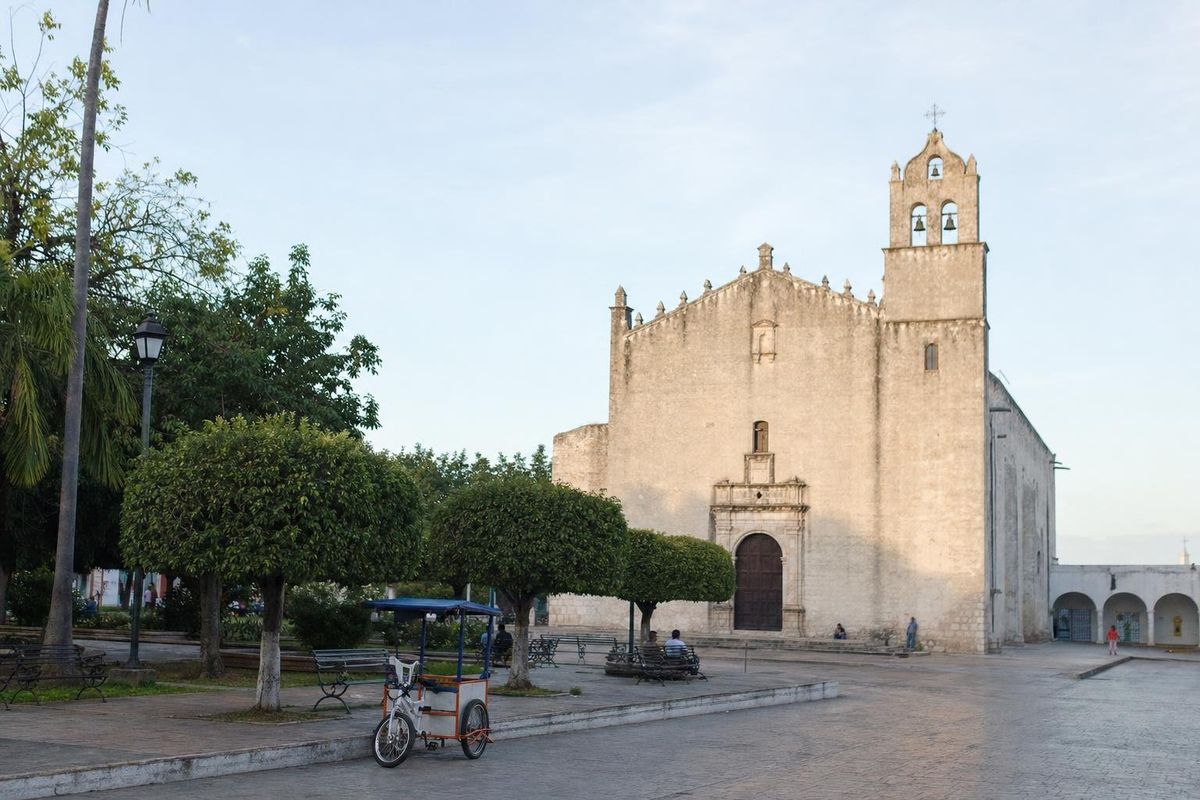
AI-generated image Towns & Villages · Yucatán
Motul
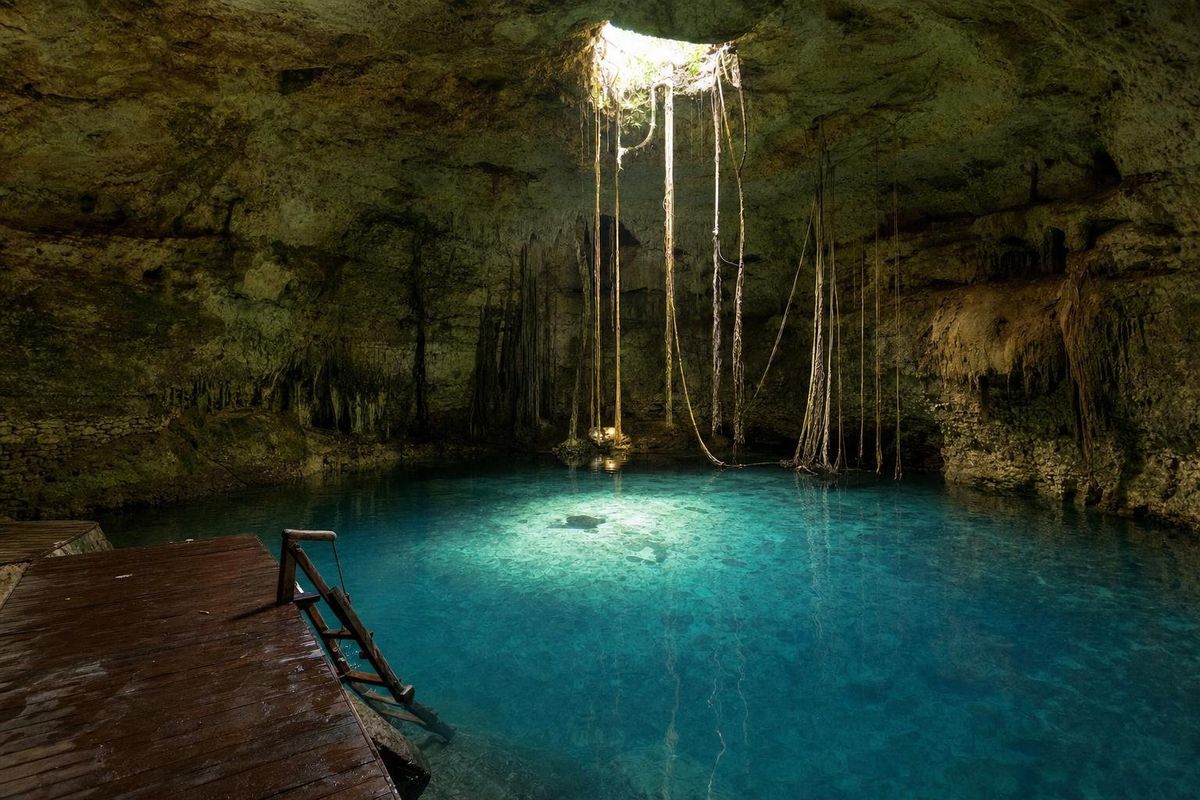
AI-generated image Trips · Yucatán
Cenotes of Yucatán
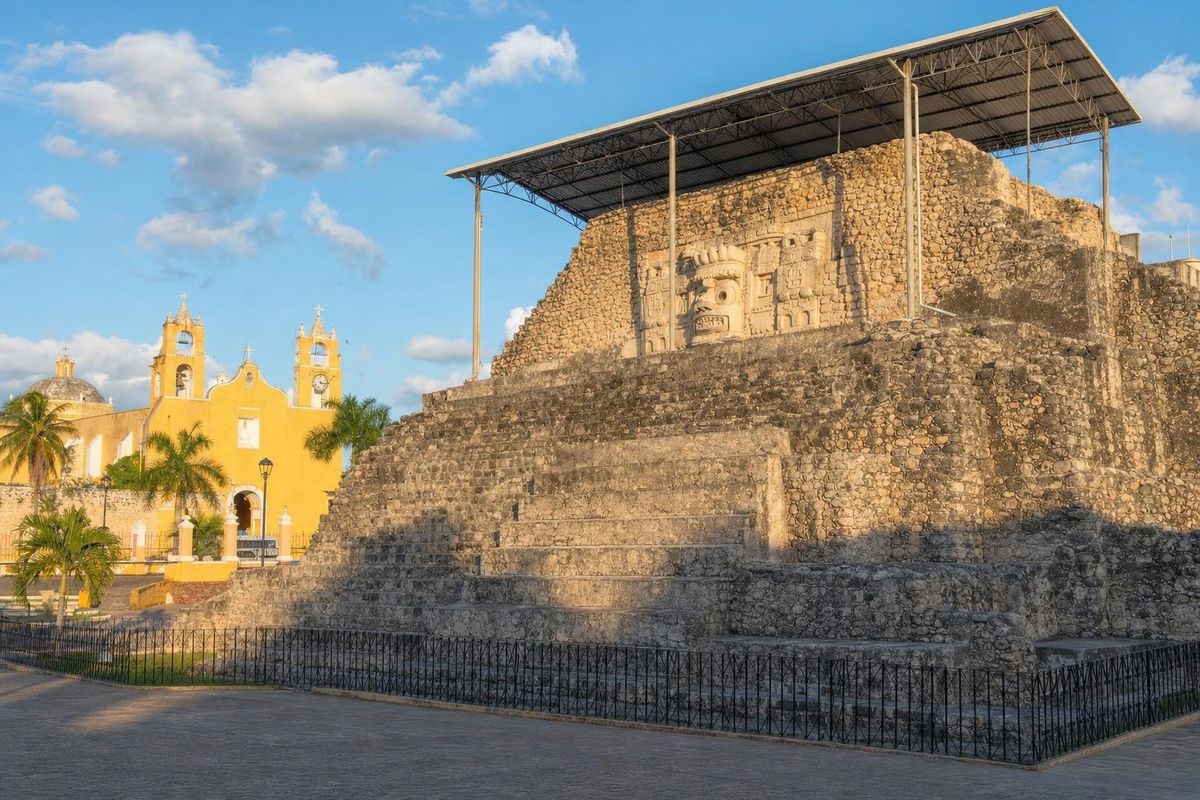
AI-generated image Maya Ruins · Yucatán
Acanceh
AI-generated image Cenotes · Yucatán
Xcajum