
−5 m · Shallows · Jungles · Quintana Roo
Punta Laguna: the Spider Monkey Reserve and Lagoon near Cobá
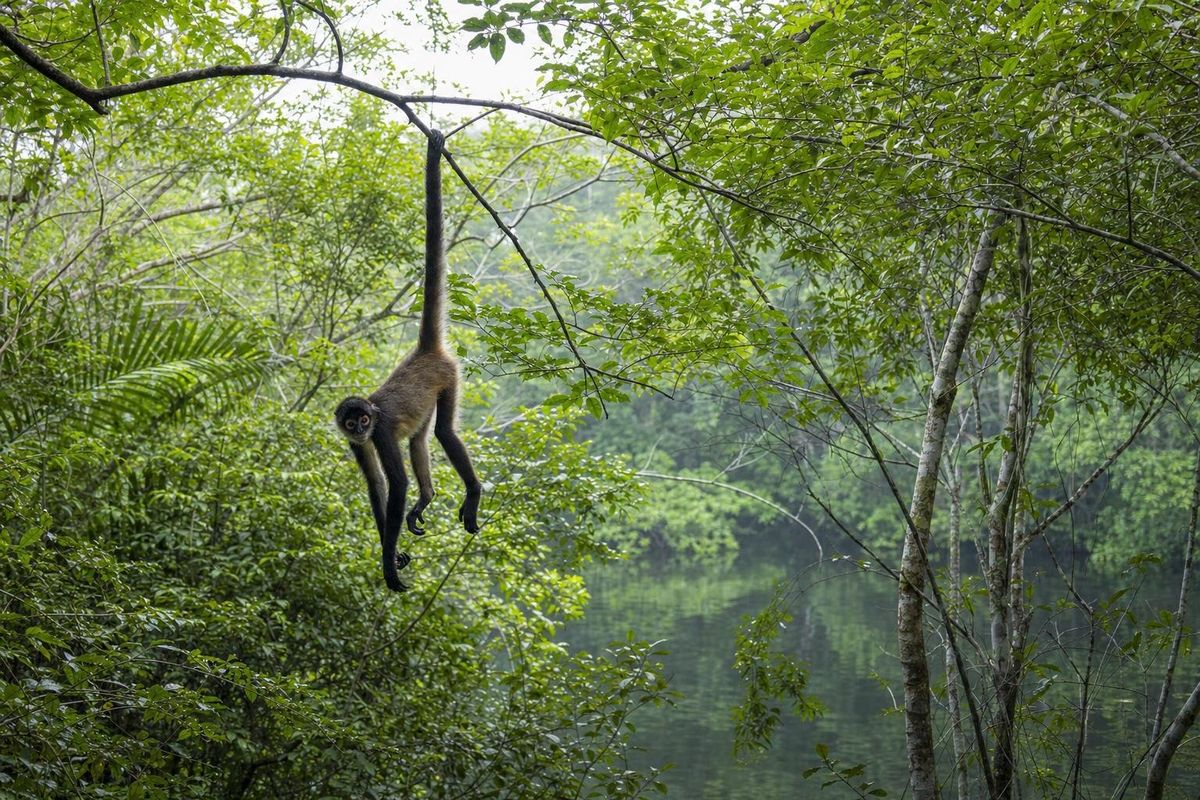
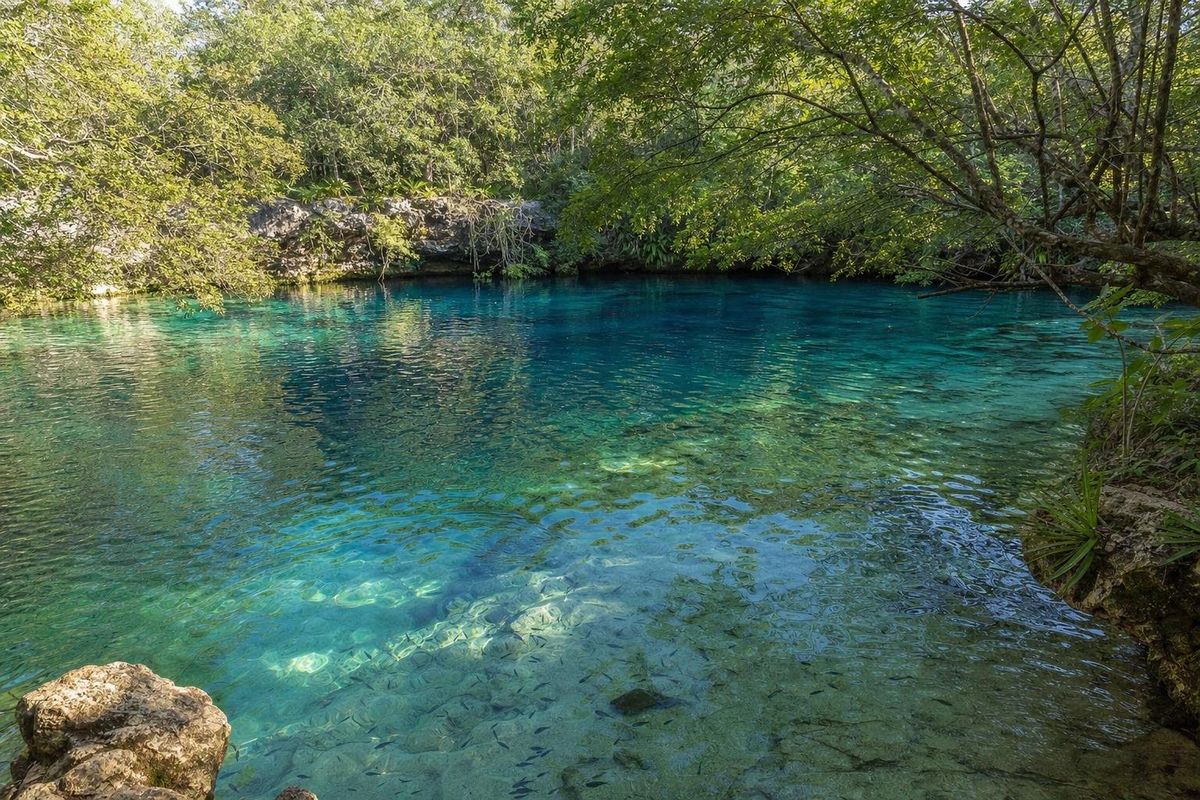
Punta Laguna is a small Yucatec Maya community and forest reserve about 20 km north of Cobá, on the road toward Nuevo Xcán and Valladolid. Its forest surrounds a long lagoon and is home to several groups of Geoffroy's spider monkeys that have been studied for decades and are used to people, so a walk with a local guide gives a good chance of seeing them at close range. The Punta Laguna nature reserve also has small Maya ruins, a cenote and canoes on the water.
What makes the Punta Laguna reserve special
The reserve's formal name is Otoch Ma'ax Yetel Kooh, Yucatec Maya for "house of the spider monkey and the puma". It was declared a federal protected area for flora and fauna in 2002, after years of effort by the community and conservation researchers. Families in Punta Laguna had already chosen to protect the forest around the lagoon instead of clearing it, and they now run the visits themselves, with local men and women working as guides.
Primatologists have followed the spider monkeys here since the 1990s. The monkeys live in loose communities that split into small groups during the day to feed on fruit, and they move fast through the canopy by swinging on arms and a long prehensile tail. They are an endangered species across much of their range, and this forest is one of the more accessible places in the Yucatán peninsula to watch them behave naturally. Howler monkeys live in the area too, though they are heard more often than seen.
The forest itself is medium-height tropical forest, partly regrown after past clearing and hurricanes, with ramón, chicozapote, the tree that gave chicle, and strangler figs wrapped around older trunks.
The puma in the name is real but almost never seen. Pumas, jaguars, ocelots and white-tailed deer move through the wider forest corridor that links this area with larger wild tracts to the north and east, and their tracks turn up on muddy trails more often than the animals themselves. A protected area of this size cannot hold big cats on its own, which is one reason conservationists care about the forest around it as well.
Things to do at Punta Laguna
Monkey walks
The main activity is a guided walk on forest trails to find the monkey groups. Guides know where the troops are likely to be feeding and listen for them moving in the branches. A sighting is likely but never guaranteed. On a good day, monkeys come down to low branches, sometimes with babies clinging to their mothers' backs, and the visit turns into an hour of quiet watching.
The lagoon
Canoes can be hired to paddle on the lagoon, which is long, narrow and fringed with forest. It is a good place for birds: kingfishers, herons, motmots and toucans are regularly seen. Swimming rules vary, and crocodiles are present in many lagoons of the region, so follow what the guides say.
Ruins and a cenote
Small Maya structures stand in the forest along the trails, low and covered in vegetation, remains of settlements tied to the wider Cobá area. A cenote in the reserve is used for a rappel descent, and a zip line has been set up over the lagoon. These activities are run by the community and change from season to season.
Ceremony and community
Some visits include a short Maya ceremony or a meal in the village. Treat these as what they are: a way for the community to earn income from the forest it protects. The guides can tell you more about how families here live from the milpa, beekeeping and tourism.
How to get to Punta Laguna
Punta Laguna lies on the road that runs north from Cobá toward Nuevo Xcán, where it meets the Cancún to Valladolid highway. From Cobá the drive takes around 20 minutes. From Tulum it is roughly an hour, and from Valladolid a little more. The entrance and the community center are signposted from the road.
A car gives the most freedom, since you can arrive early, before tour groups. Many visitors combine the reserve with the ruins of Cobá on the same day, or visit as a stop on the way between the coast and Valladolid. Public transport along this road is limited.
When to go
Timing matters more than season. Spider monkeys feed actively in the early morning and late afternoon and rest through the heat of the day, so try to start your walk soon after the reserve opens or a couple of hours before closing. Exact hours change; ask in advance or on arrival.
The dry season, roughly from December to April, makes the trails easier. The wet season, roughly June to October, brings mosquitoes and muddy paths, but the forest is green and the lagoon full. Hurricane season in the Atlantic runs from June to November, with the highest risk usually from August to October.
Practical notes
- Wear closed shoes and long trousers, and bring insect repellent.
- Keep voices low and do not feed the monkeys. Feeding changes their behavior and can make them sick.
- Do not use sunscreen or repellent before getting into the cenote; it pollutes the water.
- Binoculars are useful for birds and for monkeys high in the canopy.
- Bring cash; card payment cannot be assumed in a small community.
For other forests on the peninsula, see the jungles section. Nearby, the trip around Valladolid covers cenotes and colonial towns, and the coast south of Tulum leads to Muyil and the Sian Ka'an reserve. For swimming holes along the way, see the cenotes of Yucatán. If the monkeys are high and moving, listen for breaking branches and falling fruit: that is often how the guides find them first.
Punta Laguna questions
Where is Punta Laguna?
In Quintana Roo, Mexico, about 20 km north of Cobá on the road toward Nuevo Xcán and Valladolid.
Are you guaranteed to see spider monkeys at Punta Laguna?
No, but chances are good with a local guide, especially in the early morning or late afternoon when the monkeys are feeding.
Who runs the Punta Laguna reserve?
The local Yucatec Maya community runs the visits and guides, within a federal protected area called Otoch Ma'ax Yetel Kooh.
Can you combine Punta Laguna with Cobá?
Yes. The two are about 20 minutes apart by road, and many visitors see both on the same day.
What else can you do at Punta Laguna?
Paddle a canoe on the lagoon, watch birds, see small Maya ruins in the forest and, depending on the season, try the cenote rappel or zip line run by the community.
Nearby on the map
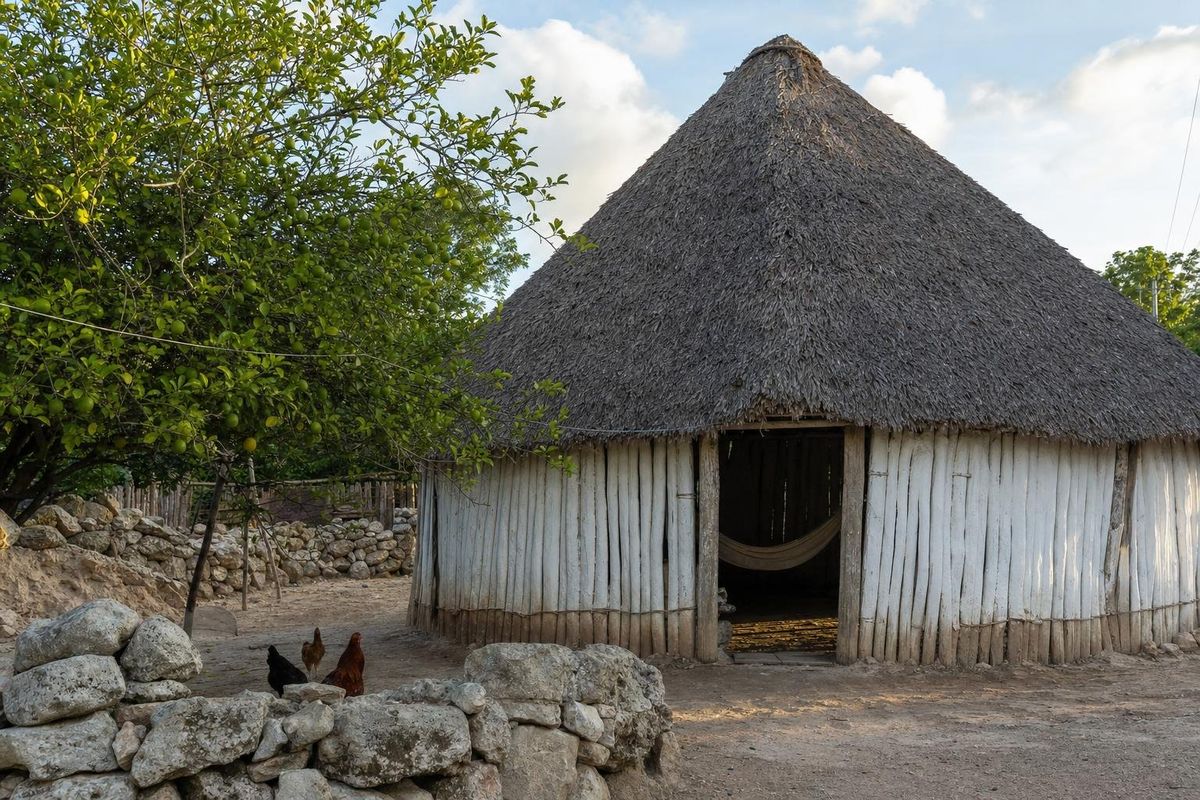
AI-generated image Towns & Villages · Quintana Roo
Maya villages
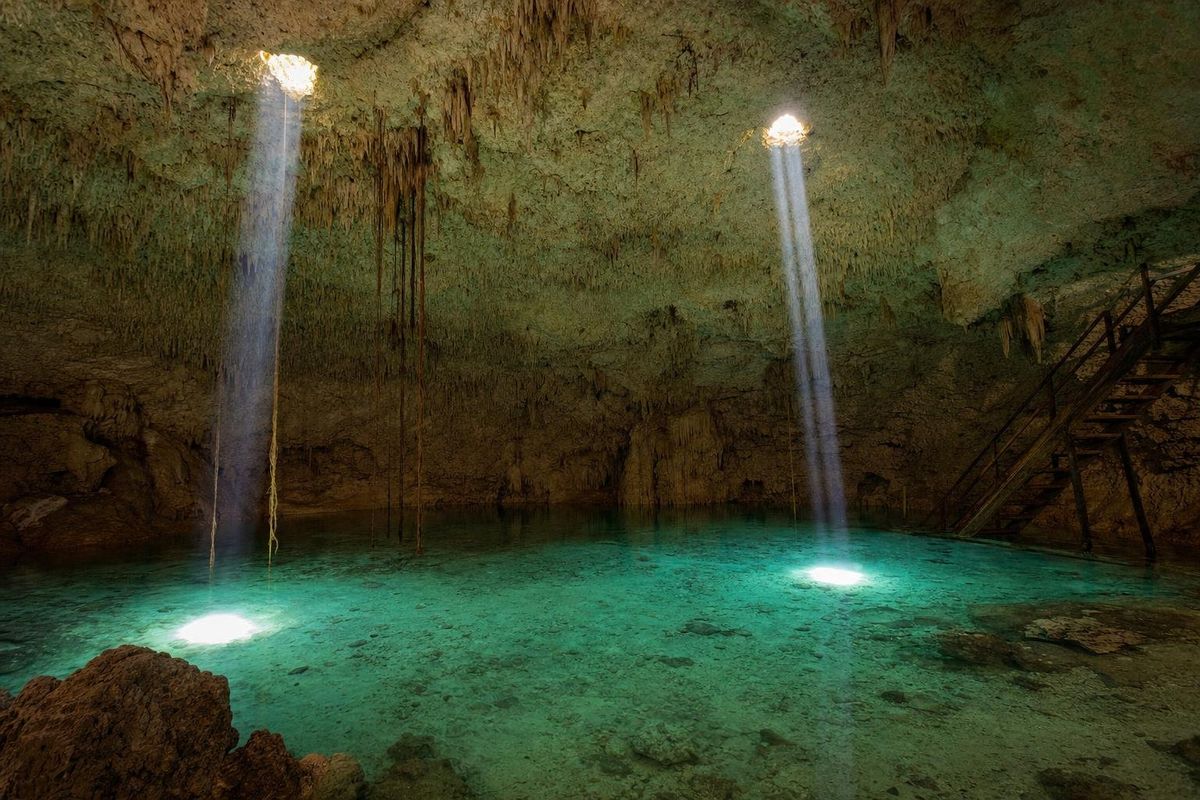
AI-generated image Cenotes · Quintana Roo
Choo Ha
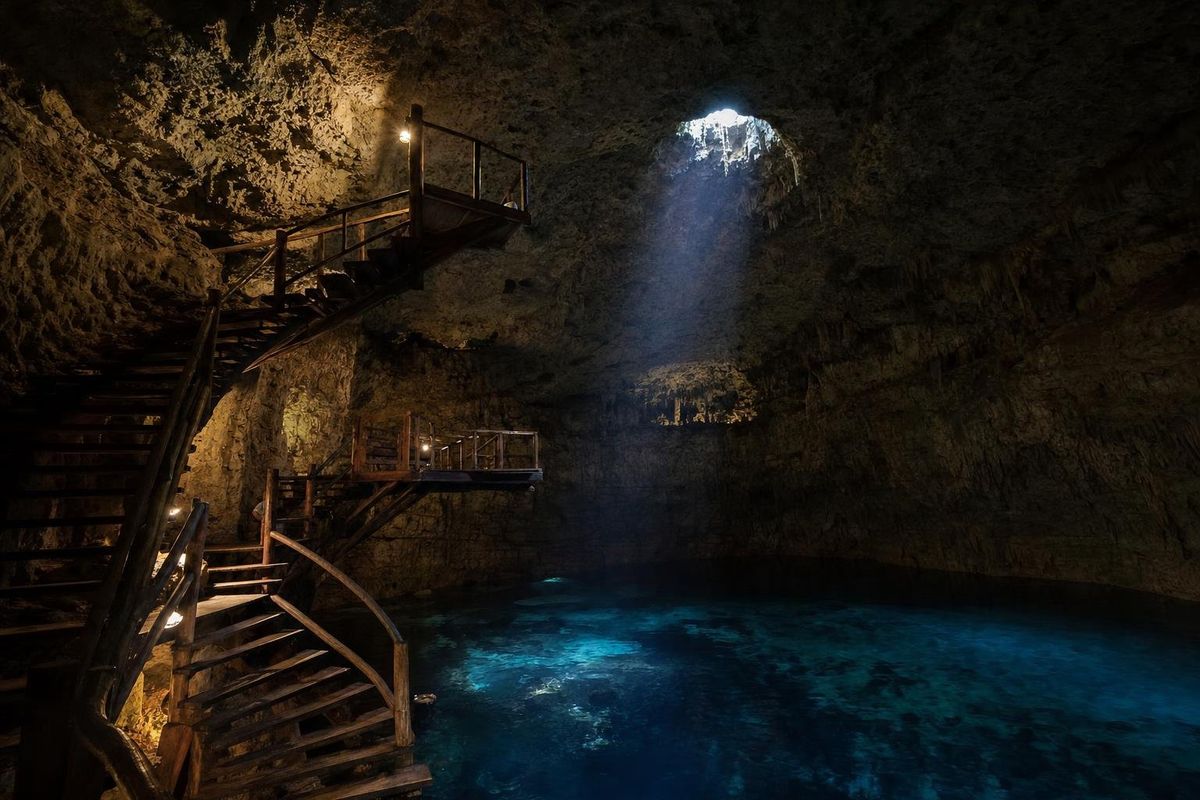
AI-generated image Cenotes · Quintana Roo
Tankach-Ha
AI-generated image Cenotes · Quintana Roo
Cenote Azul