
−5 m · Shallows · Jungles · Yucatán
Loltún Caves in Yucatán: Grutas de Loltún, Handprints and Cave Art
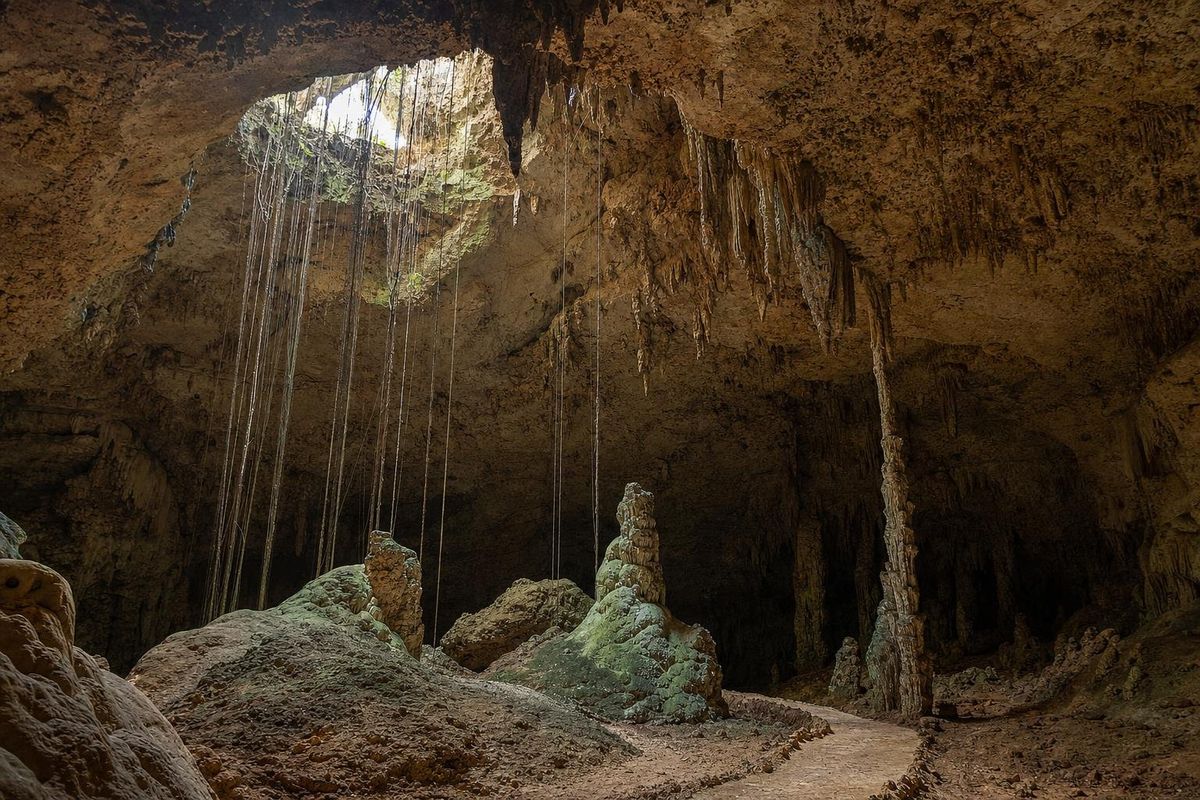
The Loltún caves, a few kilometers south of Oxkutzcab in southern Yucatán, form the largest known cave system on the peninsula. Visits are guided only and cover a route of one to two kilometers through dry galleries where people have left traces over thousands of years: a carved relief at the entrance, painted handprints, stone water troughs, and walls built during a nineteenth-century war.
A cave in the Puuc forest
Loltún lies at the foot of the Puuc hills, the only real high ground in the state of Yucatán. The name joins two Yucatec Maya words, lol (flower) and tun (stone), and is usually translated as "flower stone," possibly after flower motifs found carved in the cave. The Spanish name, Grutas de Loltún, uses the plural because the system is a chain of connected caves with several entrances, though it is commonly treated as one.
Unlike the water-filled cenotes of the north, Loltún is a dry cave: the groundwater that dissolved its passages has long since dropped below the floor. In places, the rock underfoot still shows the rippled surface left by old underground streams. Daylight enters through several collapsed openings in the ceiling, where tree roots hang down into the chambers from the forest above.
Inside the Loltún caves
The Loltún warrior
Beside the Nahcab entrance, a relief of a standing figure is carved into the rock face. Known as the Warrior of Loltún, the figure wears an elaborate costume and holds an object that may be a weapon or a staff of office. Its style is usually dated to the Late Preclassic, and scholars have compared it with carvings at Izapa on the Pacific coast of Chiapas and with older Olmec work. It is among the earliest monumental carvings in northern Yucatán. The relief is worn, and morning light makes it easier to see.
Handprints and Maya cave paintings
Several walls carry paintings: negative handprints, made by blowing pigment around a hand held against the rock, along with faces, animals and geometric designs. Dark pigments, probably based on charcoal, dominate. Some of the paintings sit high on walls that cannot be reached from today's floor. Their meaning is uncertain; caves were entrances to Xibalbá, the Maya underworld, and handprints may mark ritual acts performed at the threshold. Several of the painted areas are not on the standard tour.
Water and stone
Water dripping from stalactites was collected in troughs carved into the rock, known locally as haltunes, and in a dry region these were valuable. Some chambers also hold grinding stones, and others contain stalactite and stalagmite columns that ring with different tones when struck. Visitors are asked not to touch them. Chambers carry names given by guides, such as the Cathedral, inspired by their shapes.
A record going back to the Ice Age
Excavations in parts of the cave have recovered bones of animals that disappeared from Yucatán at the end of the last Ice Age, among them horse and mammoth remains, alongside stone tools. Whether people and these animals shared the cave at the same time is debated, but later layers show use by the Maya from the Preclassic onward. During the Caste War of the mid-nineteenth century, Maya families sheltered in Loltún, and low stone barricades from that time still stand in some passages.
Why caves mattered to the Maya
For the Maya, caves were never just shelters. They were openings into the earth and, in religious terms, doorways to the underworld, the place where the dead traveled and where the rain gods were thought to keep water, wind and clouds. Offerings, incense burning and rituals took place deep inside caves across the Maya area, often in the darkest chambers, far from daylight. Water dripping from a cave ceiling, untouched by the ground, was considered especially pure and was sought for ceremonies.
Seen in that light, the troughs, the handprints and even the cut tips of some stalactites at Loltún point to more than everyday use. The cave was close to the Puuc cities, which had no cenotes, and it may have been both a water source and a sacred place for the region. Ceremonies to ask for rain are still held in parts of rural Yucatán, and caves and cenotes remain part of that tradition.
Getting to the caves
The caves are signposted off the road between Oxkutzcab and the Ruta Puuc, roughly ten minutes by car from town. Oxkutzcab is around an hour and a half from Mérida by road, with colectivo and bus connections; from town, taxis cover the last stretch. With a car, Loltún combines well with Labná and the other Puuc sites to the west, and the Puuc hills road trip suggests a route.
When to go
The temperature inside stays fairly constant all year, so the season matters less than for the coast. The rainy months from about June to October bring more humidity and mosquitoes around the entrance, while the cooler, drier months from November to March are more comfortable for combining the cave with ruins. Earlier tours tend to be calmer. Opening times and tour schedules change, and access to the cave has been interrupted at times for maintenance, so confirm the current situation in Oxkutzcab or with INAH before travelling.
What to bring and know
- Sturdy shoes with grip. The floor is uneven, damp in places and in some sections there are steps and short climbs.
- A light layer if heading in after a hot morning at the ruins, and water for afterwards.
- Patience with the lighting: paths are lit, but some formations are best seen with a small flashlight.
- Do not touch the paintings, formations or carvings. Oils from skin damage them, and some have already been lost to visitors.
Guides are assigned at the entrance; group tours follow a shorter route, while smaller groups may be taken further. Fees and guide tips change and should be checked on the spot. Near the exit, the route climbs into a chamber lit by a ceiling opening, and the first sound back in daylight is usually the birds of the Puuc forest.
The cave is one of several natural places in the region described in the jungles section, and the INAH website lists the sites it manages.
Loltún caves: common questions
Where are the Loltún caves?
In southern Yucatán, a few kilometers south of the town of Oxkutzcab, at the foot of the Puuc hills.
Can you visit Loltún without a guide?
No. Visits are only allowed with a guide, for safety and to protect the paintings and formations.
How long is the Loltún cave tour?
Usually between one and two hours, covering roughly one to two kilometers depending on the group size and the route.
Are there Maya cave paintings in Loltún?
Yes, including negative handprints and painted figures. Some are visible on the standard route, others lie in areas not usually included.
Can you swim in Loltún?
No. Loltún is a dry cave without a pool. For swimming, the cenotes of central and northern Yucatán are the place to go.
Nearby on the map
AI-generated image Towns & Villages · Yucatán
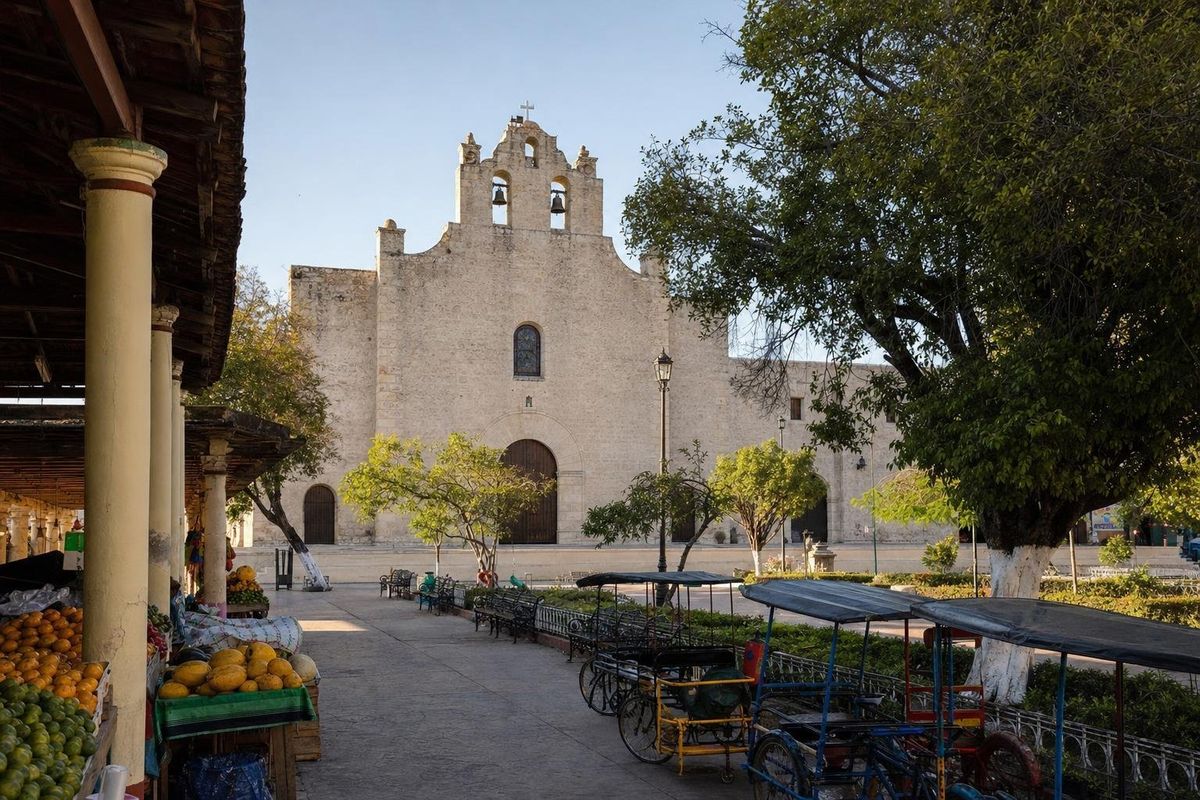
Oxkutzcab
AI-generated image Maya Ruins · Yucatán
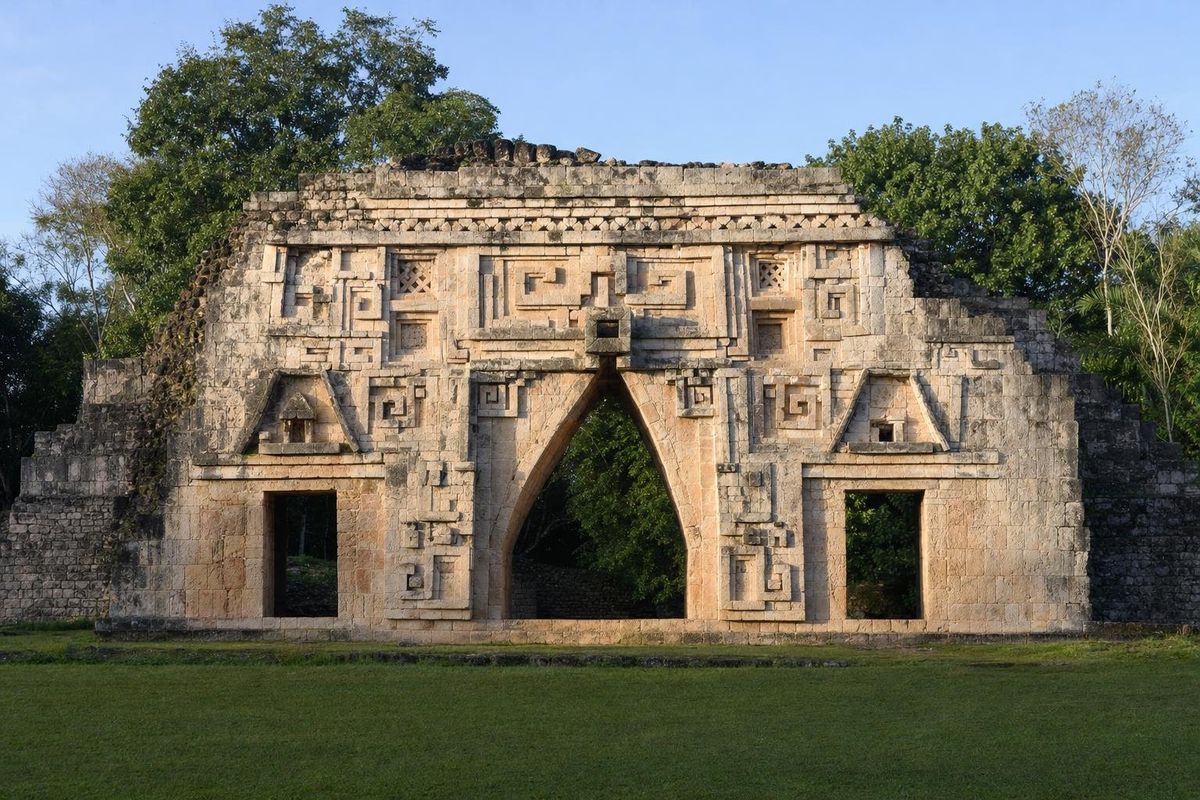
Labná
AI-generated image Trips · Yucatán
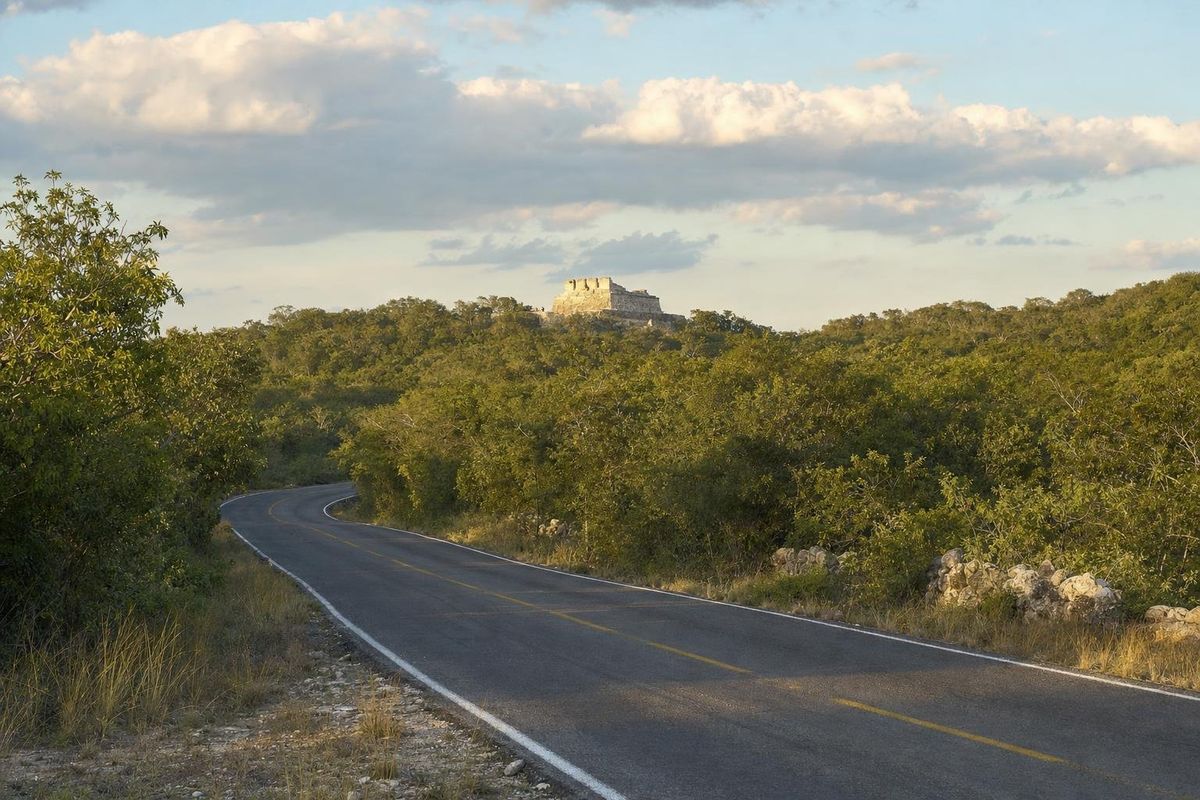
Puuc Hills
AI-generated image Maya Ruins · Yucatán
Sayil