
−45 m · Xibalba · Maya Mysteries · Quintana Roo
The Maya Sun God, K'inich Ajaw, and the Descending God of Tulum
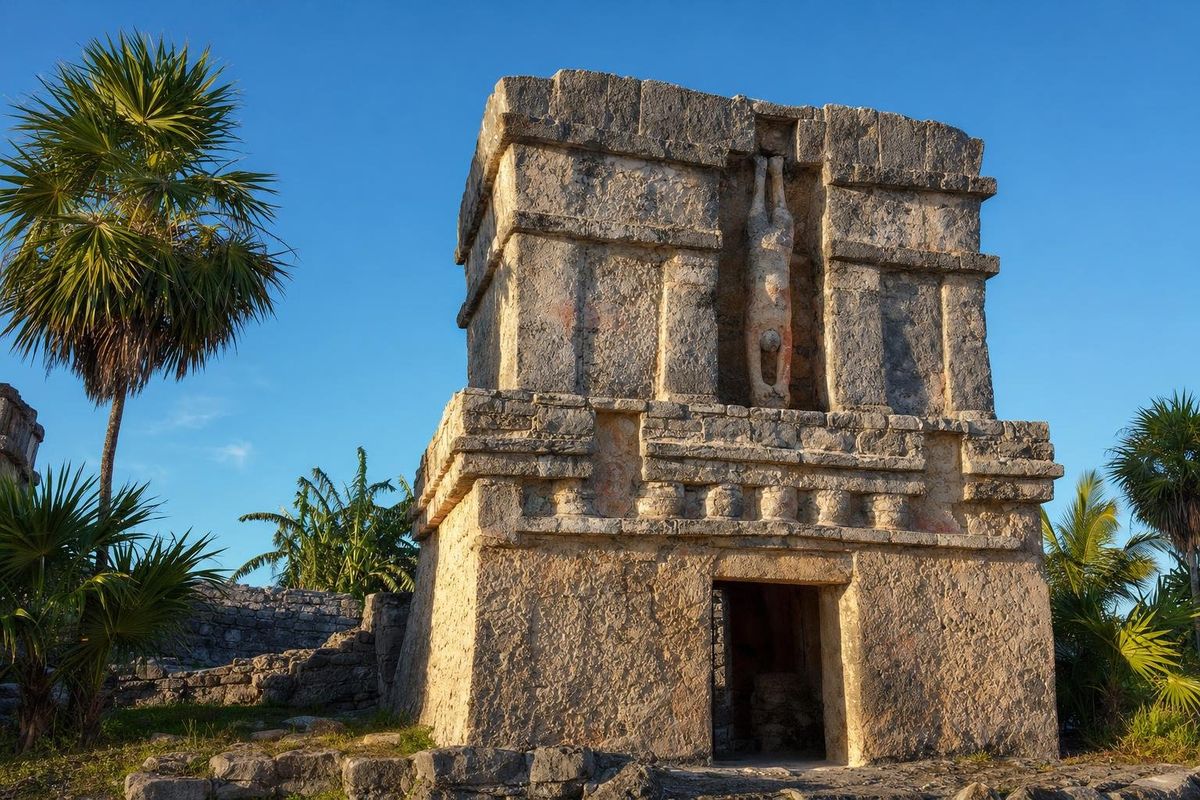
The Maya sun god was K'inich Ajaw, "sun-faced lord," shown with square eyes, a hooked nose and a four-petalled sun sign on his body. At Tulum on the Caribbean coast a different figure dominates: a small winged being diving head first above doorways, known as the Descending God. Some scholars link him to the setting sun, others to bees, Venus or maize, and no reading has settled the question.
K'inich Ajaw, the Maya sun god
In Classic Maya art, from roughly AD 250 to 900, the sun god is one of the easiest deities to recognise. Scholars once labelled him God G in the alphabetic list of codex gods; his name in the inscriptions reads K'inich Ajaw. He has large squarish eyes, often slightly crossed, a prominent Roman nose, and front teeth filed into a T shape. The k'in sign, a four-petalled flower, appears on his cheek or brow. K'in means sun, day and time.
Kings took his name as a title. The word k'inich, "sun-faced" or "radiant," forms part of many royal names, from K'inich Janaab Pakal of Palenque to rulers across the lowlands. A king who carried the title was claiming to be, in some sense, the sun of his kingdom.
Many researchers think the sun had a night form. The Jaguar God of the Underworld, with a twisted cord under his eyes and jaguar ears, is often read as the sun travelling through the underworld between sunset and dawn. Shields of Maya warriors frequently carry his face. This day-and-night pairing is an interpretation, though a widely shared one.
Where to see the sun god's face
At Kohunlich in southern Quintana Roo, the Temple of the Masks has large stucco faces flanking its stairway, made around AD 500. Many scholars read them as rulers shown with the attributes of the sun god. At Izamal in Yucatán, the great platform of Kinich Kakmó carries a name that tradition translates as "sun-faced fire macaw." Smaller sun-god faces turn up on incense burners in regional museums.
The Descending God at Tulum
The Descending God belongs to a later world: the Late Postclassic towns of the east coast, roughly 1200 to the Spanish arrival. Tulum was one of the largest of these, a walled port on a cliff above the sea. The diving figure appears there in plaster in niches above the doorways. The best examples are on the Temple of the Descending God, a small building whose walls lean noticeably, and on the central niche of El Castillo, the main temple facing the sea. Another appears at Cobá, at the temple on top of the Nohoch Mul pyramid.
The figure has its legs in the air and its arms raised or held forward, as if plunging from the sky. Wings or a feathered tail are often visible. Some versions hold an object in their hands. Most are badly weathered, which makes detail hard to read and explains part of the disagreement.
The name itself is modern. Spanish-speaking guides call him el Dios Descendente, and the English Descending God or Diving God simply describes the pose. Nearby, the Temple of the Frescoes keeps traces of painted murals inside, in a style that shows contact with central Mexico, with gods, offerings and serpent cords framing the scenes. They are a reminder that the diving figure was once one painted element in a colourful town, not a lone grey carving.
Interpretations of the diving figure
Four main readings exist, and each has supporters.
- The setting sun. The figure descends as the sun does each evening. One version of this reading makes him the sun at the moment of entering the underworld.
- The bee god. Many writers identify him with Ah Muzen Cab, a bee deity of the Yucatec Maya. Stingless bees were kept in log hives on the peninsula, honey and wax were valuable trade goods along this coast, and the figure's posture resembles a bee dropping to a flower.
- Venus. Others connect him with Venus as the evening star, a body that seems to fall toward the horizon after sunset.
- The maize god. A further reading sees the maize god descending into the earth to be reborn, a central idea in Maya mythology.
These ideas overlap. Sun, Venus and maize all follow cycles of descent and return, and Maya religion often merged such cycles. The Madrid Codex, one of the surviving Maya books, has a long section on beekeeping and bee deities, which keeps the bee reading in play. Without inscriptions naming the Tulum figure, any single identification remains a theory.
A short comparison
| Figure | Period | Key features | Where |
|---|---|---|---|
| K'inich Ajaw | Classic and later | Square eyes, hooked nose, k'in sign, filed teeth | Stelae, masks, codices |
| Jaguar God of the Underworld | Classic | Jaguar ears, cord twisted under the eyes | Warrior shields, incense burners |
| Descending God | Late Postclassic | Upside-down, wings or tail, raised arms | Tulum, Cobá |
Visiting Tulum and the east coast
Tulum lies on the Caribbean coast south of Playa del Carmen. The site is compact and very busy by late morning; arriving at opening time means softer light and the fewest people. Visitors cannot enter the temples, so a zoom lens or binoculars help with the figures above the doors. Rules and hours change, so check locally or with INAH.
The same coastal culture left smaller sites with a similar style: Xaman-Há in Playa del Carmen, El Meco near Cancún and Muyil south of Tulum. Cobá is about 45 minutes inland by road. Other recurring figures, from serpents to ballplayers, are explained under Maya Mysteries.
At the Temple of the Descending God, stand back a few steps before looking for the figure. The walls are visibly out of true, and the tilt of the whole building is easier to judge from a distance than from the rope line.
Questions about the Maya sun god and the Descending God
What was the name of the Maya sun god?
K'inich Ajaw, meaning roughly "sun-faced lord." In older literature he is called God G. The title k'inich also appears in the names of many Maya kings.
Who is the Descending God at Tulum?
An upside-down winged figure in niches above doorways. He has been identified as the setting sun, the bee god Ah Muzen Cab, Venus and the maize god. No inscription names him.
Where is the Temple of the Descending God?
Inside the archaeological site of Tulum, Quintana Roo, a short walk from El Castillo. It is a small building with a niche figure above its door and noticeably sloping walls.
How was the Maya sun shown?
As the k'in sign, a four-petalled flower, and as the face of K'inich Ajaw with square eyes and filed teeth. Rulers also wore sun-god attributes in portraits.
Can the Descending God be seen anywhere besides Tulum?
Yes. Cobá has a similar figure at the temple on top of the Nohoch Mul pyramid, and diving figures appear at several smaller Postclassic sites on the east coast.
Nearby on the map
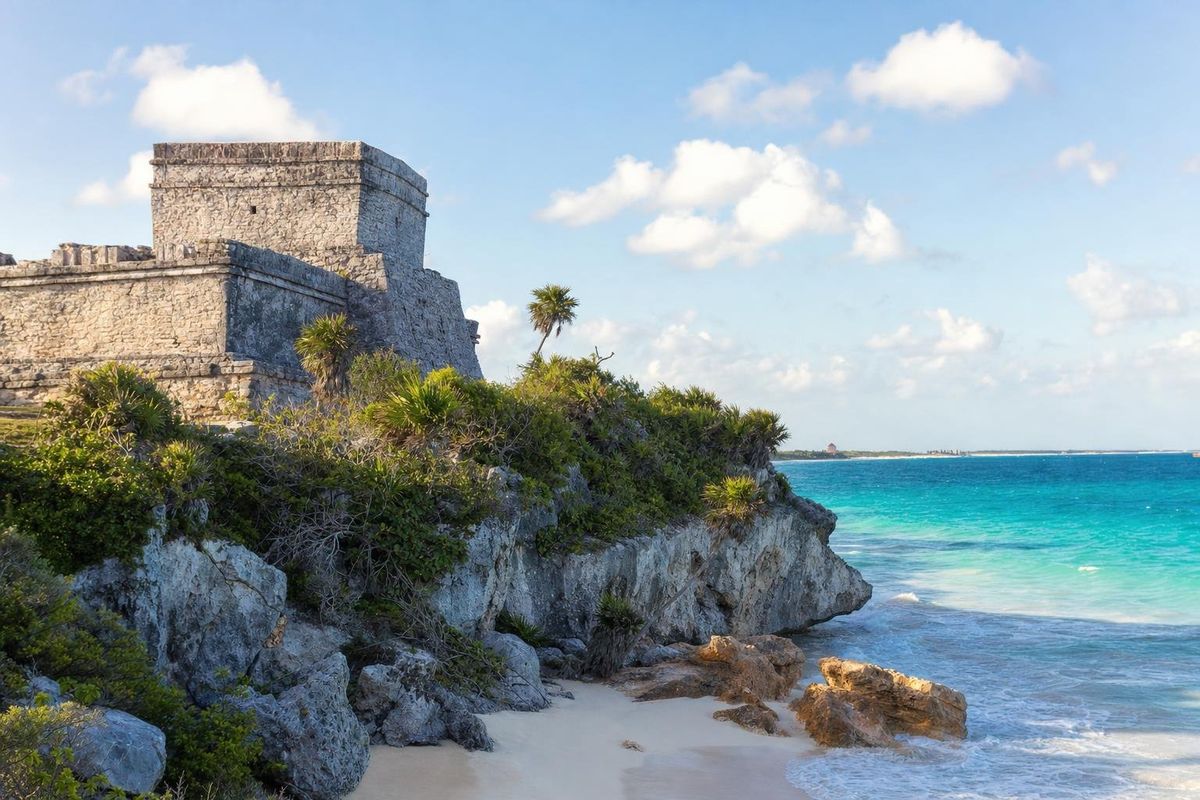
AI-generated image Maya Ruins · Quintana Roo
Tulum Ruins
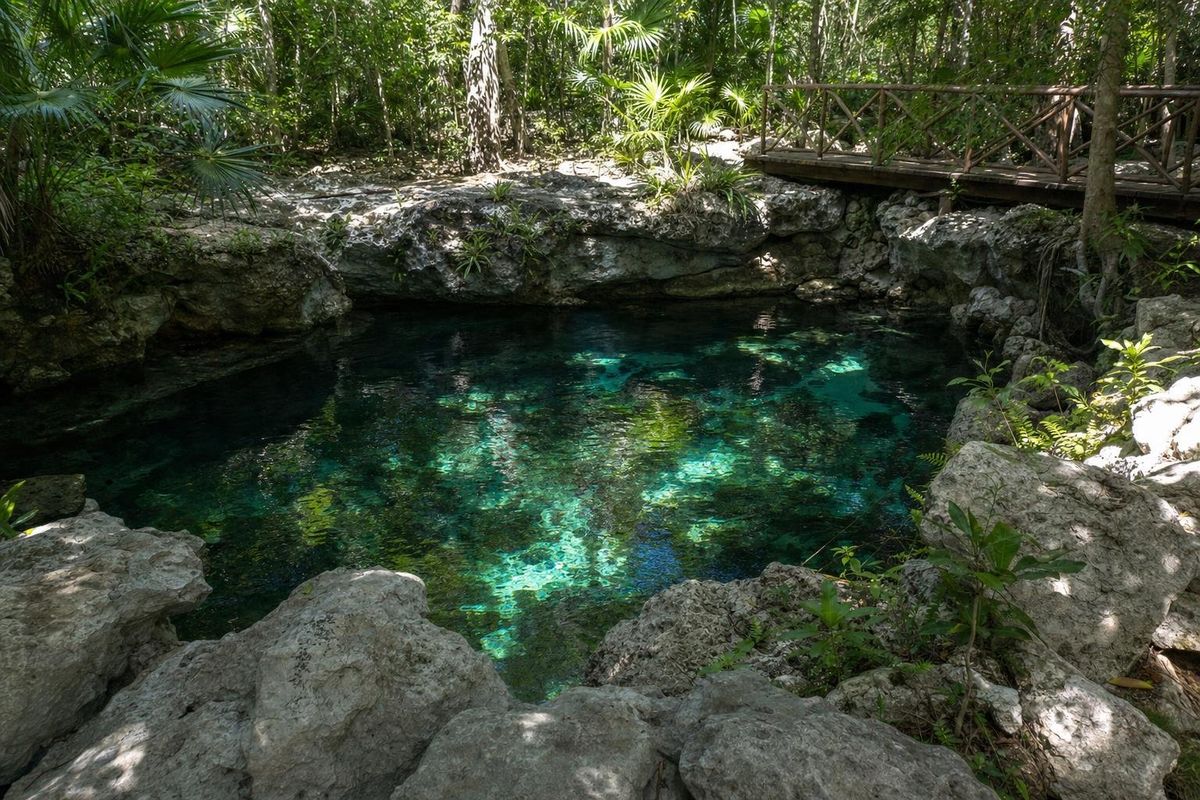
AI-generated image Cenotes · Quintana Roo
Caleta Tankah
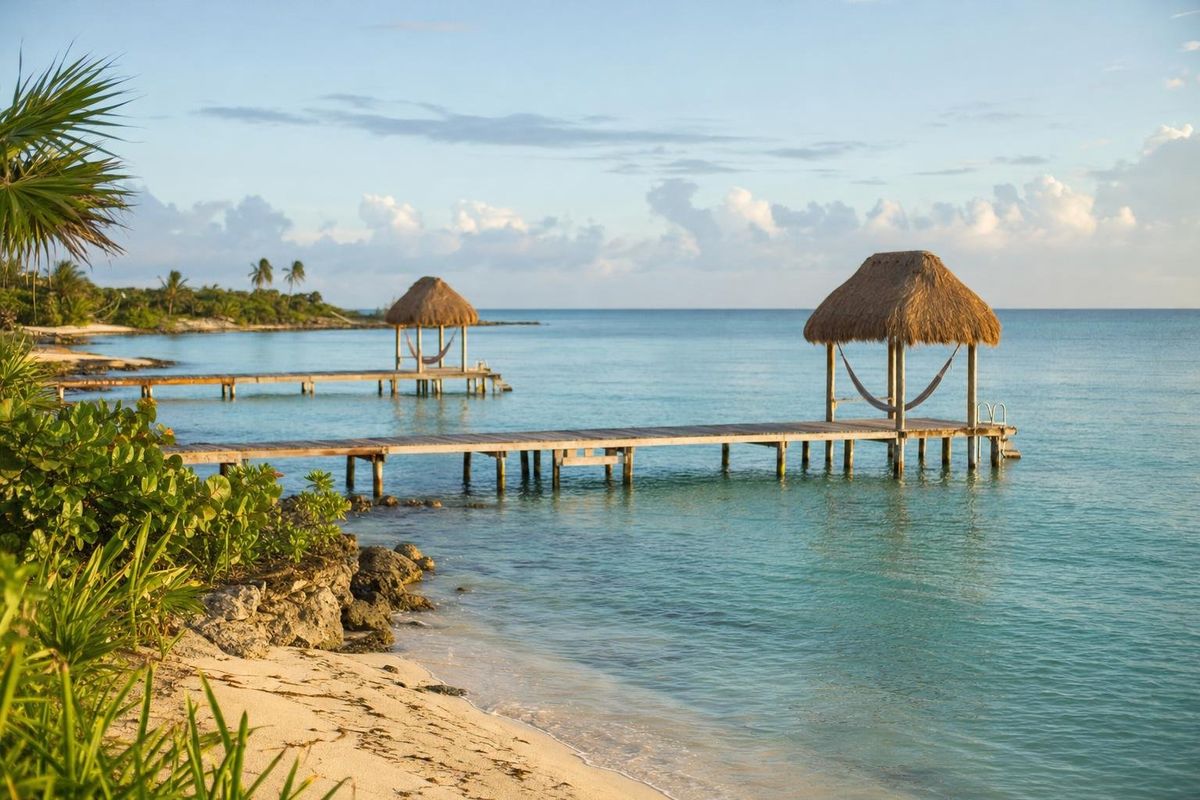
AI-generated image Beaches · Quintana Roo
Tankah Bay
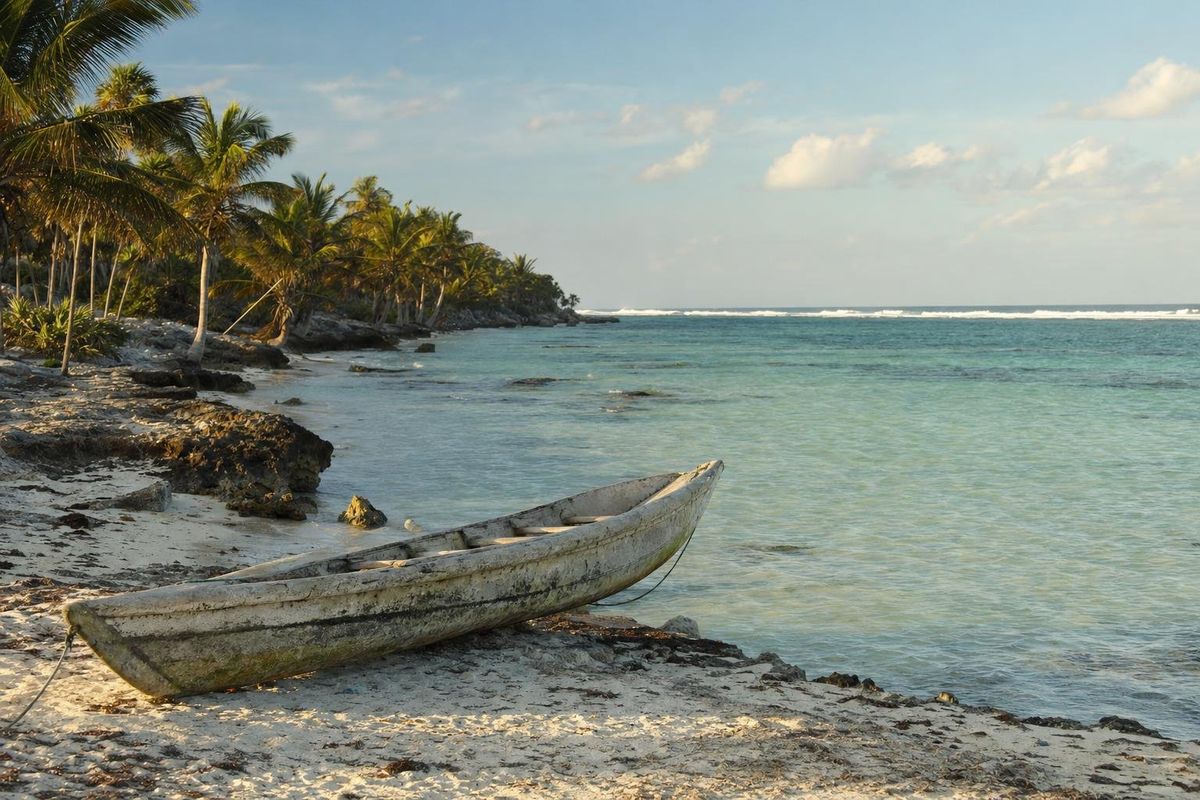
AI-generated image Beaches · Quintana Roo
Soliman Bay