
−5 m · Shallows · Beaches · Quintana Roo
Punta Esmeralda in Playa del Carmen: Local Beach, Seaside Cenote
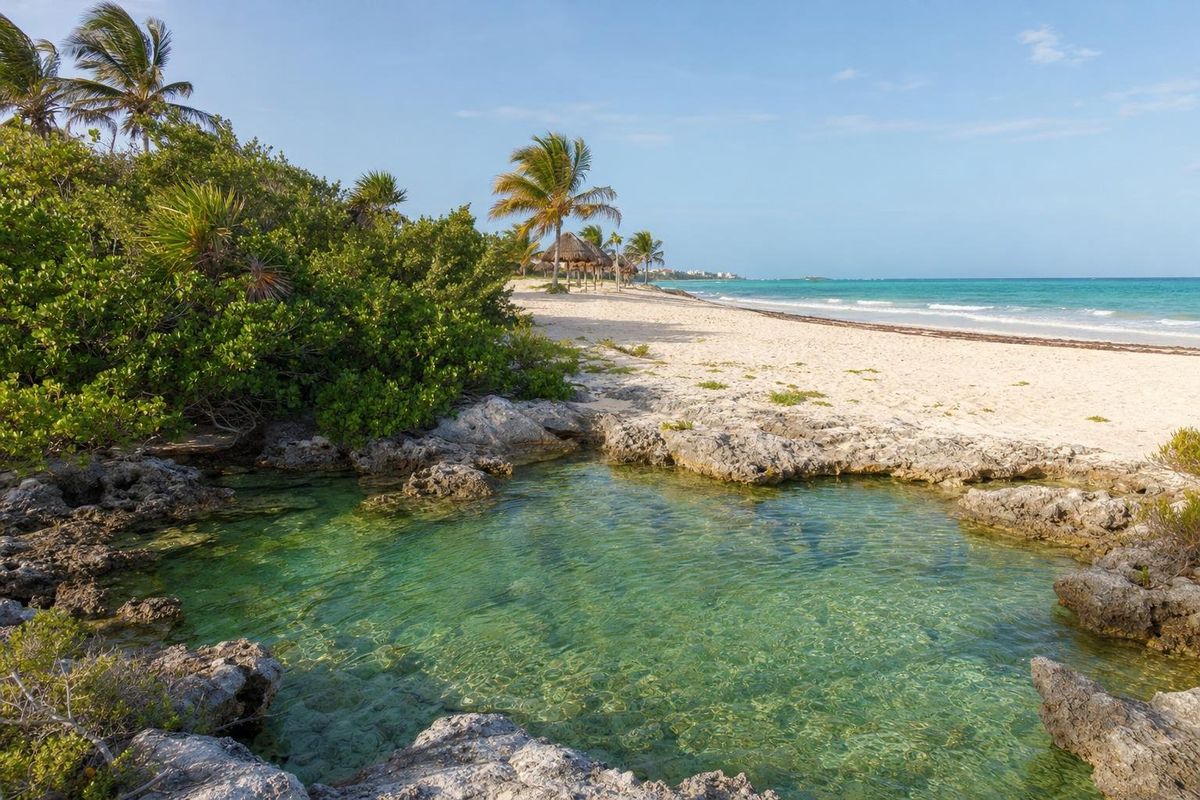
Punta Esmeralda is a free public beach at the northern end of Playa del Carmen, used mostly by local families rather than tourists. Its unusual feature is a small cenote right behind the sand, where cool fresh water rises from the ground into a shallow pool before running into the sea.
The beach Playa del Carmen keeps for itself
The central beaches of Playa del Carmen, around Quinta Avenida and the ferry pier, are busy, lined with beach clubs and very much part of the tourist circuit. Walk or drive north beyond the last big hotels, and the atmosphere changes. Punta Esmeralda is where people who live in Playa go on a Sunday: families with coolers, grandparents under the palms, children splashing in the shallow pool.
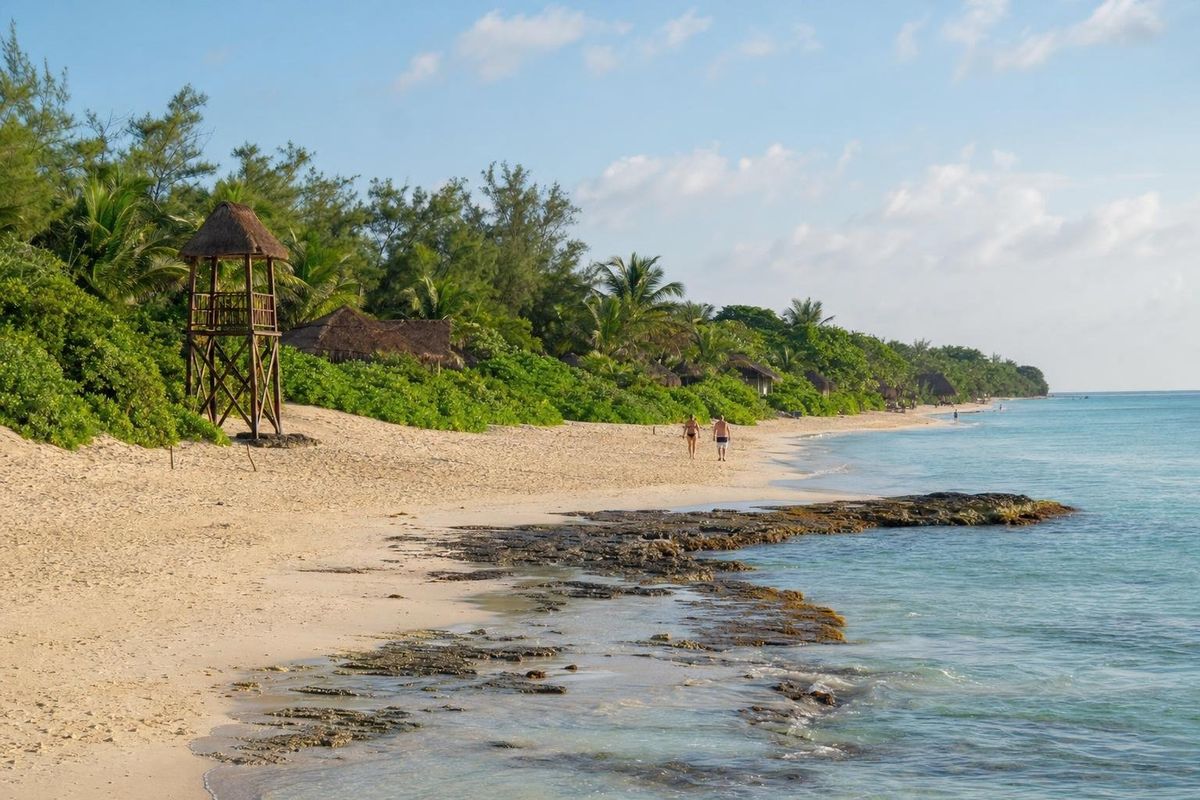
There is no resort here and no entrance fee. The sand is backed by a strip of trees and mangrove shrubs, and the sea is generally calm, with the reef offshore taking much of the swell.
Esmeralda means emerald, and on a bright day the shallows here do take on a green tint where the fresh water spreads into the sea.
The cenote at Punta Esmeralda
The Yucatán peninsula has no surface rivers to speak of. Rain soaks into the porous limestone and flows underground toward the coast, where in places it escapes into the sea. At Punta Esmeralda one of these outlets has opened a small cenote, a pool of clear, cold fresh water among rocks and roots, only a few steps from the beach.
The pool is shallow, which is why it is so popular with young children. Water from the cenote runs out through a short channel into the sea, and along that channel the water is noticeably cooler and clearer. You can sit where the fresh and salt water meet and feel the temperature change.
The cenote is small, so do not expect the deep blue caverns found inland. Rinse off sunscreen and insect repellent before you go in, as these spoil the water for everyone and harm the animals that live in it. Small fish and crabs live among the rocks. The guide to the cenotes of Yucatán explains how these sinkholes form.
Swimming and things to do
- Paddle in the cenote: best for small children and anyone who wants a cool dip.
- Swim in the sea: the water is calm on most days, with a sandy bottom close to shore.
- Walk the shoreline: heading north, the beach continues toward the quieter coves of Xcalacoco.
- Watch birds: pelicans and frigatebirds work the water offshore, and herons visit the cenote's edges early in the day.
The same underground water that feeds the cenote also seeps out through the seabed in a few places just offshore. Swimmers sometimes notice sudden cool patches in otherwise warm water; that is fresh water rising from below, lighter than the salt water around it.
There is little coral close to shore, so snorkelling is limited. Boat trips to the reef leave from central Playa del Carmen.
A neighborhood beach in a fast-growing town
Playa del Carmen was a small fishing village and ferry landing for Cozumel until the 1980s. Since then it has grown into one of the fastest-growing towns in Mexico, spreading inland from the beach and northward along the coast. Punta Esmeralda sits on that northern edge, where newer residential blocks meet what is left of the coastal scrub. It is one of the few beaches in town where the land behind the sand is not occupied by a hotel or beach club.
That gives the place a different rhythm from the center. Groups of friends play football on the sand, vendors sell sliced mango with chili and lime, and families set up for the whole afternoon with music and folding chairs. It is a good place to see how Playa del Carmen spends its free time, and you will hear far more Spanish than English.
Getting there
Punta Esmeralda lies at the northern edge of Playa del Carmen, roughly at the seaward end of Calle 88. From the center, it is a long but easy walk north along the beach, or a short taxi ride. If driving, head north along the streets parallel to Quinta Avenida until you reach the area around Calle 88, then follow the road toward the sea. Parking is on the street and limited on weekends.
All beaches in Mexico are federal property. At Punta Esmeralda the access is direct and public.
When to go
Weekday mornings are the quietest time. On weekends and public holidays, especially Sundays, the beach fills with local families by midday, which is part of its charm if you like a lively atmosphere.
December to April brings dry, comfortable weather. Summer is hot and humid, a good time for the cool cenote. Sargassum can arrive on this coast between about April and October in heavy years, and the beach is not always cleared as quickly as the hotel strips. Hurricane season runs from June to November.
Practical notes
- Facilities are minimal. There may be a few palapa shades and vendors, but bring water, snacks and something to sit on.
- Keep an eye on children around the cenote rocks, which can be slippery.
- Do not leave belongings unattended.
- Take your trash with you; the beach depends on visitors to stay clean.
Punta Esmeralda is a short hop from the rest of Playa del Carmen. Nearby are the beaches and small ruins of Xcalacoco to the north, the coast at Grand Coral, and the remains of the Maya town of Xaman Ha in the south of the city. For more, see the beaches section.
In the late afternoon, when the crowds leave, the cenote pool goes perfectly still and reflects the palms.
Punta Esmeralda FAQ
Where is Punta Esmeralda?
At the northern end of Playa del Carmen, near the seaward end of Calle 88, beyond the main hotel and tourist area.
Is there a cenote at Punta Esmeralda?
Yes, a small, shallow cenote right next to the beach, where fresh water rises and flows into the sea.
Is Punta Esmeralda free?
Yes. It is a public beach with no entrance fee.
Is Punta Esmeralda good for children?
Very. The cenote pool is shallow, and the sea is usually calm near the shore.
When is Punta Esmeralda busiest?
Weekends and public holidays, especially Sunday afternoons, when local families come for the day.
Nearby on the map
AI-generated image Museums · Quintana Roo
Frida Kahlo Museum
AI-generated image Beaches · Quintana Roo
Grand Coral
AI-generated image Maya Ruins · Quintana Roo
Xaman Há
AI-generated image Beaches · Quintana Roo
Xcalacoco