
−5 m · Shallows · Cenotes · Yucatán
Kikil Cenote near Tizimín: a Deep Village Swim and a Ruined Church
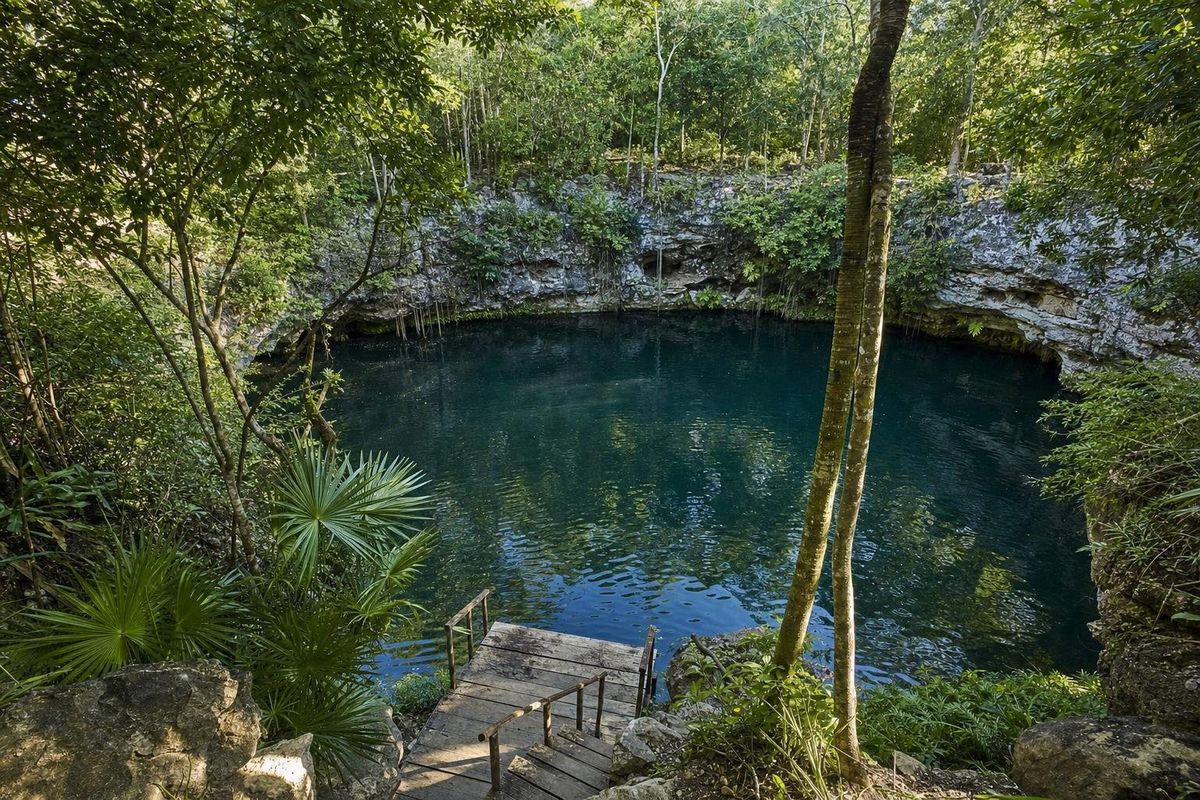
Kikil is a small village just outside Tizimín in eastern Yucatán, and its open cenote is one of the most pleasant swims in the region's cattle country. The pool sits in a shaded park, the water is very deep, and the cenote also goes by the name Nohoch Dzonot, Yucatec Maya for "big cenote". A roofless colonial church a short walk away makes the stop worth more than a swim.
Kikil and its cenote
Most travelers in eastern Yucatán pass straight through on the way to the flamingos at Río Lagartos or the beaches of El Cuyo. Kikil rewards a short detour. The village is a quiet place of low houses, stone-walled yards and grazing cattle, and the cenote lies within it, set in a garden of tall trees, palms and paths. Facilities have usually included a restaurant, changing rooms and shaded places to sit or hang a hammock, though what is open on a given day changes and is worth checking locally.
The cenote itself is an open, round sinkhole. Long ago the roof of an underground cavern fell in, leaving a wide circle of water ringed by limestone walls, with ferns, roots and vines growing down the rock. Because the opening is large and the rim is shaded by trees, the light changes across the day: green and bright around noon, dark and still in the late afternoon.
The name Nohoch Dzonot is worth knowing. Signs, maps and local people use it as well as Kikil, and it is the name to try if directions for "the cenote at Kikil" draw a blank. Nohoch means big and dzonot (also written ts'onot) is the Maya word that gave Spanish the word cenote.
Swimming at Cenote Kikil
The water is deep from the edge, and wearing a life vest has been compulsory, which also means diving and free-diving are not part of the visit here. That makes it an easy, relaxed swim rather than a sporting one: float, look up at the trees around the rim, and let the water take the heat out of the day.
Like other inland cenotes, the water stays cool all year, usually around 24 to 25°C. It is fed by groundwater rather than the sea, so it is fresh and clear, with small fish along the walls. Snorkel gear shows the rock dropping away under the platform, though the attraction is less the view underwater than the setting above it.
The difference from the coast is the company. On the Riviera Maya, the best-known cenotes see coachloads of visitors before lunch. Here the people in the water on a weekday are more likely to be a few local families and a handful of travelers heading for the north coast, and the loudest sound is often the birds in the trees around the rim. Swallows and motmots dart in and out of the shaft, and small iguanas sun themselves on the rocks at the top of the steps.
- Use the steps and platform to enter; the rock edges are slippery.
- Keep the vest on in the water, as required.
- Shower before swimming and leave sunscreen and repellent off.
The ruined church of Kikil
Kikil's other landmark is a colonial church that has lost its roof. Its tall stone walls, empty window openings and arched front still stand at the edge of the village, with grass growing where the floor once was. The church belongs to the early wave of Franciscan building in eastern Yucatán, when friars set up missions in the Maya towns of the region during the sixteenth and seventeenth centuries, often reusing stone from older Maya structures.
Accounts of how it fell into ruin vary. Much of eastern Yucatán was shaken by the Caste War of the nineteenth century, when Maya rebels and government forces fought across the region and many villages were abandoned for years, and churches across the east of the state suffered in that period. Today the ruin is a quiet, photogenic stop, best in the low light of late afternoon. Treat it with care, since loose masonry is common in roofless buildings.
How to get to Kikil
Kikil lies a short drive from the center of Tizimín, the main town of eastern Yucatán. Tizimín itself is about 50 km north of Valladolid, a drive of roughly an hour on a good road, and has bus connections to Valladolid, Mérida and the coast. From the town, a taxi to the cenote is quick and inexpensive; agree on a pick-up time, as rural taxis do not wait.
With a car, Kikil fits easily into a day that links Valladolid, the ruins of Ek Balam and the north coast, or a loop through Tizimín and the nearby ruins of Kulubá. Kikil also makes a natural stop between Tizimín and the coast, where the lagoons of Río Lagartos and the long beach at El Cuyo are about an hour away. Roads in the area are paved but narrow, with speed bumps (topes) at the entrance to every village. Save directions offline before setting out, since mobile signal outside the towns can be patchy.
When to visit
Kikil sees few foreign visitors at any time of year, and weekdays are usually quiet. Local families come at weekends and during school holidays, especially around Easter and in July and August. Midday brings the most light to the water; late afternoon suits the church better.
The dry season, roughly November to April, is the most comfortable time to travel in the region. The rainy season, about June to October, brings heat, humidity and afternoon storms, and overlaps with the Atlantic hurricane season. In January, Tizimín's large Feria de Reyes fills the area with visitors from across the state, which affects buses and accommodation more than the cenote.
Practical notes for the visit
Bring cash in pesos, a towel and water shoes. Entrance fees, life vest rules and opening hours are set locally and change, so check them on arrival. Most rural cenotes close in the late afternoon.
The region rewards a slower pace. Nearby, the semi-open cave of Hubiku near Temozón is another swim on the way back toward Valladolid, and the Valladolid trip notes cover the villages, churches and cenotes of the area. Other swimming holes across the peninsula are gathered on the cenotes page.
Kikil: common questions
Where is Kikil?
Kikil is a small village just outside Tizimín in the east of the state of Yucatán, about an hour's drive north of Valladolid.
Is Cenote Kikil the same as Nohoch Dzonot?
Yes. Nohoch Dzonot, meaning "big cenote" in Yucatec Maya, is another name for the open cenote at Kikil.
Is Cenote Kikil deep?
Very deep, from the edge of the platform. Life vests have been compulsory for swimmers, and diving is not allowed.
Can you see the ruined church at Kikil?
Yes, the roofless colonial church stands in the village and can be seen from outside. Keep clear of loose stonework.
How do you get to Kikil without a car?
Take a bus to Tizimín from Valladolid or Mérida, then a local taxi to the cenote. Arrange the return trip with the driver.
Nearby on the map
AI-generated image Towns & Villages · Yucatán
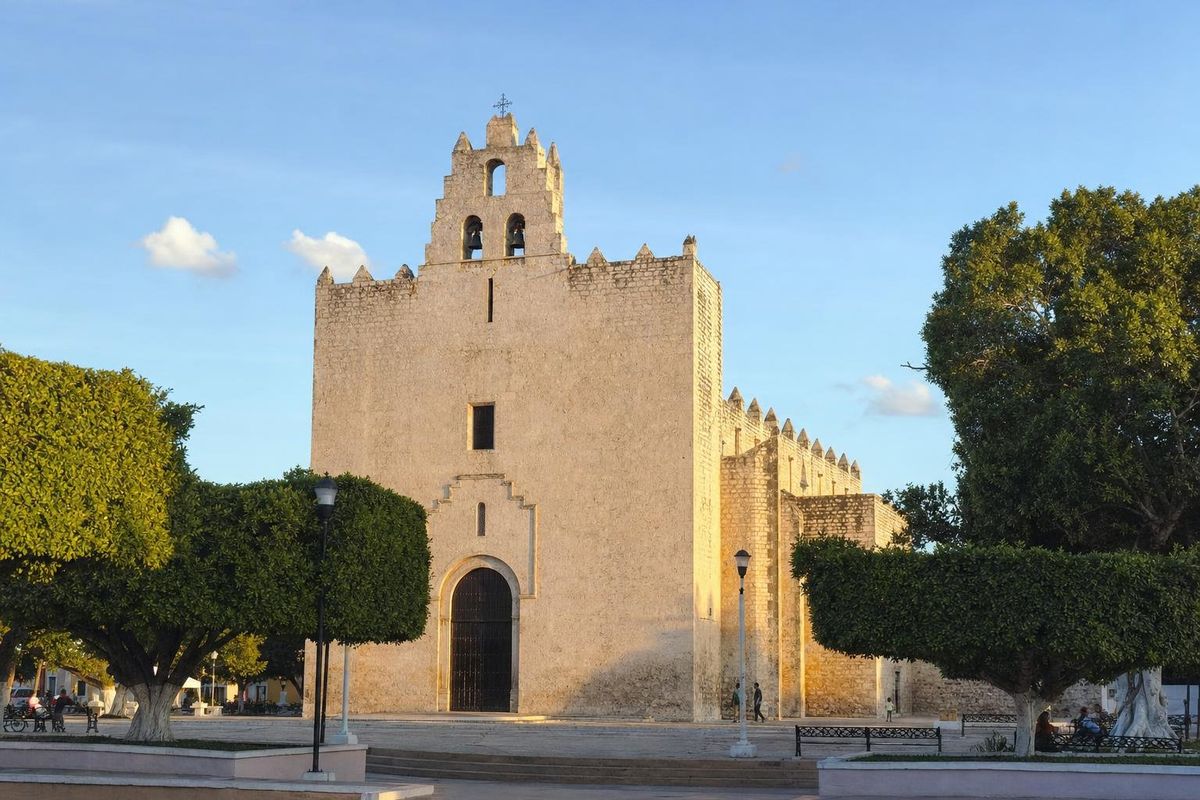
Tizimín
AI-generated image Maya Ruins · Yucatán
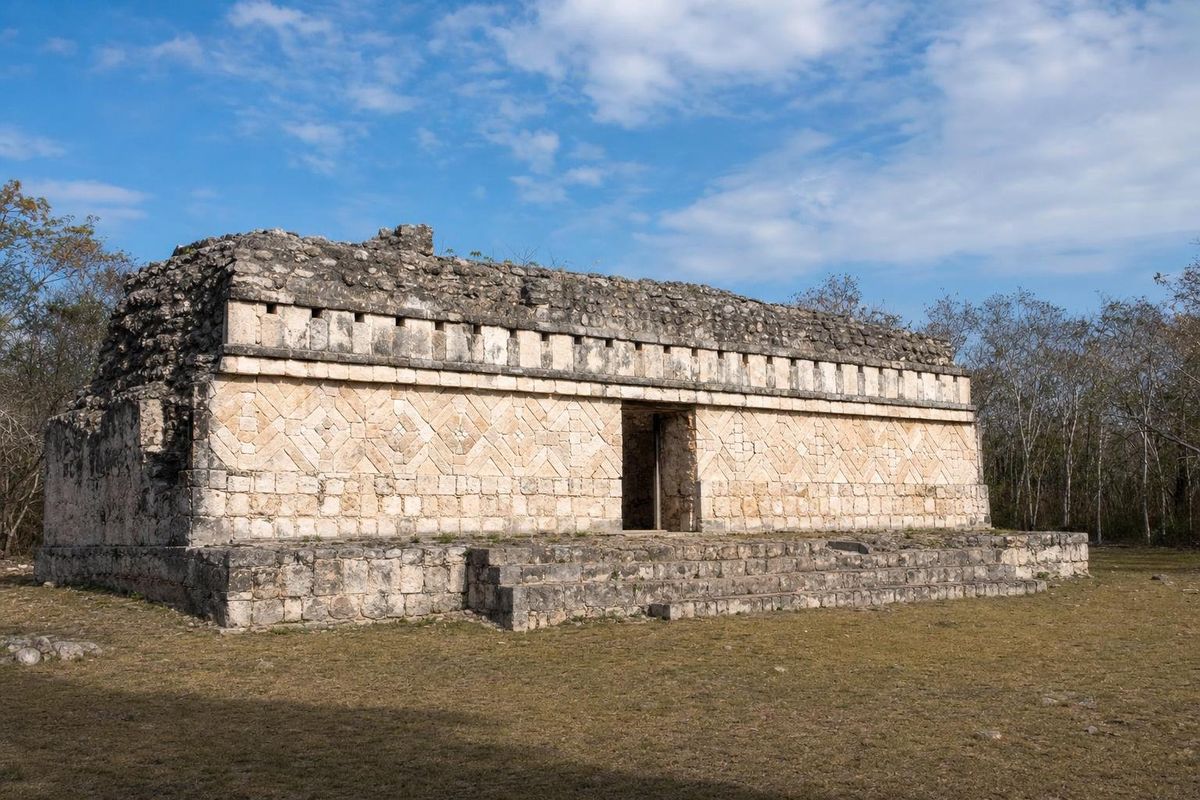
Kulubá
AI-generated image Maya Ruins · Yucatán
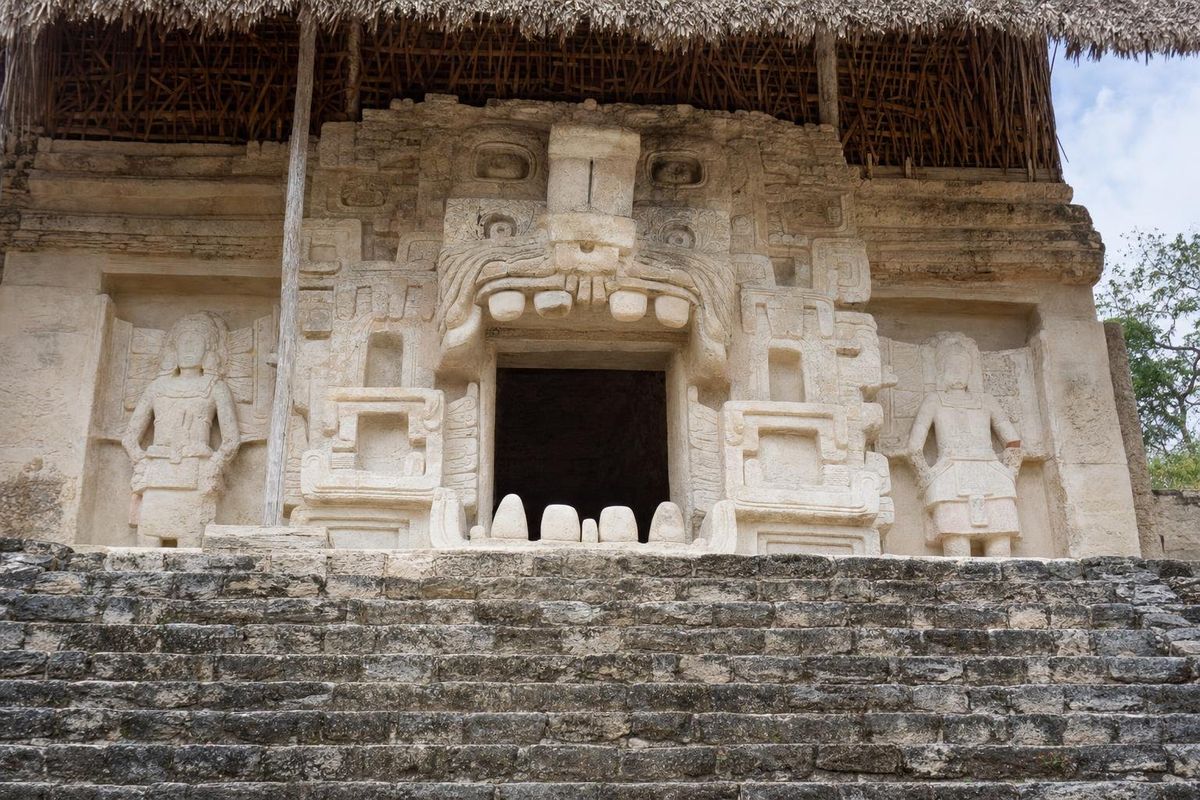
Ek Balam
AI-generated image Cenotes · Yucatán
Zazil Tunich