
−5 m · Shallows · Cenotes · Yucatán
Hubiku Cenote: a Cavern Swim on the Road from Valladolid to Tizimín
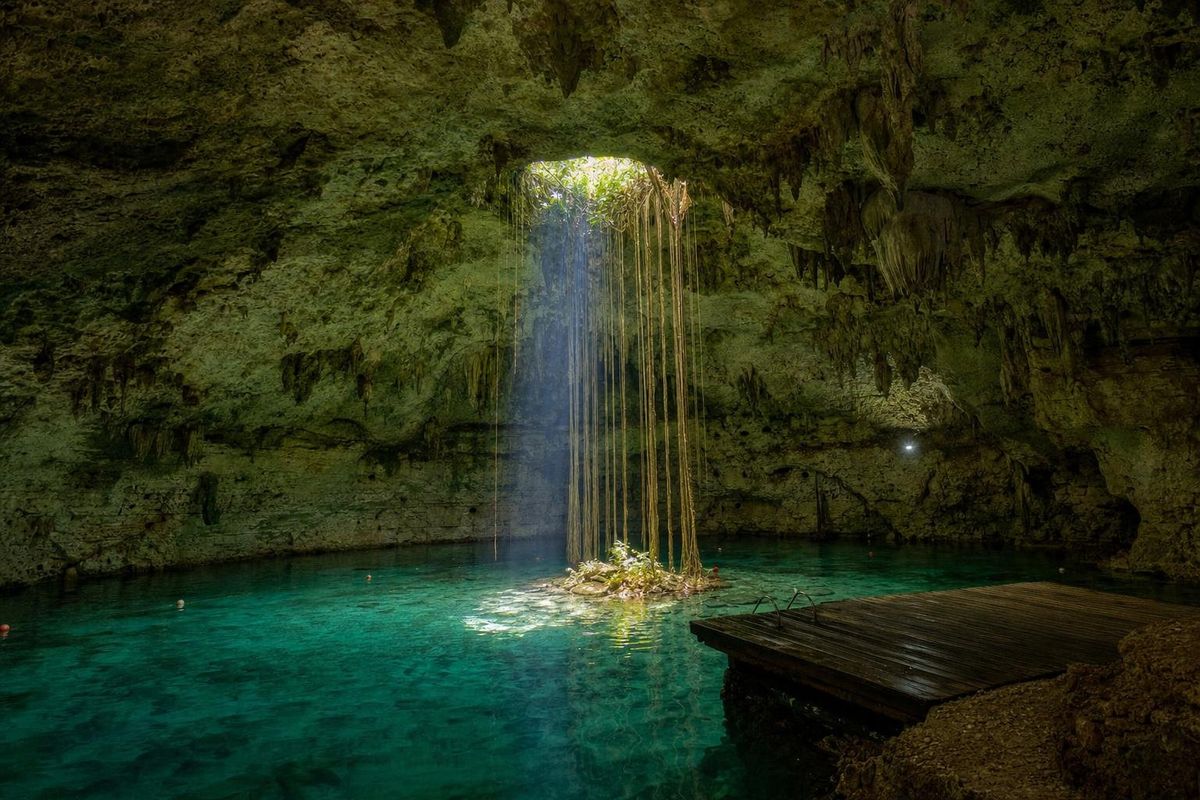
Hubiku cenote is a cavern pool in the municipality of Temozón, about 20 km north of Valladolid on the road to Tizimín. A single round opening in the cave roof lets a column of light fall onto the water, roots hang down through it, and the pool holds a large population of catfish. It is a straightforward, well-run swim that fits easily into a day around Valladolid and the ruins of Ek Balam.
What Hubiku looks like
From the surface there is not much to see: a park with gardens, a reception area and a stairway leading underground. The stairs pass through a tunnel and open into a large domed chamber, almost completely enclosed. In the middle of the roof is one circular hole, the only natural window, and the whole cave is arranged around it.
Around midday the sun passes straight through the opening and lights a disc of water a clear blue-green, while the edges of the cavern stay in shadow. Tree roots from the forest above drop through the gap and trail into the pool, and the ceiling carries stalactites that formed when the cave was still dry. Some visitors describe Hubiku as semi-open, others as a cavern; both are fair, since the sky is visible but only as a small circle.
The fish are the other thing people remember. Hubiku has a large population of catfish, dark and long-whiskered, which gather near the platforms and slide away from swimmers. They are harmless and keep their distance. Cenote catfish of this kind reached the pools through the underground water system and live off insects and organic matter falling from above.
The name is usually connected with iguanas, which are common around the site; regional press has written about iguana nesting areas there. The exact translation offered locally varies, so it is best read as a place name with an iguana story attached rather than a fixed meaning.
Swimming at Hubiku cenote
Wooden platforms and steps lead down into the water. The pool is deep, so life jackets are offered and are worth taking for children or anyone unsure in open water. Swimming out to the patch of light under the opening is the obvious move; looking straight up from there, with the roots hanging overhead and the cave walls curving away, is the moment most visitors come for.
The water is clear and cool, around the 24 to 25°C typical of cenotes in the region. Snorkel gear shows the drop-off under the platforms and the catfish below, though in a dark cavern there is less to see underwater than in an open, sunlit pool. A rope or line across part of the pool has usually been in place as a rest point.
Hubiku is run as a visitor park rather than a rustic village cenote, so facilities tend to be more complete than at small family-run sites: changing areas, showers, lockers and food service have been available, along with craft stalls. Hubiku cenote also has a small tequila exhibit on site that some tours add to the visit. Services change over time, so check what is open locally.
Getting there from Valladolid
Valladolid is the natural base. Leave town heading north on federal highway 295 toward Tizimín. After roughly 20 km, near the town of Temozón, signs point to the cenote, which lies a short distance off the road. With a car the drive takes about 20 to 25 minutes.
Without a car, the options are a taxi from Valladolid (agree on waiting time or a return pick-up), a colectivo or bus toward Tizimín with a stop at the turn-off and a walk from there, or a tour. Many day tours that combine Chichén Itzá, Valladolid and a cenote use Hubiku as their swimming stop, which affects timing more than anything else.
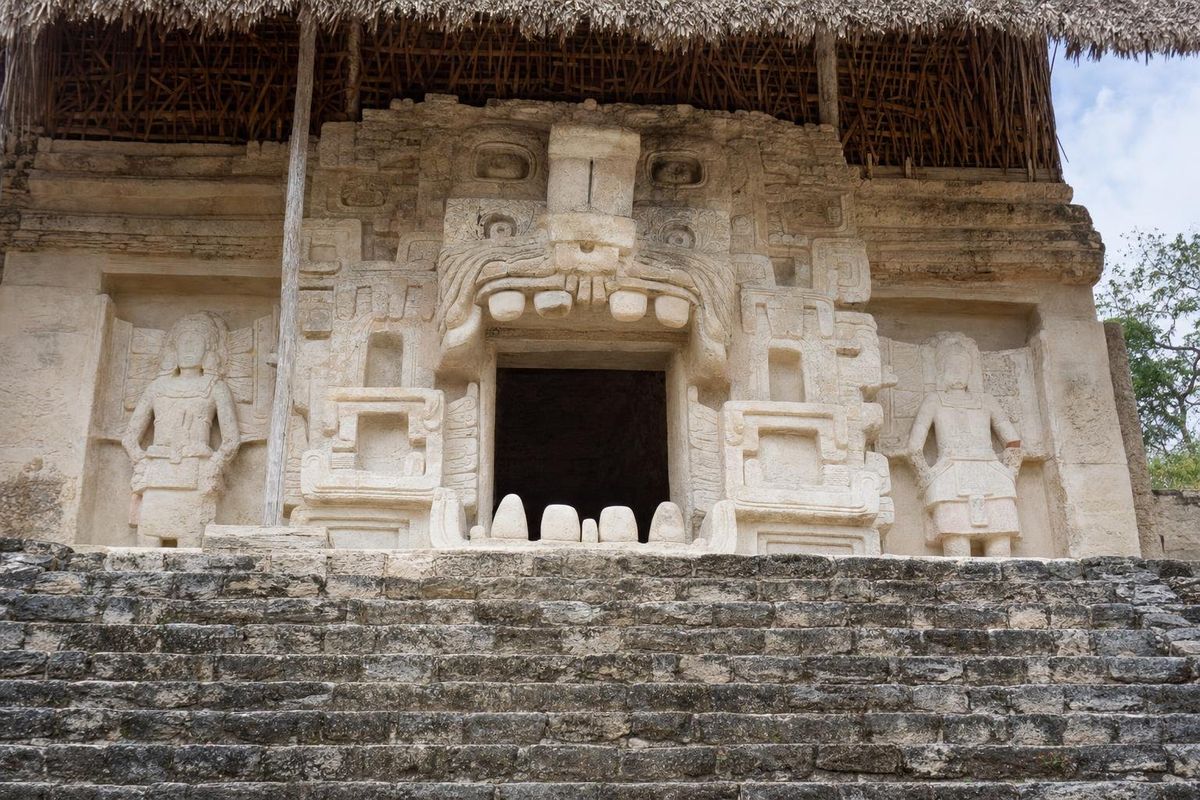
Ek Balam, the Maya city known for the stucco sculpture on its Acropolis, lies off the same corridor, a little west of Temozón. Hubiku, Ek Balam and an evening in Valladolid make a comfortable day; for further stops north, the cattle town of Tizimín sits at the end of the same highway.
When to visit
Light is everything in a cavern like this. The beam through the roof is strongest roughly between late morning and early afternoon, when the sun is high. Early or late in the day, the cave is dim and the water looks darker.
The catch is that midday is also when tour groups arrive, since many coaches reach Hubiku after a morning at Chichén Itzá. Arriving at opening time means fewer people and softer light; arriving just before the groups at around late morning gives the best balance. On weekends local families visit too.
Seasons matter less underground than on the coast. The dry months from about November to April are pleasant for the drive and for exploring Valladolid. The rainy season, roughly June to October, brings heat, humidity and afternoon storms but leaves the cenote itself unchanged.
Practical notes before going down
- Shower before entering and skip sunscreen, repellent and lotions altogether; staff at most cenotes ask for this, and the rule protects a closed water system.
- The stairs and platforms are often wet. Water shoes or sandals with grip help.
- Bring cash in pesos. Entrance fees and extras such as lockers or life jackets change and are best confirmed on arrival.
- Mobile signal can be weak; arrange a return taxi before leaving Valladolid.
Cenotes like Hubiku form when the roof of a flooded limestone cave thins and partly collapses. The Yucatán has thousands of them because the peninsula is a slab of porous limestone where rainwater drains underground instead of forming rivers. For the Maya, cenotes were both water supply and sacred places linked to the rain god Chaak and the underworld, Xibalbá. A partly collapsed cave like this one shows the process half-finished: a dome still intact, a single hole where it began to give way.
Combining Hubiku with other stops
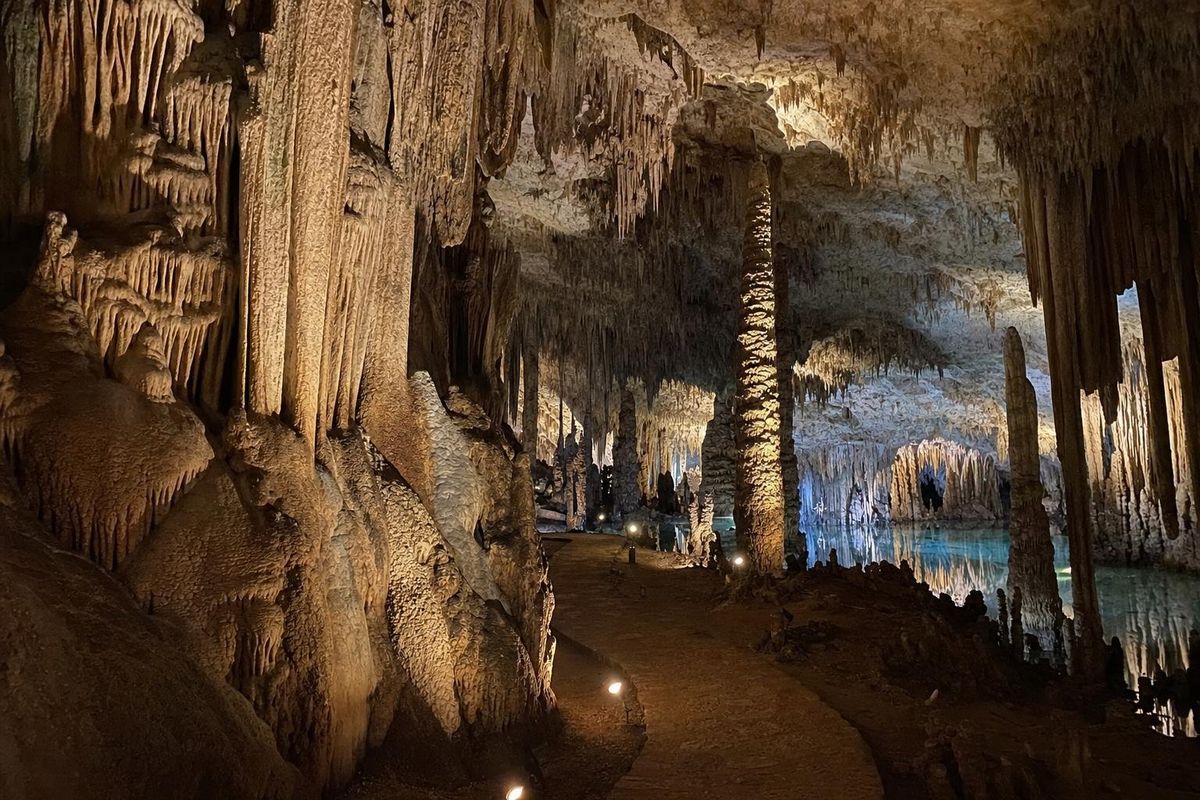
The area around Valladolid is one of the richest in the peninsula for cenotes. The Valladolid trip notes cover the town and its surroundings, and the cenotes of Yucatán route links several swimming holes into one itinerary. Toward the west, Cenote Xcajum is the quieter alternative near Chichén Itzá, while the cave of Zazil Tunich lies northeast of Valladolid. All of them appear on the cenotes overview.
Visitors who go on to Tizimín pass flat ranch country with stone walls along the road, a reminder that this part of Yucatán has been cattle land since the colonial haciendas.
Hubiku: questions before a visit
Where is Hubiku cenote?
In the municipality of Temozón, Yucatán, about 20 km north of Valladolid, just off highway 295 toward Tizimín.
Is Hubiku an open or a closed cenote?
It is a cavern with one round opening in the roof. The sky is visible through that hole, but most of the pool sits under rock.
Are the fish in Hubiku dangerous?
No. The catfish are harmless and tend to keep away from swimmers.
What is the best time to see the light beam?
Late morning to early afternoon, when the sun is high enough to shine straight through the opening onto the water.
Can Hubiku be combined with Ek Balam?
Yes. Both lie north of Valladolid near Temozón, so the ruins in the morning and a swim at Hubiku afterwards is an easy half day.
Nearby on the map
AI-generated image Trips · Yucatán
Around Valladolid
AI-generated image Maya Ruins · Yucatán
Ek Balam
AI-generated image Cenotes · Yucatán
Zazil Tunich
AI-generated image Maya Ruins · Yucatán
Kulubá