
−5 m · Shallows · Beaches · Quintana Roo
Soliman Bay Near Tulum: A Calm Riviera Maya Cove With a Reef Close In
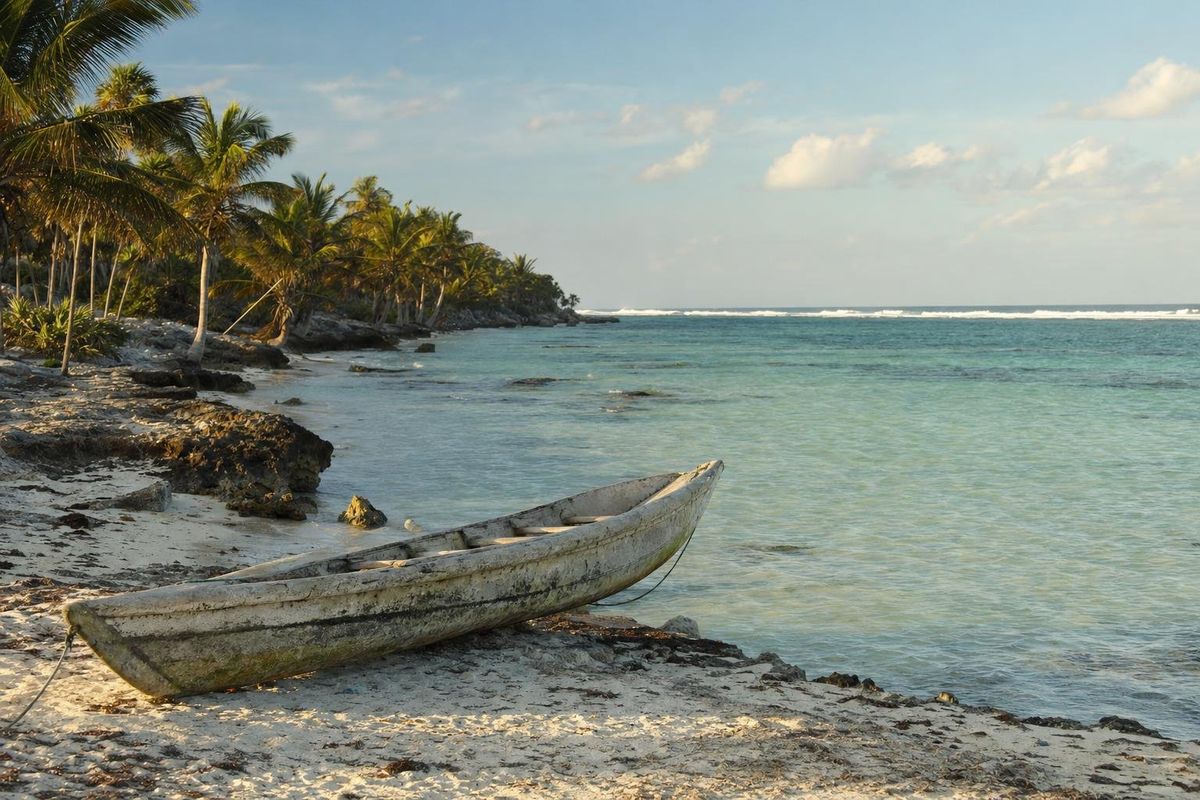
Soliman Bay is a shallow, reef-sheltered cove on the Riviera Maya about fifteen minutes north of Tulum, between Akumal and the town. The reef runs close enough to the shore that, on calm days, swimmers can reach it from the beach, and the water inside Soliman Bay stays as flat as a lagoon.
A bay that stays calm
Out beyond the shore, a long arm of the Mesoamerican Reef breaks the swell. You can usually see the line of white water where waves hit it. Inside that barrier the bay is shallow, clear and almost still, with a bottom of sand, sea grass and coral rubble. That combination makes Soliman one of the most reliable spots on this part of the coast for an easy snorkel.
The shore is rustic. A row of private villas, many of them holiday rentals, lines most of the bay, and their guests keep to their own stretches of sand. The southern end opens out into a palm-shaded patch of beach with a simple seafood restaurant and not much else. There are no jet skis and no vendors walking the sand.
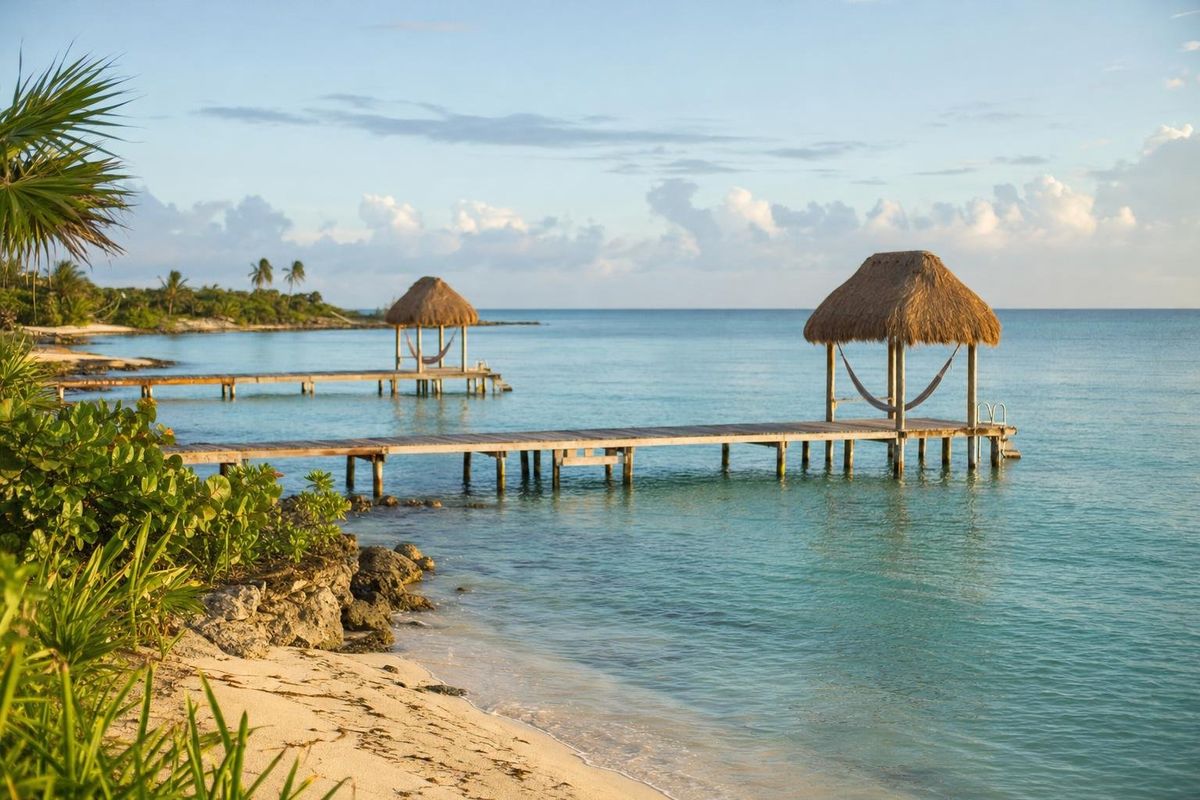
The northern point separates Soliman from its neighbor, Tankah Bay, which has the same sheltered water and a similar mood.
Snorkelling at Soliman Bay
The reef here is closer to shore than at most beaches on the Riviera Maya. A well-used sandy track leads into the water near the southern end; follow it rather than scrambling over the rocks. From there you can wade and then swim toward the coral heads, watching the bottom change from sea grass to patch reef.
Expect the regulars of a shallow Caribbean reef: sergeant majors, parrotfish, blue tang, wrasse and the occasional barracuda hanging motionless in the blue. Southern stingrays rest on the sand. Green turtles may turn up over the sea grass, as they do at nearby Akumal.
A few cautions:
- Bring your own mask, snorkel and fins. There is no rental on the beach.
- Do not stand on coral. Choose sand patches if you need a rest.
- Stay inside the reef. Beyond it, currents and boat traffic make the open sea a different proposition.
- Wind from the east can stir up the water and cut visibility; mornings tend to be clearest.
Walks, shells and hurricane wreckage
Soliman is also a good walking beach. Large shells are uncommon on the Yucatán coast, but the tideline here regularly produces conchs and big whelk shells after storms. Leave live animals and occupied shells where they are; collecting from protected areas is prohibited.
Heading south, a few wooden houses stand in ruins, wrecked by a past hurricane and never rebuilt. An old fishing boat beached on the sand has become an unofficial landmark, much photographed and covered in paint. You are free to walk along the shore in front of the villas, since the beach itself is federal land.
Birds and other wildlife
The coastal strip behind the villas is a mix of palms, sea grape and low forest, and it holds more birdlife than the busier beaches. Brown pelicans fish in the bay, frigatebirds ride the wind high overhead, and ospreys sometimes perch on dead trees near the shore. On the beach, ghost crabs dig their burrows above the tideline and disappear at the first footstep.
How access works
All Mexican beaches are public, but at Soliman Bay the only road runs through a gated residential area. A security post sits at the entrance, near a small boutique hotel at the north end of the bay. Day visitors are generally let through after explaining where they are going, usually to the restaurant at the southern end. Anyone not eating there has typically been asked for a small charge to use that end of the beach. Arrangements change, so be ready to ask.
Getting to Soliman Bay
Soliman Bay lies just off Highway 307, roughly fifteen minutes north of Tulum, twenty minutes south of Akumal and about forty minutes from Playa del Carmen. The entrance is on the seaward side of the road, through a stone gateway onto a dirt road. Drivers coming from the north need to pass it and turn back at the next return point. A restaurant on the opposite side of the highway is the usual landmark, but signs change, so a map pin is the safest way to find the turning.
Follow the dirt road past the hotel and the line of villas until you reach the end of the bay. Colectivos running between Tulum and Playa del Carmen will drop passengers at the highway, and the walk to the beach is manageable.
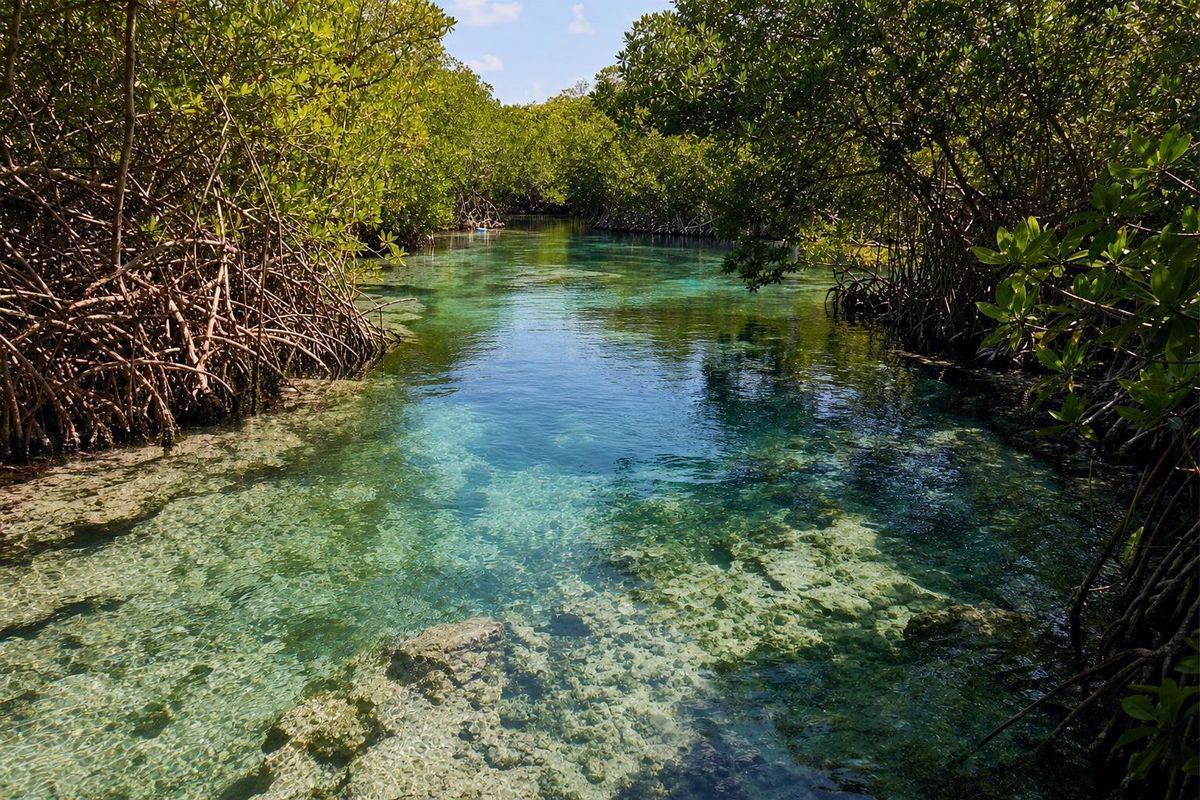
Soliman makes a natural pairing with the Maya ruins at Muyil, south of Tulum, or with Casa Cenote, a mangrove-fringed cenote a short drive away behind Tankah Bay.
Seasons and conditions
Between December and April the weather is dry and the water clearest. Late spring and summer bring heat, more humidity and the chance of sargassum, which can blanket this coast in bad years between about April and October. The reef catches some of it, but not all. Hurricane season runs from June to November, and the abandoned houses at the southern end are a reminder of what a direct hit can do.
Practical notes
Water shoes help on the rocky stretches, although the main path into the water is sandy enough for bare feet. Use reef-safe sunscreen or cover up, and bring water and cash. Shade is limited to the palms at the southern end.
The bay is a residential place first. Keep noise down and do not walk through villa gardens. For other quiet beaches nearby, see Xcacel, a protected turtle beach a few kilometers north, or explore the beaches section.
At low tide, the coral heads closest to shore break the surface like small dark islands.
Soliman Bay questions
Where is Soliman Bay?
On the Riviera Maya coast of Quintana Roo, off Highway 307 about fifteen minutes north of Tulum and twenty minutes south of Akumal.
Can you snorkel from the beach at Soliman Bay?
Yes. The reef is close to shore and the water inside is calm, so swimmers can reach coral heads from the beach. Bring your own gear.
Is Soliman Bay public?
The beach is federal and public, but the access road crosses a gated residential area. Visitors are usually allowed through; a small charge may apply at the southern end if you are not eating there.
Is Soliman Bay good for children?
The shallow, calm water suits confident young swimmers, but the bottom is rocky in places, so water shoes are a good idea.
What is the difference between Soliman Bay and Tankah Bay?
They are neighboring coves divided by a narrow point. Both are calm and reef-sheltered; Tankah has more houses and is closer to Casa Cenote.
Nearby on the map
AI-generated image Cenotes · Quintana Roo
Casa Cenote
AI-generated image Beaches · Quintana Roo
Tankah Bay
AI-generated image Cenotes · Quintana Roo
Caleta Tankah
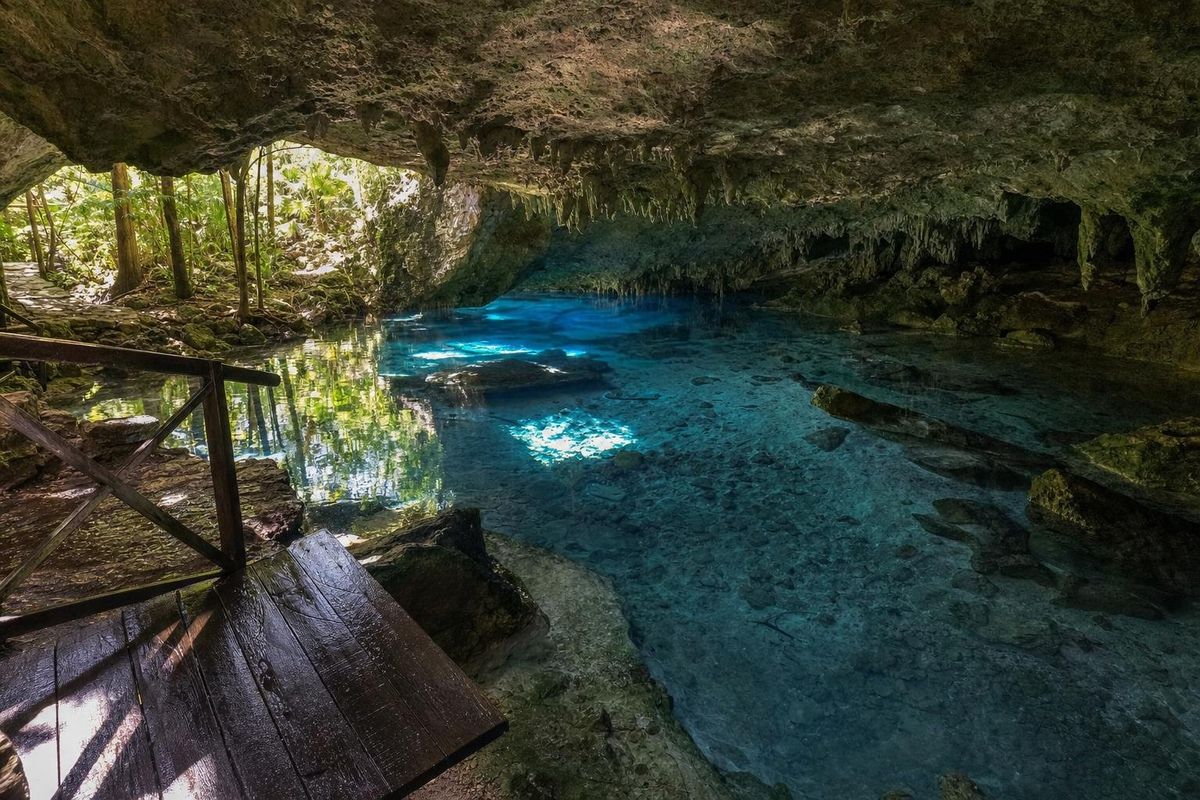
AI-generated image Cenotes · Quintana Roo
Dos Ojos