
−45 m · Xibalba · Maya Mysteries · Chiapas
Mayan Weapons and Warriors: How the Classic Maya Fought Their Wars
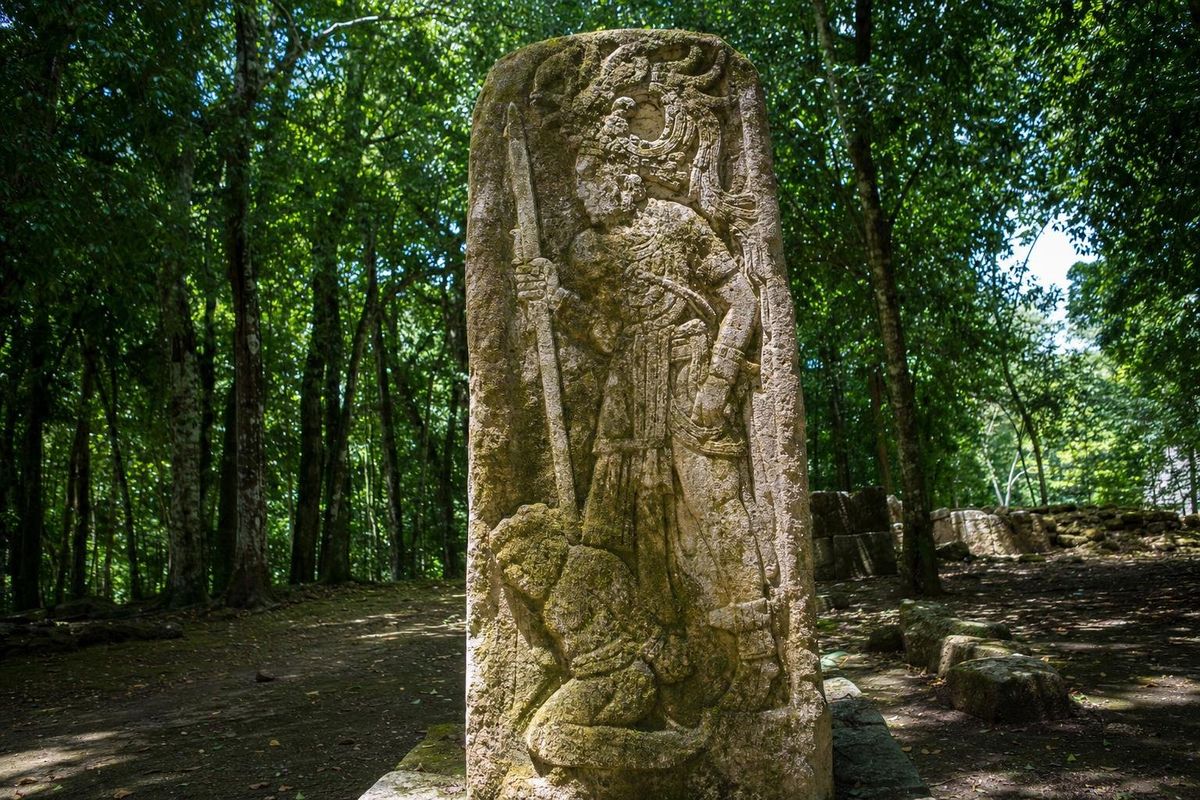
Mayan weapons were made of wood, flint and obsidian: a heavy thrusting spear, the atlatl spear-thrower, axes and clubs, with the bow arriving late. Maya warriors fought for captives, tribute and control of rival cities, and their battles are recorded in hieroglyphs and in the painted murals of Bonampak. The old picture of a peaceful civilisation of stargazers did not survive the reading of those texts.
From peaceful astronomers to warrior kings
Through the first half of the 20th century, many scholars described the Maya as calm priest-astronomers. Two things changed that. In 1946 the murals of Bonampak in the Chiapas rainforest came to the attention of outsiders, and one room showed a full battle in colour, followed by the display of captives. Then, from the 1960s onward, the decipherment of Maya writing revealed inscriptions full of captures, attacks and conquered cities.
The Classic Maya were never an empire. They lived in dozens of kingdoms, each ruled by a holy lord (k'uhul ajaw), crowded close together and competing for land, water, trade routes and prestige. Warfare was part of kingship. A ruler's titles often included a count of the captives he had taken.
Why Maya cities went to war
Inscriptions use several verbs for military events, and epigraphers have sorted them roughly by scale. Chuhkaj means "was captured" and records the seizure of a named enemy. Ch'ak means "chop" or "axe" and can refer to defeat or decapitation. Other glyphs mean "to burn" or "to throw down," the latter used for desecrating a rival city's gods and monuments.
The most dramatic is the star war glyph, a name coined by Linda Schele for a sign showing a star over the earth or over a shell, raining drops. It marks major wars that could bring down a dynasty. Some researchers noticed that several such events fall close to key points in the cycle of Venus and proposed that the Maya timed attacks by the planet. Others argue that the statistical link is weak. Both positions are still held.
Captives mattered for more than prestige. High-ranking prisoners could be displayed for years, forced to take part in ritual ball games, and eventually sacrificed. Commoners taken in war may have become labourers. Tribute in cacao, cloth and feathers flowed from defeated cities to their overlords.
Mayan weapons and armour
Weapons appear in carved scenes, in murals and in the stone points found by archaeologists. The thrusting spear, about the height of a man or more, with a broad flint or obsidian blade, was the main weapon of close combat and the best tool for taking a prisoner alive. The atlatl, a wooden spear-thrower that lengthened the arm and added force to a throw, was used for darts at range and became more common in images after contact with Teotihuacan in the late 300s. The bow and arrow appears clearly only in the Postclassic period.
| Weapon or gear | Material | Use |
|---|---|---|
| Thrusting spear | Wooden shaft, flint or obsidian point | Close combat, taking captives |
| Atlatl and darts | Wood, stone points | Ranged attack |
| Axe and club | Wood with stone blade or head | Hand-to-hand fighting |
| Bow and arrow | Wood, stone points | Ranged attack, mainly Postclassic |
| Armour | Quilted cotton, sometimes salted | Body protection |
| Shield | Hide, wicker, wood; some flexible | Defence and display |
Quilted cotton armour was effective enough that Spanish soldiers adopted it in the 16th century. Warriors also carried war banners, and armies marched with conch-shell trumpets and drums. Leaders went into battle in animal costumes and masks, and some carried images of their patron gods, which could be seized by the enemy and displayed as trophies.
Mayan warriors in the field
Who actually fought? In the Classic period, warfare seems to have been led by the nobility, with the king or his representatives in command. Diego de Landa, writing about 16th-century Yucatán, described a war captain called the nacom, chosen for three years, and paid soldiers called holcanes. That description belongs to a later period and may not apply to the Classic kingdoms. Many researchers think armies were small by Old World standards and that campaigns took place in the dry season, after the harvest, when men could leave the fields and paths were passable.
Tactics relied on surprise, raids and ambushes more than on open battles. Defensive works show the danger: a moat and earthworks at Becán in Campeche, walls at Tulum, Ek' Balam and Mayapán, and a long ditch and rampart north of Tikal.
Calakmul against Tikal
The best-documented rivalry was between the Snake dynasty of Calakmul and Tikal. In 562, Tikal was defeated by Calakmul's ally Caracol, with Calakmul's backing, and Tikal raised almost no dated monuments for more than a century. Calakmul built a network of allied cities around its rival until Tikal won a decisive victory in 695. Further west, Yaxchilán, Piedras Negras and Bonampak fought over the Usumacinta river.
Queens as war leaders
Several royal women appear in warrior roles. Lady Six Sky of Naranjo is shown on a stela standing over a bound captive, a pose normally reserved for kings, and Lady K'abel of El Perú-Waka held the high title kaloomte'. There is no evidence that either fought in person. The images claim authority over war, which is a different thing.
Eagles and jaguars
The famous eagle and jaguar warriors were orders of the Aztec army in central Mexico. The Maya had their own jaguar imagery from early on, and kings wore jaguar pelts into battle. At Chichén Itzá, the Platform of the Eagles and Jaguars shows the two animals clutching hearts, and many scholars see it as a sign of contact with central Mexico in the Early Postclassic. Ball games and war overlapped too, as the page on the ballplayers explains.
Seeing Maya warfare in person
Bonampak, reached from Palenque by road, holds the murals; Room 2 is the battle. Yaxchilán, by boat on the Usumacinta, has carved lintels of captures. The Platform of the Eagles and Jaguars is a short walk from the main pyramid at Chichén Itzá. Access to the Bonampak rooms is controlled to protect the paint, and conditions change, so check locally. The full list of iconography pages is under Maya Mysteries.
On the north wall of the battle room at Bonampak, look low: the captives sit on painted steps at the bottom, the victors stand above them.
Questions about Maya warriors and weapons
What weapons did the Maya use?
Mainly thrusting spears with flint or obsidian points, the atlatl spear-thrower with darts, axes and clubs. The bow and arrow became common only in the Postclassic period.
Did the Maya have a professional army?
Not in the modern sense. Classic warfare was led by nobles, and Spanish-era sources from Yucatán describe a war captain and some paid soldiers, but much of the fighting force was probably raised for campaigns.
What was a Maya star war?
A modern name for major wars marked by a glyph showing a star over the earth or a shell. Some researchers link their dates to Venus; others find the evidence unconvincing.
Where can Maya battle scenes be seen?
The Bonampak murals in Chiapas are the best known. Carved lintels at Yaxchilán and stelae in many museums show captives and victorious rulers.
Did the Maya use obsidian swords like the Aztecs?
The Aztec macuahuitl, a wooden club edged with obsidian blades, is well documented in central Mexico. Maya warriors also used edged clubs and axes, but the spear was their signature weapon.
Nearby on the map
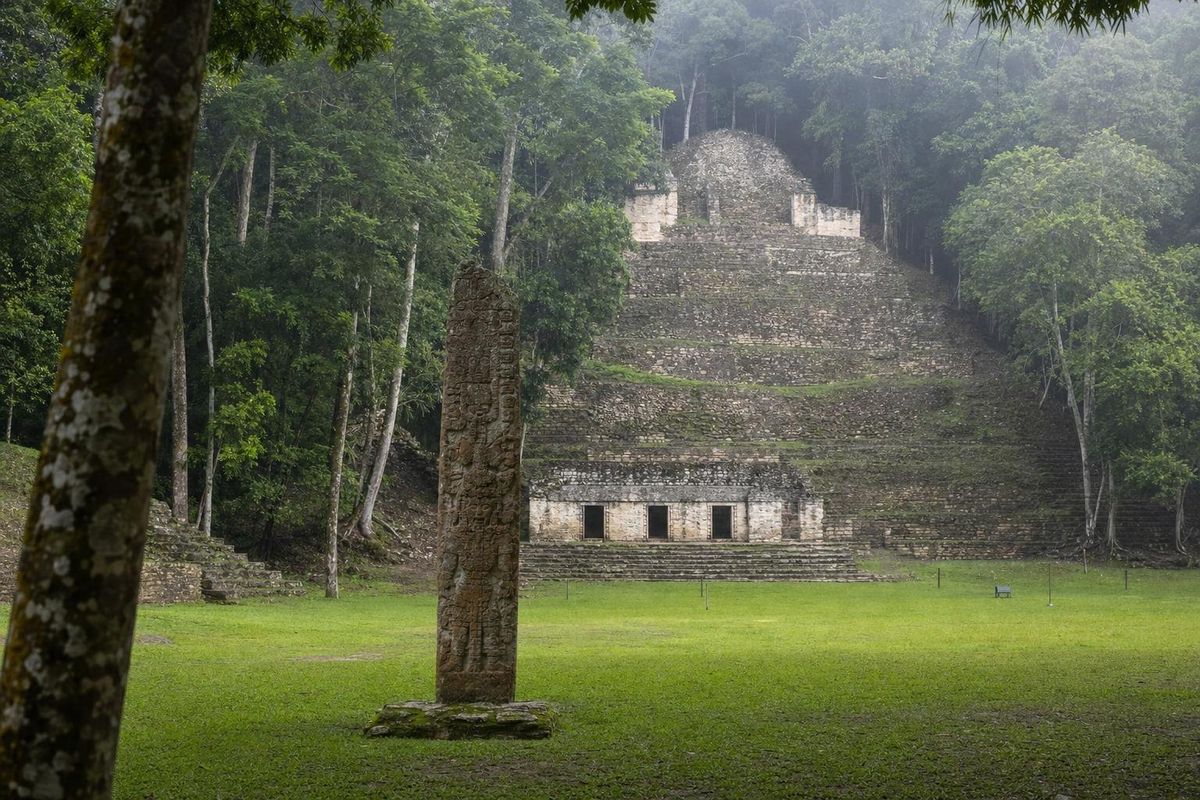
AI-generated image Maya Ruins · Chiapas
Bonampak
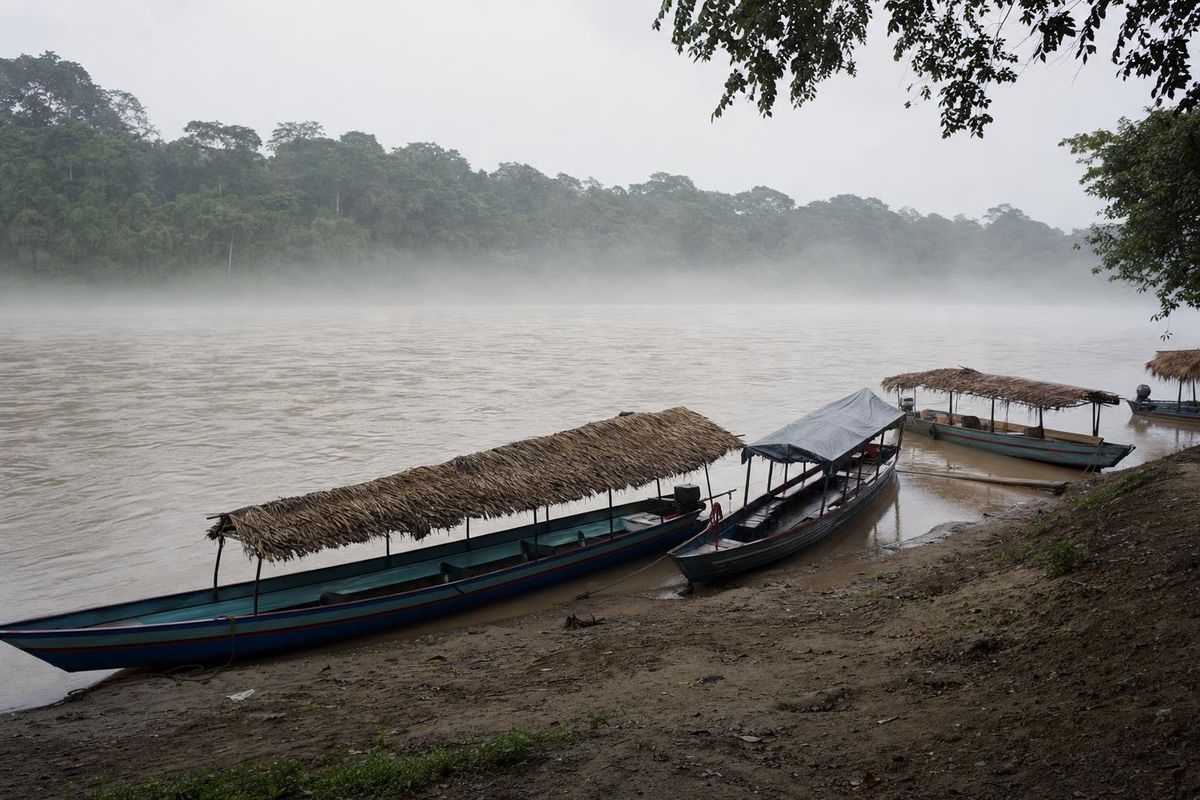
AI-generated image Towns & Villages · Chiapas
Frontera Corozal
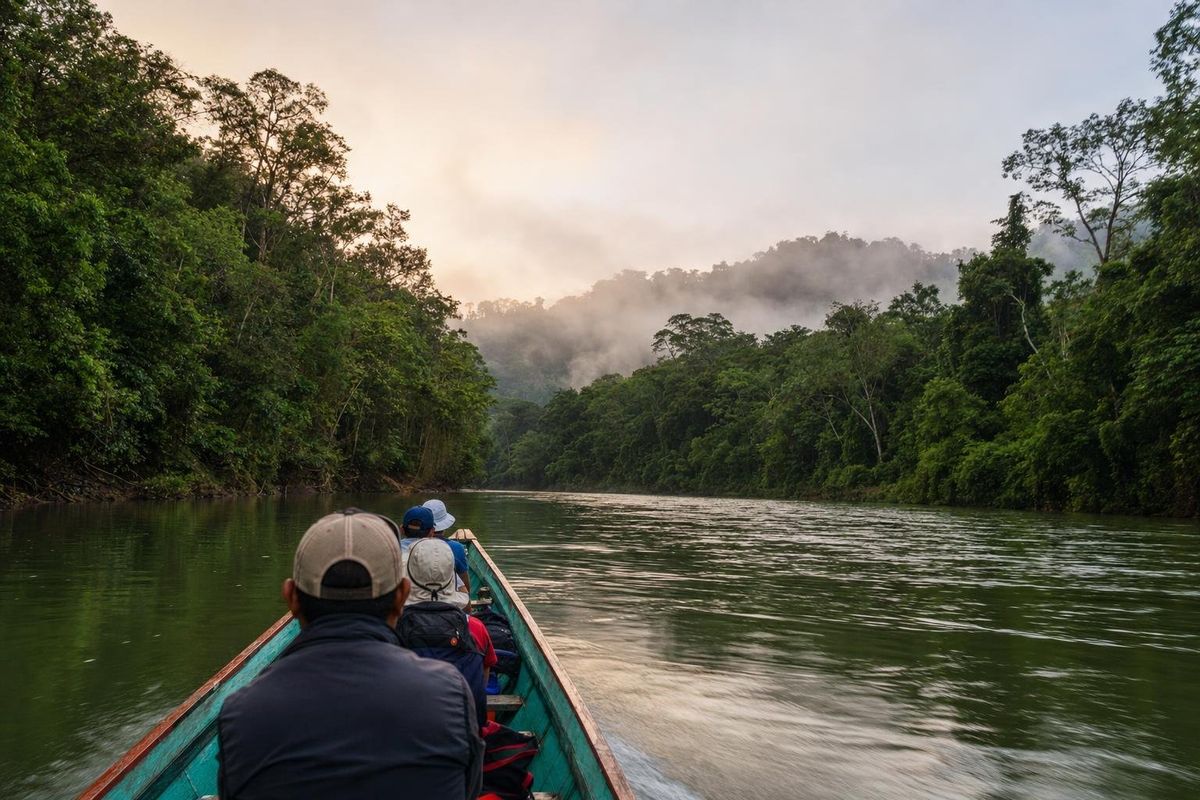
AI-generated image Trips · Chiapas
Eerie Legends
AI-generated image Maya Ruins · Chiapas
Yaxchilán