
−20 m · Stone · Maya Ruins · Chiapas
Yaxchilán: The Maya City of Shield Jaguar on a Bend of the Usumacinta
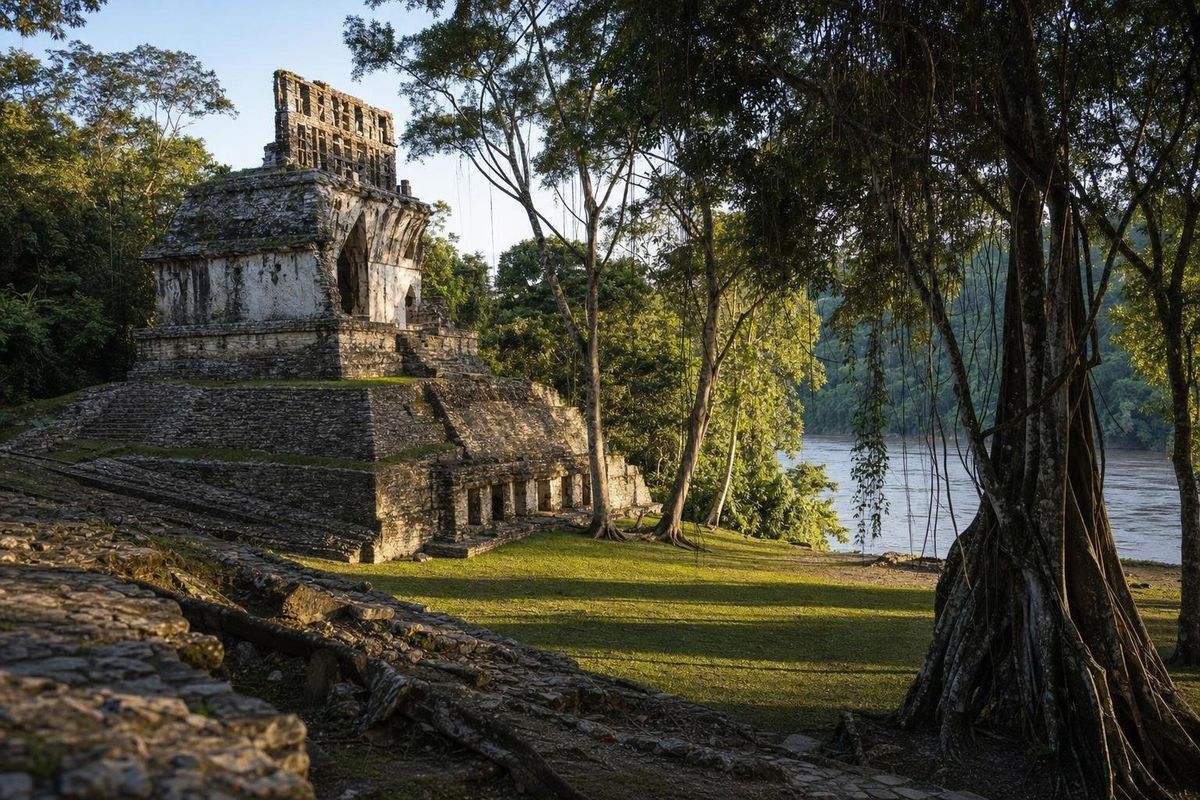
Yaxchilán is a Classic Maya city built on a horseshoe bend of the Usumacinta River in eastern Chiapas, on the Mexican bank of the border with Guatemala. There is no road to the ruins: visitors travel downstream by boat from Frontera Corozal, roughly 40 minutes through rainforest. The site is famous for its carved stone lintels, above all those commissioned for Shield Jaguar and Lady Xoc, which rank among the finest reliefs the Maya produced.
A river kingdom and its rivals
The Usumacinta was a highway. Canoes carried goods between the highlands and the Gulf coast, and the cities along its banks competed for control of that traffic. Yaxchilán's great rival was Piedras Negras, about 40 km downstream on the Guatemalan side, and its sphere reached south to smaller towns such as Bonampak, whose rulers married into the Yaxchilán royal family.
The dynasty claimed roots going back to the fourth century AD, but most of what stands today was built in the seventh and eighth centuries. Two kings shaped the city. Itzamnaaj Bahlam III, known in English as Shield Jaguar, reigned for some sixty years until his death in 742 and is said in the inscriptions to have lived into his nineties. His son Yaxuun Bahlam IV, known as Bird Jaguar, took the throne in 752 after a ten-year gap that scholars still argue about. Bird Jaguar's mother was not Shield Jaguar's principal wife, and much of his building program seems designed to prove that he was the rightful heir.
Carving at Yaxchilán stopped in the early ninth century, and the city was abandoned during the wider collapse of the southern lowlands. European explorers arrived in 1882, when Alfred Maudslay and Désiré Charnay reached the ruins within days of each other.
Shield Jaguar and Lady Xoc
The best-known images at Yaxchilán come from Structure 23, a building dedicated by Shield Jaguar's principal wife, Lady K'abal Xook (often written Lady Xoc). Its three lintels show her performing royal rituals. On Lintel 24, Shield Jaguar holds a burning torch above her while she pulls a rope set with thorns through her tongue, the blood falling onto paper in a basket. On Lintel 25 she kneels before a huge serpent rising from a bowl of burnt offerings, with a warrior emerging from its jaws. Most scholars read this as a vision summoned by bloodletting, possibly of an ancestor or a deity of war. Lintel 26 shows her handing her husband a jaguar helmet before battle.
Lintels 24 and 25 were removed by Maudslay and have been in the British Museum in London since the 1880s. Lintel 26 is in the Museo Nacional de Antropología in Mexico City. What remains in place at the site are casts and the original doorways, so the scenes are best studied in photographs before a visit. Linda Schele and Mary Ellen Miller made these lintels central to their book The Blood of Kings (1986), which did much to change how the public saw Maya royalty.
It is unusual for a Maya queen to be given a whole temple with carved scenes of her own. Some scholars think her status reflects a powerful noble family whose support Shield Jaguar needed.
What to see at Yaxchilán
The site follows the river terrace and then climbs two hills. A path from the boat landing leads through the first buildings into the Grand Plaza, a long open space parallel to the river.
The Labyrinth
Structure 19, known as the Labyrinth, is often the first building visitors enter. Its dark interior has passages and small chambers on several levels. Bring a flashlight and expect bats.
The Grand Plaza
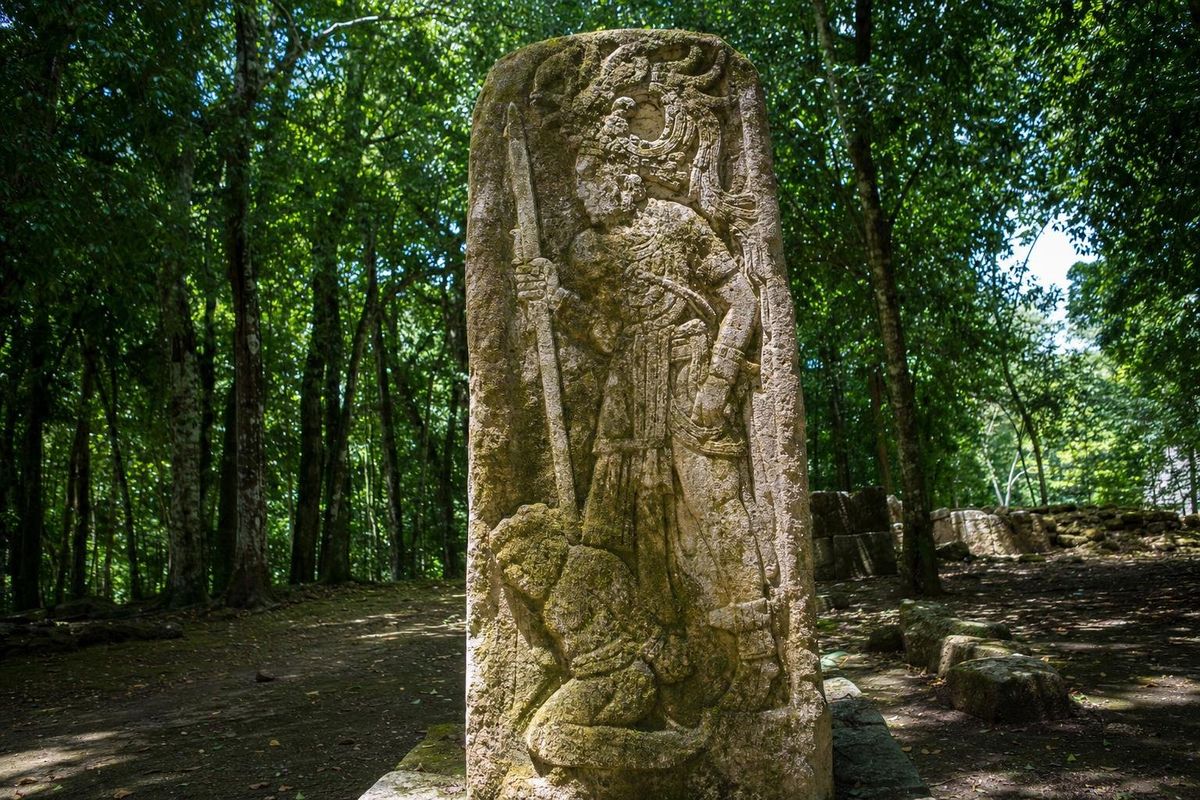
Along the plaza stand stelae, a ball court and buildings with carved lintels still in their doorways. Stela 1 and several others show rulers in the act of scattering offerings. The reliefs are weathered and easiest to read in low, raking light.
Structure 33 and the Great Acropolis
A steep stairway climbs from the plaza to Structure 33, Bird Jaguar's showpiece, with a tall pierced roof comb and three carved lintels. The step in front of the temple, Hieroglyphic Stair 2, is carved with ballgame scenes. Inside sits a headless stone statue of Bird Jaguar; the Lacandón Maya, who still visit, are said to believe the world will end when the head is restored to its body. From here paths climb further to the higher South Acropolis, where Structure 41 offers the highest point of the site.
The Small Acropolis
West of the plaza, the Small Acropolis holds some of the older buildings. Fewer visitors make the climb, which makes it a good place to hear howler monkeys and watch for toucans and parrots in the canopy.
Getting to Yaxchilán
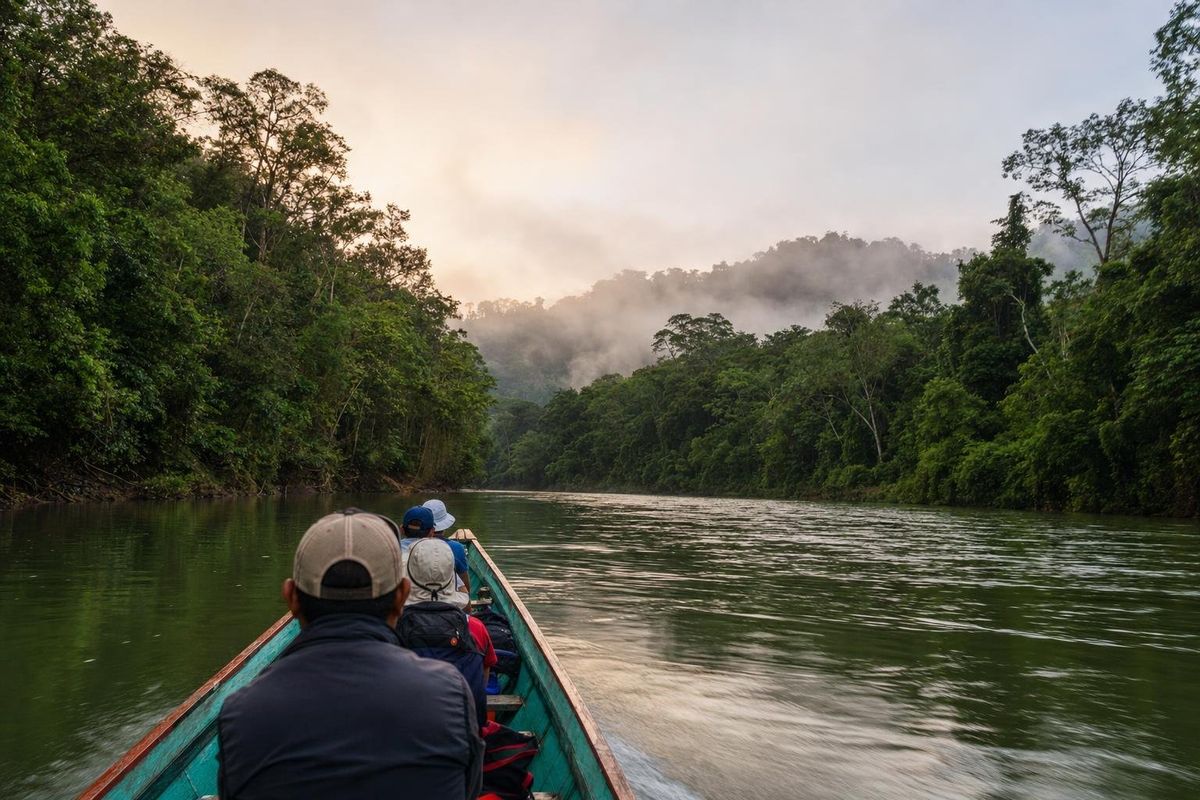
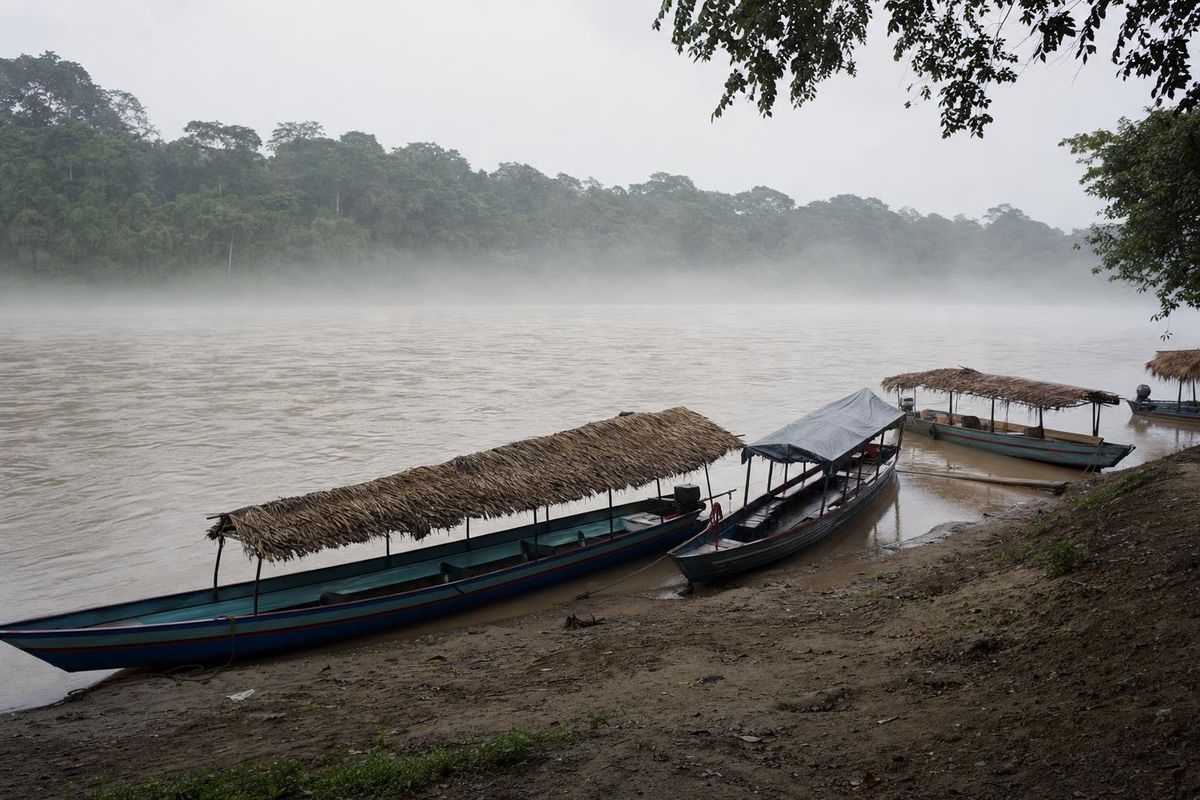
The starting point is Frontera Corozal, a Chol Maya community on the Usumacinta reached by the Carretera Fronteriza from Palenque, roughly three hours by road. Long motor launches run by local cooperatives leave from the river bank and ride the current downstream past forest on both banks, Mexico on one side and Guatemala on the other. Boats are shared or chartered, and the price depends on the number of passengers, so ask locally. The return against the current takes a little longer.
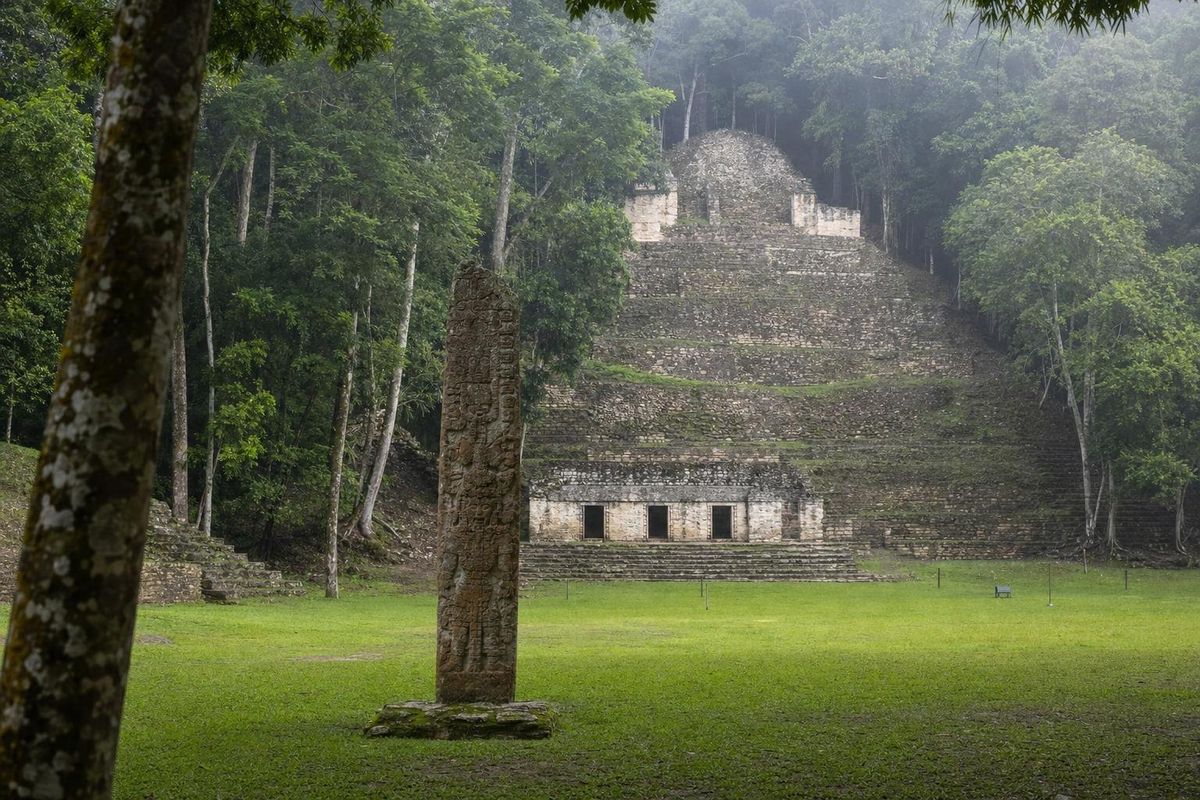
Most people combine the visit with Bonampak, about an hour away by road. Starting early in Frontera Corozal or nearby lodging lets you be among the first at the site, when the forest is cooler and the monkeys are active.
Practical notes
- Allow at least two to three hours on site. The climbs to the acropolis are steep and can be slippery after rain.
- Bring water, insect repellent, a hat and a flashlight. There is little shade on the river.
- Carry your passport: the Carretera Fronteriza has checkpoints and runs close to the border.
- The wet season runs roughly from June to October, with heavy afternoon rain. The driest months are usually February to April, which are also the hottest.
- Opening hours and boat arrangements change. Confirm them locally or check with INAH, which administers the site.
For other Maya cities, see the Maya ruins section. For more on how kings went to war in this region, see Maya warriors. On the boat, keep an eye on the sandbanks: Morelet's crocodiles live in the Usumacinta and are sometimes seen basking.
Yaxchilán questions
How do you get to Yaxchilán?
Only by river. Boats leave from Frontera Corozal on the Usumacinta, which is reached by road from Palenque along the Carretera Fronteriza. The boat ride takes roughly 40 minutes downstream and a little longer back.
Who were Shield Jaguar and Lady Xoc?
Shield Jaguar (Itzamnaaj Bahlam III) ruled Yaxchilán for about sixty years until 742. Lady K'abal Xook, or Lady Xoc, was his principal wife, shown performing bloodletting and vision rituals on the carved lintels of Structure 23.
Where are the original Yaxchilán lintels?
Lintels 24 and 25 are in the British Museum in London, and Lintel 26 is in the Museo Nacional de Antropología in Mexico City. Several other lintels remain in place at the site.
Can you visit Yaxchilán and Bonampak on the same day?
Yes. The two sites are about an hour apart by road, and many visitors see both on one long day from Palenque, or more comfortably with a night in the area.
Is Yaxchilán in Mexico or Guatemala?
It is in Mexico, in the state of Chiapas, on the Mexican bank of the Usumacinta. The river forms the border, so Guatemala is on the opposite shore.
Nearby on the map
AI-generated image Trips · Chiapas
Eerie Legends
AI-generated image Towns & Villages · Chiapas
Frontera Corozal
AI-generated image Maya Ruins · Chiapas
Bonampak
AI-generated image Maya Mysteries · Chiapas
Warriors