
−5 m · Shallows · Towns & Villages · Quintana Roo
Puerto Aventuras, the Marina Town Between Playa del Carmen and Tulum
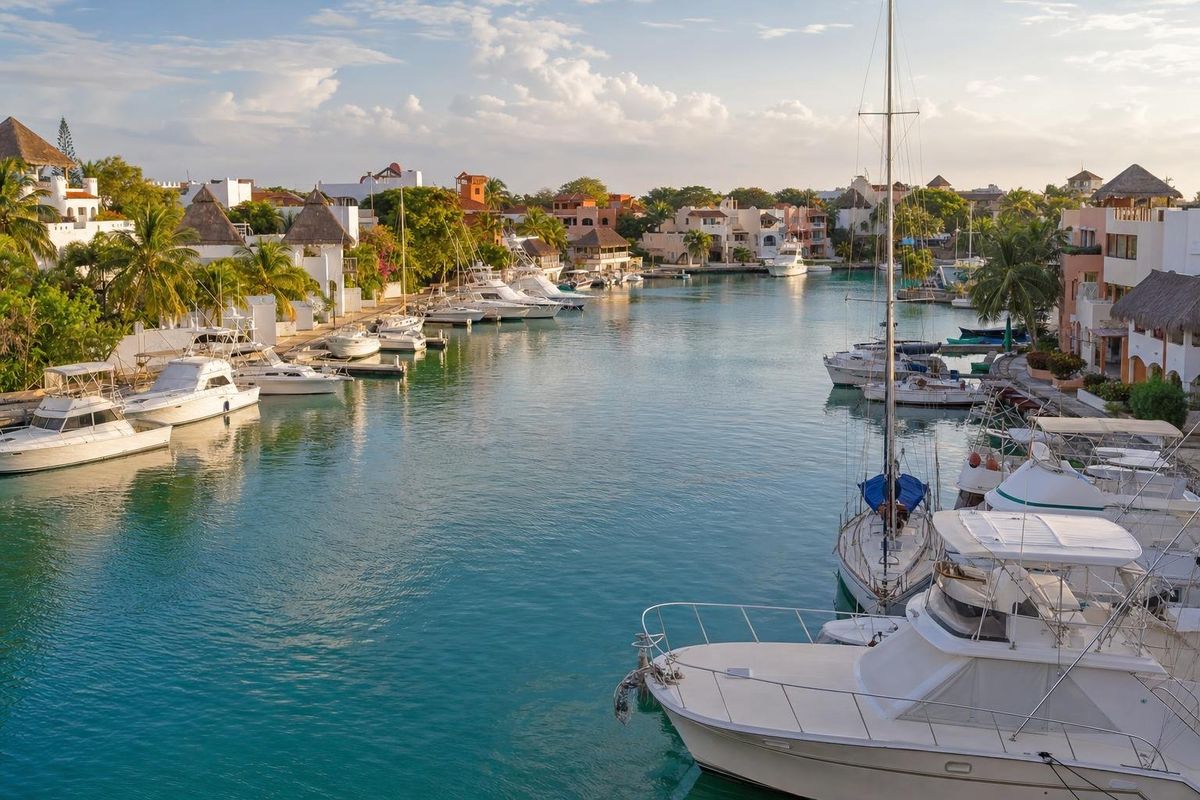
Puerto Aventuras is a planned resort town built around a marina on the Riviera Maya, roughly twenty kilometers south of Playa del Carmen and about forty-five minutes north of Tulum. Puerto Aventuras is quieter and more self-contained than either, with sheltered coves, a small shipwreck museum and several cenotes within a short drive.
A town built around a harbor
Most towns on this coast grew out of fishing villages or road junctions. Puerto Aventuras was laid out on purpose, beginning in the late 1980s, on the site of a coconut plantation. The plan put a deep-water marina at the center, dredged into the limestone, with channels winding inland so that houses and condominiums could have their own moorings. Today the marina holds sport-fishing boats, sailboats and dive boats, and the waterfront around it is lined with restaurants, shops and low buildings with terracotta roofs.
The result is tidy and walkable, more like a holiday village than a city. Many residents are retirees and part-year owners from the United States and Canada, alongside Mexican families who work in tourism. The whole community sits behind a guarded entrance on Highway 307, but visitors are generally allowed in to reach the beaches, the marina and the restaurants.
The name is sometimes misspelled Puerto Adventuras, an easy slip for English speakers; in Spanish it means "port of adventures".
Beaches and calm water
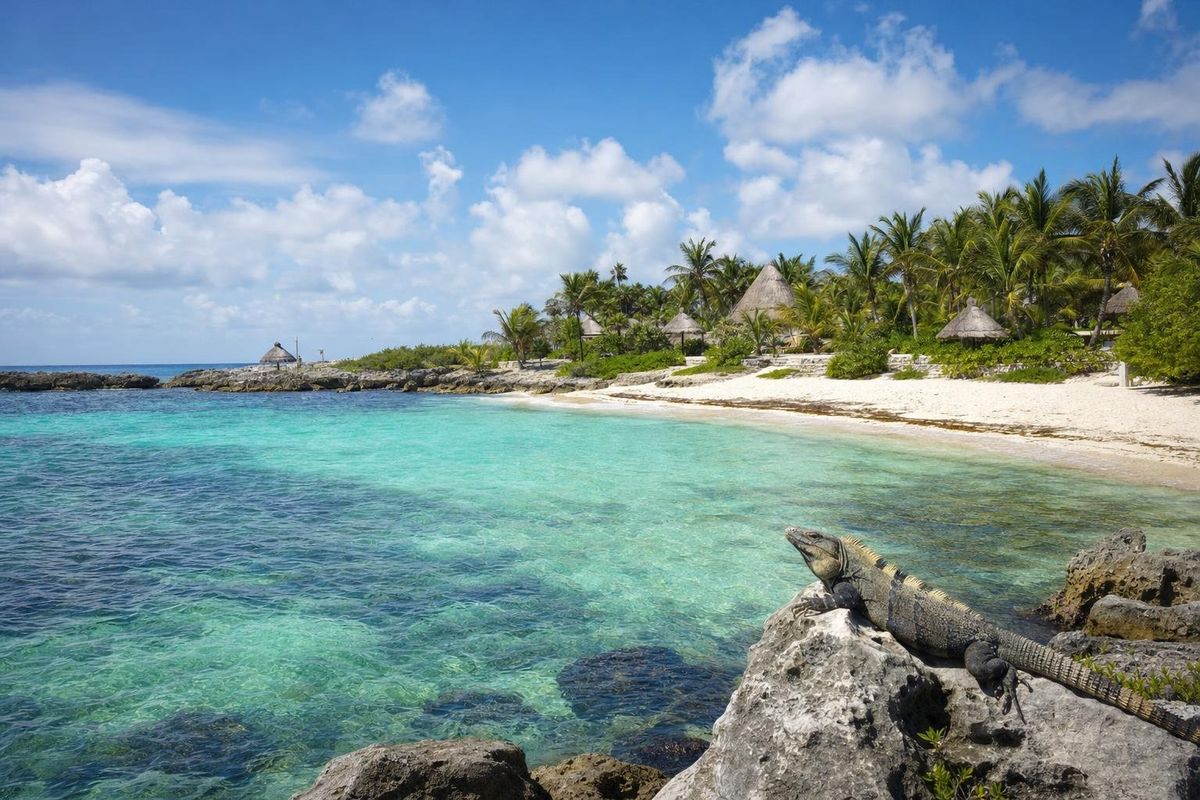
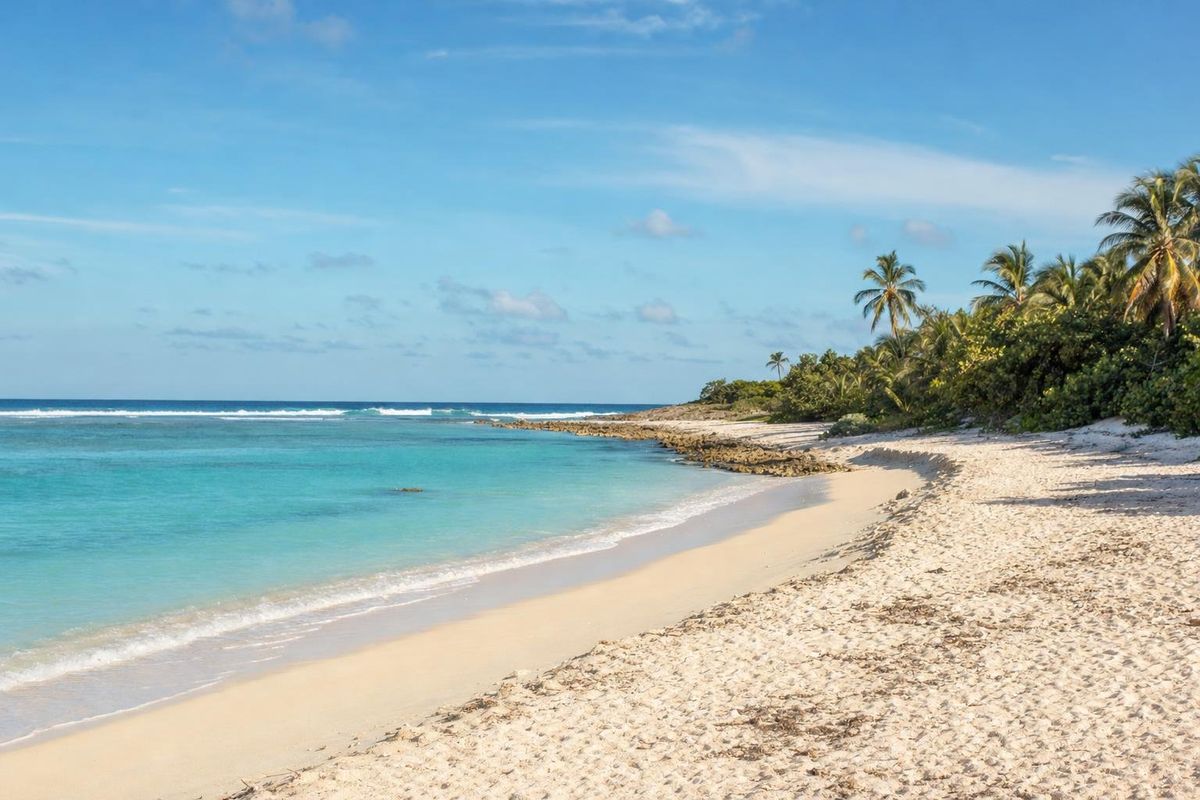
The beaches of Puerto Aventuras are on small, sheltered bays rather than open coast. The main one, Fátima Bay, is a crescent of sand with calm, shallow water behind the reef, a good choice for children and nervous swimmers. The reef offshore makes snorkelling possible from the shore on calm days, though boat trips reach the better coral.
Like everywhere on the Riviera Maya, the beaches are federal property and open to everyone, even where the land behind them belongs to hotels and condominiums.
What to do in and around Puerto Aventuras
Visit the shipwreck museum
The most interesting thing in town is a small museum devoted to underwater archaeology on the Mexican Caribbean. It is named after Pablo Bush Romero, founder of the Mexican diving club CEDAM, whose members explored the wreck of El Matancero, a Spanish merchant ship lost on the reef near Akumal in 1741. The collection includes cannons, ship's fittings, coins, religious medallions and everyday objects from the wreck and other sites along the coast. Opening times vary, so check before you go.
Head out on the water
The marina is a base for deep-sea fishing, sailing, diving and snorkelling trips along the reef. Sailfish and marlin run in the open sea in spring and early summer, while dorado and tuna appear for much of the year. Look for licensed operators and agree on what is included before setting off.
The dolphin question
The marina is also known for captive dolphin programs, where visitors swim with dolphins kept in sea pens. These attractions are a major draw for some visitors and a source of long-running criticism from animal-welfare organizations, which argue that captivity harms highly social, wide-ranging animals. Whether to take part is a personal decision; many travellers prefer to see dolphins in the wild on boat trips, where they are sometimes spotted along the coast.
Cenotes nearby
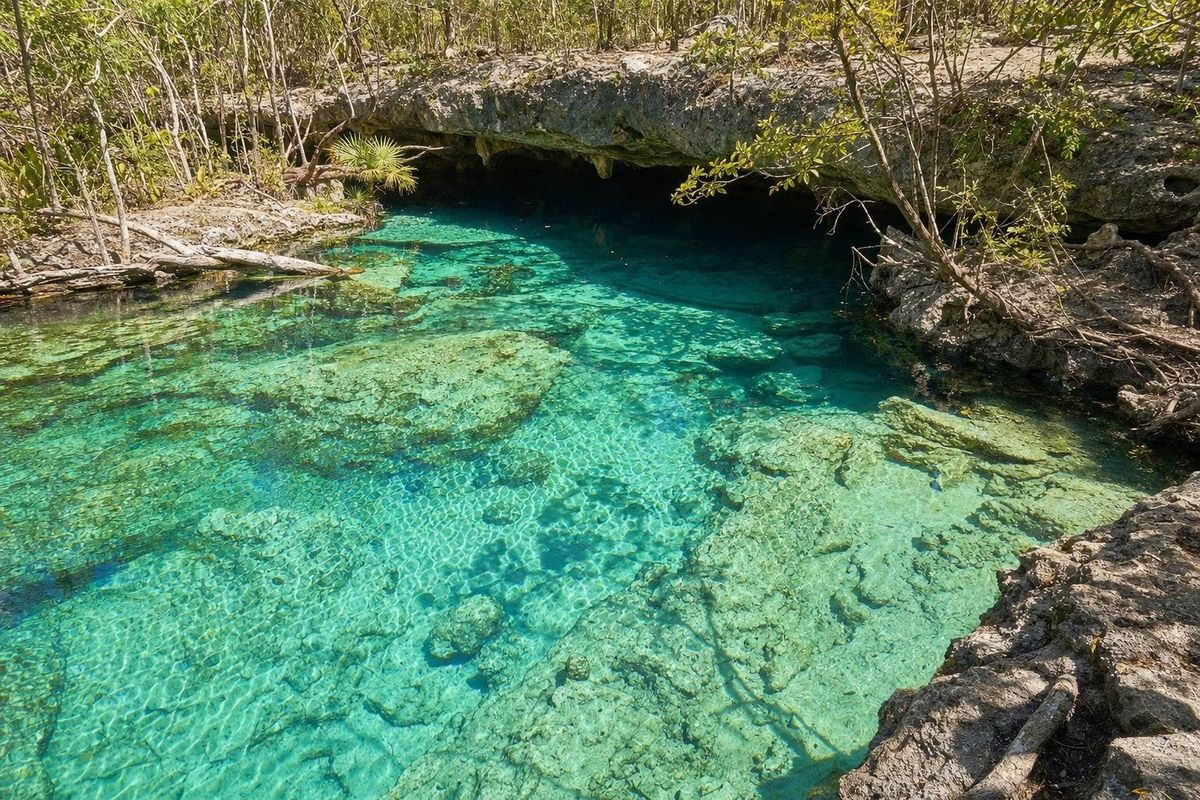
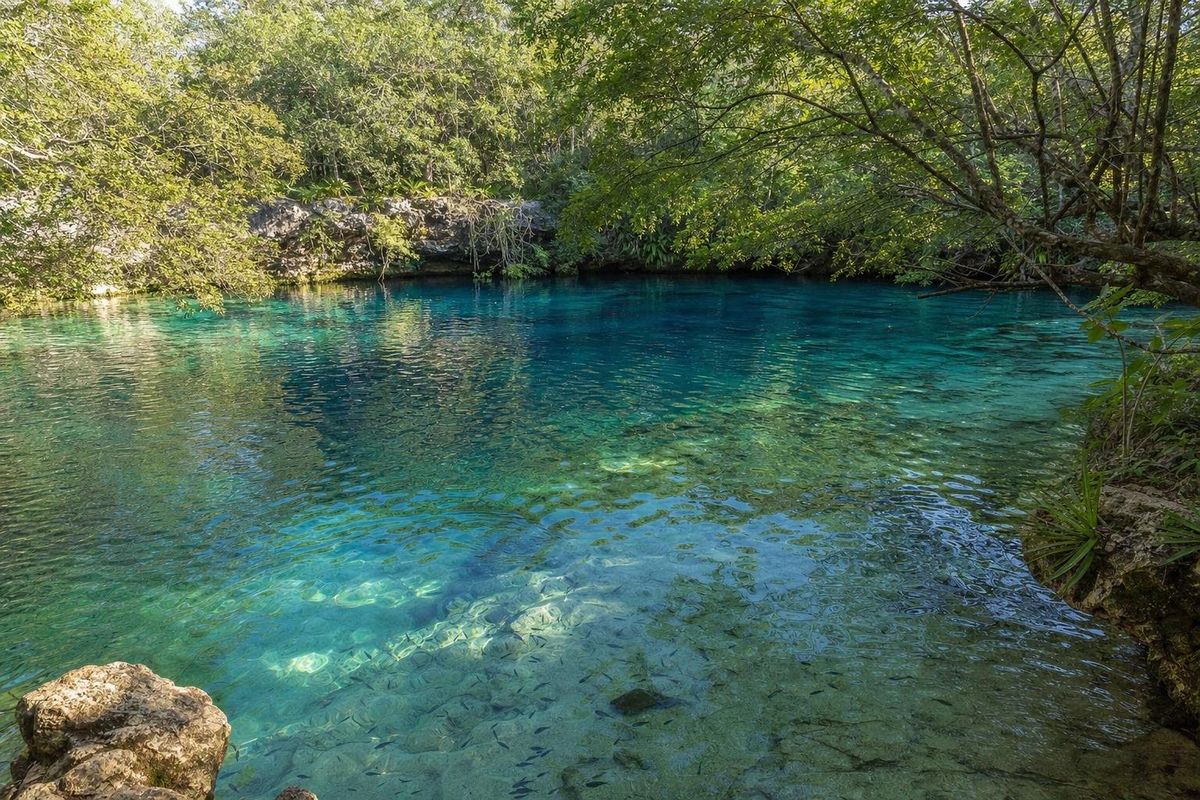
The highway south of town passes several cenotes in the forest, among them Cenote Azul, a set of open pools with clear water and fish, a few minutes away. The guide to cenotes in Yucatán explains how they form and what to expect.
Golf
A nine-hole golf course runs through the community, a rarity on this part of the coast where most courses sit closer to Cancún and Playa del Carmen.
Puerto Aventuras as a base
For travellers who want to explore the Riviera Maya without staying in a big town, Puerto Aventuras sits almost exactly in the middle. Playa del Carmen and its ferry to Cozumel are about twenty minutes north; Akumal, Xcacel and the coves around Tulum lie to the south; and the inland road to Cobá is within easy reach. The ruins of ancient Xcaret, once the port from which Maya pilgrims set out for Cozumel, are a short drive up the coast.
The trade-off is atmosphere. The town is pleasant and safe, but it was designed for holidays and has little of the street life of an old Mexican town. Evenings revolve around the restaurants on the marina.
Getting to Puerto Aventuras
Puerto Aventuras is on Highway 307, signed at its own entrance, about twenty to twenty-five minutes south of Playa del Carmen by car and around forty-five minutes north of Tulum. From Cancún airport, allow roughly an hour and a quarter. Colectivo minibuses between Playa del Carmen and Tulum stop at the highway entrance; from there it is a walk of ten to fifteen minutes to the marina. Fares and routes change, so ask locally.
When to go
December to April is dry and pleasant, and this is also when the winter residents are in town and the marina is busiest. Late spring brings the peak fishing season and rising heat. Summer is hot and humid, and sargassum can reach the beaches between about April and October in heavy years, although the sheltered coves and marina are often less affected than open beaches. Hurricane season runs from June to November.
Practical notes
- Carry some form of identification; the guards at the entrance may ask where you are going.
- Most restaurants and shops cluster around the marina.
- For a broader range of restaurants and nightlife, Playa del Carmen is the nearest large town.
Puerto Aventuras makes a calm base for exploring the middle of the Riviera Maya. Nearby are the quiet cove at Paamul, just north, and the turtle bay at Akumal, about fifteen minutes south. More towns are listed in the towns and villages section.
In the late afternoon, the sport-fishing boats return to the basin one after another, trailing small wakes across the still water.
Puerto Aventuras: frequently asked questions
Where is Puerto Aventuras?
On the Riviera Maya in Quintana Roo, off Highway 307 about twenty kilometers south of Playa del Carmen and roughly forty-five minutes north of Tulum.
Is Puerto Aventuras a gated community?
Yes, the town has a guarded entrance, but visitors are generally allowed in to reach the marina, restaurants and beaches.
Are the beaches in Puerto Aventuras good for children?
Yes. The coves are sheltered by the reef, so the water is usually calm and shallow near the shore.
What is there to see in Puerto Aventuras?
The marina, sheltered beaches, a small museum of objects from Spanish shipwrecks, and several cenotes a short drive south.
How do you get to Puerto Aventuras without a car?
Colectivos running between Playa del Carmen and Tulum stop at the highway entrance, a walk of ten to fifteen minutes from the marina.
Nearby on the map
AI-generated image Cenotes · Quintana Roo
Cristalino
AI-generated image Beaches · Quintana Roo
Paamul
AI-generated image Cenotes · Quintana Roo
Cenote Azul
AI-generated image Beaches · Quintana Roo
Punta Venado