
0 m · Haciendas
Haciendas of Yucatán: the Henequen Boom, the Estates and What Remains
For a few decades around 1900, a spiky agave made Yucatán one of the richest corners of Mexico. The haciendas built on that fortune now stand as ruins, museums and hotels.
Every guide in Haciendas
AI-generated image Haciendas · Yucatán
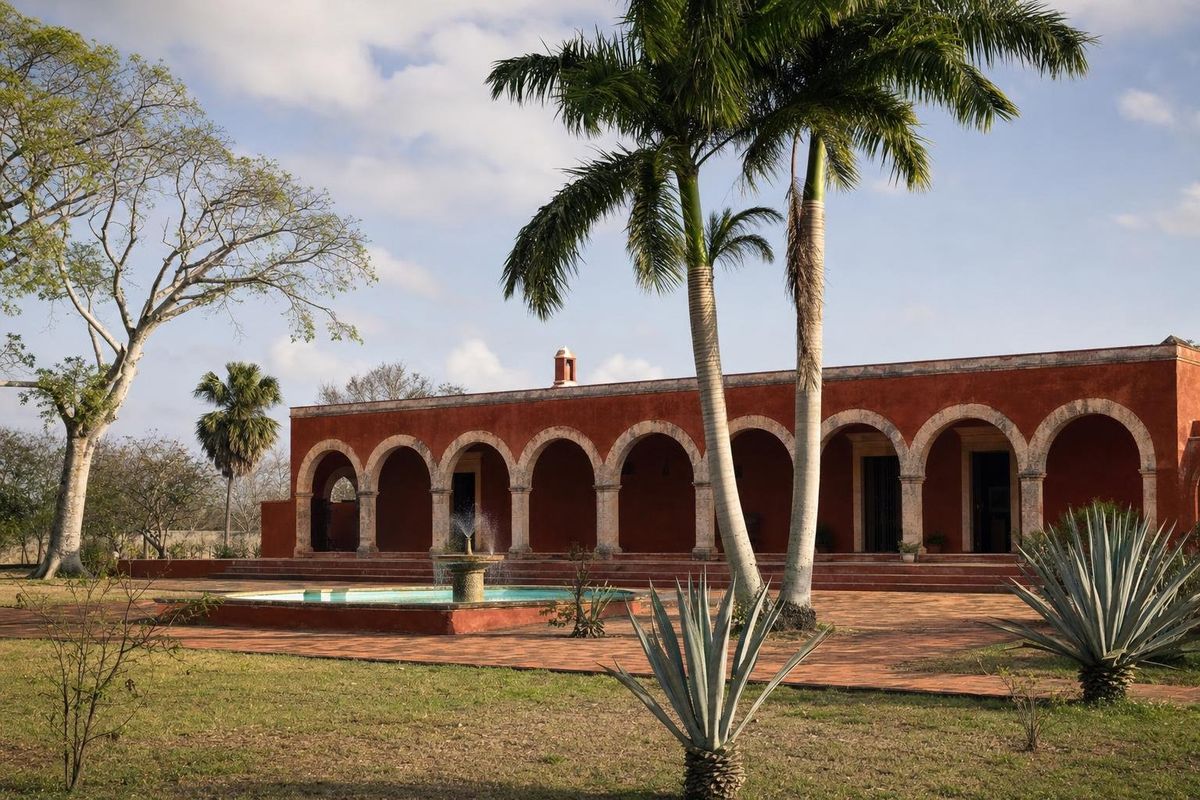
Hacienda Ochil
AI-generated image Haciendas · Cuba
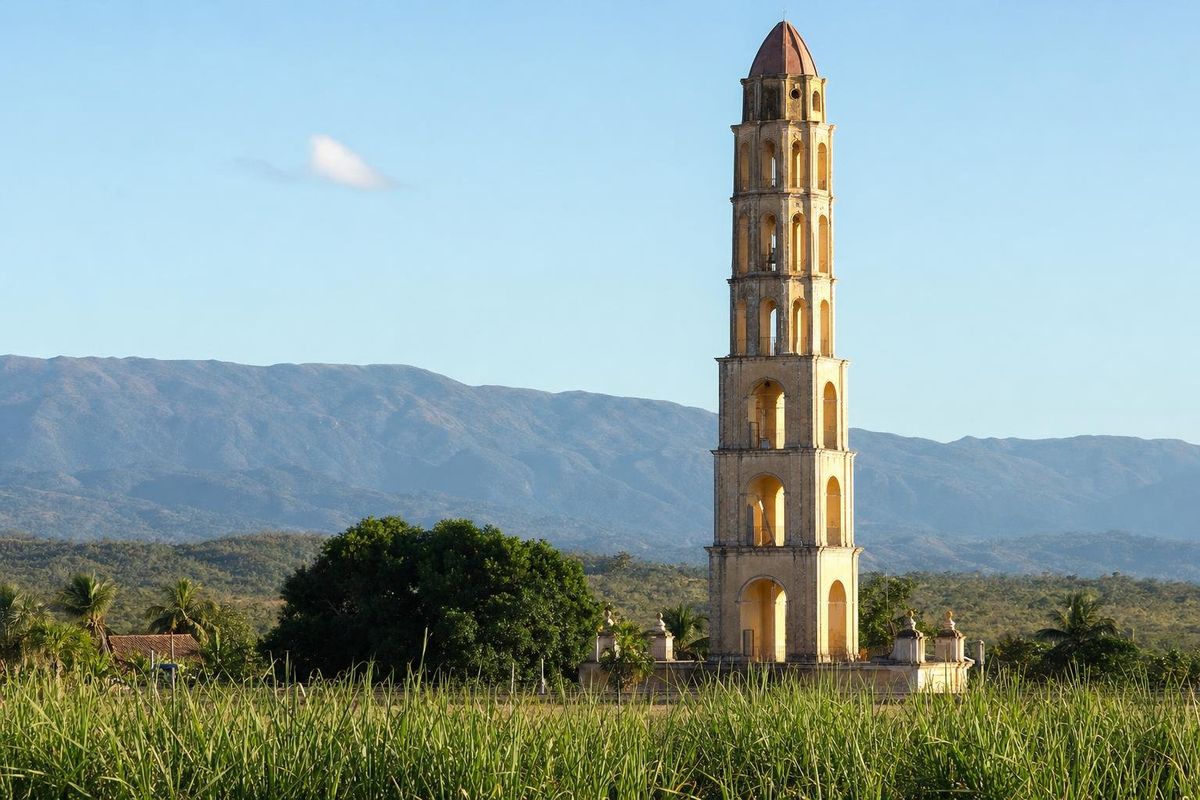
Manaca Iznaga
Green gold
Henequen is an agave native to the Yucatán, with long, stiff leaves that yield a strong fiber. The Maya used it for rope and sacks long before the Spanish arrived. In the second half of the nineteenth century, demand exploded: the mechanical reaper-binder, adopted on farms across North America, needed huge amounts of binder twine, and henequen fiber, shipped from the port of Progreso, supplied much of it. Growers called it oro verde, green gold.
The thin, rocky soil of northwestern Yucatán suited the plant, and old cattle and maize estates turned into henequen plantations. By the early twentieth century a small circle of families controlled most of the trade, and the mansions of Mérida's Paseo de Montejo were built on it. Banks, theaters and French-style villas went up in the city on the same money, and Progreso grew from a small landing into the busiest port on the peninsula.
Life on the estates
The wealth rested on Maya labor. Workers lived on the estates, were paid in scrip at the hacienda store and fell into debts that bound them, and often their children, to the land. Historians describe conditions in this period as close to servitude, and outside journalists of the time drew comparisons to slavery. Reforms after the Mexican Revolution ended the debt system, and in 1937 the government of Lázaro Cárdenas expropriated most henequen land and handed it to communal ejidos.
The industry itself declined over the following decades, undercut by competition from other producers and, decisively, by synthetic fibers after the Second World War. Many haciendas were abandoned, their machine houses roofless and their narrow-gauge tracks overgrown.
What to look for at a hacienda
A typical henequen hacienda has a main house with a long arcade, a chapel, a casa de máquinas where the leaves were shredded, a tall chimney for the steam engine, drying yards and workers' houses set apart. Rails for mule-drawn carts, the truck lines, ran into the fields. Some estates have a cenote, used for water and now for swimming, as at Hubiku near Valladolid. Ochil, south of Mérida, keeps a small henequen exhibit and its cart rails.
Today the haciendas range from crumbling shells beside village plazas to restored hotels and event venues. A few community projects run them as workshops or museums. Even the abandoned ones are usually still woven into village life: the chapel may hold Sunday mass, and the main gate often faces the plaza of a settlement that grew out of the old workers' quarter. Henequen fields still survive in patches, recognizable by their straight rows of blue-gray rosettes.
Plantations elsewhere
Other regions had their own estate economies. In Cuba, the sugar plantations of the Valle de los Ingenios near Trinidad, listed by UNESCO together with the town, worked on enslaved labor; the tower at Manaca Iznaga is said to have served to watch over the fields. In Oaxaca, agave of a different kind feeds the small mezcal distilleries of Santiago Matatlán, where the roasting pits and stone mills are still worked by hand.
More haciendas in Yucatán
Dozens of henequén estates survive around Mérida in very different states. Sotuta de Peón still runs its old fiber machinery for visitors. Yaxcopoil keeps its machine house and Moorish-style double arch much as it was left. Teya, San José Cholul, San Andrés, Santa Rosa, Xcanatún and Yabucú have been turned into hotels or restaurants, and Chunchucmil, near the Gulf coast, lies beside a large Maya site of the same name. Access to the hotel haciendas is usually limited to guests or diners.
Questions about haciendas
What is henequen used for?
Mainly rope and twine. It was the dominant binder twine for grain harvests in the late nineteenth and early twentieth centuries, and smaller quantities are still produced for crafts and cordage.
Why did the henequen industry collapse?
Competition from other fiber producers, land reform after the Revolution and, above all, synthetic fibers from the mid twentieth century onward.
Can you visit haciendas that are not hotels?
Yes. Some operate as museums or community projects, and many abandoned ones stand in villages, though some sit on private or ejido land and are not open to the public.
Is henequen the same as sisal?
They are related agaves. Sisal takes its name from the old Yucatán port that shipped henequen, and the two words are often used interchangeably.