
0 m · Surface · People of Mexico · Oaxaca
Zapotec Pottery: Hand-Built Clay Traditions of the Oaxaca Valleys
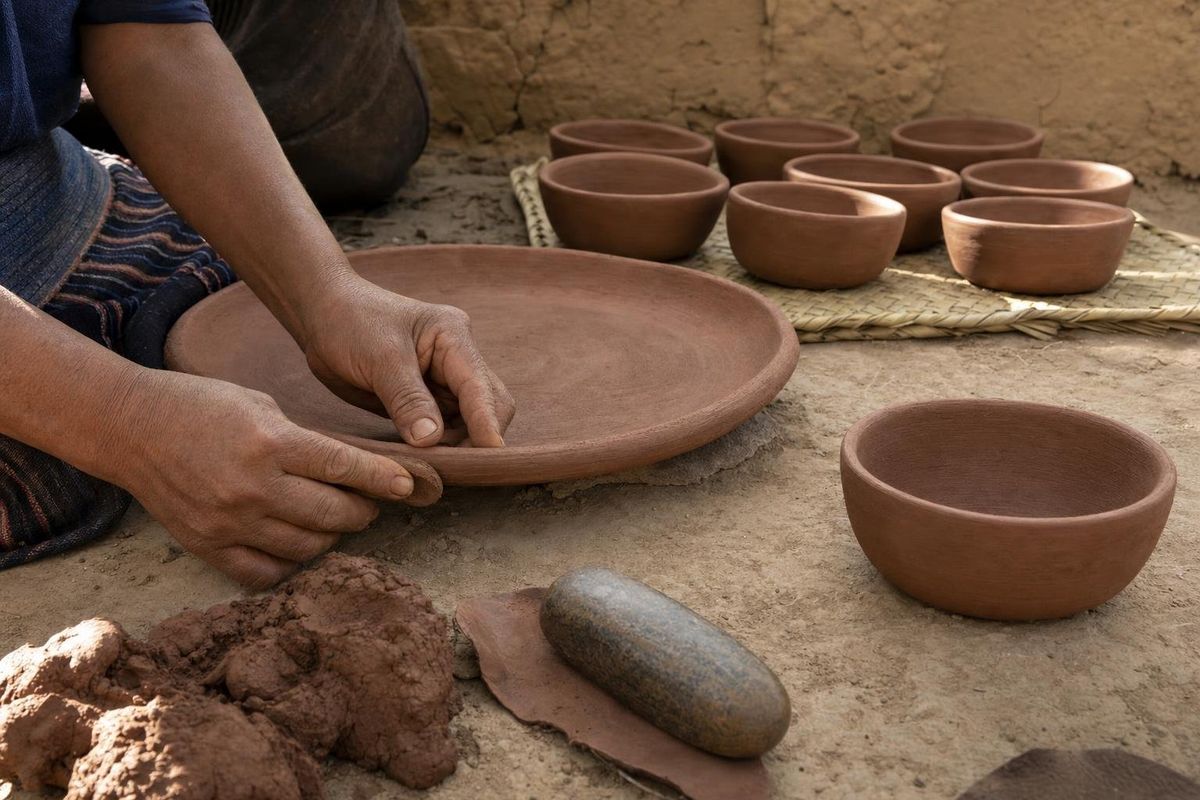
Zapotec pottery is still made by hand in villages around Oaxaca city, mostly without a potter's wheel and fired with wood, in techniques that reach back long before the Spanish arrived. Three traditions stand out for visitors: the green-glazed ware of Santa María Atzompa, the red clay of San Marcos Tlapazola and the black pottery of San Bartolo Coyotepec.
An old craft in the valley
Pottery is one of the oldest crafts in Oaxaca. Archaeologists describe a long sequence of ceramics in the valley, and at Monte Albán the Zapotecs produced fine grey wares and the elaborate funerary urns shaped as seated figures with tall headdresses. Everyday pots for cooking, storing water and serving food were made in villages throughout the valley.
Spanish contact brought the potter's wheel and lead glazes. Glazing took hold in some villages, and the wheel in fewer: many Oaxacan potters, especially women, continued to build vessels by hand, and they still do. In many families the skill passes from mothers and grandmothers to daughters.
For much of the twentieth century, village pottery was sold mainly in the weekly markets of the valley, where cooks bought comales, bean pots and water jars that would be used until they broke. Plastic and aluminum have taken over much of that trade. Many potters have responded by making decorative pieces, tableware for restaurants and design shops, and work for collectors, while still producing the everyday shapes their villages are known for.
How a pot is made by hand
Preparing the clay
Clay is dug from local deposits, often by the potters' own families. It is dried in the sun, broken up and ground, then sieved and soaked in water. Fine sand or another temper is kneaded in to make the clay workable and to help the finished piece survive firing without cracking. Each village has its own clay and its own recipe, which is one reason the wares look so different.
Shaping
Without a wheel, potters use several methods. Some press a slab of clay into or over a mold for the base, then build the walls with coils. Others pinch and pull the clay upward from a single lump. A widely used aid is a turntable made from two shallow dishes, one upturned beneath the other, so the top dish can be spun by hand while the potter shapes the walls. Gourd scrapers, corn cobs, pieces of leather and smooth stones thin, smooth and polish the surface.
Drying and burnishing
Pieces dry slowly in the shade, then in the sun. Many are burnished while leather-hard: rubbed with a smooth stone until the surface takes on a soft sheen.
Firing
Firing is done with wood. In some villages pots are stacked on the ground and covered with wood, bark and dried dung in an open fire; in others they go into simple kilns of stone or adobe, some partly sunk into the ground. Firing temperatures are relatively low compared with industrial ceramics, which keeps the pottery porous, a useful quality for water jars, which stay cool through evaporation.
Three villages, three wares
| Village | Location | Ware | Look for |
|---|---|---|---|
| Santa María Atzompa | Northwest of Oaxaca city, below Monte Albán | Green-glazed and natural clay | Glazed cookware, sculpted figures, plant-like vessels |
| San Marcos Tlapazola | Tlacolula valley, east of the city | Burnished red clay | Comales (griddles), bowls, jugs, tableware |
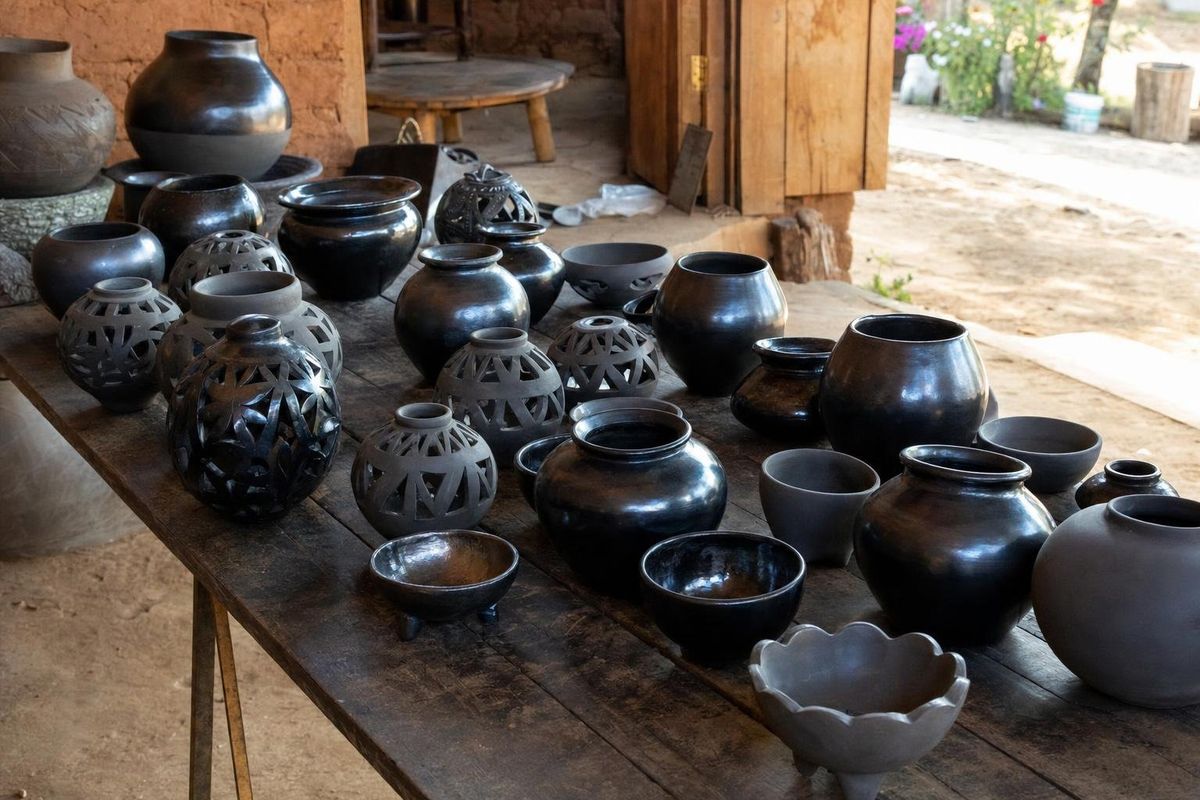
| San Bartolo Coyotepec | About 12 km south of the city | Black pottery (barro negro) | Burnished jars, openwork lanterns |
Atzompa's potters have long made the green-glazed pots and casseroles sold in Oaxaca's markets, as well as sculptural pieces such as female figures and vessels decorated with leaves and flowers. The village has a craft market and, on the hill above, a small archaeological site related to Monte Albán.
In San Marcos Tlapazola, women potters make red clay vessels coated with a red slip, polished and fired in open fires. The pieces are mostly practical: comales for tortillas, bowls, pitchers and plates, increasingly sold to restaurants and design shops.
Coyotepec's black pottery gets its color from a reduction firing that fills the clay with carbon. It has its own page: San Bartolo Coyotepec.
Lead and food safety
Traditional glazes in Mexico were made with lead, and lead can leach into food, especially acidic or hot dishes. Government programs and potters' groups have worked for years to replace it with lead-free glazes, and many Atzompa workshops now advertise glazes sin plomo (lead-free). For any glazed piece meant for cooking or serving, ask whether the glaze is lead-free; if the seller cannot say, use the piece for decoration. Unglazed burnished ware like Tlapazola's has no glaze to worry about, but it should be cured before cooking, usually by rubbing it with lime or oil and heating it gently; the potter will explain the local method.
Visiting and buying
- Atzompa is easy to reach by taxi or colectivo from Oaxaca city, and its craft market gathers many workshops in one place.
- Tlapazola sits a short way off the road to Tlacolula; some potters sell at Tlacolula's Sunday market.
- Buying directly from the potter is the best way to make sure the money reaches the family that did the work.
- Handmade pots vary. Slight asymmetries and fire marks are signs of the method, not defects.
- Carry fragile pieces in hand luggage, wrapped in newspaper or cloth.
Unglazed clay cookware lasts longer with a little care. Heat it slowly, keep it away from sudden temperature changes, and avoid putting a cold pot straight onto a hot flame. Water jars work best when left unglazed and kept in the shade, where evaporation through the walls cools the water inside.
Ask before photographing anyone at work. Related crafts, from rugs to painted wood carvings, are collected in the People of Mexico section.
Zapotec pottery: questions
Do Oaxacan potters use a wheel?
Many do not. Hand-building, coiling and a simple turntable made from two dishes remain common in the villages around Oaxaca city.
Is Atzompa green pottery safe for food?
Only if the glaze is lead-free. Many workshops now use lead-free glazes; ask before buying a piece for cooking or serving.
What is a comal?
A flat griddle, traditionally of clay, used to cook tortillas and toast chiles and seeds over a fire.
Where can visitors see Zapotec pottery being made?
In Santa María Atzompa, San Marcos Tlapazola and San Bartolo Coyotepec, where many families work at home and welcome visitors.
Why is Oaxacan pottery porous?
It is fired at relatively low temperatures with wood. The porosity keeps water jars cool through evaporation.
Nearby on the map
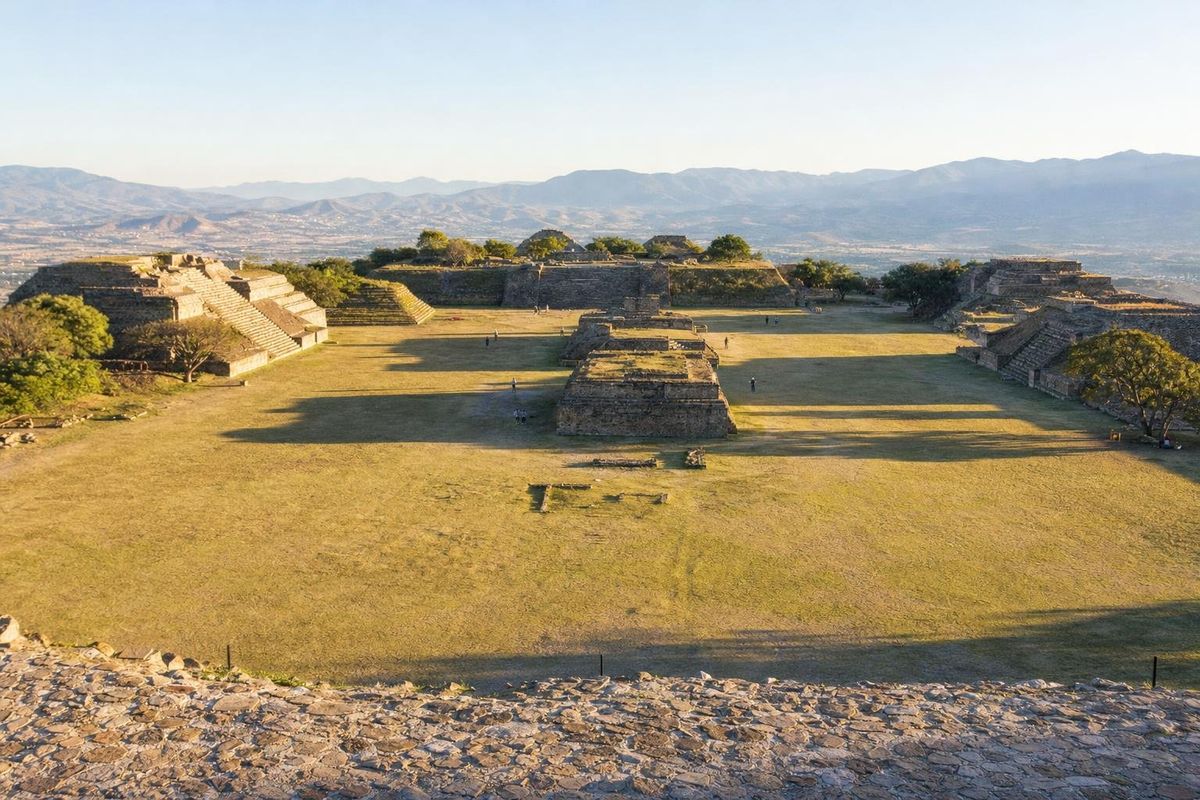
AI-generated image Maya Ruins · Oaxaca
Monte Albán
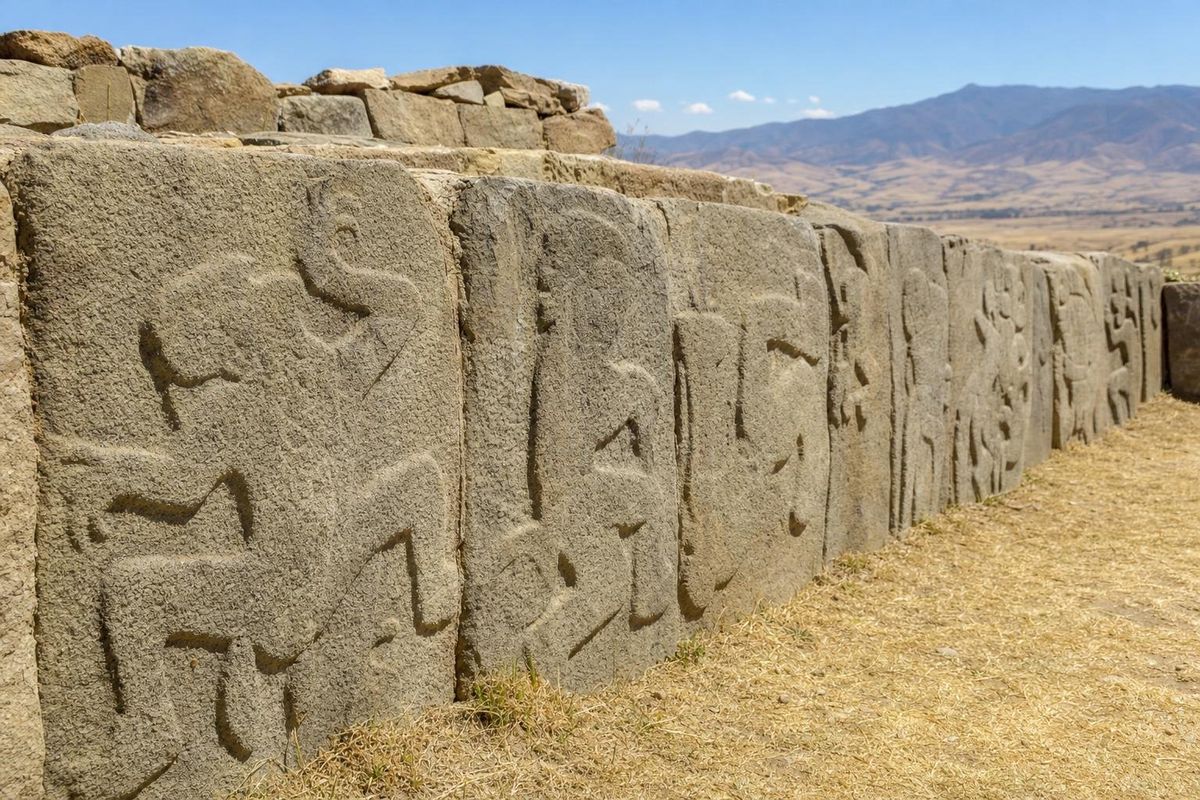
AI-generated image Maya Mysteries · Oaxaca
Zapotec Danzantes
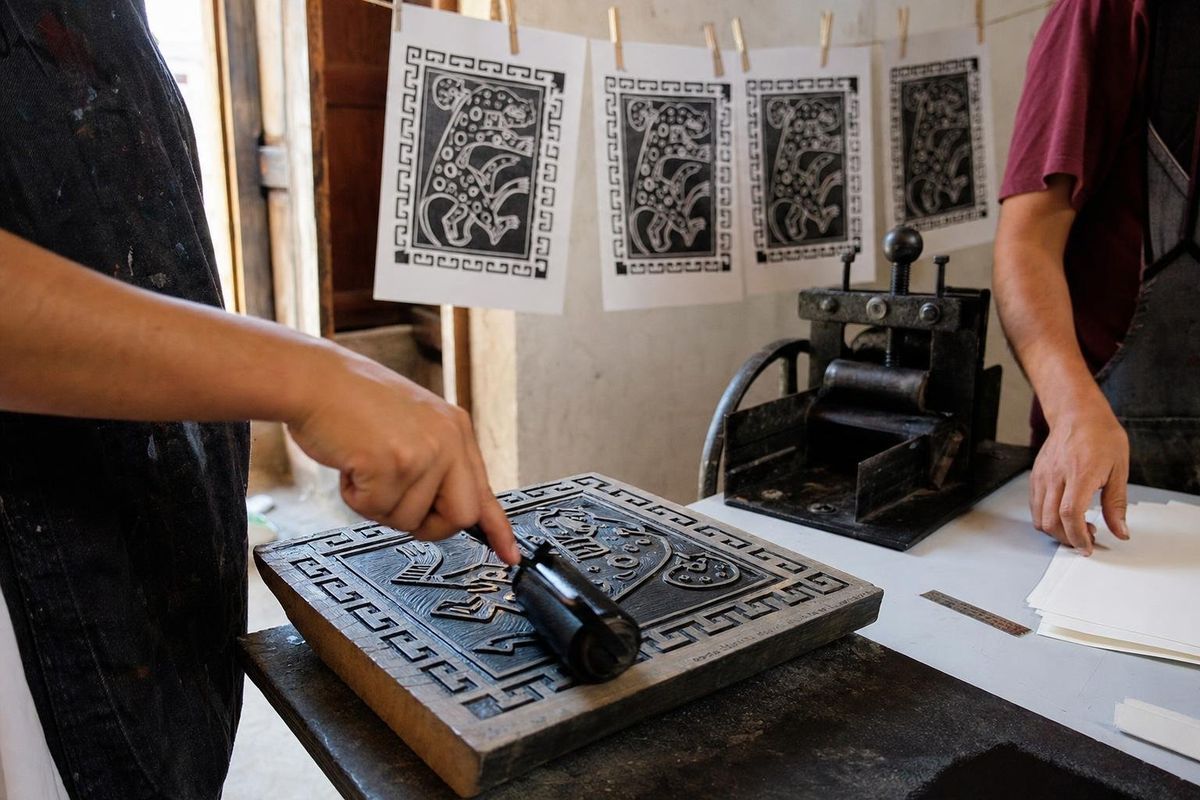
AI-generated image People of Mexico · Oaxaca
Zapotec art
AI-generated image Towns & Villages · Oaxaca
San Bartolo Coyotepec