
−5 m · Shallows · Towns & Villages · Oaxaca
San Bartolo Coyotepec, the Black Pottery Village of Oaxaca, Mexico
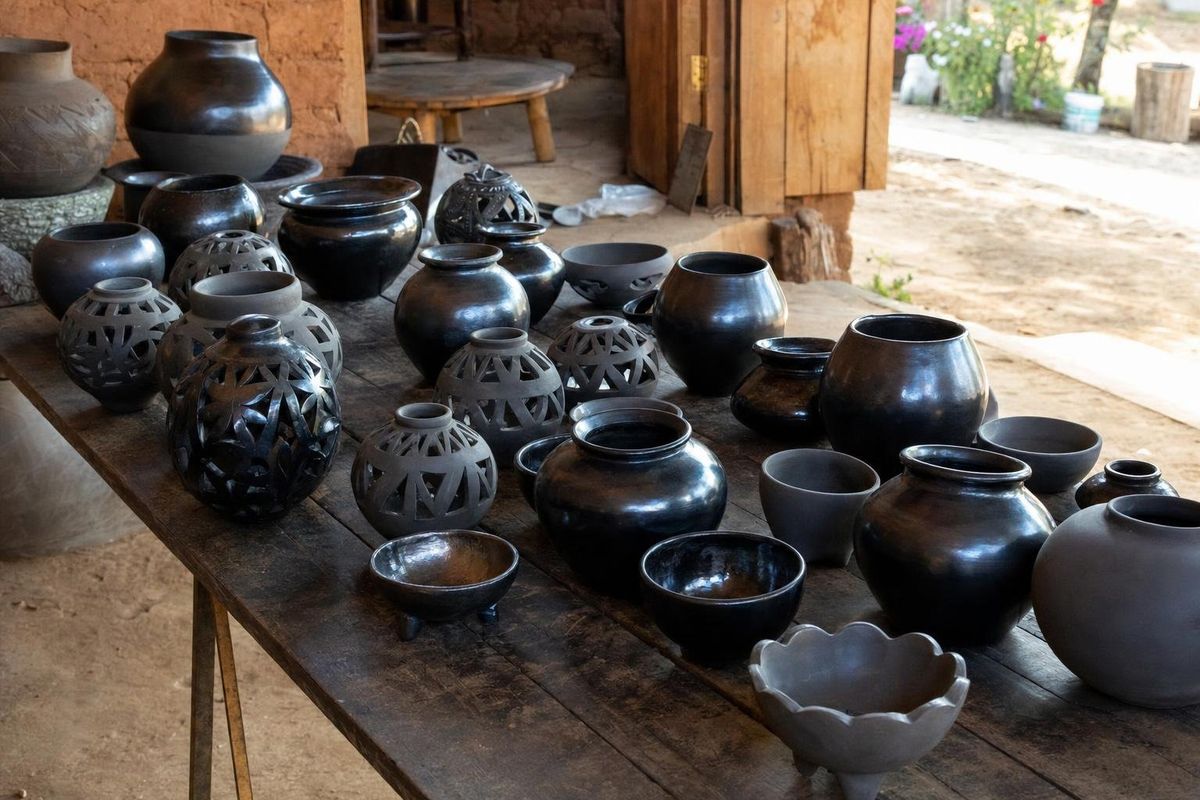
San Bartolo Coyotepec sits about 12 km south of Oaxaca city (say it wa-HA-ka) on the highway to Ocotlán, and it is the place to see Oaxaca pottery at its most distinctive: barro negro, the black pottery that turns up in shops across Mexico. Most of the town's family workshops will show how a lump of grey local clay becomes a polished black jar, and many sell straight from the patio.
Why the pottery here is black
The clay dug around Coyotepec is a fine grey, rich in iron. Its color comes from the firing, not from any glaze or paint. Potters stack the dried pieces in a kiln that is partly sunk into the ground, light a wood fire beneath, and toward the end of the firing seal the openings so the fire is starved of air. That reduction atmosphere fills the clay with carbon and turns it from grey to a deep charcoal black right through.
The shine is a separate step. Before firing, while a piece is leather-hard, the potter rubs its surface for a long time with a smooth stone, often quartz, or a piece of polished metal. Burnishing presses the clay particles flat, and after the reduction firing those areas come out with a soft, almost metallic gloss. Leave a band unburnished and it stays matte, which is how the two-tone patterns of many pieces are made.
For most of its history Coyotepec pottery was a working ware: large matte jars called cántaros for carrying water and storing mezcal, which the clay keeps cool. The glossy burnished style that collectors know today became widespread from the middle of the twentieth century, when local potters found that polishing before a lower firing produced the shine. The change turned a utilitarian craft into a decorative one, and the village's reputation grew with it.
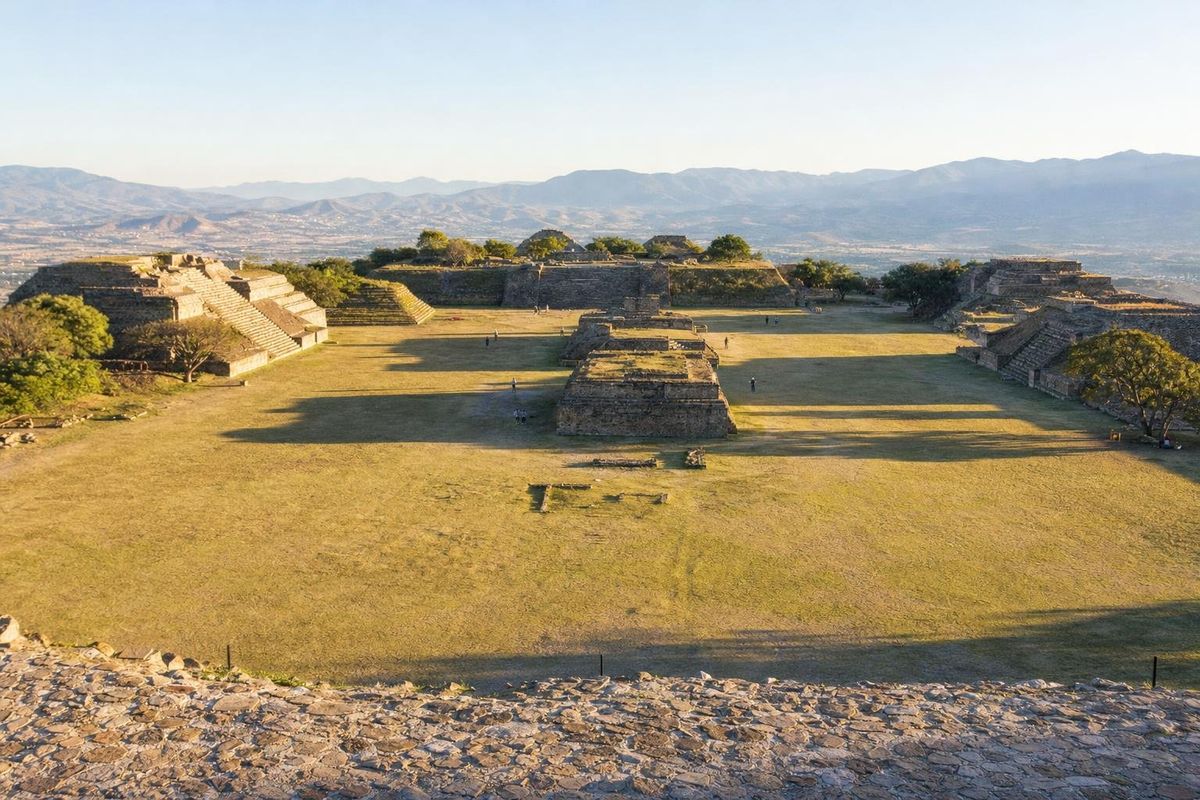
Grey and black wares have deep roots in the Oaxaca Valley. Archaeologists working at Monte Albán describe a long tradition of grey pottery among the ancient Zapotecs, and Coyotepec's potters are often seen as heirs to that line, even if the modern black finish is a later refinement.
Watching black pottery being made
Many workshops in the village open their doors to visitors, and a short demonstration usually covers the whole sequence. Traditionally the potter shapes a vessel without a wheel, turning the clay on two shallow dishes set rim to rim, one upturned beneath the other, so the top dish spins like a simple turntable. Walls are thinned by hand and with scraps of gourd or leather.
After shaping, a piece dries slowly in the shade, sometimes for weeks. Rush it and it cracks in the kiln. Then comes the burnishing and, on decorative pieces, the calado: openwork cut through the walls with a fine blade, producing lanterns, vases and spheres patterned with flowers, stars or Zapotec-style frets. Small incised lines and dots are added before the clay gets too hard to cut.
Firing days are worth asking about, since the pit kilns are not lit every day. The smoke, the smell of wood and the moment the pieces come out still warm and black are the part most visitors remember.
The state museum of popular art
Coyotepec is also home to the Museo Estatal de Arte Popular de Oaxaca, a state museum of folk art near the main square. Its rooms show black pottery alongside other Oaxacan crafts, which helps when comparing what is made in different villages before buying. Opening days and hours change, so check locally.
The square itself, with its church and the small market around it, is a pleasant place to stop. Stalls along the highway sell pottery too, though the selection and finish vary a great deal from one stand to the next.
Other Oaxaca pottery towns nearby
Black pottery is the best known of several clay traditions in the valleys around Oaxaca city, and each village has its own look. A morning or a full day can take in two or three of them.
- Santa María Atzompa, northwest of the city near the foot of Monte Albán, is known for green-glazed pottery and for whimsical figures and plant-like sculpted vessels.
- San Marcos Tlapazola, in the Tlacolula valley, makes red clay cookware and tableware, burnished and fired in open bonfires.
- Ocotlán de Morelos, farther south on the same road as Coyotepec, is known for brightly painted clay figures and has a large Friday market.
The craft background behind all three, from clay preparation to firing, is covered in more detail on the page about Zapotec pottery traditions.
Getting to Coyotepec
From Oaxaca city, follow Highway 175 south toward Ocotlán and Puerto Ángel. Coyotepec is the first village of note after the airport turn-off, and the drive takes roughly 20 to 30 minutes depending on traffic leaving the city. Shared taxis (colectivos) and local buses heading to Ocotlán pass through; ask to be let off in San Bartolo. Routes and fares change, so check at the stop.
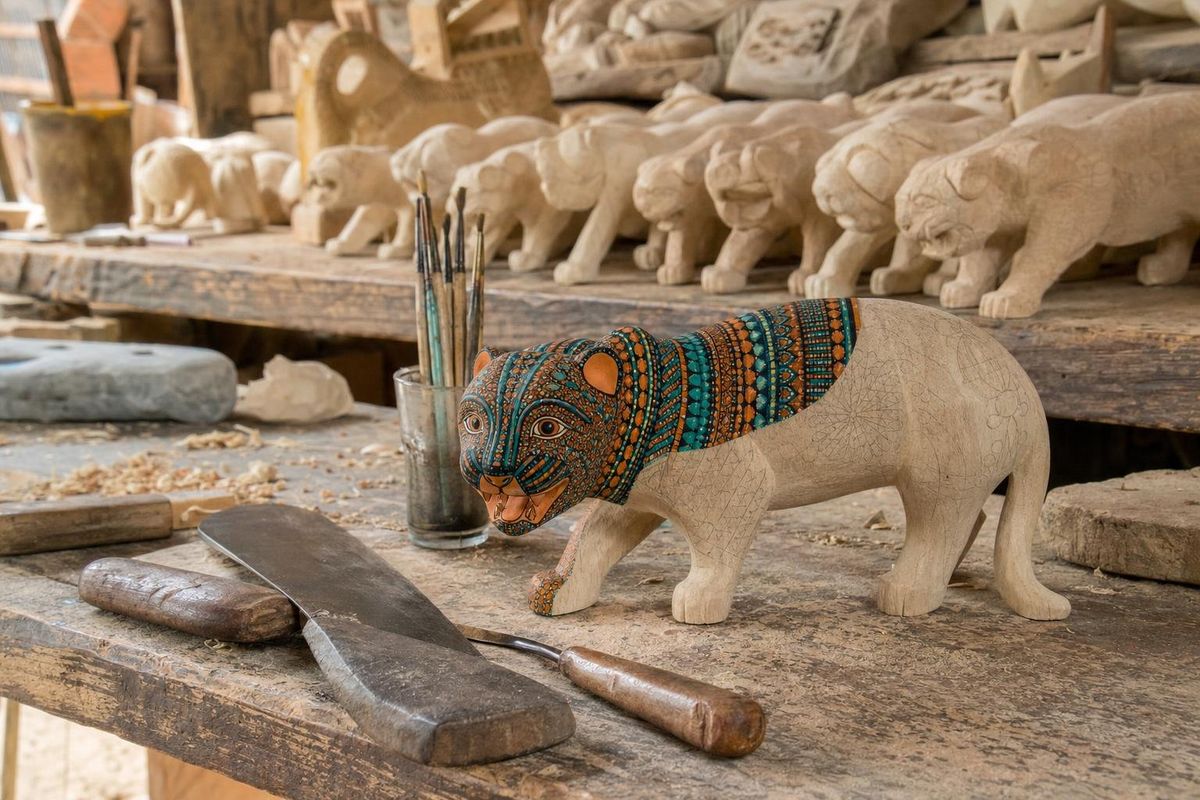
The village combines easily with San Martín Tilcajete, the wood-carving village a little farther south on the same road, and with Ocotlán's market on a Friday.
Buying black pottery well
Burnished black pottery is decorative. The low firing that gives it the shine leaves the clay porous, so a polished vase will not hold water for long, and nothing in this style belongs in an oven or on a stove. Matte pieces fired at higher temperatures are sturdier, but treat any piece as an ornament unless the maker says otherwise.
A few points help when choosing:
- Look for an even sheen without dull patches, and for openwork with clean, regular cuts.
- Tap the piece lightly: a clear ring suggests no hidden cracks, a dull thud is a warning.
- Some cheaper pieces sold elsewhere get their shine from shoe polish or wax; real burnishing is part of the clay surface and does not rub off on a fingertip.
- Buying at a workshop puts the money with the family that made the piece. Light bargaining is normal at stalls, less so in a workshop that has just spent time showing you its work.
For the trip home, ask for the piece to be wrapped in newspaper and carried as hand luggage. Openwork lanterns are the most fragile and travel best in a small box padded on all sides.
More craft villages around Oaxaca city and across the south are listed under towns and villages.
Questions about San Bartolo Coyotepec
Is Oaxaca black pottery painted or glazed?
Neither. The black color comes from firing the grey local clay in a kiln starved of oxygen, and the shine comes from rubbing the surface with a stone before firing.
Can black pottery from Coyotepec hold water or food?
Burnished pieces are porous and are best treated as decorative. Matte, traditionally fired jars were once used for water and mezcal, but modern glossy pieces are not made for daily use.
How far is San Bartolo Coyotepec from Oaxaca city?
About 12 km south on Highway 175, roughly 20 to 30 minutes by car or colectivo.
Can visitors watch the pottery being fired?
Many workshops show the shaping and burnishing to visitors. Kilns are not lit every day, so ask at a workshop which day the next firing is planned.
What other pottery villages are near Oaxaca city?
Santa María Atzompa for green-glazed ware, San Marcos Tlapazola for red clay, and Ocotlán de Morelos for painted clay figures are the best known.
Nearby on the map
AI-generated image Towns & Villages · Oaxaca
San Martín Tilcajete
AI-generated image Maya Ruins · Oaxaca
Monte Albán
AI-generated image Maya Mysteries · Oaxaca
Zapotec Danzantes
AI-generated image People of Mexico · Oaxaca
Zapotec art