
−5 m · Shallows · Towns & Villages · Oaxaca
Alebrijes Meaning, Origins and the Carvers of San Martín Tilcajete
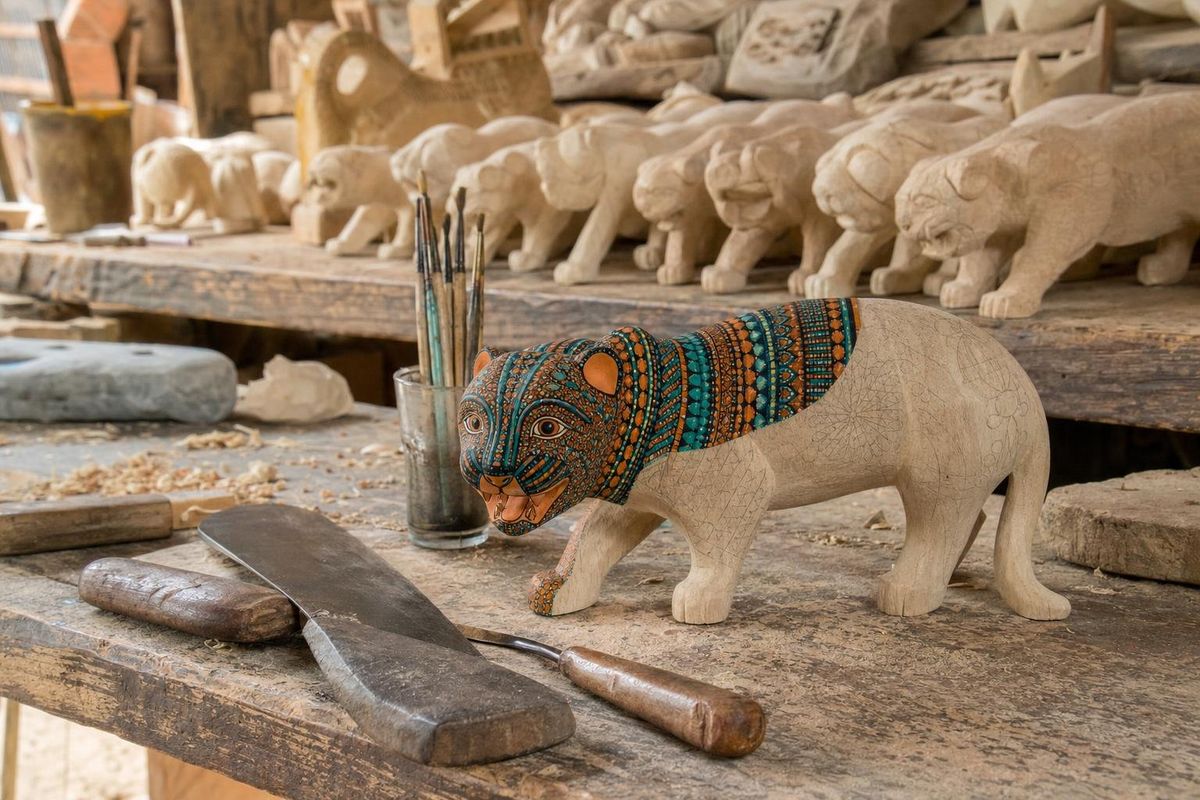
Alebrijes are fantastical painted creatures, and in Oaxaca the name means figures carved from soft copal wood and covered in fine, dense patterns. San Martín Tilcajete, about 25 km south of Oaxaca city on the road to Ocotlán, is one of the two villages most closely tied to the craft, and most of its families either carve, paint or sell.
Alebrijes meaning: where the word comes from
The word itself has no older meaning in Spanish or Zapotec. It was coined in Mexico City in the 1930s by the papier-mâché artist Pedro Linares, who made brightly colored hybrid monsters of paper and paste and gave them that invented name. His creatures, part dragon, part bird, part something else, became famous in the following decades and are still made by cartonero workshops in the capital.
The Oaxacan version is a separate branch. Wood carving of toys and animal figures already existed in the Oaxaca Valley, and from around the 1980s carvers in San Martín Tilcajete and San Antonio Arrazola began painting their figures with the bold palettes and patterns associated with Linares's paper creatures. Collectors and shops started calling the results alebrijes, and the name stuck. So the term covers two crafts: paper monsters from Mexico City and carved, painted wood from Oaxaca.
Many buyers also ask about a personal alebrije. Some Oaxacan workshops link their figures to the tona or nahual, a protective animal companion that, in older Mesoamerican belief, is tied to a person from birth. The ancient Zapotec ritual calendar assigned day signs, many of them animals, and a few carvers offer to identify a buyer's animal from a birth date. This is best understood as a modern reinterpretation built on real calendar traditions, not as a fixed ancient system, and different workshops give different answers for the same date.
Animals and designs
Almost any creature can become an alebrije. Jaguars, armadillos, iguanas, owls, turtles, coyotes, rabbits, cats and dogs are common; so are dragons, winged horses and hybrids with a lizard's tail and a bird's head. Size runs from a figure that fits in a palm to pieces close to a meter long assembled from several blocks.
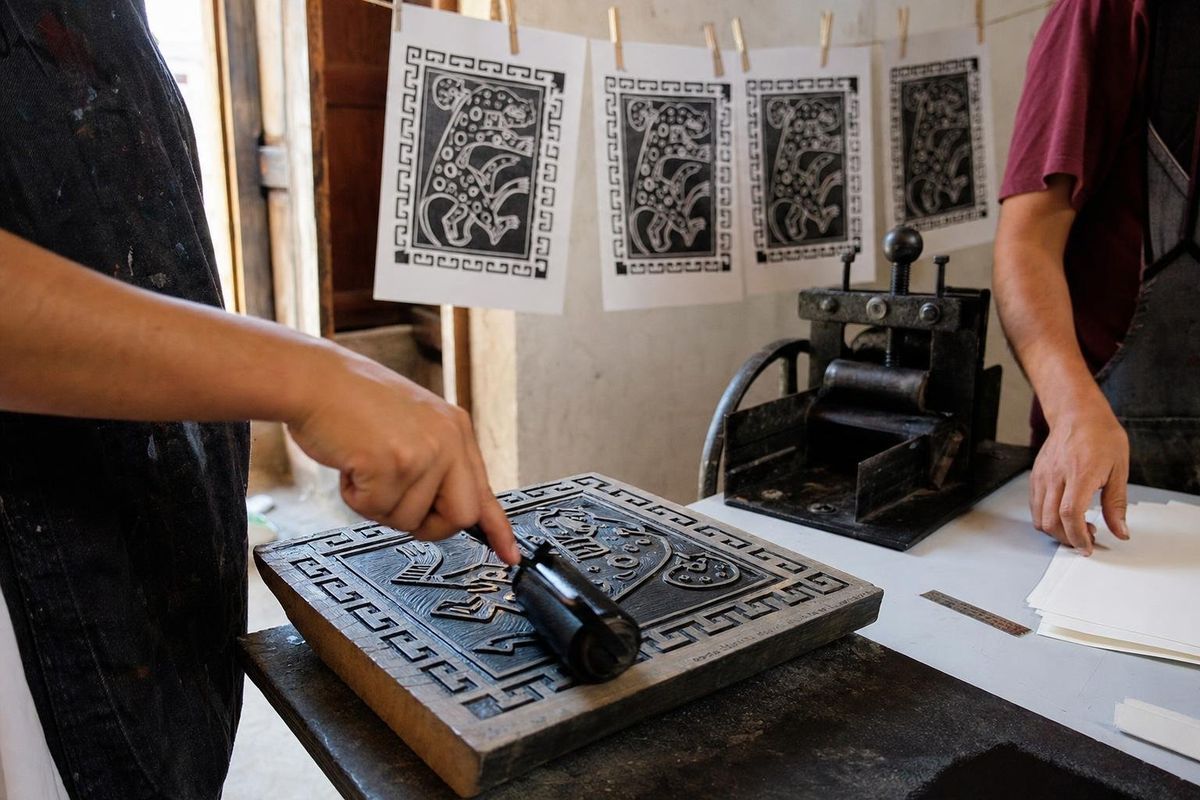
The painting is what separates a careful piece from a quick one. Look closely and the surface is built up in layers: a base color, then stripes, zigzags, dots, petals, small eyes and stepped frets, sometimes thousands of tiny strokes applied with brushes trimmed to a few hairs. Many painters work freehand without drawing a pattern first, though some sketch alebrije designs on paper to plan a large piece. Motifs often borrow from Zapotec stonework and textiles, including the geometric frets seen on the palaces of Mitla.
How a carving is made
- Cutting the wood. Carvers use copal, a fragrant, light tree of the Bursera genus that grows in the dry hills around the valley. It is carved while still green and soft, often with a machete for the rough shape and knives for detail.
- Drying. A fresh carving can take weeks or months to dry, and it may crack as it does. Cracks are filled with a paste of sawdust and glue.
- Protecting. Copal attracts boring insects, so many workshops treat the dry figure before painting, for example by soaking or fumigating it.
- Sanding and painting. The piece is sanded, given a base coat and then painted in layers. Most workshops use acrylic paints today; a smaller number work with natural pigments from plants, minerals and cochineal and will explain the difference.
Ears, tails, wings and legs are frequently carved separately and fitted into drilled holes. Ask before lifting a large piece by a tail.
Copal is not unlimited. As demand grew, the trees near the village were cut faster than they regrew, and several community and workshop programs now replant copal. It is a fair question to ask a seller where the wood came from.
Visiting San Martín Tilcajete
The village is laid out along a few streets running off the main road, with workshop signs on many doors. Visitors are usually welcome to walk into a family patio, see carving or painting in progress and look over finished work without any obligation to buy. The streets around the church and the small square have several larger showrooms; quieter family workshops sit a block or two back.
Tilcajete holds a yearly alebrije fair, and the days before Lent bring a carnival known for masked devils and dancers smeared in oil and soot, with carved wooden masks that are themselves a local specialty. Dates shift from year to year, so check locally before planning around either.
Getting there and combining stops
From Oaxaca city, follow Highway 175 south. The turn-off to Tilcajete comes after San Bartolo Coyotepec, the black pottery village, and the drive takes roughly 40 minutes. Colectivos toward Ocotlán stop at the junction, from where the village center is a short walk or a moto-taxi ride. A day on this road can take in Coyotepec's pottery, Tilcajete's carvings and the Friday market in Ocotlán de Morelos.
Arrazola, the other carving village, lies on the opposite side of the city near Monte Albán, which makes it an easy add-on to a visit to the ruins.
Buying an alebrije
- Check the painting at close range: fine, even lines and crisp dots take hours and show the difference between a careful piece and a quickly decorated one.
- Look for small filled cracks; they are normal in copal and not a defect if sealed well.
- Many workshops sign the base of their pieces. A signature does not guarantee quality, but it does tell you which family made it.
- For shipping, workshops in the village are used to wrapping and boxing pieces. Large pieces with many fitted parts travel more safely disassembled.
Wood carvings can be subject to rules on untreated wood when entering some countries. A treated, painted piece is usually fine, but checking the destination's import rules before buying a large one saves trouble at customs.
More on Oaxaca's craft villages and the people behind them is on the People of Mexico pages and in the overview of towns and villages.
Alebrijes and Tilcajete: common questions
What does the word alebrije mean?
It has no older meaning. The name was invented in Mexico City in the 1930s for papier-mâché fantasy creatures and was later applied to the painted wood carvings of Oaxaca.
What wood are Oaxacan alebrijes made from?
Mostly copal, a soft, fragrant wood from trees of the Bursera genus that grow in the dry hills of the Oaxaca Valley.
How do workshops decide which alebrije belongs to a person?
Some workshops match a birth date to an animal using the Zapotec ritual calendar. It is a modern practice built on older ideas about animal companions, and answers differ between workshops.
Which villages make alebrijes in Oaxaca?
San Martín Tilcajete, south of Oaxaca city, and San Antonio Arrazola, west of the city near Monte Albán, are the two best known carving villages.
Can visitors watch alebrijes being carved and painted?
Yes. Many family workshops in Tilcajete welcome visitors to see work in progress, usually without any obligation to buy.
Nearby on the map
AI-generated image Towns & Villages · Oaxaca
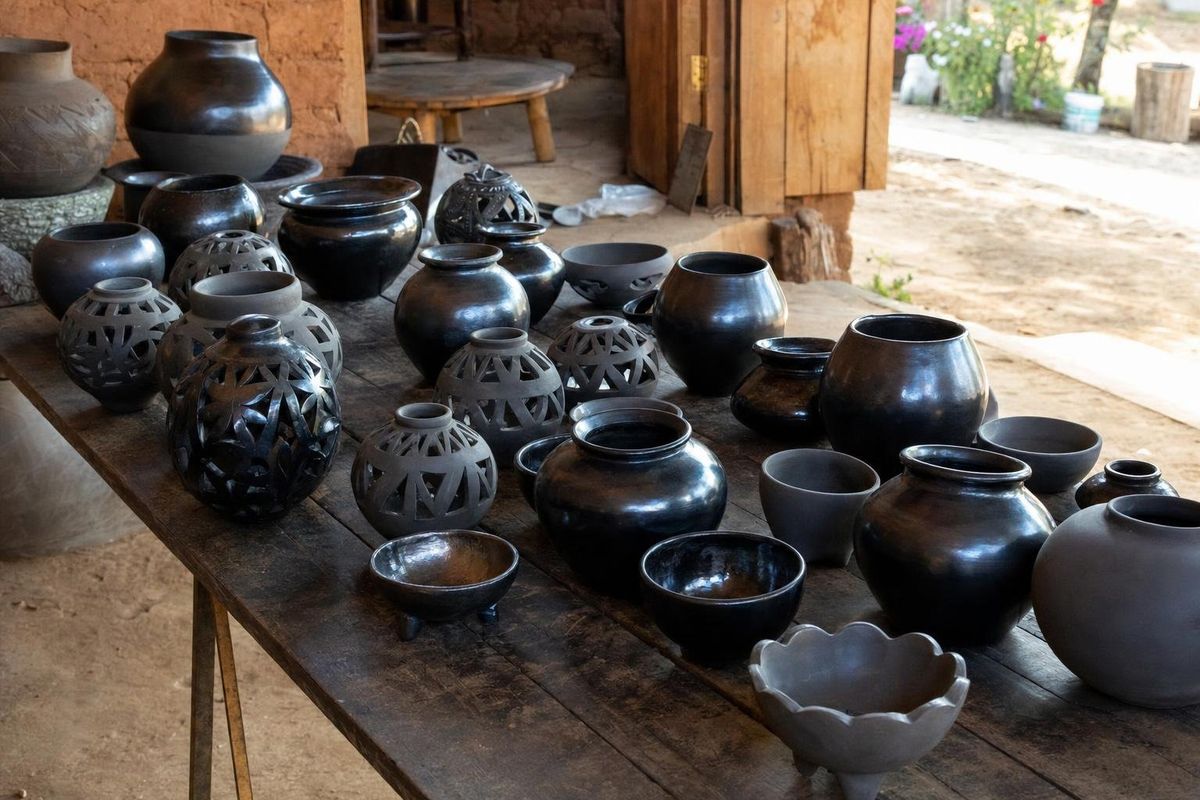
San Bartolo Coyotepec
AI-generated image Maya Mysteries · Oaxaca
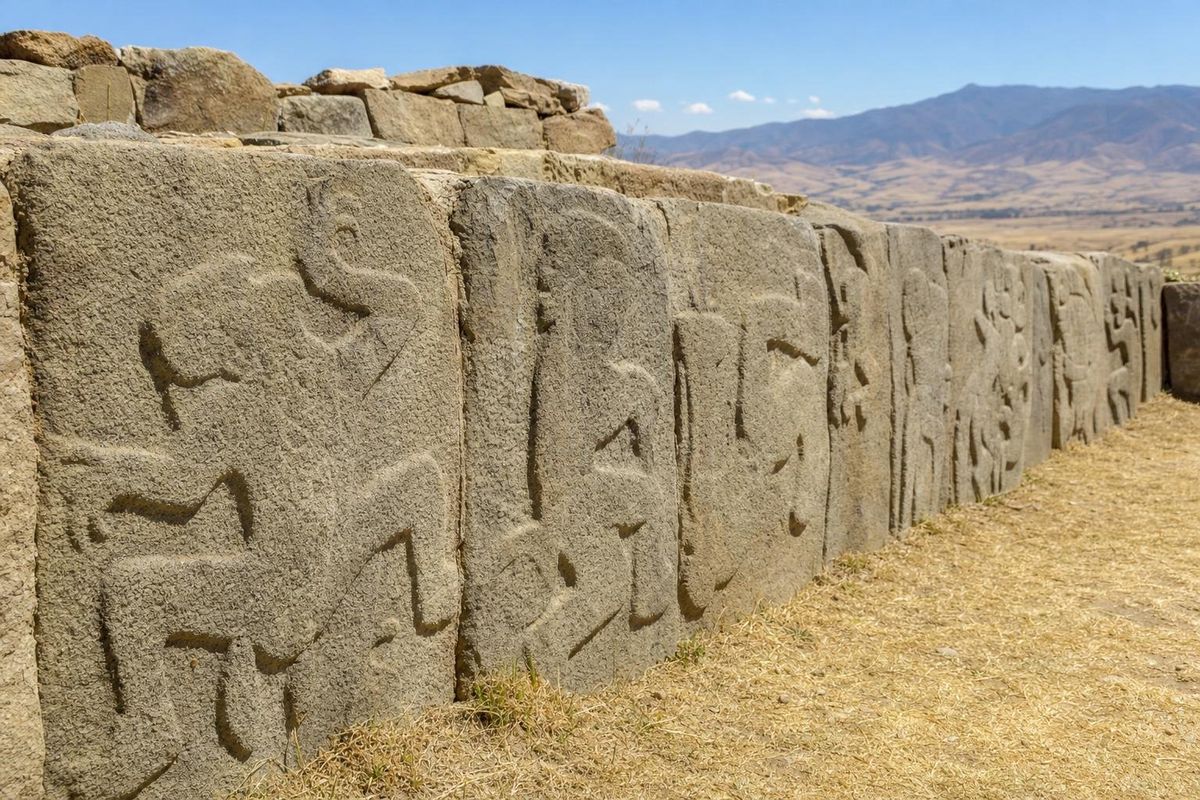
Zapotec Danzantes
AI-generated image Maya Ruins · Oaxaca
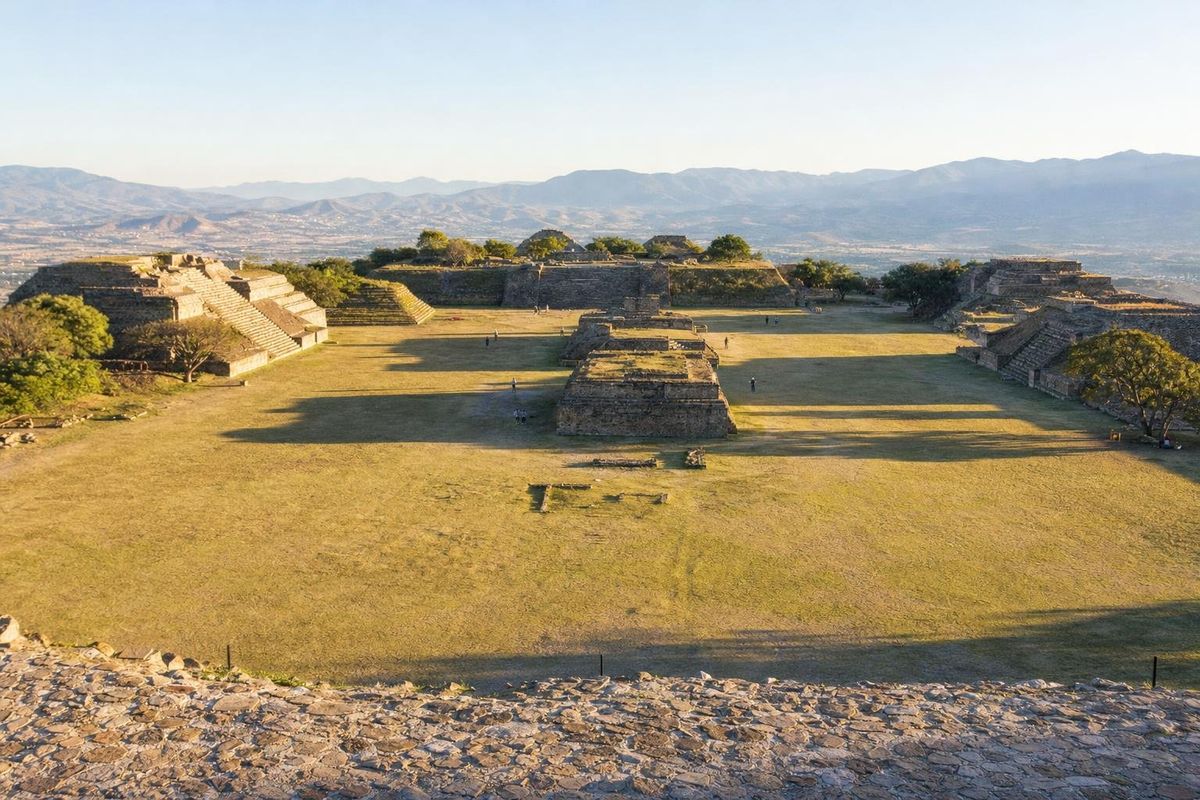
Monte Albán
AI-generated image People of Mexico · Oaxaca
Zapotec art