
−9 m · Glyphs · Maya Mysteries
Maya Mysteries: How the Glyphs Were Read and What the Figures Mean
The same figures appear again and again on Maya buildings and pottery. This section explains them one by one, from what the inscriptions say to what scholars still argue about.
Every guide in Maya Mysteries
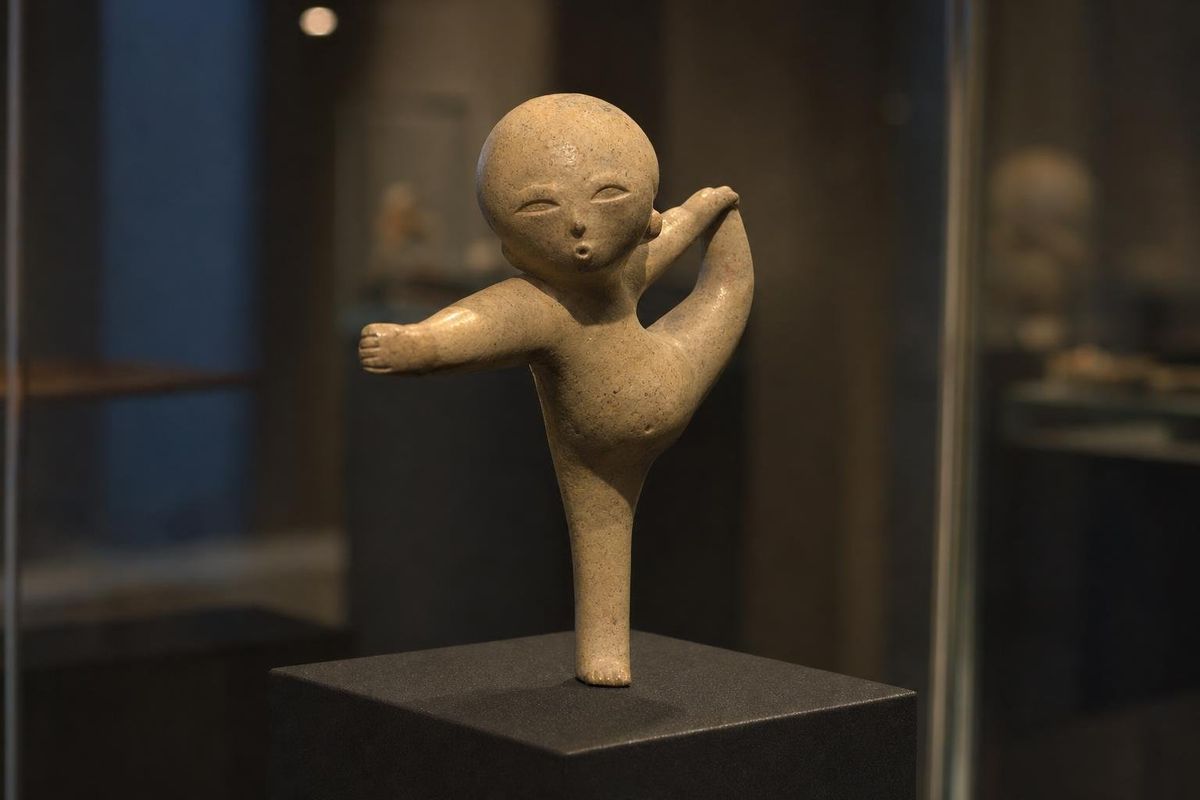
AI-generated image Maya Mysteries · Tabasco
Acrobats
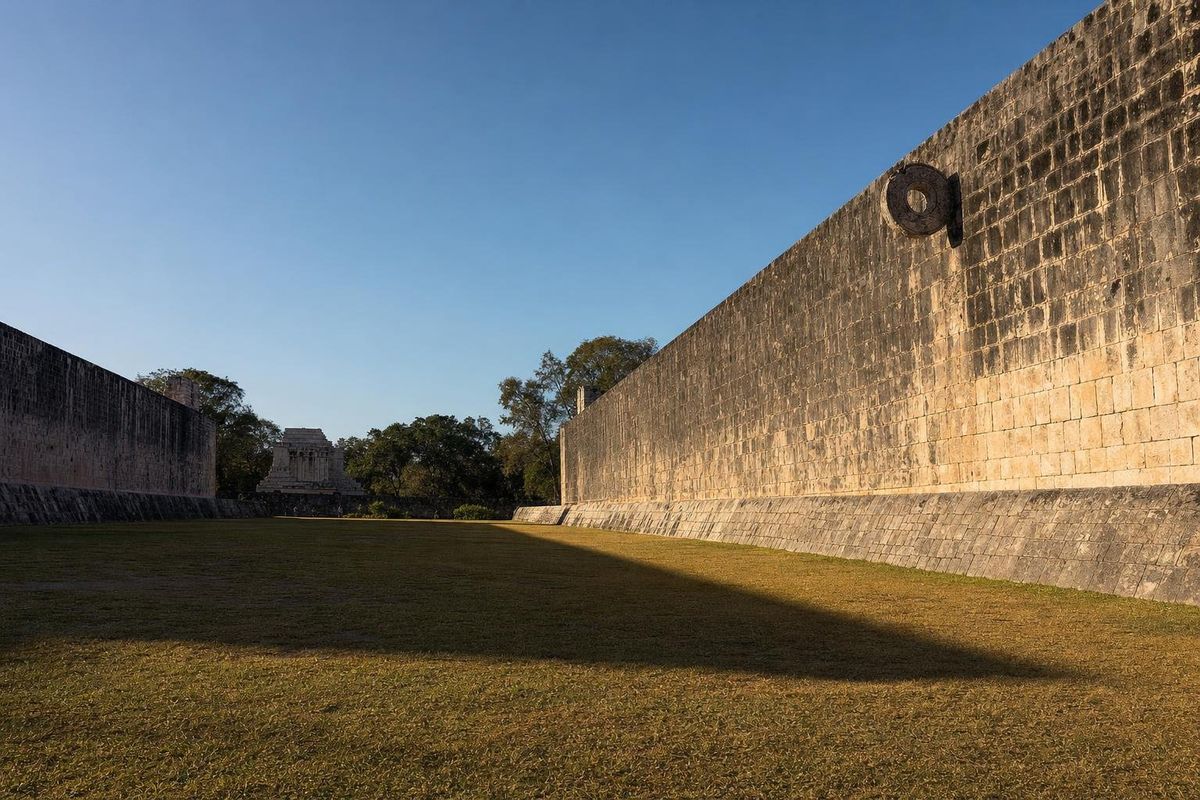
AI-generated image Maya Mysteries · Yucatán
Ballplayers
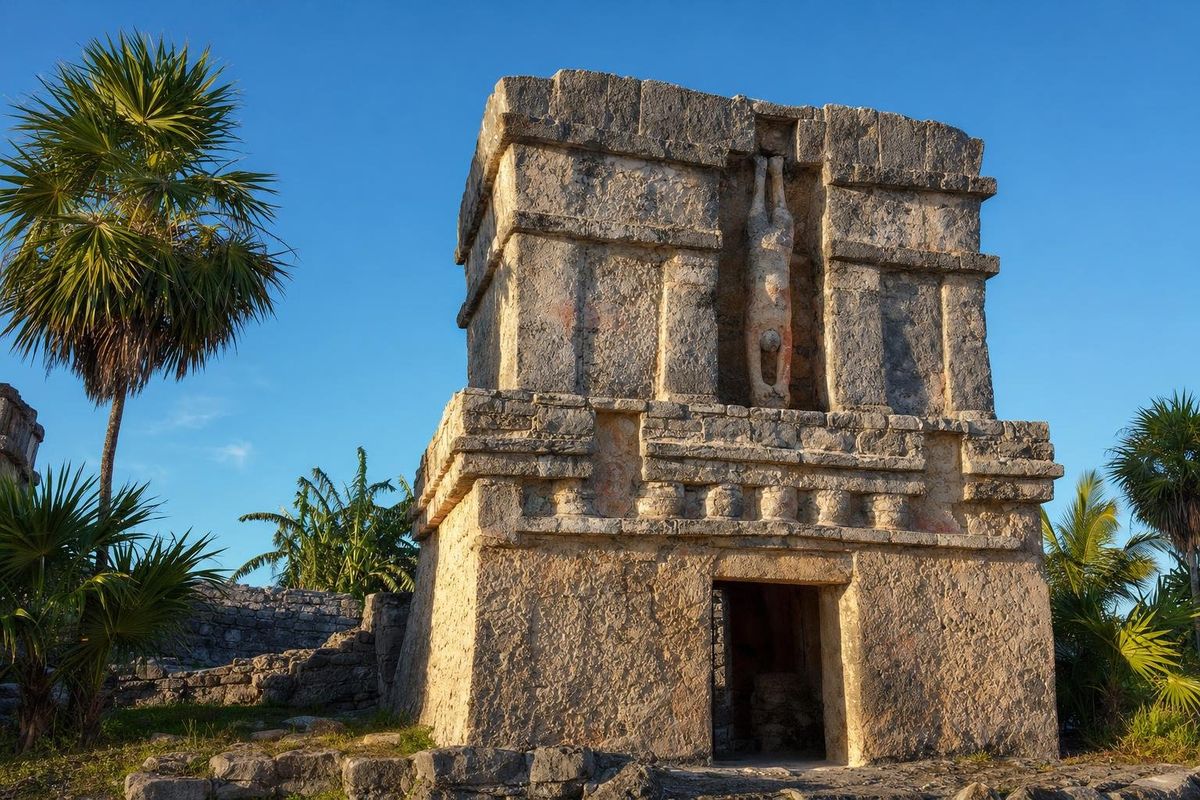
AI-generated image Maya Mysteries · Quintana Roo
Descending God
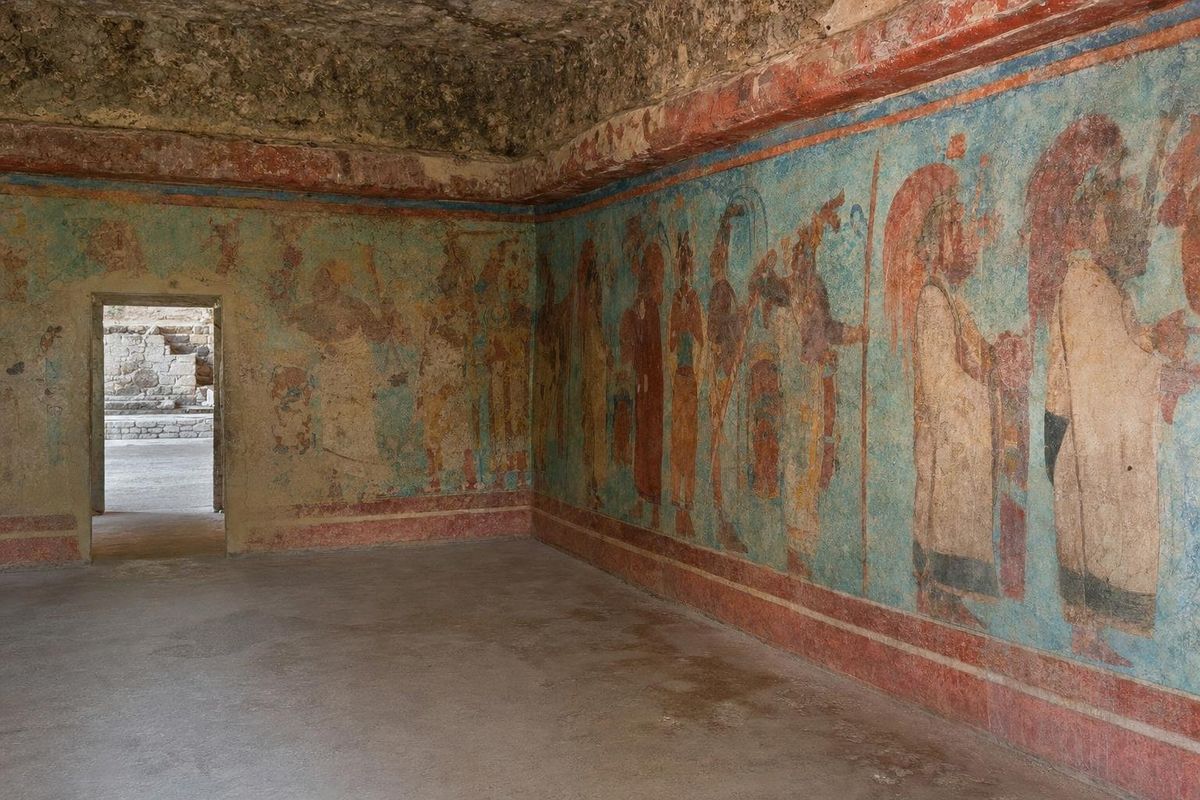
AI-generated image Maya Mysteries · Mexico City
Dress and Ahuianime
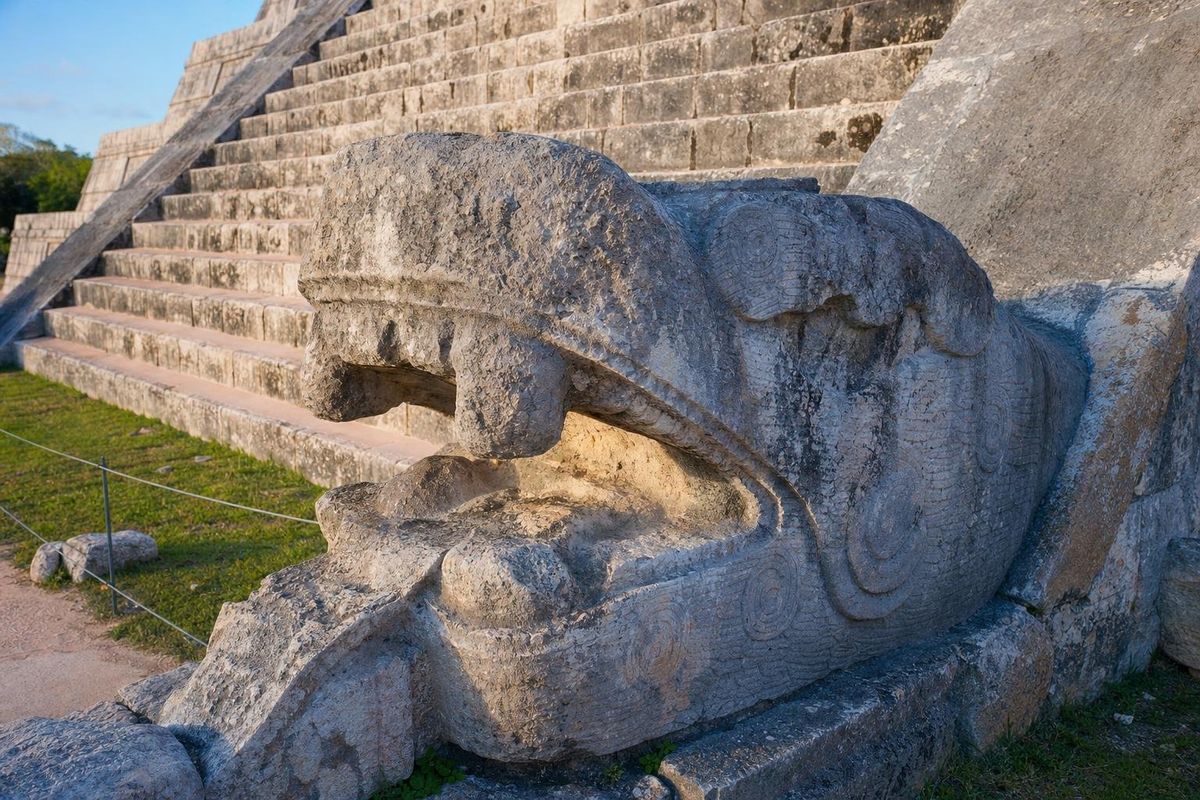
AI-generated image Maya Mysteries · Yucatán
Feathered Serpent
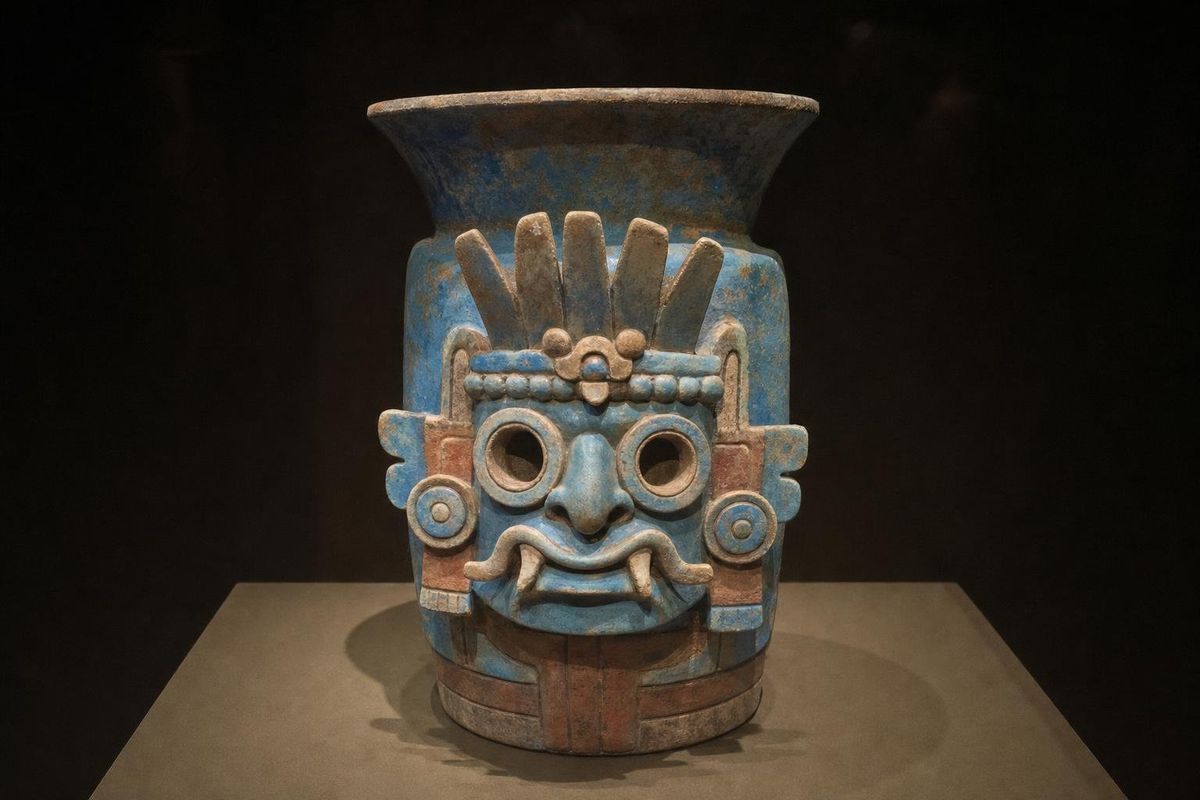
AI-generated image Maya Mysteries · Estado de México
Goggles
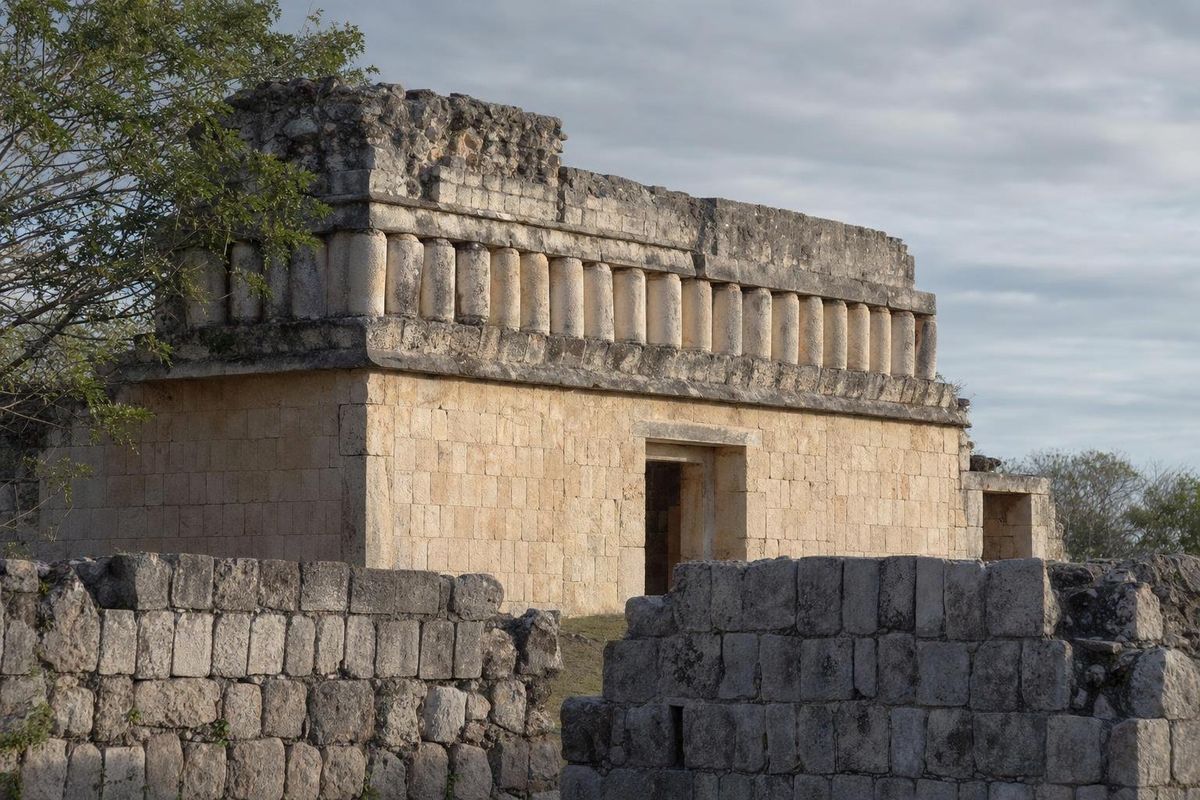
AI-generated image Maya Mysteries · Yucatán
Phallic Cult
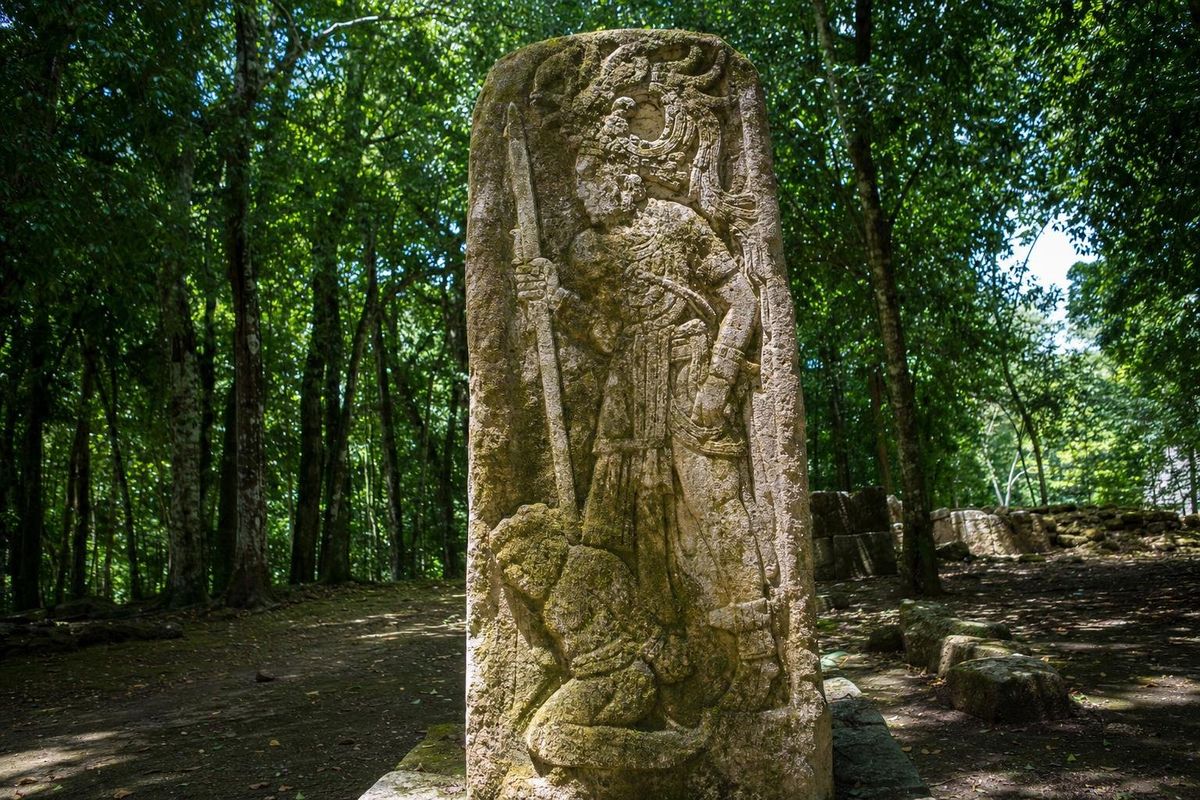
AI-generated image Maya Mysteries · Chiapas
Warriors
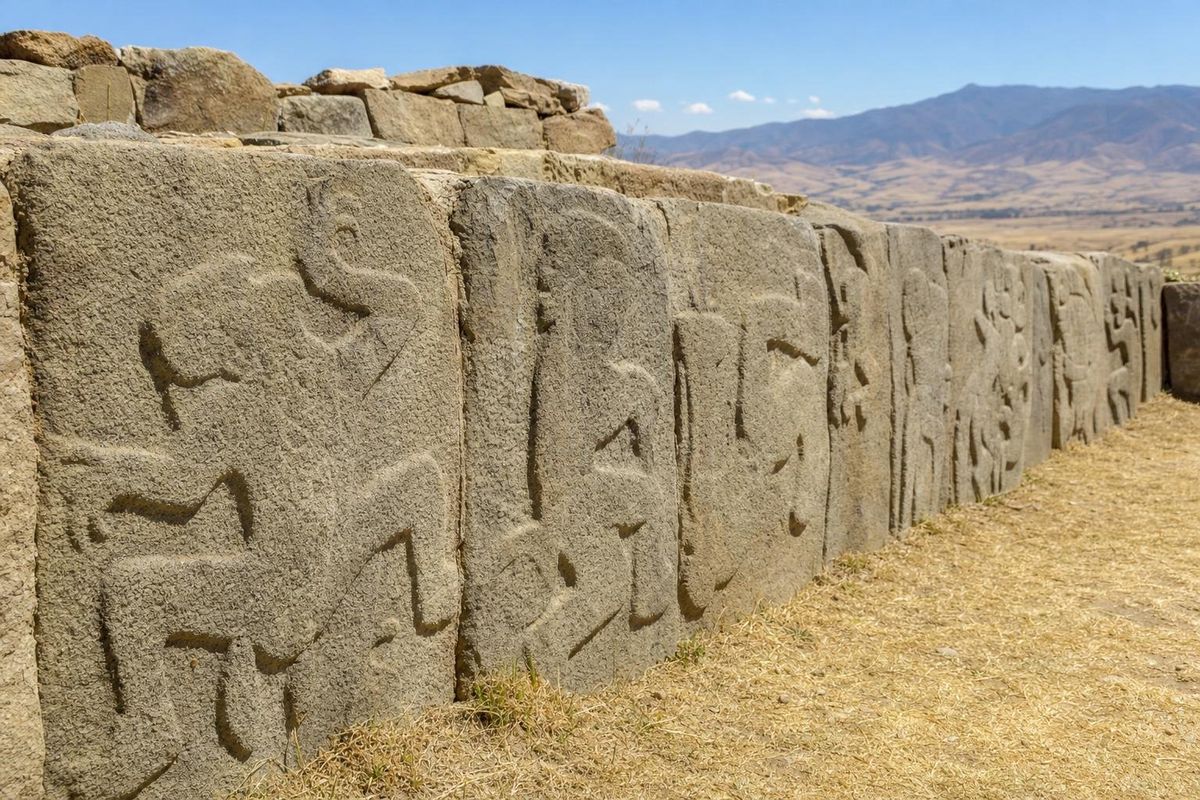
AI-generated image Maya Mysteries · Oaxaca
Zapotec Danzantes
A language in stone
Maya writing is the most complete script known from the ancient Americas. It mixes signs for whole words with signs for syllables, so the same word could be written several ways: as a single picture, as a string of sounds, or as a combination. Inscriptions record births, accessions, wars, rituals and deaths, dated with precision in the Long Count calendar. Most surviving texts are on stone monuments, painted pottery and the walls of tombs; only four books on bark paper, the codices, survived the Spanish conquest. They deal with ritual calendars, astronomy and prophecy, including tables that track the cycles of Venus.
How the code was broken
The story begins with an error. In the 1560s the Franciscan bishop Diego de Landa, who also burned Maya books, recorded what he took to be a Maya alphabet. It was in fact a list of syllables, and its misreading confused scholars for centuries. By the early twentieth century researchers could read the calendar and the numbers, and many assumed the rest was religious or astronomical.
Two discoveries changed that. In 1952 the Russian scholar Yuri Knorozov argued that the script was largely phonetic and that Landa's list held the key. In 1960 Tatiana Proskouriakoff showed from monuments at Piedras Negras that the dates marked the lives of real rulers. From the 1970s, Linda Schele, Peter Mathews, David Stuart and others worked out royal histories site by site, and the story is told in Michael Coe's book Breaking the Maya Code. Today most inscriptions can be read, though some signs remain uncertain.
The recurring figures
Certain images appear across centuries and sites. The feathered serpent, Kukulkan to the Yucatec Maya and Quetzalcoatl in central Mexico, runs down the stairways of Chichén Itzá. A small figure plunging head first, the descending god, sits above doorways at Tulum and Cobá. Ballplayers in padded belts, warriors in feathers and armor, and faces with ringed goggle eyes borrowed from the rain god of Teotihuacan turn up wherever power was displayed.
Each page in this section takes one figure and asks the same questions: where it appears, what the texts and context say, how scholars have read it and where they disagree. Some readings are firm because a glyph names the figure; others rest on comparison and remain theories. Where Mesoamerican cultures outside the Maya share an image, such as the Zapotec carvings of Oaxaca, the comparison is part of the story.
Seeing them in person
Many of the best carvings are now in museums, but much remains in place: the serpent heads at the foot of Chichén Itzá's main pyramid, the stucco masks at Kohunlich, the divers at Tulum. Bring binoculars for high friezes, and visit early, when low sun throws relief into shadow. At the equinoxes, crowds gather at Chichén Itzá to watch a pattern of light and shade run down the edge of the northern stairway toward the serpent head at its base.
More figures waiting to be explained
Other recurring figures turn up across the sites and museums. Dwarfs stand beside rulers on stelae and appear on palace vessels. Small Gulf coast figures with heavy mittens are often described as boxers or ballplayers. Monsters fill the art, from the earth monster with an open mouth for a doorway to the sky caiman. The shark, xoc in Yucatec Maya, shows up in offerings and as a glyph, and fossil shark teeth were placed in burials. The flying men, the voladores, still spin down from a tall pole in Papantla. Clay stamps, sellos, printed designs on cloth and possibly skin. Balam, the jaguar, stood for the night sun and for lordship. The scribe god Pauahtun wears a netted headdress, and astronomers tracked Venus in the codices.
A much later figure belongs here too: the Speaking Cross of Chan Santa Cruz, today Felipe Carrillo Puerto, an oracle that guided the Cruzob Maya during the Caste War of the nineteenth century, and the reason the town still holds a sanctuary for it.
Questions about Maya mysteries
Can Maya glyphs be read today?
Most of them, yes. Since the decipherment advances of the second half of the twentieth century, epigraphers can read the large majority of known inscriptions, with some signs still debated.
Who deciphered Maya writing?
No single person. Yuri Knorozov showed the script was phonetic, Tatiana Proskouriakoff showed it recorded history, and many epigraphers, including Linda Schele and David Stuart, filled in the details.
How many Maya books survive?
Four codices are generally accepted: the Dresden, Madrid and Paris codices, and the Maya Codex of Mexico, formerly called the Grolier.
Is Kukulkan the same as Quetzalcoatl?
Both names refer to a feathered serpent, Kukulkan in Yucatec Maya and Quetzalcoatl in Nahuatl. The figures overlap but carry different local histories, and scholars debate how closely they were linked.