
−20 m · Stone · Maya Ruins · Yucatán
Chichén Itzá Ruins: El Castillo, the Serpent, Temple of the Warriors
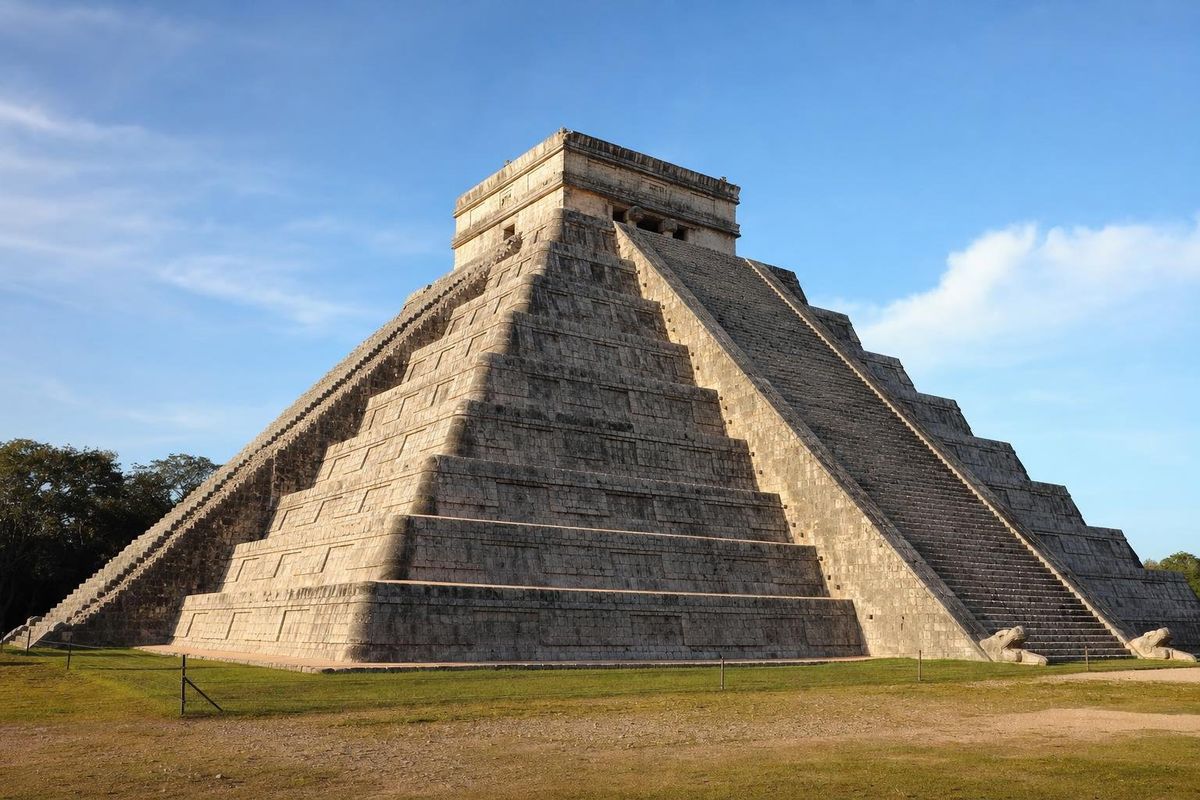
The Chichén Itzá ruins, in eastern Yucatán about 40 kilometers west of Valladolid, belong to the most powerful city of the northern Maya lowlands between roughly AD 800 and 1100. The site is best known for El Castillo, the stepped pyramid where a shadow serpent appears on the stairway around the equinoxes, but the Temple of the Warriors, the Great Ball Court and the Sacred Cenote are just as important for understanding it.
What the name Chichén Itzá means
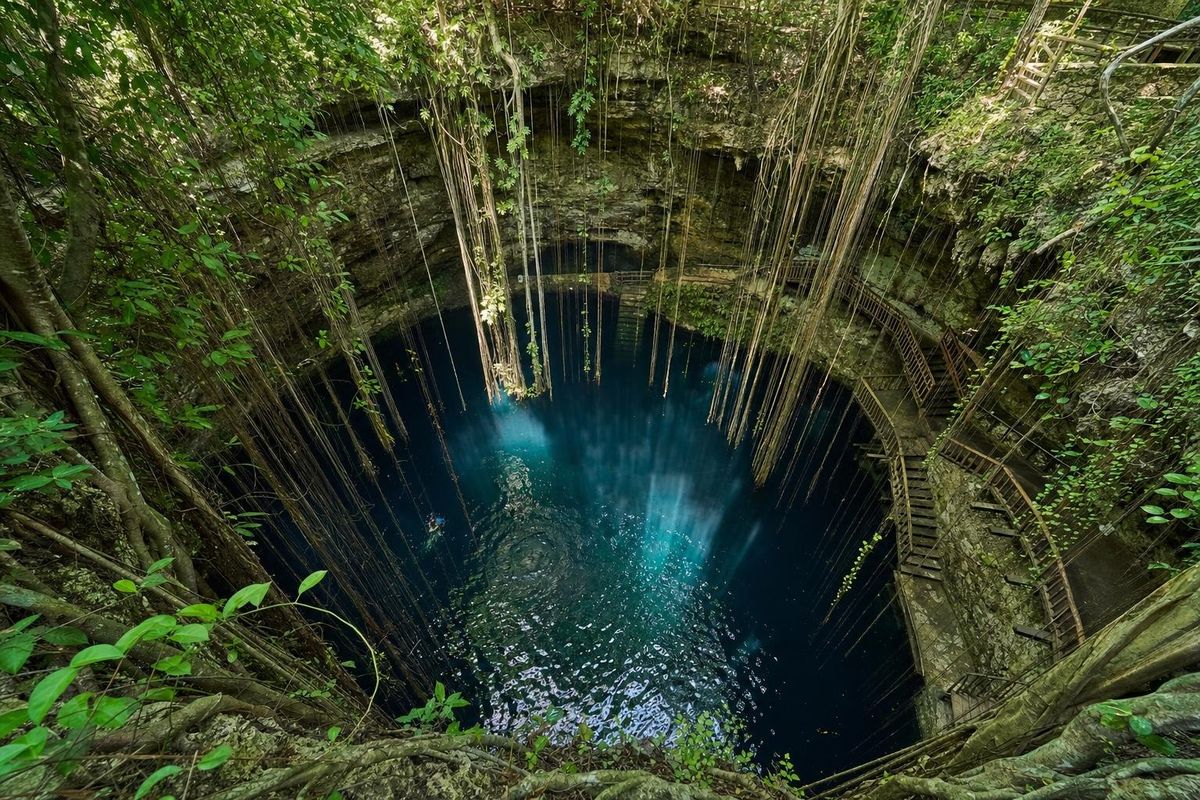
The name is usually translated as "at the mouth of the well of the Itzá": chi (mouth), ch'en (well) and Itzá, the name of the people who ruled here. The well is the Sacred Cenote, a large natural sinkhole north of the main plaza. The Itzá themselves remain partly mysterious. Colonial sources describe them as a lineage or group who came to dominate northern Yucatán, and some accounts say they were foreigners, though they wrote and spoke Maya.
There was an older settlement here in the Late Classic, built in a style close to the Puuc cities, before the city expanded dramatically in the ninth and tenth centuries. At its height, Chichén Itzá controlled trade across the north, including salt from the coast and goods arriving by sea. Its decline in the eleventh and twelfth centuries opened the way for Mayapán, though the Sacred Cenote stayed a place of pilgrimage until the Spanish conquest. UNESCO added the site to its World Heritage List in 1988.
For a long time, the city's style was explained by an invasion of Toltecs from Tula in central Mexico, because the two cities share warrior columns, reclining chacmool figures and feathered serpents. Most researchers now favor a more complex picture of trade, alliances and shared ideas moving in both directions, and the dates of the two cities overlap in ways that make a simple conquest story hard to sustain.
El Castillo and the serpent of the equinox
The Temple of Kukulcán, called El Castillo, rises about 30 meters over the main plaza. It has nine stepped terraces and four stairways of 91 steps each; with the top platform, the total is 365, the number of days in the solar year. The pyramid encloses an earlier temple, found by archaeologists in the twentieth century, that held a red jaguar throne.
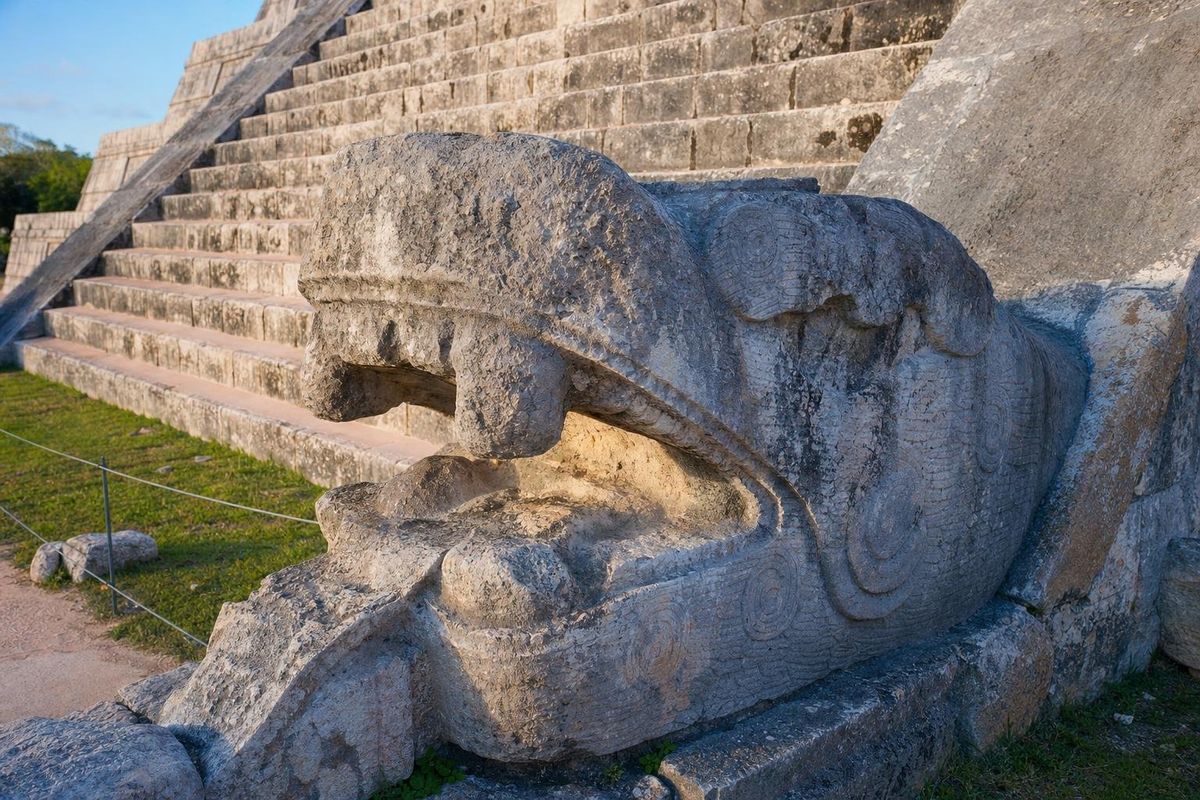
The Chichén Itzá serpent is the feature that draws crowds in March and September. In the late afternoon around the equinoxes, the corners of the terraces cast a row of triangles of light onto the side of the north stairway, which ends in carved serpent heads at the base. The effect reads as a body of light joining the stone heads. Whether the builders designed it for that purpose is debated, but the serpent heads tie the pyramid to Kukulcán, the feathered serpent deity. The effect is visible for several days either side of the equinox, weather permitting.
Climbing the pyramid has been prohibited since 2006 to protect the structure.
The Temple of the Warriors
On the east side of the plaza stands the Temple of the Warriors, a stepped platform crowned by a temple and fronted by rows of square stone columns. The columns are carved on all four sides with figures of warriors in full regalia, and the hall they once supported, roofed with beams and plaster, would have been a vast covered space. At the top of the stairway sits a chacmool, a reclining stone figure holding a dish on its stomach, probably a receptacle for offerings. Behind it, two great serpent columns framed the temple doorway.
Like El Castillo, the Temple of the Warriors covers an older building, the Temple of the Chac Mool, which preserved painted columns when it was excavated in the 1920s. The adjoining Group of the Thousand Columns extends the colonnades south and east. The warrior figures, with their spear-throwers, feathered headdresses and round shields, are among the reasons Chichén Itzá is associated with a militaristic elite; the Maya warriors page looks at how they are portrayed. Visitors cannot enter the temple, but the columns are close to the path.
Other Chichén Itzá temples and structures
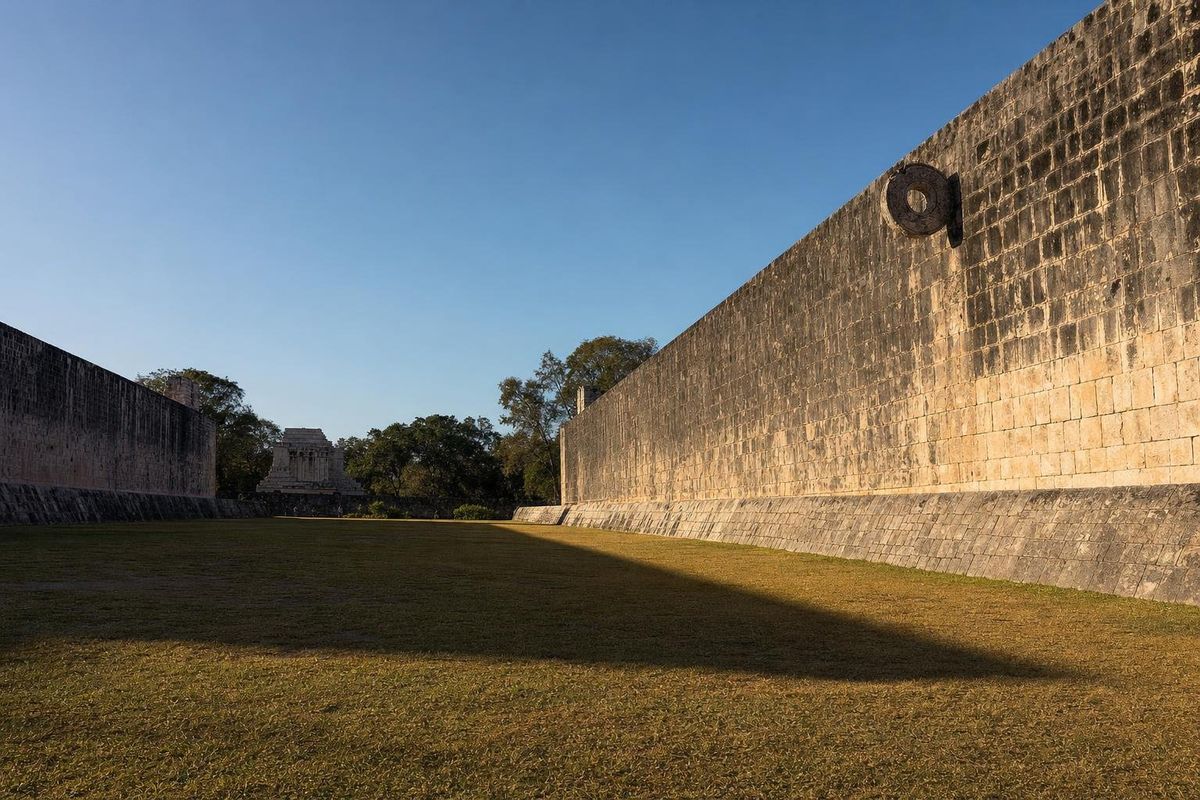
- The Great Ball Court: the largest in Mesoamerica, roughly 160 meters long, with two stone rings set high in the side walls. Reliefs along its benches show a ballplayer being decapitated, with serpents and plants rising from the blood. More on the game is on the ballplayers page.
- The Tzompantli: a low platform carved with rows of skulls, modeled on the racks where the heads of the sacrificed were displayed.
- The Sacred Cenote: reached by a causeway from the plaza. Dredging and diving in the twentieth century recovered jade, gold, copal, pottery and human bones, confirming the colonial reports of offerings and sacrifice.
- El Caracol: a round tower on a platform, often called the observatory; some of its windows align with positions of Venus and the sun.
- Las Monjas and the Akab Dzib: buildings in the older southern part of the site with Puuc-style masks and lattice work.
Getting there
Chichén Itzá lies just off the highway between Mérida and Cancún, beside the small town of Pisté. From Valladolid, the drive takes under an hour; from Mérida, roughly two hours; from Cancún, about two and a half hours on the toll road. Buses serve the site from all three cities, and many tours run from the coast. Staying in Valladolid or Pisté allows an arrival at opening time, before the tour buses. The Valladolid area trip combines Chichén Itzá with cenotes and Ek' Balam.
Visiting tips
The site is large and very exposed, and the plaza around El Castillo can get extremely hot by midday. Arriving at opening time gives cooler air, better light and far fewer people. Bring water, a hat and sunscreen. Fees, opening hours and the rules on equinox access change, so check them locally or through INAH before going. Allow at least three hours, more to walk to the Sacred Cenote and the southern group.
Vendors line many of the paths. Clapping in front of El Castillo's stairway produces an echo that sounds like a bird's chirp, which some researchers have linked to the quetzal, a sacred bird. Other cities of the Maya world are covered in the Maya ruins section.
Chichén Itzá: common questions
What does Chichén Itzá mean?
"At the mouth of the well of the Itzá." The well is the Sacred Cenote, and the Itzá were the group who ruled the city.
When can you see the serpent at Chichén Itzá?
In the late afternoon for several days around the spring and autumn equinoxes, in March and September, if the sky is clear.
Can you climb El Castillo?
No. Climbing has been prohibited since 2006 to protect the pyramid.
What is the Temple of the Warriors?
A temple on a stepped platform on the east side of the main plaza, fronted by columns carved with warrior figures and topped by a chacmool sculpture.
How long do you need at Chichén Itzá?
About three to four hours covers the main structures, the Sacred Cenote and the southern group without rushing.
Is it better to visit from Valladolid or Mérida?
Valladolid is closer, under an hour away, which makes an early arrival easier. Mérida is about two hours away by road.
Nearby on the map
AI-generated image Maya Mysteries · Yucatán
Ballplayers
AI-generated image Maya Mysteries · Yucatán
Feathered Serpent
AI-generated image Cenotes · Yucatán
Xcajum
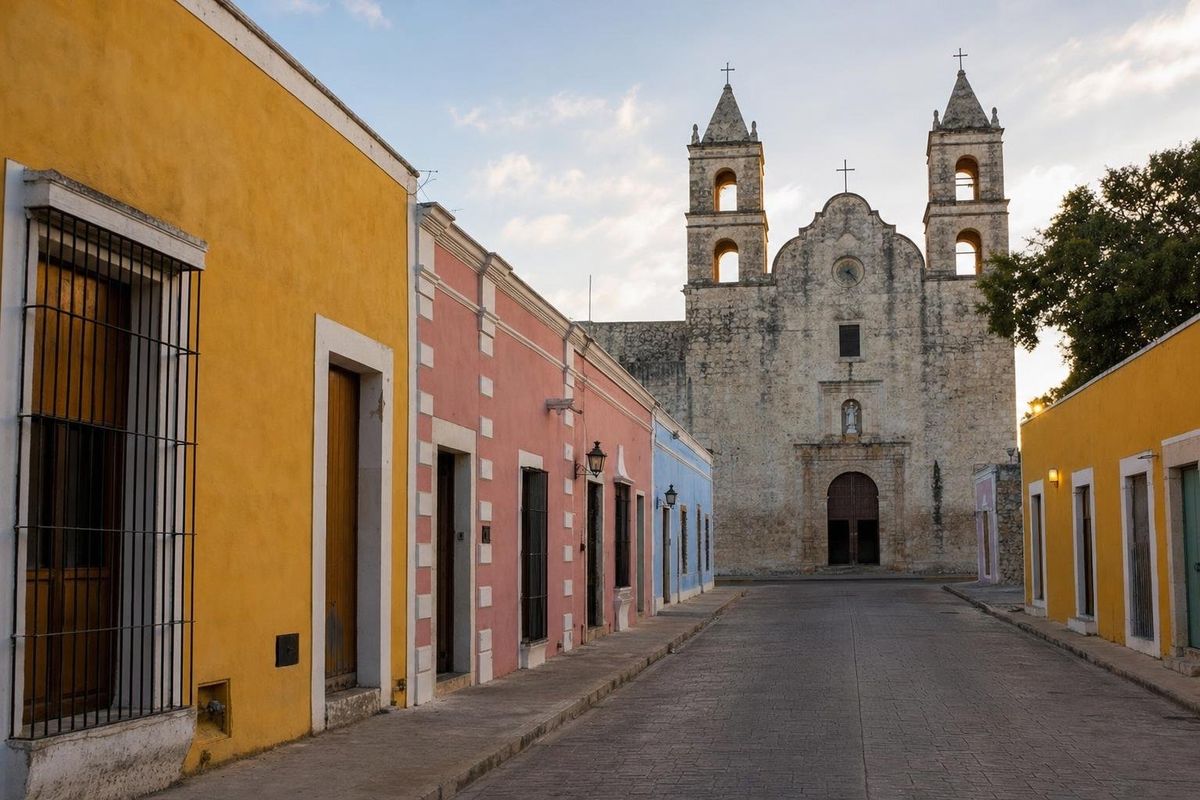
AI-generated image Trips · Yucatán
Around Valladolid