
−5 m · Shallows · Cenotes · Quintana Roo
Casa Cenote at Tankah Bay: Snorkeling and Diving Through the Mangroves
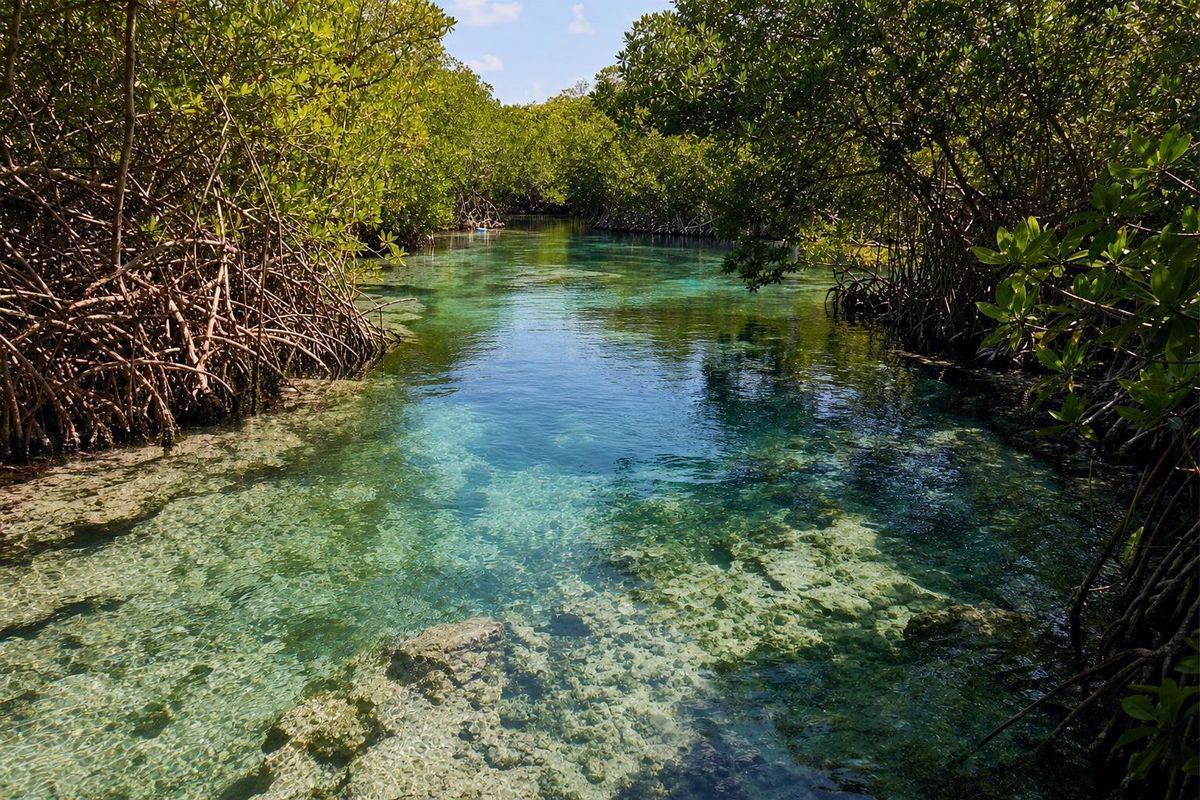
Casa Cenote is a long, open cenote winding through the mangroves at Tankah Bay, about 10 km north of Tulum and only a road's width from the Caribbean. Snorkelers float along a channel of clear water between mangrove roots, while divers follow underground passages where fresh water from inland meets seawater. Older maps call it Cenote Manatí, after the manatees that once swam in from the sea.
A cenote between jungle and sea
Most cenotes sit inland, wrapped in forest. Casa Cenote is different: it lies right behind the beach, a narrow ribbon of water perhaps a couple of hundred meters long, edged on both sides by red mangroves whose roots arch down into the water. The surface looks like a quiet lagoon. Underneath, the rocky floor and the roots create an underwater landscape that is easy to explore with a mask.
The cenote is part of the vast system of flooded caves that drains the eastern Yucatán toward the Caribbean. Fresh water collected inland flows through the limestone and leaves the coast through vents, and at Tankah Bay part of that flow passes through Casa Cenote before reaching the sea. Near the vents on the reef, a shimmer of fresh water rising through salt water can sometimes be seen on calm days.
Depths are modest across most of the cenote, typically a few meters, which makes it comfortable for snorkeling. The water is immediately deep at the usual entry point by the road, however, so non-swimmers and small children need flotation.
Snorkeling and kayaking
Snorkeling is the main activity for non-divers. Following the channel brings views of mangrove roots draped with algae, rock formations on the floor, and the fish that move between fresh and brackish water: small livebearers such as mollies and guppies, larger fish near the roots, and, with luck, blue crabs or a moray eel tucked into a crevice. Because the cenote is long, a float or life jacket makes a longer swim more relaxed.
Kayaks and stand-up paddleboards have been available to rent, which is rare at a cenote and suits the shape of this one. Paddling the length of the channel gives a different view of the mangroves from above. Equipment and prices vary from season to season, so check what is offered on site.
Facilities at the cenote itself have been basic, with limited toilets and changing space. The beach on the other side of the road has more services, which is part of why a visit here usually becomes a half day at Tankah Bay rather than a quick swim.
Casa Cenote diving: the halocline
Divers come to Casa Cenote for something snorkelers can only glimpse: the halocline, the boundary between the lighter fresh water on top and denser seawater below. Swimming through it, the water seems to blur and shimmer like heat haze, and temperature can shift at the same time (a thermocline). The cavern section under the mangroves adds rock formations, stalactites and the sense of diving beneath a forest.
Casa Cenote is a cavern dive suitable for open-water certified divers with a qualified local guide, and dive centers along the coast between Tulum and Akumal run it regularly. The passages beyond the daylight zone are cave diving territory and require full cave training. Depths in the cavern route are shallow by cave-diving standards, which is part of the cenote's popularity as an introduction.
Getting there
Tankah Bay lies off federal highway 307 between Akumal and Tulum, about 10 km north of Tulum town. The turn-off is marked by signs for the beach and the residential area rather than the cenote itself. A road runs parallel to the beach past a row of houses, and Casa Cenote lies along it, between the road and the mangroves, with the sea on the other side.
Two places in the area are easy to confuse. Caleta Tankah is a different cove with its own small cenote, a little closer to Tulum; Tankah Bay with Casa Cenote is the next bay north. Colectivos running along highway 307 between Playa del Carmen and Tulum can drop passengers at the Tankah turn-off, leaving a walk of a kilometer or more to the cenote. Taxis from Tulum or a rental car are simpler.
When to go and practical notes
Morning is the calmest time, before dive groups and day visitors arrive, and the light in the mangroves is gentle. The cenote is fed from underground, so its water stays clear even when sargassum seaweed piles up on the Caribbean beaches, which happens most often in the warmer months. The dry season, roughly November to April, is the most comfortable time on this coast; the hurricane season runs from June to November.
- No sunscreen or repellent in the cenote. Cover up with a rash guard instead.
- Mosquitoes like mangroves; long sleeves help on land.
- Bring cash in pesos. Entry, lockers and equipment rental change in price and are best checked on arrival.
- Do not stand on or break mangrove roots; they hold the shoreline together and shelter young fish.
Manatees used to be seen here, which gave the cenote its older name, but they have not been a regular sight for many years. On the beach side, look for the shallow reef just offshore.
Around Tankah Bay
The beach at Tankah Bay is quiet and protected by a reef, and makes a natural pairing with the cenote. Further north, Xcacel is a protected turtle-nesting beach and Akumal is known for its sea turtles. For an inland swim, Cenote Escondido lies just south of Tulum. More options are listed on the cenotes page.
Casa Cenote: frequently asked
Where is Casa Cenote?
At Tankah Bay, off highway 307 about 10 km north of Tulum, between the beach road and the mangroves.
Is Casa Cenote the same as Cenote Manatí?
Yes. Cenote Manatí is the older name, from the manatees that once entered from the sea.
Do you need to be certified for Casa Cenote diving?
Open-water certification and a qualified local guide are the usual requirements for the cavern dive. Going beyond the daylight zone needs cave training.
Is it good for children?
With life jackets, yes. The water is deep at the main entry point, though most of the channel is not very deep.
Is Casa Cenote the same as Caleta Tankah?
No. Caleta Tankah is a separate cove with its own small cenote, a little south toward Tulum.
Nearby on the map
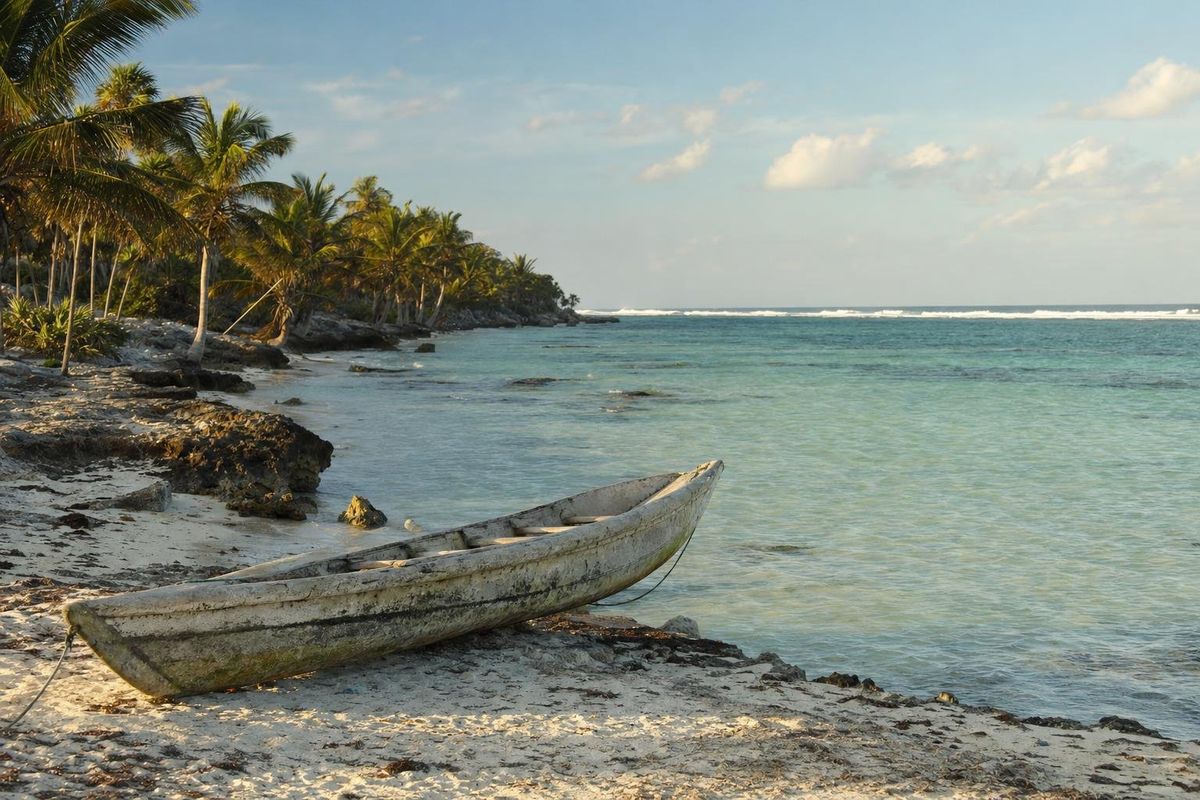
AI-generated image Beaches · Quintana Roo
Soliman Bay
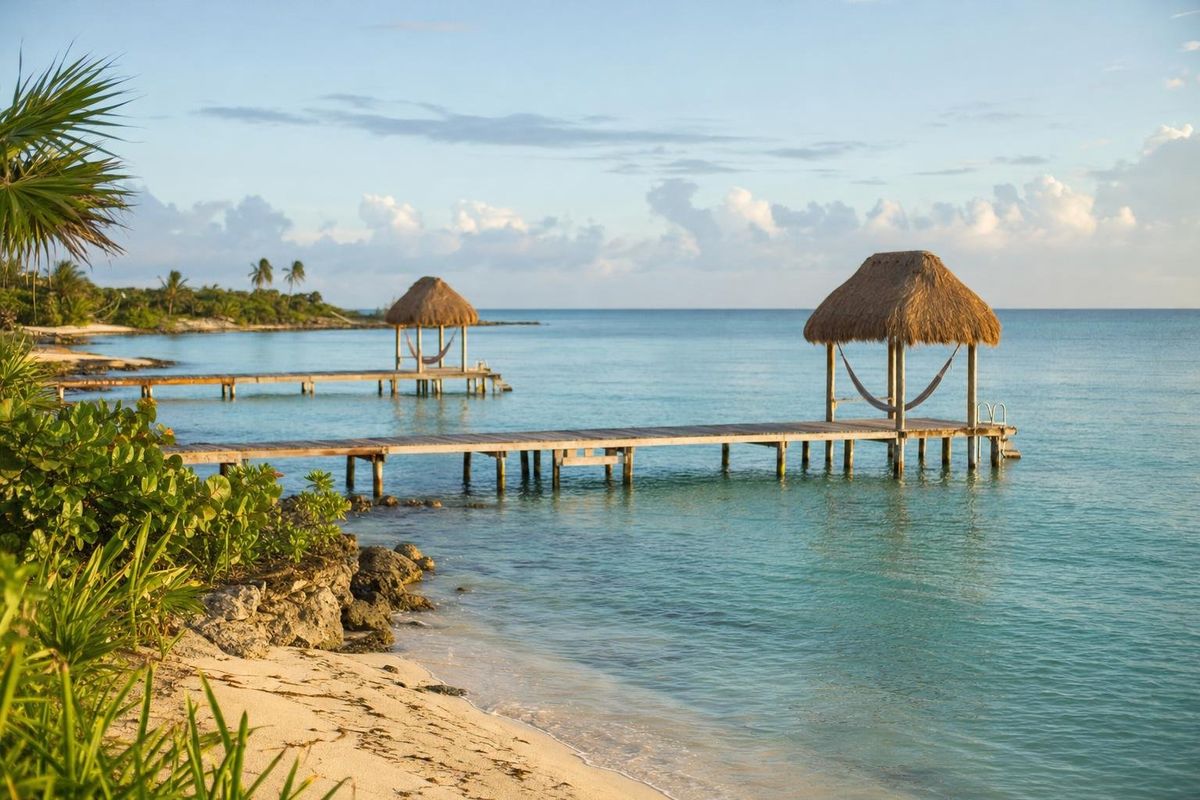
AI-generated image Beaches · Quintana Roo
Tankah Bay
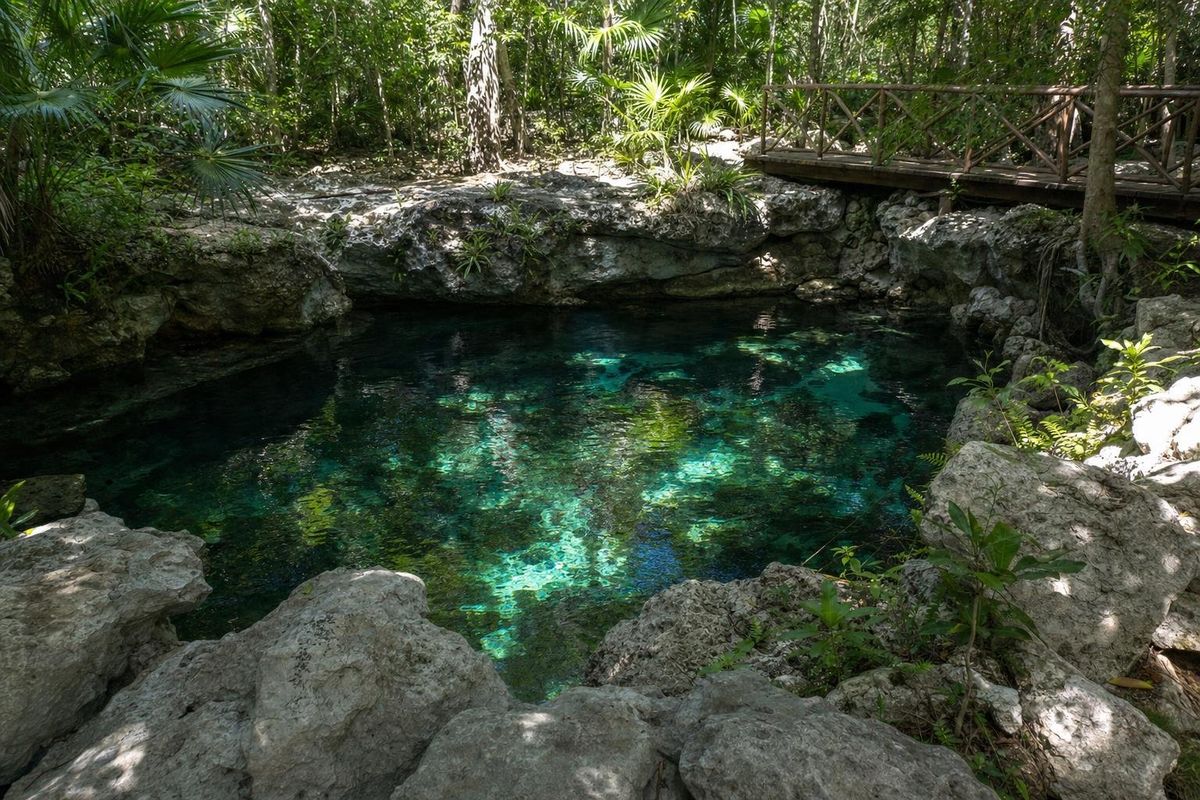
AI-generated image Cenotes · Quintana Roo
Caleta Tankah
AI-generated image Cenotes · Quintana Roo
Dos Ojos