
−5 m · Shallows · Towns & Villages · Yucatán
Tizimín, Yucatán: the Cattle Town of the Three Kings Fair
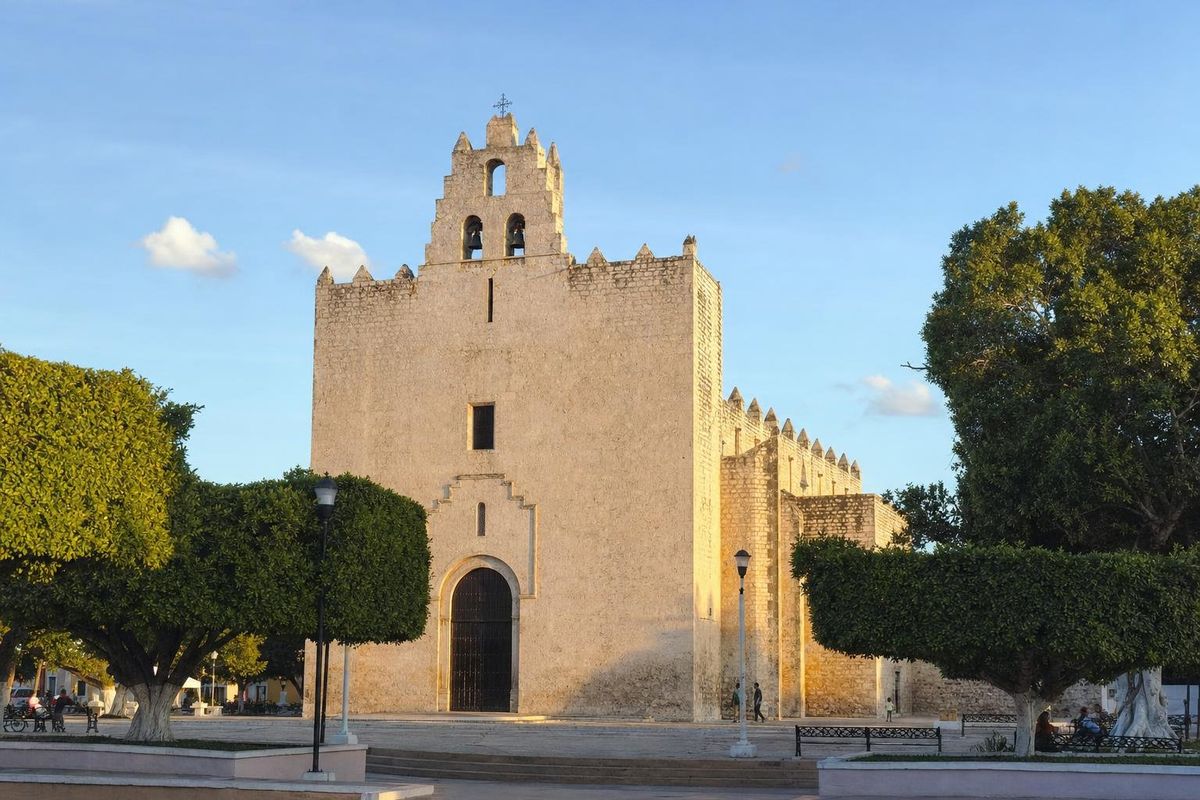
Tizimín is the main town of eastern Yucatán, about 50 kilometers north of Valladolid, and the center of the state's cattle country. It is not a tourist town, which is part of its interest: a large Franciscan church dedicated to the Three Kings, one of the biggest fairs in the state every January, and the bus station and roads that lead north to the flamingo coast at Río Lagartos, San Felipe and El Cuyo.
A ranch town with a Maya name
The name Tizimín is usually traced to the Yucatec Maya word tzimin, the tapir. When the Spanish arrived with horses, the Maya applied the same word to the new animal, so the name sits neatly on what the town later became: a place of livestock. The municipality is the largest in Yucatán by area, and much of it is open grassland and scrub cleared for cattle, a landscape quite different from the henequén country around Mérida.
That gives the town its character. Pickups with ranch brands, feed stores, saddlers and butchers are as common as anything aimed at visitors. Prices in the market and the cafés around the square are local prices.
The streets are laid out in the usual colonial grid, with numbered calles, and the center is walkable in an hour.
The church and convent of the Three Kings
The center of town is dominated by the church of Los Santos Reyes, a Franciscan foundation from the colonial period with a massive, plain facade and a large former convent beside it. Like many Franciscan churches in Yucatán, it was built to hold big congregations and to stand up to the climate rather than to impress with decoration. Inside, the images of the Three Kings are the focus of the town's devotion.
The kings are the reason Tizimín's calendar peaks in early January. Pilgrims come from across the peninsula to visit them around the feast of the Epiphany on January 6.
The plaza in front of the church is the town's living room in the evening, with families, street food and children on bicycles.
The Feria de Reyes in January
The Three Kings fair, the Feria de Reyes, is one of the best-known regional fairs in Yucatán. It combines the religious festival with a livestock show, a commercial fair, music and dances, and bullfights and rodeo events in temporary rings. It usually runs for a couple of weeks around the start of January, and the town fills up. If you want to see Tizimín at its most lively, this is the time; if you only need a quiet base for the coast, avoid those weeks or book well ahead.
Dates and program change each year and are announced locally, so check them close to the time.
Buses and the Noreste terminal
Tizimín is the transport hub for the north-east of the state. The regional bus company Noreste runs services from the town's bus terminal to Mérida, Valladolid and the coastal villages, and other lines and colectivo vans cover nearby routes. Mérida is roughly two and a half to three hours away by road; Valladolid less than an hour.
Timetables change and are not always published online, so ask at the terminal for current departures, especially for the coast. Services to El Cuyo and San Felipe are less frequent than those to Mérida and Valladolid. A rental car is the simplest way to combine several stops in a day.
Taxis in town are inexpensive for short hops, and drivers can be hired for trips to nearby sites by agreement; settle the price before setting off.
Trips from Tizimín
The town works well as a base, or a stop, for the north-east of the peninsula:
- Río Lagartos and San Felipe, about an hour north, for flamingo boat trips in the Ría Lagartos Biosphere Reserve and the island port of Isla Cerritos.
- El Cuyo, a fishing village beach with kitesurfing, roughly an hour and a half away via Colonia Yucatán.
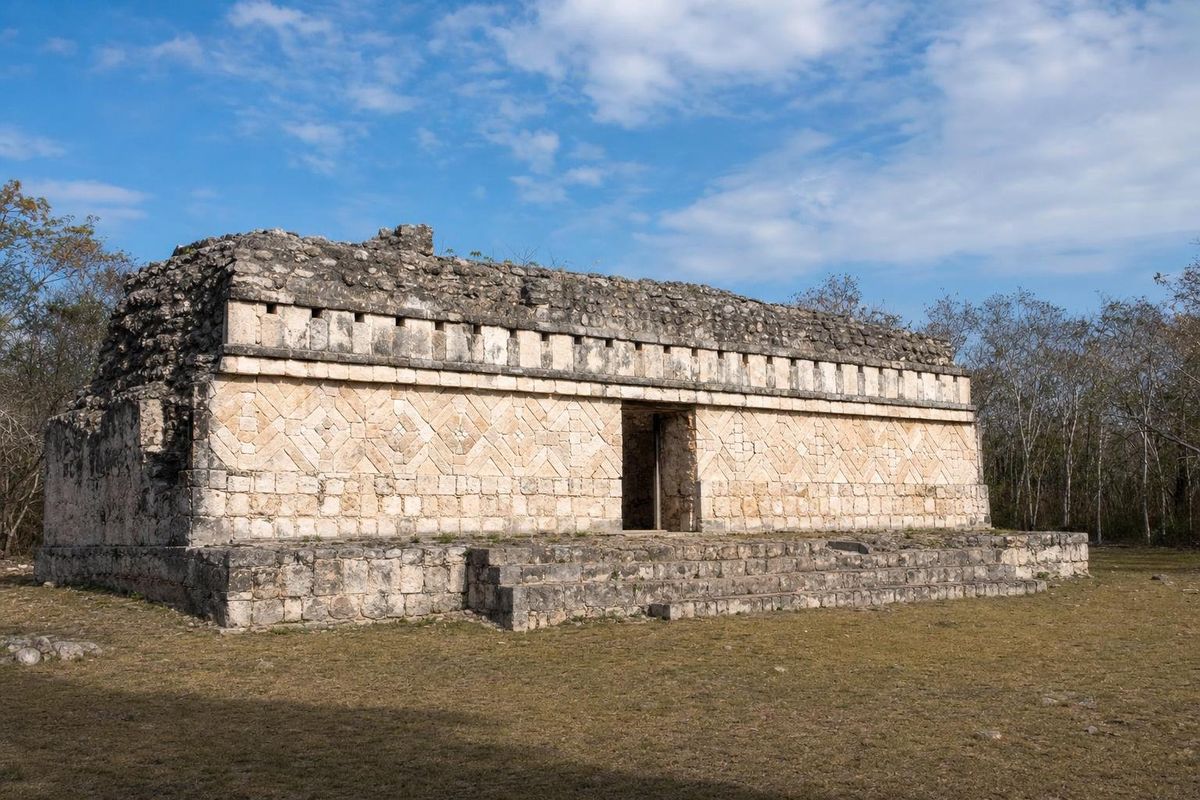
- Kulubá, a Maya site in the municipality with buildings in a style linked to Chichén Itzá.
- Ek Balam, the ruins with a famous stucco frieze, near the road south to Valladolid.
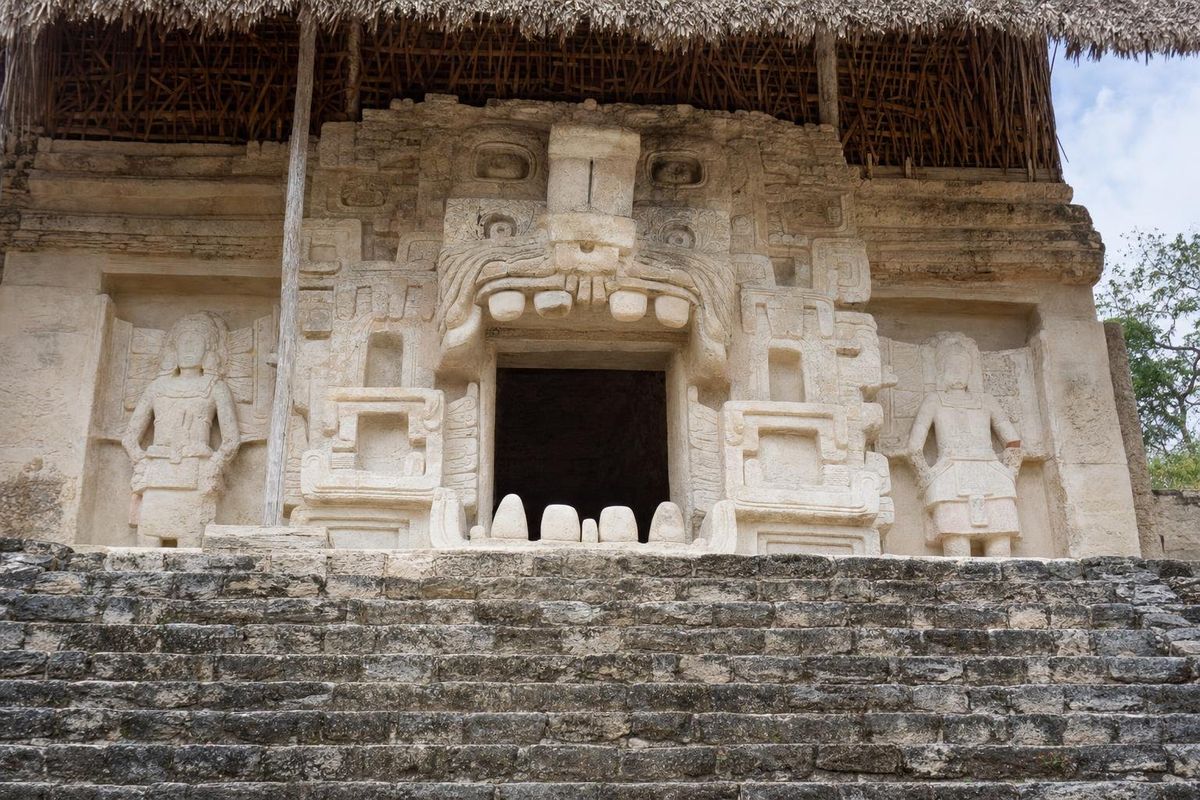
Ek Balam deserves more than a line. Its name is usually translated as "black jaguar", and its Acropolis holds one of the best-preserved stucco facades in the Maya world: a huge open monster mouth framing a doorway, with winged human figures modeled around it. Inscriptions name a powerful eighth-century ruler, Ukit Kan Le'k Tok', whose tomb was found inside the building.
The drive north from Tizimín towards the coast is a lesson in the landscape of the east: open pasture, stone walls, ranch gates, waterholes with cattle egrets, and vultures circling over the scrub. The forest closes in again only near the lagoons.
From Valladolid itself, the day trips described in around Valladolid cover the cenotes and ruins further south.
When to go
The cooler months, from about November to February, are the most comfortable for walking around town. Early January means the fair: lively and crowded. April and May are the hottest months, often very hot inland. The rainy season runs roughly from June to October, with afternoon storms, and the hurricane season extends into November.
Practical notes
- Tizimín has banks, cash machines, supermarkets and pharmacies, which are scarce on the coast. Stock up here before heading to El Cuyo or San Felipe.
- Try local dishes based on beef from the region, along with Yucatecan standards such as cochinita pibil and panuchos.
- Churches are active places of worship. Dress modestly inside and avoid walking around during mass.
- During the fair, traffic and parking in the center can be difficult; leave the car outside the core.
More towns and villages of the region are listed under Towns & Villages.
Tizimín questions
Where is Tizimín?
Tizimín is in the north-east of Yucatán state, about 50 kilometers north of Valladolid and roughly 50 to 60 kilometers south of the coast at Río Lagartos.
What does the name Tizimín mean?
It is usually linked to the Yucatec Maya word tzimin, meaning tapir. After the conquest the same word was used for the horse.
When is the Tizimín fair?
The Feria de Reyes centers on the feast of the Three Kings on January 6 and usually runs for a couple of weeks around it. Exact dates change each year.
How do you get from Tizimín to El Cuyo by bus?
Buses and colectivo vans run from Tizimín to El Cuyo, but departures are limited and change. Ask at the Tizimín bus terminal for current times.
Is Tizimín worth a stop?
As a base for the north-east coast and as a look at an everyday Yucatecan ranch town, yes. It has few sights beyond the church and the plaza, except during the January fair.
Nearby on the map
AI-generated image Cenotes · Yucatán
Kikil
AI-generated image Maya Ruins · Yucatán
Kulubá
AI-generated image Maya Ruins · Yucatán
Ek Balam
AI-generated image Cenotes · Yucatán
Zazil Tunich