
−5 m · Shallows · Towns & Villages · Yucatán
Motul, Mexico: a Town of Huevos Motuleños, Cenotes and History
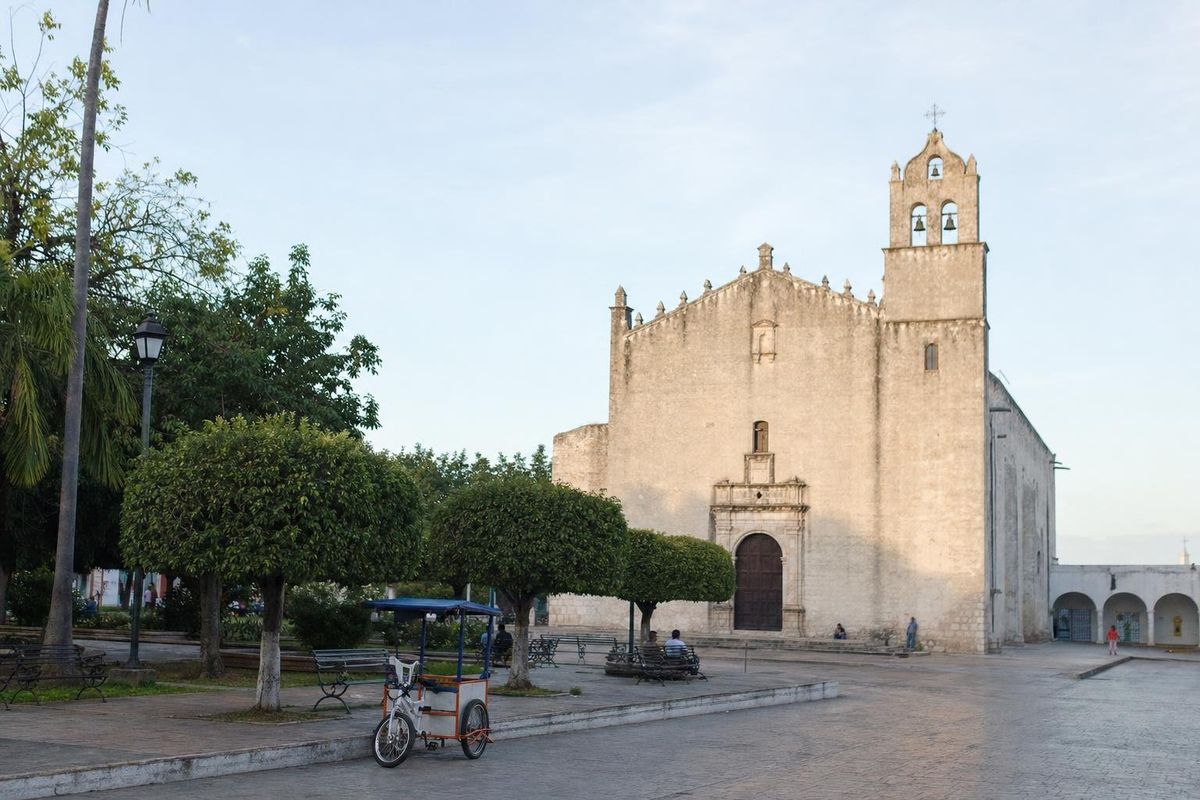
Motul is a colonial town about 45 kilometers east of Mérida, once the capital of a Maya province, later the heart of the henequén plantations, and today best known across Mexico for a breakfast: huevos motuleños. A visit to Motul, Yucatán, takes in a sixteenth-century Franciscan church, a cenote you can swim in without leaving town, a busy market, and the memory of Felipe Carrillo Puerto, the governor born here in 1874.
A capital before the Spanish
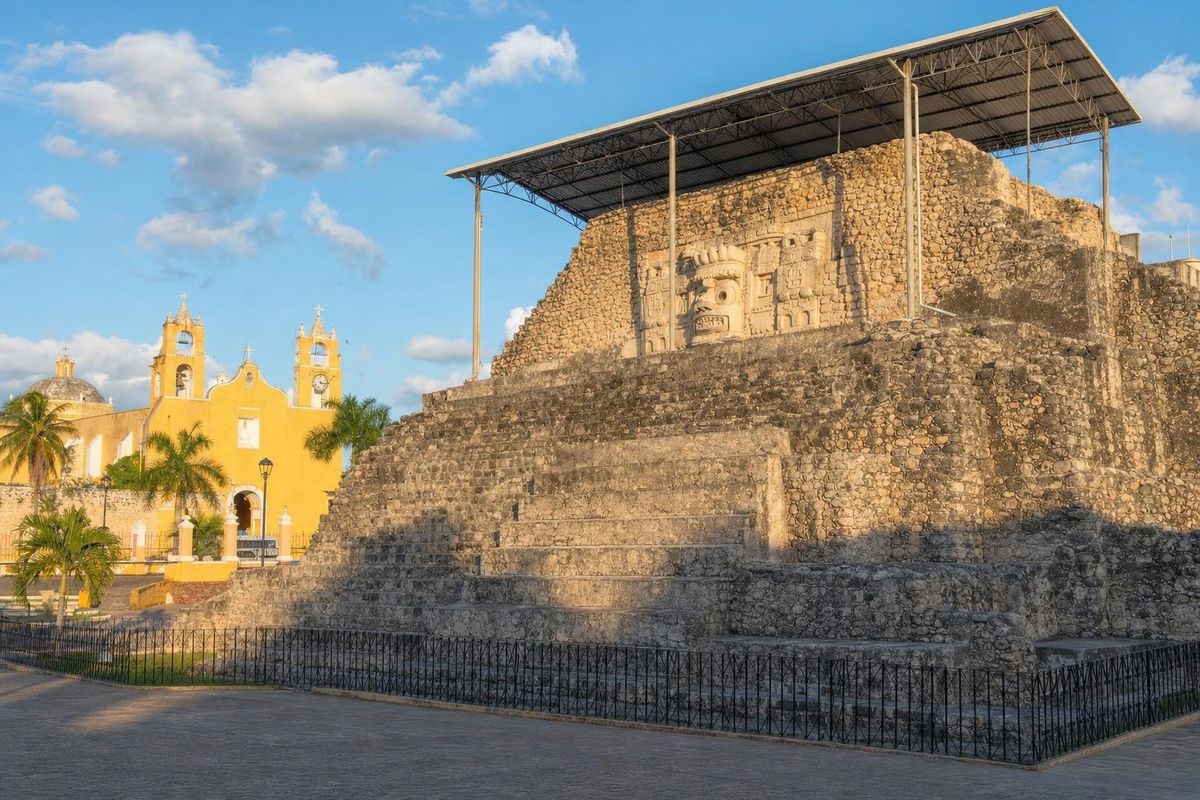
Motul's history starts long before the colonial grid. In the fifteenth and early sixteenth centuries it was the seat of the Ceh Pech, one of the Maya provinces, or kuchkabalob, that emerged after the fall of Mayapán. The ruling Pech lineage held a band of territory reaching to the coast, and Motul was its political center. Local tradition credits the foundation of the town to a figure called Zac Mutul, and the name is linked to the Maya word mut, which can mean a kind of bird or, in other readings, an omen or news; the derivation is not settled.
When the Spanish arrived, the Pech lords chose accommodation over resistance. Members of the family were baptized, took Spanish names, and one of them wrote an account of the conquest from the lineage's point of view, a rare document of the period.
The convent and the Motul dictionary
The Franciscans built a church and convent dedicated to San Juan Bautista in the second half of the sixteenth century, on the main square. It is a large, plain building in the fortress style typical of early Yucatecan missions, still in active use, and its services are well attended.
The convent gave its name to one of the most important sources for the Yucatec Maya language: the Motul dictionary, a large Maya-Spanish dictionary compiled by friars in the late sixteenth century. Modern scholars still use it to read colonial documents and, indirectly, to help with the decipherment of earlier Maya texts.
That is a lot of history for a quiet town of tricycle taxis.
Henequén and the haciendas
From the late nineteenth century, Motul sat at the center of the henequén zone, the belt of plantations around Mérida that grew agave for rope and twine during the boom known as the era of green gold. Haciendas surrounded the town, with their machine houses, chimneys and narrow-gauge rail lines, and Maya laborers lived in conditions close to debt bondage. The town's coat of arms still carries a henequén plant and field tools.
Several former haciendas stand in the area, some in ruins, some restored as hotels or event venues. For a sense of what these estates were like inside, the restored Hacienda Ochil south of Mérida is an easier visit.
Felipe Carrillo Puerto
Motul's most famous son was born here in 1874. Felipe Carrillo Puerto grew up in a middle-class family, worked a range of jobs including journalism, and became an organizer for Maya workers on the plantations. He joined the revolutionary movement, was jailed and exiled, and returned to lead the Socialist Party of the Southeast. As governor of Yucatán from 1922, he pushed through land distribution, schools and the use of the Maya language in public life, and supported early archaeological work at sites such as Chichén Itzá.
His government lasted less than two years. During a military rebellion in late 1923 he was captured, and in January 1924 he was executed by firing squad in Mérida together with several of his brothers and supporters. In Yucatán he is remembered as a hero, and a statue and park near the main square honor him; his birthplace in town has served as a small museum.
Things to do in Motul
Eat huevos motuleños
The town's dish is fried eggs on a crisp tortilla spread with black beans, covered with a tomato sauce and finished with peas, ham, cheese and often fried plantain. It is now served across Mexico, but breakfast in the market or around the square in Motul is the classic setting. Marquesitas, rolled crisp crepes with cheese or sweet fillings, are the evening snack on the plaza.
Swim in Cenote Sambulá
Cenote Sambulá, in town, is a cave cenote with clear water reached down steps, with the remains of a former estate around it. It is one of the few cenotes a short taxi ride from a town square. Rinse off sunscreen and lotions before entering, and follow the rules on site.
Walk the market and the square
The municipal market is busy and practical, with fruit, meat, flowers and food stalls, and the square around the church and town hall comes alive in the evening.
Getting to Motul
From Mérida, the drive east on the highway towards Tizimín takes under an hour. Second-class buses and colectivos run frequently between Mérida and Motul; check departures locally, as timetables change. From the coast, the road south from Telchac Puerto reaches Motul in about half an hour. The town fits well with a day on the north coast, including the pink salt ponds of Xtampú near Dzemul.
Izamal, the yellow-painted convent town built over large Maya platforms, lies to the south-east and is an easy addition by car. Together with Motul it makes a full day of colonial Yucatán away from the crowds. Heading back towards Mérida, the old henequén estates along the roads around the city are a reminder of how much of this landscape was once agave fields.
Practical notes
- The hottest months are April and May; mornings are best for walking around town.
- Tricycle and motorcycle taxis are cheap ways to reach the cenote and the edge of town; agree on the fare first.
- Churches are active places of worship, so dress modestly inside.
- Mérida, the base for most visitors, has its own guide to where it is and how to use it.
More towns and villages are listed under Towns & Villages.
Motul questions
Where is Motul?
Motul is in the north of Yucatán state, Mexico, about 45 kilometers east of Mérida and roughly half an hour inland from the Gulf coast at Telchac Puerto.
What are huevos motuleños?
A breakfast of fried eggs on a tortilla with black beans, tomato sauce, peas, ham and cheese, often with fried plantain. The dish takes its name from Motul.
Is there a cenote in Motul?
Yes. Cenote Sambulá is within the town, a cave cenote reached by steps, with clear water for swimming.
Who was Felipe Carrillo Puerto?
A reformist governor of Yucatán, born in Motul in 1874, who championed land reform and Maya rights and was executed in January 1924.
Is Motul worth a day trip from Mérida?
Yes, especially combined with the north coast. It offers history, a swimmable cenote and good local food, all within an hour of the city.
Nearby on the map
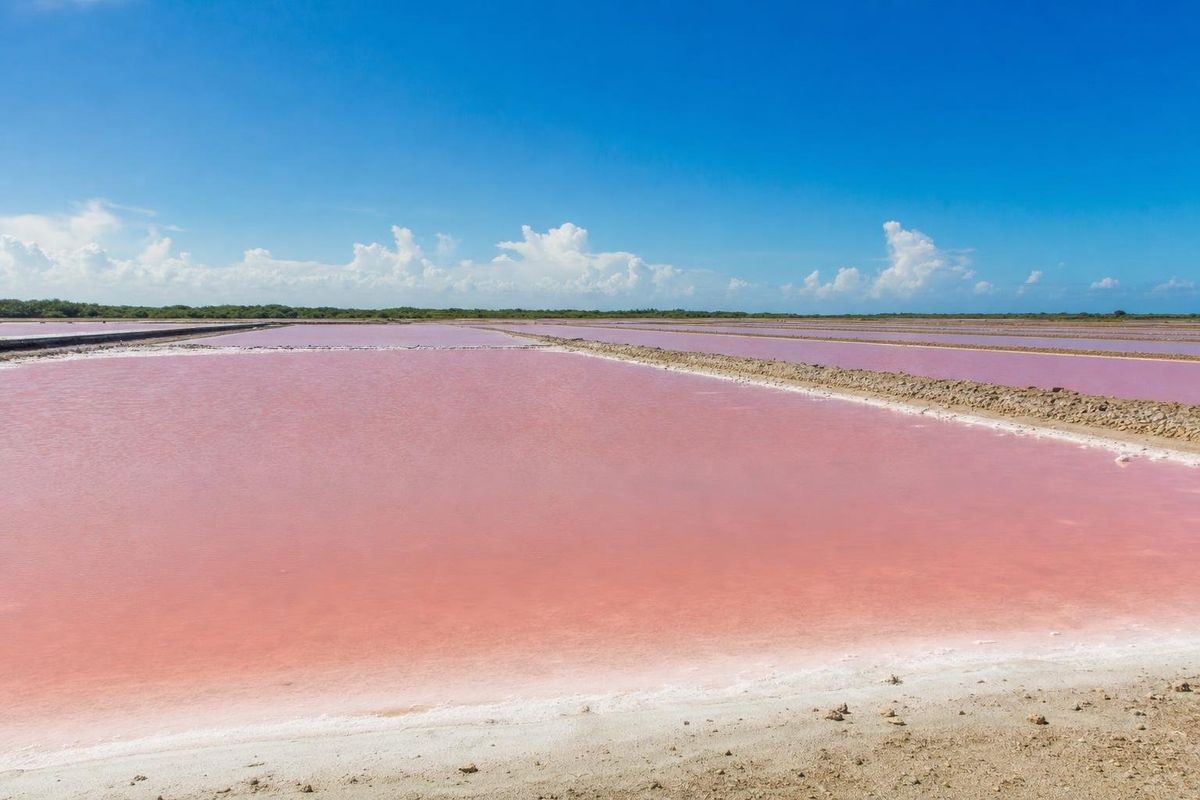
AI-generated image Lakes & Rivers · Yucatán
Xtampú Pink Lake
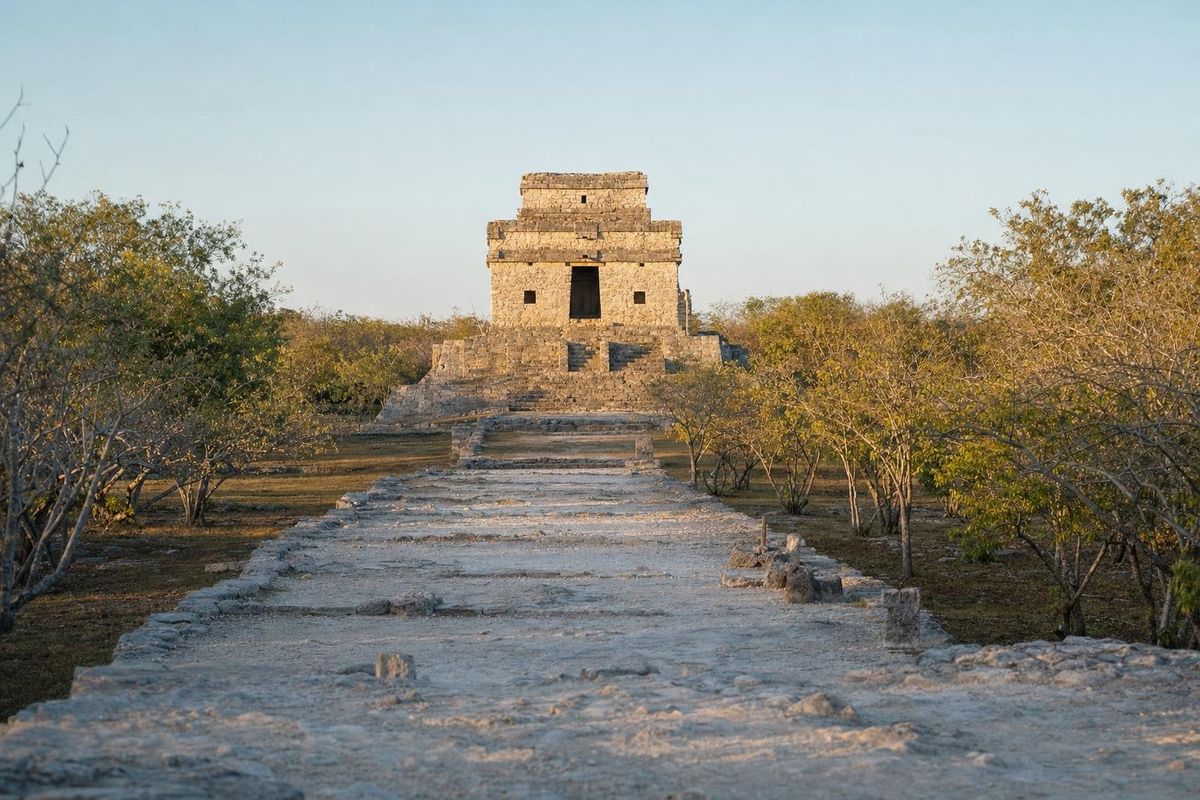
AI-generated image Maya Ruins · Yucatán
Dzibilchaltún
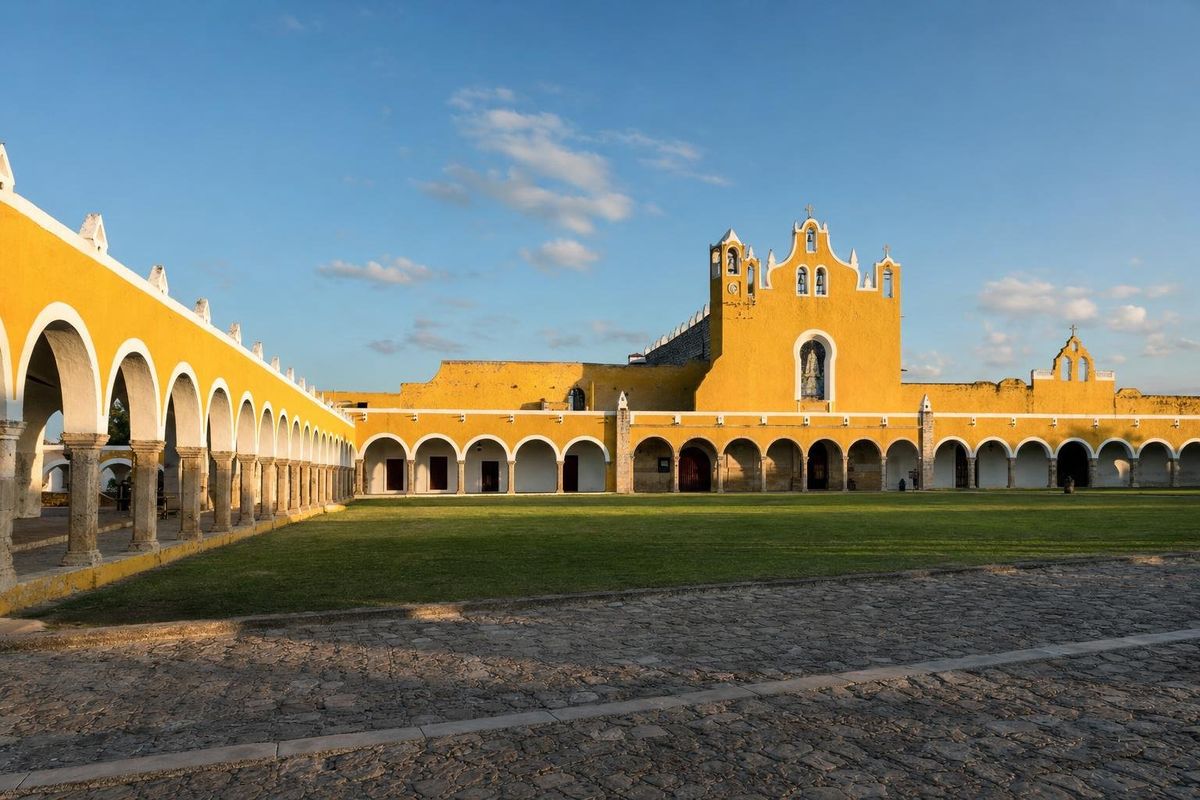
AI-generated image Towns & Villages · Yucatán
Izamal
AI-generated image Maya Ruins · Yucatán
Acanceh