
−45 m · Xibalba · Maya Mysteries · Yucatán
The Feathered Serpent: Kukulkan, Quetzalcoatl and the Meaning of a God
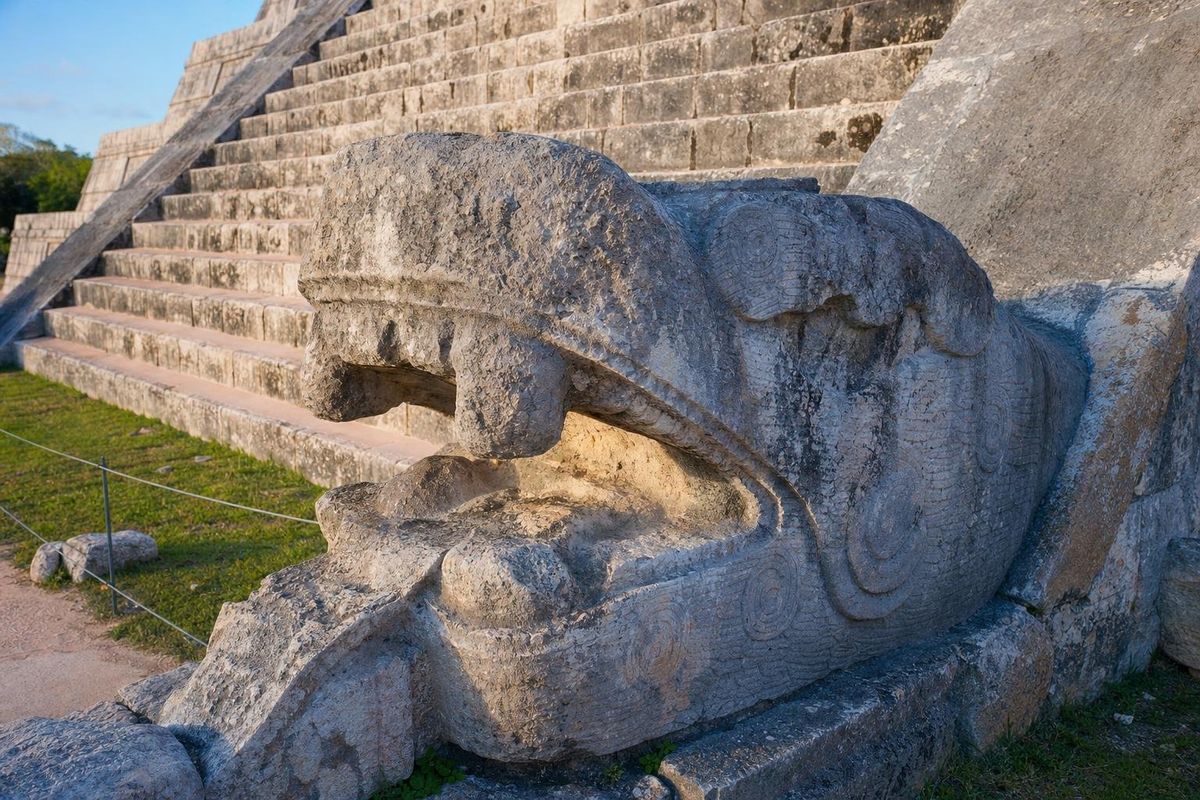
The feathered serpent god is the most widespread figure in ancient Mexican religion: a rattlesnake covered in the green plumes of the quetzal bird. The Yucatec Maya called him Kukulkan, the Aztecs Quetzalcoatl, and the K'iche' Maya of Guatemala Q'uq'umatz. His carved heads guard staircases from Teotihuacan to Chichén Itzá, and the best place to see him in Mexico is still a pyramid in Yucatán.
What the feathered serpent is, and what its meaning was
Two animals sit in one body. The snake lives on and under the ground, slips into caves and water, and renews itself by shedding its skin. The quetzal lives in the cloud forest canopy, and its long tail feathers were worth more than gold to the peoples of Mesoamerica. Put together, they make a creature that belongs to earth and sky at the same time. Most scholars read the meaning of the feathered serpent along those lines: a mediator that moves between the levels of the cosmos, carrying rain, wind and the souls of rulers between them.
The names say the same thing literally. In Nahuatl, quetzalli is the precious green feather and coatl is snake. In Yucatec Maya, k'uk'um means feather and kan means snake, which gives K'uk'ulkan, usually written Kukulkan. Q'uq'umatz in K'iche' is built the same way.
Maya speech added a pun that artists exploited for centuries. In several Mayan languages the words for sky and for snake sound alike (kan and chan). Serpent bodies therefore frame sky bands on carved monuments, and a serpent arching overhead could stand for the heavens themselves. That double reading is why the meaning of a serpent in Maya art is rarely just about snakes.
First appearances: Olmec sky snakes
The oldest images usually cited as a feathered serpent come from the Olmec world of the Gulf Coast. Monument 19 from La Venta, now in the Parque-Museo La Venta in Villahermosa, shows a seated figure wrapped by a large rattlesnake with a crest on its head; the date is often given as roughly 900 to 400 BC. Whether the crest is a plume is debated. Karl Taube, who studied early Olmec imagery closely, preferred the term avian serpent for these creatures because they combine bird and snake traits, including a flame-shaped brow.
A painting in Juxtlahuaca Cave in Guerrero, in an Olmec style, has also been described as an early plumed serpent. At this stage the creature was a minor player; jaguars dominate Olmec art.
Temple of the Feathered Serpent at Teotihuacan
The cult took its monumental form at Teotihuacan, north of modern Mexico City. Inside the Ciudadela compound stands the Temple of the Feathered Serpent, built around AD 200. Its stepped facades carry rows of projecting stone heads: a feathered serpent with a ruff of plumes alternating with a second, more geometric head. That second head was long called Tláloc because of its ringed eyes. Karl Taube and Saburo Sugiyama later read it as a headdress worn by the serpent, possibly a war serpent or a calendar sign tied to the beginning of time. Both readings remain interpretations, and the meaning of the second head is still open.
Excavations in the 1980s found well over a hundred sacrificed individuals buried in and around the temple, many with their hands tied behind their backs and some wearing necklaces of real and imitation human jaws. That discovery changed how researchers see the feathered serpent god at Teotihuacan: not only a gentle bringer of rain, but a figure tied to warfare, sacrifice and the authority of rulers. In 2003 INAH archaeologists located a tunnel running beneath the temple, later excavated and found full of offerings.
Nobody knows what Teotihuacanos called their feathered serpent god. Quetzalcoatl is the Aztec name, applied backwards, so the Temple of the Feathered Serpent is a modern label.
Quetzalcoatl in central Mexico, from Xochicalco to the Aztecs
After Teotihuacan declined in the 600s, the plumed snake travelled with the cities that rose in its place. At Xochicalco in Morelos, a second Temple of the Feathered Serpent is wrapped in undulating serpents with seated, cross-legged figures between the coils. At Tula, capital of the Toltecs, the god merged with a legendary priest-king, Topiltzin Quetzalcoatl, who in later Aztec stories was driven out of the city and departed east.
By the time of the Aztec empire, Quetzalcoatl was a creator. One well-known myth has him descend to Mictlan, the land of the dead, to recover the bones of earlier humans and bring them back to life with his own blood. He was also Ehecatl, the wind that sweeps the road for the rain, worshipped in round temples so the wind could circle freely. He was linked with Venus as the morning star and with the priesthood, and in Tenochtitlan the temple of the feathered serpent god faced the Templo Mayor.
A familiar story claims that the Aztec ruler Moctezuma took Hernán Cortés for the returning Quetzalcoatl. Historians including Matthew Restall and Camilla Townsend argue that this identification was largely written after the conquest, by Spanish and later indigenous authors, and that there is little evidence Moctezuma believed it in 1519.
Kukulkan at Chichén Itzá and the Maya world
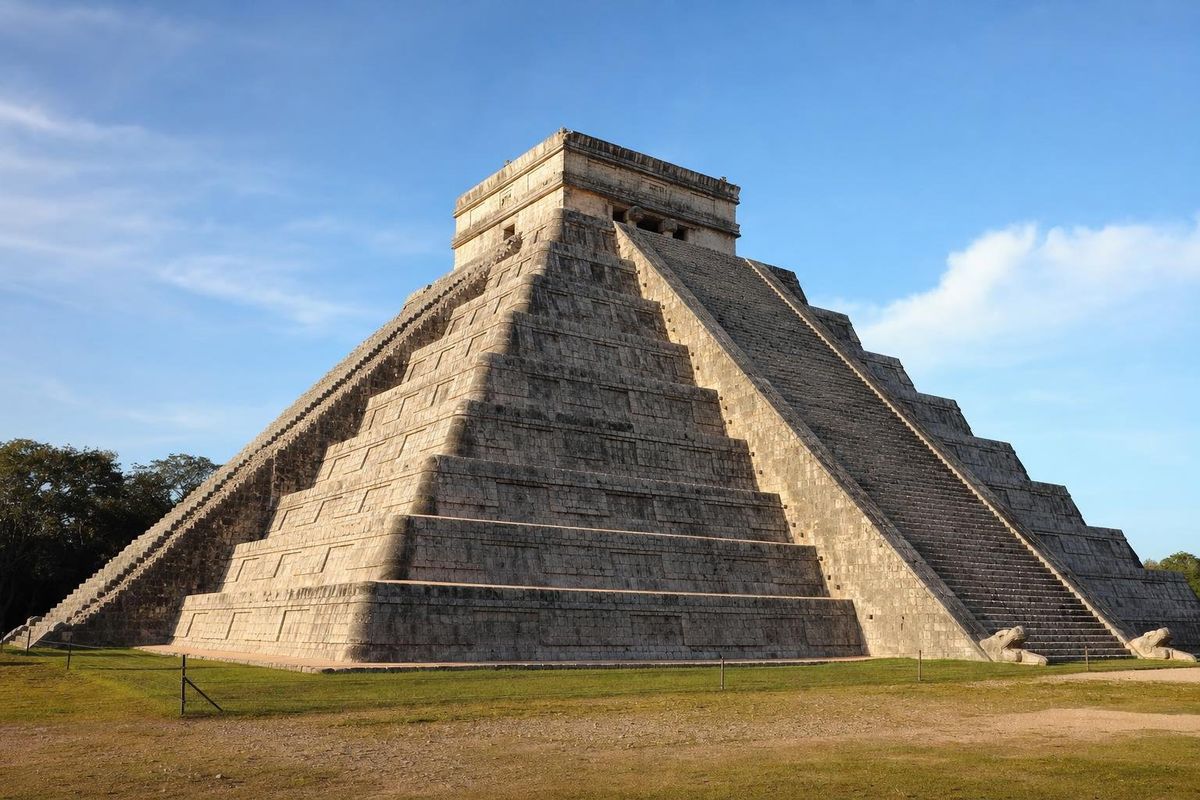
In northern Yucatán the feathered serpent became Kukulkan, and Chichén Itzá is full of him. The great pyramid, El Castillo, is also called the Temple of Kukulkan. Stone serpent heads rest at the foot of its north staircase. In the late afternoons around the March and September equinoxes, the stepped corners of the pyramid cast a series of triangles of light onto the staircase balustrade that link up with the heads, so the body appears to slide down the steps. Whether the builders planned it is still argued.
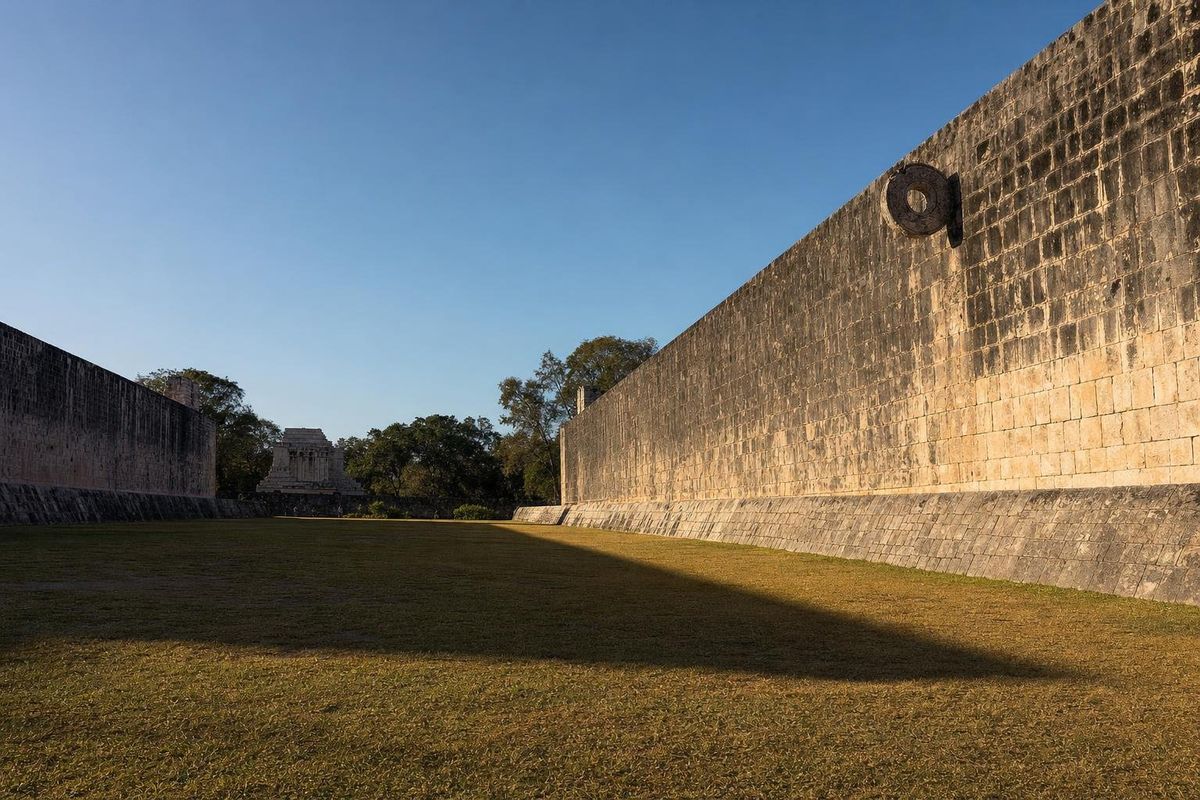
The serpent appears all over the site: as columns with the heads on the ground and the rattles in the air at the Temple of the Warriors and along the walls of the Great Ballcourt. The same pattern repeats at Mayapán, which built its own smaller Castillo of Kukulkan after Chichén Itzá declined. Spanish sources recorded Kukulkan as a figure who arrived from the west, and many scholars connect his cult with contacts between Yucatán and central Mexico around the 10th century, though the old idea of a Toltec conquest of Chichén Itzá is now treated with caution.
Earlier Maya art had its own serpents. Linda Schele named the Vision Serpent, the rearing snake from whose jaws ancestors and gods emerge in bloodletting scenes, best known from Lintel 25 at Yaxchilán. Some researchers see Kukulkan as a later form of that being. In the Popol Vuh of the K'iche', Q'uq'umatz is one of the creators who first speak the world into being.
| Name | People | Where to see the figure |
|---|---|---|
| Avian serpent | Olmec | La Venta Monument 19, Villahermosa |
| Unknown (Quetzalcoatl by convention) | Teotihuacan | Temple of the Feathered Serpent, Ciudadela |
| Quetzalcoatl / Ehecatl | Aztec (Mexica) | Templo Mayor area and National Museum of Anthropology, Mexico City |
| Kukulkan | Yucatec Maya | El Castillo, Chichén Itzá; Mayapán |
| Q'uq'umatz | K'iche' Maya | Popol Vuh text; highland Guatemala |
Seeing the feathered serpent in person
For Kukulkan, the essential visit is Chichén Itzá, between Mérida and Valladolid; the UNESCO listing gives a good overview of the site. Arrive early, before the heat and the tour buses. The equinox shadow brings very large crowds, and access rules for that day change, so check locally. Mayapán, south of Mérida, has a smaller Castillo and far fewer visitors.
For Quetzalcoatl, the Temple of the Feathered Serpent at Teotihuacan is the place to start, followed by the Mexica galleries of the National Museum of Anthropology in Mexico City, where large stone feathered serpents sit among the Aztec sculpture. Both fit into the trips around Mexico City. The serpent's ringed-eye companion has its own page on the goggle-eyed gods, and the wider series sits under Maya Mysteries.
On a Teotihuacan facade, look at the shells carved around the serpent bodies. They are sea creatures, a long way inland, set there by people who saw water and serpents as the same story.
Questions about the feathered serpent
What does feathered serpent mean?
It is a literal translation of Quetzalcoatl (Nahuatl: quetzal feather plus coatl snake) and of Kukulkan (Yucatec Maya: k'uk'um feather plus kan snake). Most scholars read the creature as a link between earth and sky, associated with wind, rain, creation and rulership.
Are Kukulkan and Quetzalcoatl the same god?
They are closely related versions of one widespread figure. Kukulkan is the Yucatec Maya name and Quetzalcoatl the central Mexican one; each culture gave the god its own myths and rituals, so they overlap without being identical.
Where is the Temple of the Feathered Serpent?
The best-known one is in the Ciudadela at Teotihuacan, north of Mexico City, built around AD 200. Xochicalco in Morelos has another temple with the same name, covered in serpent reliefs.
When can the serpent shadow be seen at Chichén Itzá?
In the late afternoon around the spring and autumn equinoxes, and for several days on either side, weather permitting. The equinox itself draws very large crowds, and arrangements on that day can change.
Was the feathered serpent an Aztec snake god only?
No. The Aztecs inherited the figure. Images go back to the Olmecs, the great temple at Teotihuacan was built more than a thousand years before the Aztec empire, and the Maya had their own versions.
Nearby on the map
AI-generated image Maya Mysteries · Yucatán
Ballplayers
AI-generated image Maya Ruins · Yucatán
Chichén Itzá
AI-generated image Cenotes · Yucatán
Xcajum
AI-generated image Trips · Yucatán
Around Valladolid