
−5 m · Shallows · Museums · Quintana Roo
Museo Frida Kahlo in Playa del Carmen: Her Life on the Caribbean
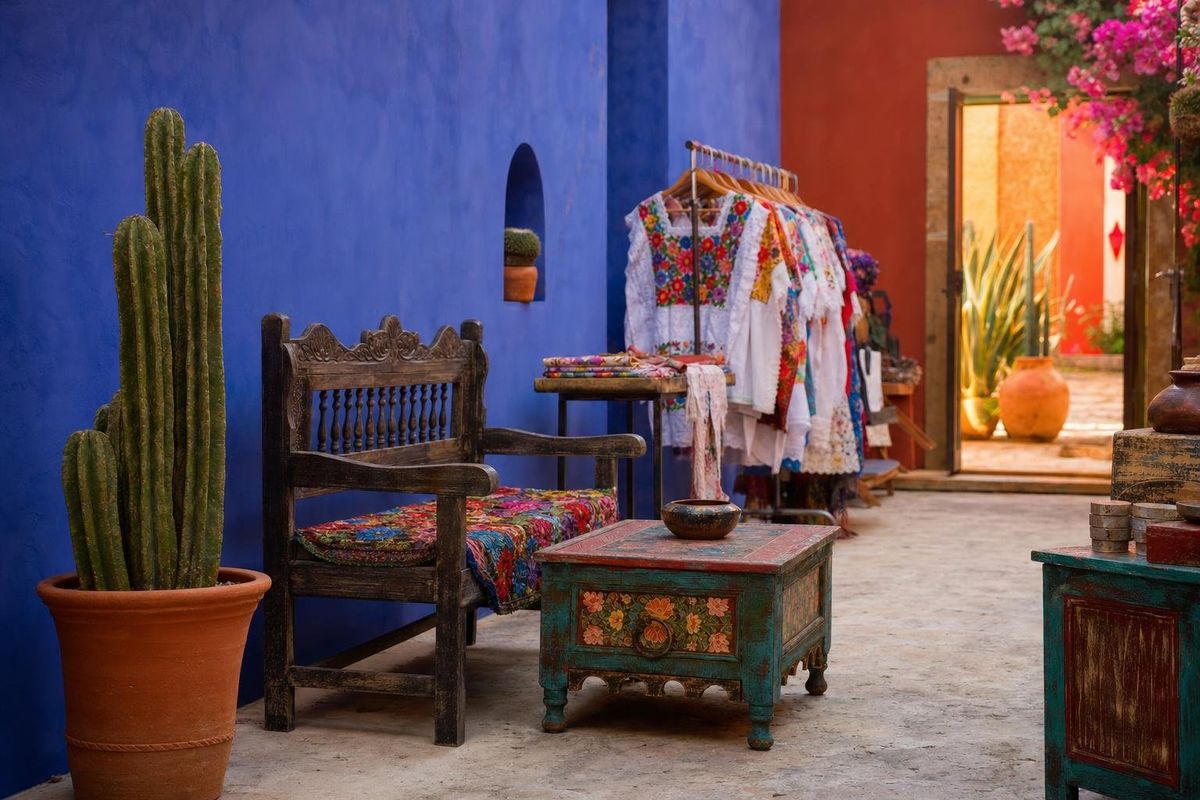
The Museo Frida Kahlo in Playa del Carmen is a small museum in the town center that tells the life of the Mexican painter through photographs, reproductions of her work, recreated rooms and objects in the style of her home. It is not the place to see her original paintings, most of which are in Mexico City, but it makes a good introduction to her story on a day off the beach.
A Frida Kahlo museum far from Coyoacán
Frida Kahlo never lived on the Caribbean coast. She was born in 1907 in Coyoacán, then a village on the southern edge of Mexico City, and spent most of her life there and in the city, with long periods in the United States and a few months in Paris. Her life is so tied to central Mexico that a museum about her in Playa del Carmen can seem out of place.
The museum exists because of her fame, which has grown enormously since her death in 1954. Kahlo is now one of the most recognized artists in the world, and her image, with the joined eyebrows, braided hair and Tehuana dress, appears on everything from tote bags to street murals. A museum devoted to her life gives the many visitors who pass through Playa del Carmen a way to learn the story behind the image.
What the Museo Frida Kahlo in Playa del Carmen shows
The exhibition walks through the main chapters of her life. Expect large-format photographs of Kahlo and the people around her, reproductions of key paintings with explanations of their symbolism, recreations of rooms from her home and displays of clothing and jewelry in the style she wore. Panels cover her childhood, the accident that shaped her life, her marriage to Diego Rivera and her place in Mexican art.
Because the paintings on show are reproductions, the value of the visit lies in the context. It works well for travellers who know her name and face but little about her life, and for families who want a cool, indoor hour in the middle of a hot day. Visitors who have already been to the Casa Azul in Coyoacán will find less that is new.
It also suits a rainy afternoon. Summer storms on the coast tend to arrive suddenly and pass within an hour or two, which is about the length of a visit.
Displays, opening times and prices change, and small private museums in tourist towns sometimes move or close. Check the current situation before you go.
The life behind the exhibits
Childhood and the accident
Magdalena Carmen Frida Kahlo y Calderón was the daughter of a German-born photographer, Guillermo Kahlo, and a Mexican mother, Matilde Calderón. She contracted polio as a child, which left one leg thinner than the other. In 1925, at eighteen, she was badly injured when the bus she was riding in collided with a streetcar in Mexico City. A metal handrail pierced her body, and she suffered multiple fractures to her spine, pelvis and leg.
During months of recovery in bed, she began to paint, using a mirror fixed above her so she could see herself. Self-portraits would become her central subject, about fifty-five of them by the usual count.
Diego Rivera
Kahlo married the muralist Diego Rivera in 1929. He was twenty years older and already famous. Their relationship was intense and troubled: they divorced in 1939 and remarried in 1940. Rivera's work took them to San Francisco, Detroit and New York in the early 1930s, and Kahlo's paintings from those years reflect her discomfort with life in the United States. The house and studios they used in San Ángel, Mexico City, are described in the article on the Diego Rivera and Frida Kahlo studio house, and Rivera's birthplace is now the Diego Rivera museum in Guanajuato.
Recognition
Her first solo exhibition was held in New York in 1938, and she exhibited in Paris in 1939, where the Louvre acquired one of her self-portraits. In 1953, already very ill, she attended her first solo show in Mexico City, carried in on her bed. She died in July 1954 at the Casa Azul, the blue house in Coyoacán where she was born; it opened as a museum a few years later.
Reading her paintings
Much of what makes Kahlo's work distinctive draws on Mexican popular art: the small votive paintings called retablos, painted on tin, and the flat, bright colors of folk art. She often wore the dress of the women of the Isthmus of Tehuantepec in Oaxaca, a deliberate statement of Mexican and Indigenous identity. Pre-Hispanic imagery, including Aztec and Maya figures and symbols, appears in a number of her works and in the collection of ancient objects she and Rivera assembled. Art historians read her paintings in many ways: as records of physical pain, as political statements, as explorations of identity. The museum's explanations offer a starting point.
Practical notes
- The museum is in the center of Playa del Carmen, within easy walking distance of Quinta Avenida, the pedestrian street.
- Allow about an hour.
- A shop sells prints, books and Frida-themed souvenirs; quality varies, as with any merchandise built around her image.
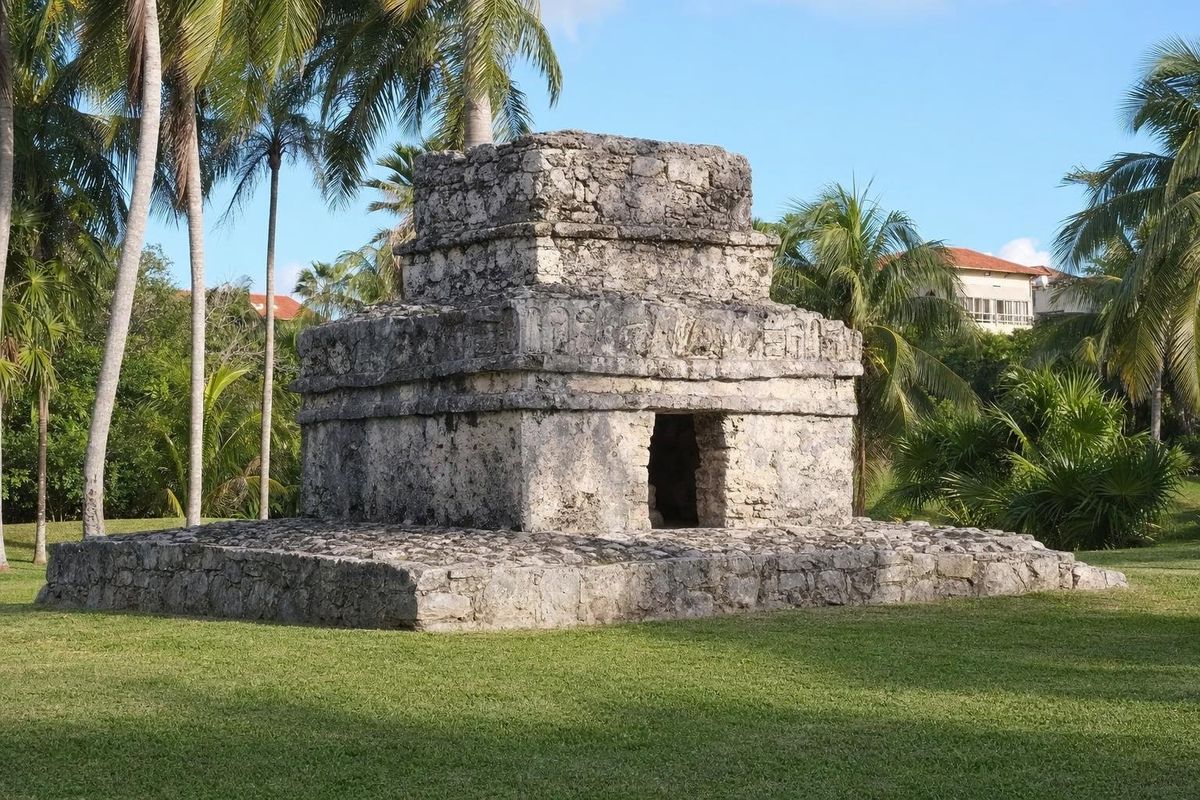
For original Kahlo paintings, plan time in Mexico City: the Casa Azul in Coyoacán and the Museo Dolores Olmedo in Xochimilco hold major collections, and the trip around Mexico City covers the area. Closer to the coast, Xaman Ha, the Maya port that preceded Playa del Carmen, survives in a few small structures in the south of town. Other museums are gathered in the museums section.
In what is often described as Kahlo's last painting, a still life of watermelons finished in 1954, she wrote the words Viva la Vida across the red flesh of one slice.
Frida Kahlo museum in Playa del Carmen: questions
Does the Frida Kahlo museum in Playa del Carmen have original paintings?
The collection is built mainly around reproductions, photographs and recreated settings. Most of her original paintings are in museums and private collections in Mexico City and abroad.
Where is the Frida Kahlo museum in Playa del Carmen?
In the center of town, within walking distance of Quinta Avenida. Check the current address locally, as small museums sometimes move.
Is the museum worth visiting?
It is a good introduction for travellers who know little about Kahlo's life. Visitors who have already seen the Casa Azul in Mexico City may find it less rewarding.
Did Frida Kahlo ever live in Playa del Carmen?
No. She lived mainly in Coyoacán in Mexico City, where she was born and died, with periods in the United States and a few months in Paris.
Is there a gift shop at the museum?
Yes, a shop sells prints, books and souvenirs related to Kahlo. Selection and prices vary.
Where are Frida Kahlo's original works in Mexico?
The Casa Azul in Coyoacán and the Museo Dolores Olmedo in Xochimilco, both in Mexico City, are the main places.
Nearby on the map
AI-generated image Maya Ruins · Quintana Roo
Xaman Há
AI-generated image Beaches · Quintana Roo
Punta Esmeralda
AI-generated image Beaches · Quintana Roo
Grand Coral
AI-generated image Beaches · Quintana Roo
Xcalacoco