
0 m · Surface · People of Mexico · Oaxaca
Triqui Weaving and the Red Huipil, From Western Oaxaca to Oaxaca City
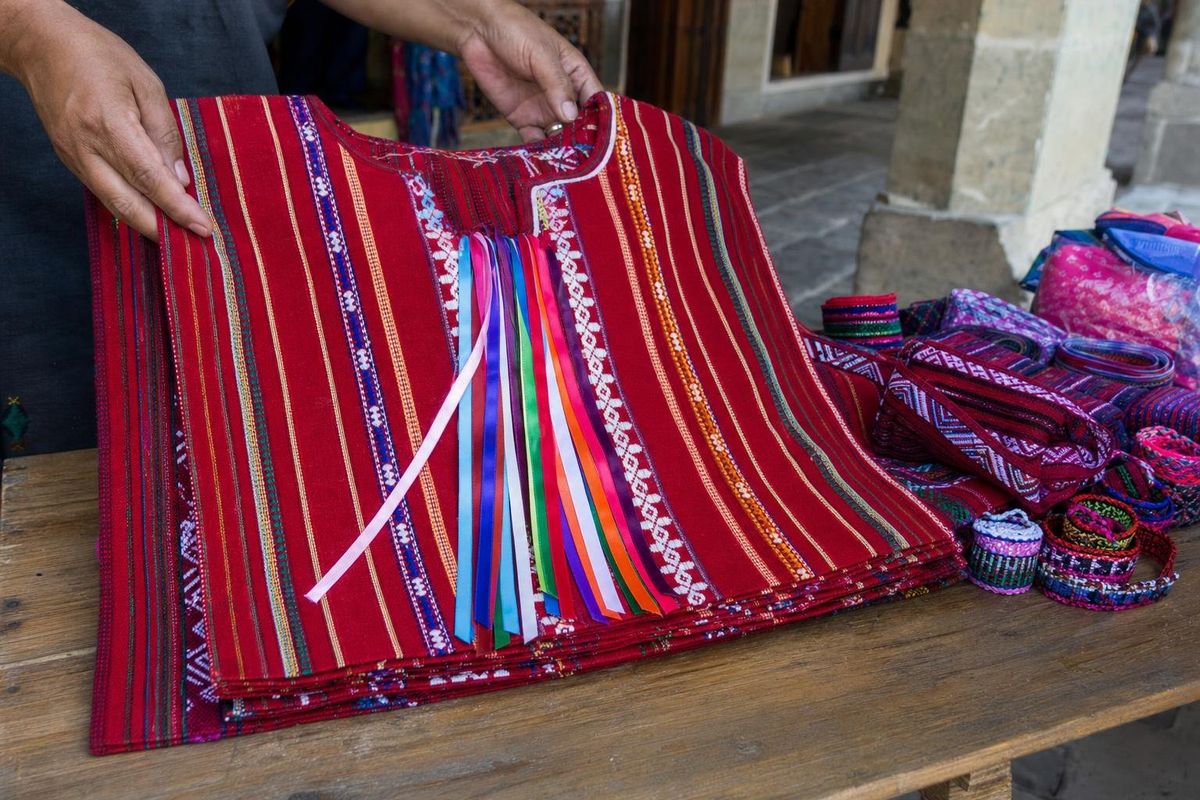
The Triqui are an Indigenous people from the mountains of western Oaxaca, and their long red huipil, striped with brocade and trimmed with ribbons, is one of the most recognizable garments in Mexico. In Oaxaca city, Triqui weavers and sellers are a familiar presence in the craft markets and on the streets of the historic center, offering huipiles, belts, bags and small woven pieces.
Who the Triqui are
The Triqui homeland is a small, steep region of the Mixteca highlands in western Oaxaca, around the communities of San Andrés Chicahuaxtla, San Juan Copala and San Martín Itunyoso. The Triqui language belongs to the Otomanguean family, like Zapotec and Mixtec, and is tonal: the pitch of a syllable changes the meaning of a word. Different communities speak distinct varieties, and speakers from Chicahuaxtla and Copala do not always understand each other easily. Spanish is widely spoken as a second language, especially among those who sell in cities, so communicating at a market stall is rarely a problem.
The region has a long history of poverty and of land and political conflict, which over recent decades has led many families to move to Oaxaca city, Mexico City and the agricultural regions of northern Mexico and the United States. Weaving travelled with them. For many families, selling textiles in cities is an important source of income.
The red huipil
The Triqui women's huipil is long, often reaching below the knee, and its dominant color is a deep red. Traditionally it is made from three panels woven on a backstrap loom and sewn together lengthwise, then covered with narrow vertical bands of brocade in white, yellow, green, blue and other colors. The brocaded areas cluster around the neck and shoulders, and long satin ribbons in many colors hang from the neckline down the back and chest.
Red has long been the defining color. Older huipiles were colored with natural red dyes, and cochineal from Oaxaca is often mentioned; most of today's huipiles use commercial red yarn. The meaning of the motifs is not documented in a single agreed way. Some weavers describe stars, flowers or the paths of life; others simply name designs by their shapes. As with other Mexican textiles, interpretations vary between communities and families.
Huipiles differ between Triqui communities in their stripes, density of brocade and the arrangement of ribbons, and they continue to change as weavers adopt new yarns and colors.
How a huipil is woven
A full huipil is weeks or months of work. The weaver sets up a warp of cotton or acrylic yarn on the backstrap loom, with one end tied to a post and the other held by a strap around her back. Weaving a plain red ground, she adds the colored bands of supplementary weft as she goes, picking up warp threads by hand with a pointed stick to form each motif. After the panels are finished, they are joined with decorative stitching, the neck opening is finished and the ribbons attached.
The same looms produce smaller items: belts (fajas), shoulder bags (morrales), table runners and narrow bands. Small woven bracelets, quick to make and inexpensive, are among the most common things Triqui sellers offer to visitors.
Girls traditionally learn to weave at home, beginning with narrow bands and belts before attempting a full huipil panel. Ribbons, a later addition to the garment, are bought ready-made and have become one of its most visible features; their colors and number vary with taste and occasion.
Where to see and buy Triqui textiles
Oaxaca city is the most accessible place. Triqui sellers are often found in and around the craft markets near the Benito Juárez and 20 de Noviembre markets, along the pedestrian streets of the center and at stalls under the arcades near the zócalo. Some have fixed stands in craft markets; others sell from blankets or by walking with their goods.
The Triqui homeland itself is remote and is not set up for visitors, and the security situation there has been tense at times. For most travelers, Oaxaca city is the place to meet the craft. The Museo de las Culturas de Oaxaca, in the former convent of Santo Domingo, and the state folk art museum in San Bartolo Coyotepec hold textiles from different Oaxacan peoples and are good places to compare styles.
Buying respectfully
- Know what you are looking at. A full handwoven huipil represents a great deal of labor, and prices reflect that. Machine-made or partly machine-woven copies are also sold; even, perfectly identical patterns and cheap synthetic fabric are signs.
- Bargain lightly, if at all. Prices for small items are already low, and the seller is often the maker or a relative.
- Ask about the piece. Which community it comes from, how long it took and how it is worn. Most sellers are happy to explain.
- Photograph only with permission. Taking photos of sellers or their children without asking is intrusive, and a refusal should be accepted.
- Ask how it is worn. Whether a piece is meant for everyday or festive use is worth knowing before wearing it.
A huipil needs simple care. Wash it by hand in cold water with mild soap, and wash it separately the first few times, since deep red yarns can bleed. Dry it flat in the shade, never in strong sun, which fades red quickly. Satin ribbons crease easily and are best ironed on low heat from the reverse side.
Oaxaca's other textile traditions include the wool rugs of Teotitlán del Valle, and the backstrap weaving of Chiapas is covered on the page about Tzotzil Maya weaving. Other crafts and communities are gathered in the People of Mexico section.
Triqui textiles: questions
Where do the Triqui live?
In the Mixteca highlands of western Oaxaca, around San Andrés Chicahuaxtla, San Juan Copala and San Martín Itunyoso, with large communities in Oaxaca city, Mexico City and beyond.
Why is the Triqui huipil red?
Red has long been the defining color of Triqui dress. Older pieces were colored with natural red dyes; most today use commercial red yarn.
How long does it take to weave a Triqui huipil?
A full huipil woven on a backstrap loom typically takes weeks to months, depending on the amount of brocade.
Where are Triqui textiles sold in Oaxaca city?
In the craft markets near the Benito Juárez and 20 de Noviembre markets, on the pedestrian streets of the center and at stalls near the zócalo.
What language do the Triqui speak?
Triqui, a tonal language of the Otomanguean family, with several distinct varieties.
Nearby on the map
AI-generated image People of Mexico · Oaxaca
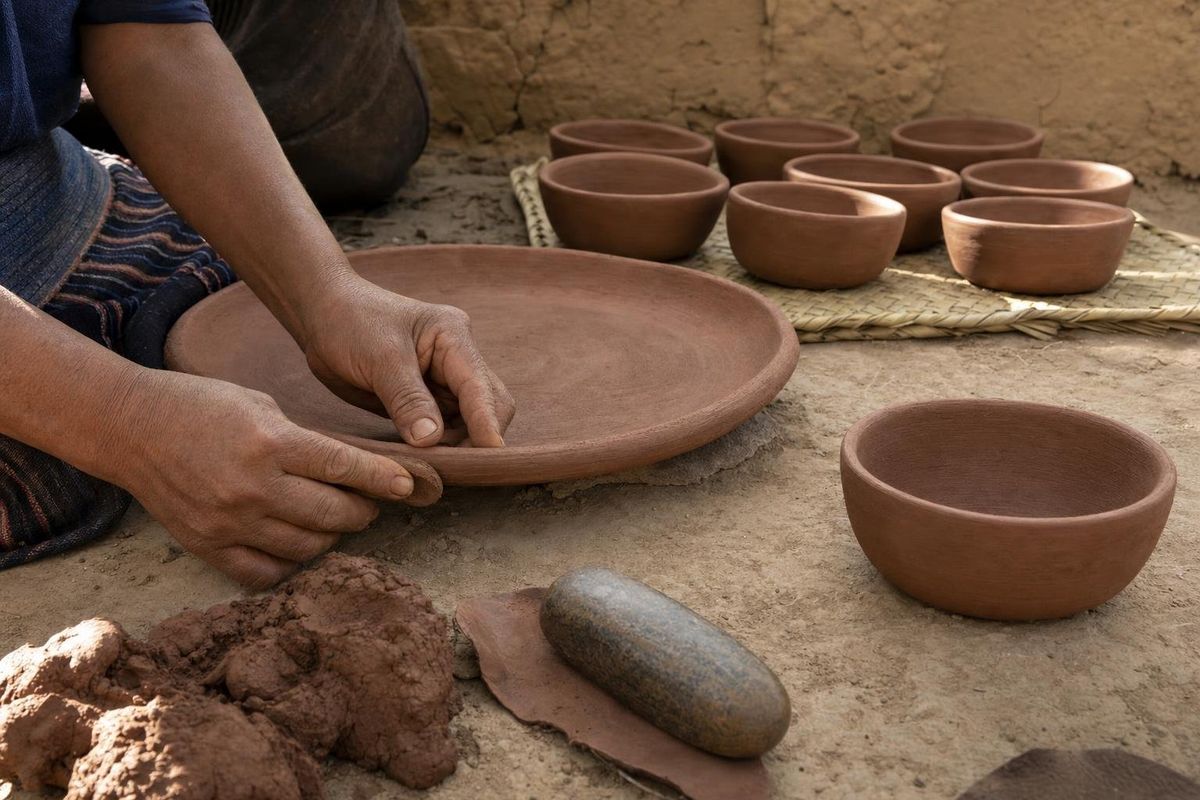
Zapotec pottery
AI-generated image Maya Mysteries · Oaxaca
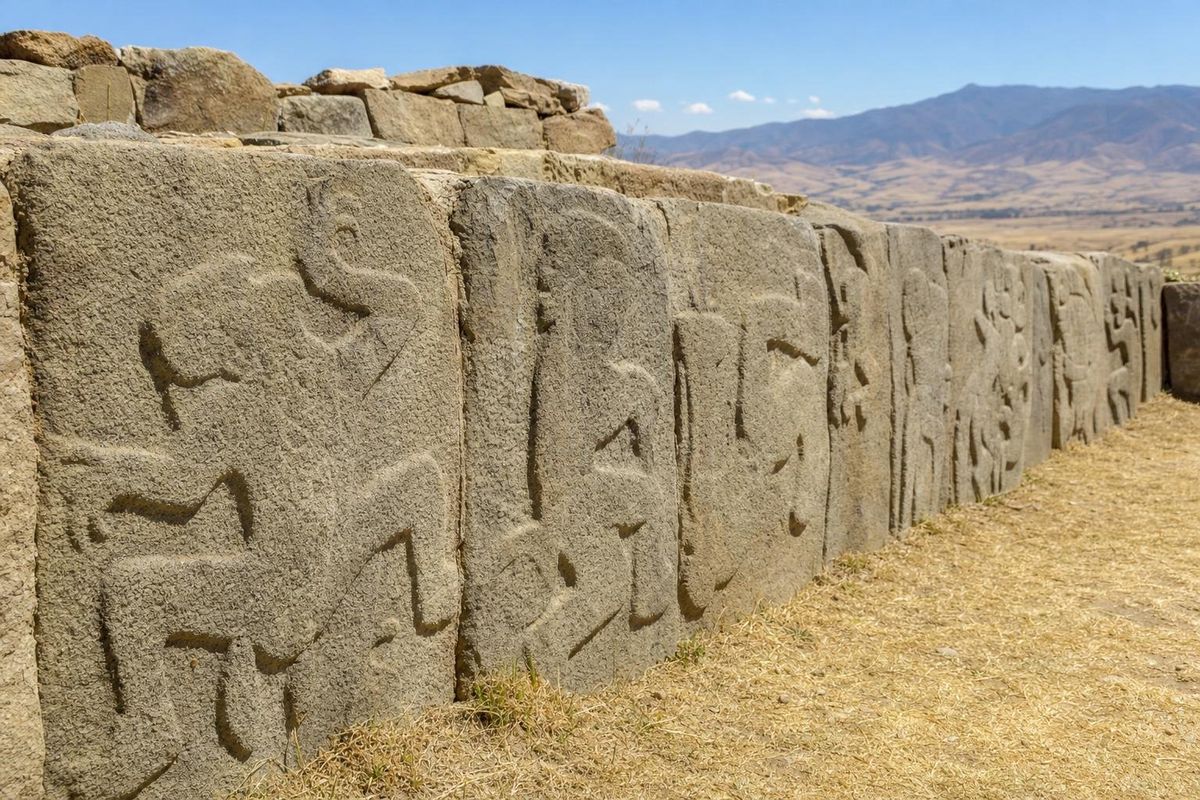
Zapotec Danzantes
AI-generated image Maya Ruins · Oaxaca
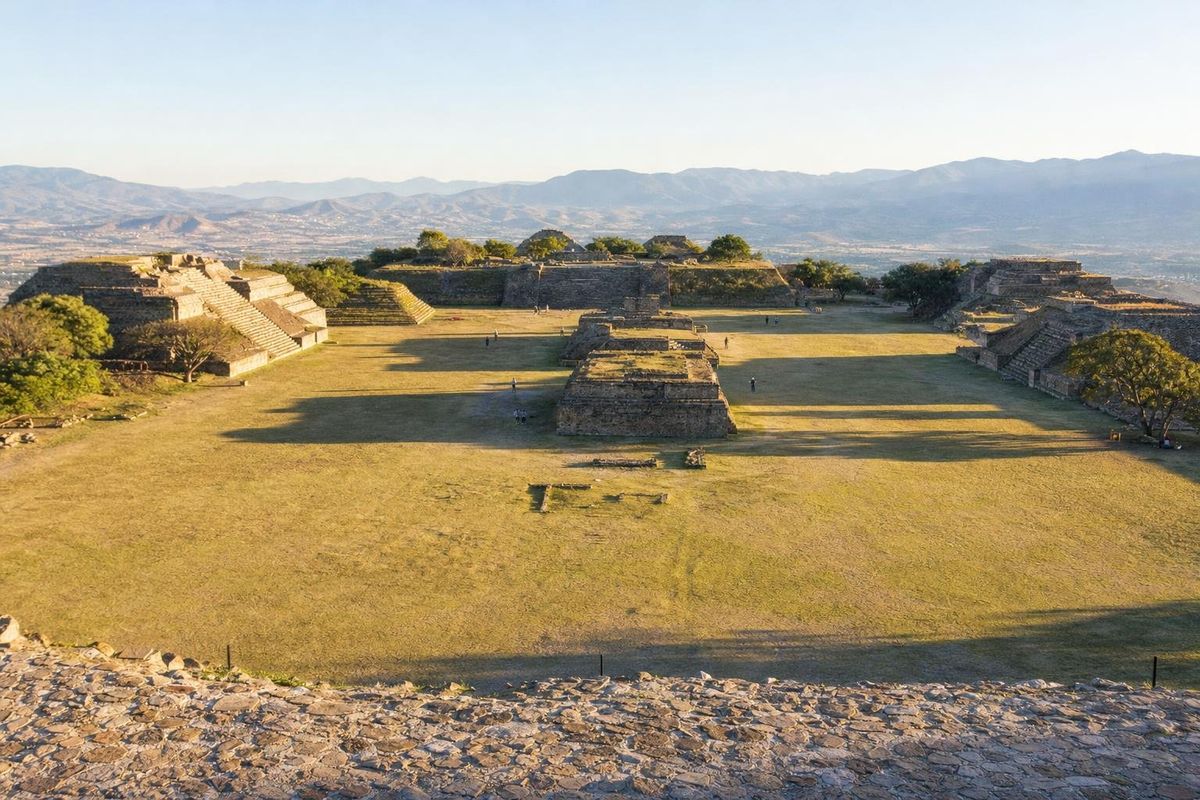
Monte Albán
AI-generated image People of Mexico · Oaxaca
Zapotec art