
−45 m · Xibalba · Maya Mysteries · Oaxaca
San José Mogote and the Danzantes of Monte Albán, Oaxaca
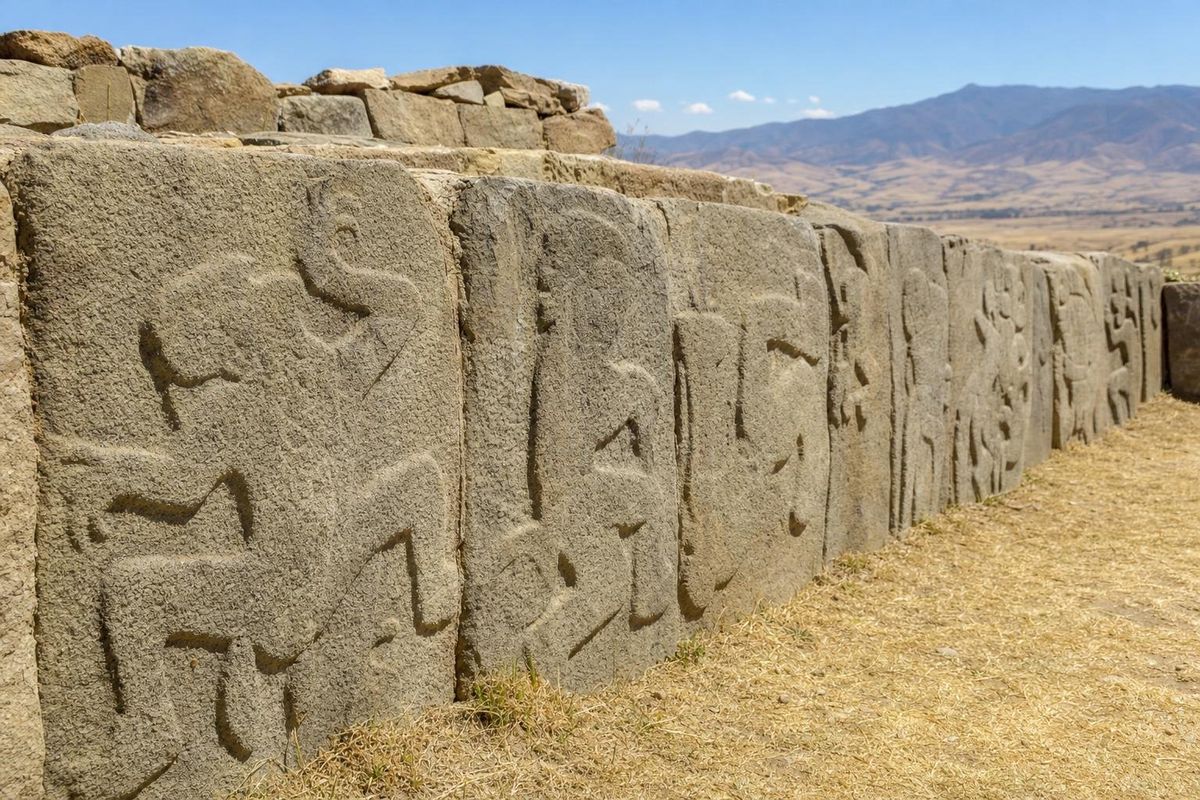
San José Mogote, a village site in the Valley of Oaxaca, holds one of the oldest carved stones in the region: a sprawled captive with a calendar name beside him. A few centuries later, the Zapotecs who founded Monte Albán carved more than 300 similar figures, the Danzantes. Their contorted poses once suggested dancers; most archaeologists now read them as slain or sacrificed enemies.
Who were the Zapotecs?
The Zapotecs are the people of the central valleys of Oaxaca, in southern Mexico, and they still live there, speaking a family of related languages. Their own name is often translated as "cloud people." In ancient times they built one of the first states in Mesoamerica, with its capital at Monte Albán, a mountaintop city that dominated the valley from about 500 BC until around AD 800. Later Zapotec centres included Mitla and Zaachila.
Zapotec religion centred on forces of nature. The best known is Cocijo, the god of rain and lightning, whose face appears on many ceramic effigy urns found in tombs. Other deities, often named with the honorific pitao, governed maize, death and the ancestors. Ancestors themselves, and especially royal ones, were central to Zapotec belief. Much of what is said about named Zapotec gods comes from Spanish-era sources, so identifying specific gods on ancient urns involves some guesswork.
San José Mogote: the stone in the corridor
San José Mogote lies in the Etla arm of the Valley of Oaxaca, northwest of the modern city. For centuries before Monte Albán existed, it was the largest settlement in the valley. Kent Flannery and Joyce Marcus of the University of Michigan excavated it over many seasons and traced its growth from a farming village to a centre with public buildings.
Their most discussed find is Monument 3, a carved slab set as a threshold in a corridor between two public buildings. It shows a naked man lying sprawled, eyes closed, with a scroll design at his chest that most readers take as blood. Between his feet are two glyphs, read by Marcus as a day name in the 260-day calendar, possibly "1 Earthquake." That would make it the man's name, taken from the day of his birth, and one of the earliest pieces of writing in Mesoamerica. Marcus and Flannery dated the stone to around 600 BC; other researchers argue for a somewhat later date. The interpretation of the scene, a captive placed where people would walk over him, is widely accepted.
The Danzantes of Monte Albán
When Monte Albán was founded, its builders lined the side of an early structure, now called Building L, with large stone slabs carved with naked men. More than 300 survive, one of the largest groups of carved monuments of that age in Mesoamerica. Nineteenth-century visitors named them los Danzantes, the dancers, because of the bent limbs and twisted bodies.
Look closely and the reading changes. Many figures have closed eyes and open mouths. Bodies lie at odd angles, as if fallen. Some have flowing designs near the groin that a number of scholars interpret as blood, and they have proposed that these depict genital mutilation of captives, a practice sometimes described as ritual castration. Others caution that the design may be decorative or symbolic. Several slabs carry glyphs, possibly names.
Competing interpretations
- Slain captives. The most widely held reading, argued by Joyce Marcus among others: a display of enemies killed or sacrificed by the young state, placed on public view as a warning and a boast.
- Dancers or ritual performers. The original nineteenth-century reading, now held by few.
- Shamans or figures in trance. Some writers have seen altered states in the poses; this view has limited support.
- Medical illustrations. An older idea that the slabs showed illness or deformity, largely abandoned.
Some of the faces have broad noses and downturned mouths that recall Olmec art from the Gulf Coast, which has led to discussion of contact between Oaxaca and the Olmec world. Style alone cannot settle that question.
Building J and the conquest slabs
A later building at Monte Albán, the arrow-shaped Building J, carries a different set of carved stones. Alfonso Caso, who excavated the site from the 1930s, read them as a list of places conquered by the city, each shown by a hill glyph with an upside-down head. If the Danzantes boast of individual captives, Building J seems to boast of whole territories.
| Monument | Approximate date | What it shows |
|---|---|---|
| San José Mogote Monument 3 | About 600 BC (debated) | Single sprawled captive with a calendar name |
| Danzantes, Building L, Monte Albán | About 500 to 100 BC | More than 300 naked figures, mostly read as slain enemies |
| Conquest slabs, Building J, Monte Albán | About 100 BC to AD 200 | Place glyphs with inverted heads, read as conquests |
Seeing the Danzantes in person
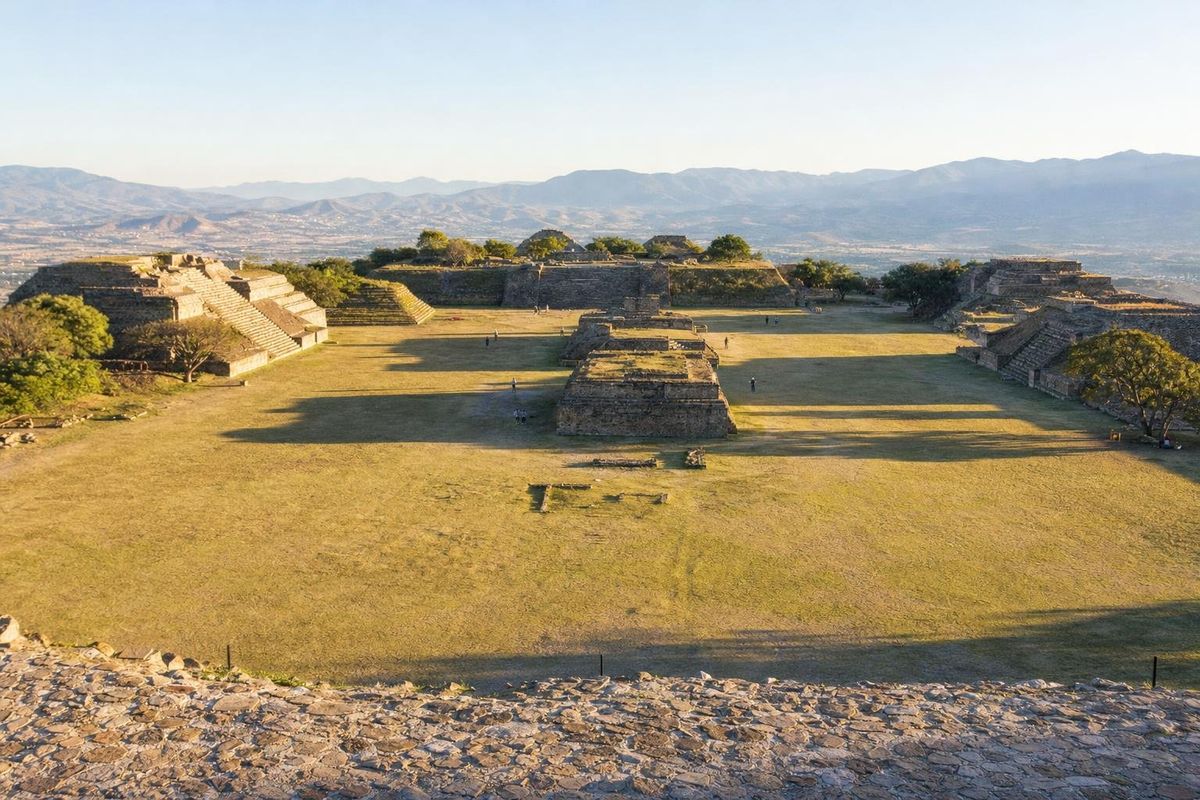
Monte Albán sits on a ridge a short drive above Oaxaca City and is part of a UNESCO World Heritage listing together with the city's historic centre (UNESCO listing). Many of the slabs in the wall are replicas; several originals are displayed in the site museum near the entrance, which is worth seeing first. The plaza is high and exposed, so bring water and a hat. San José Mogote has a small community museum, and its hours vary, so ask in Oaxaca before heading out.
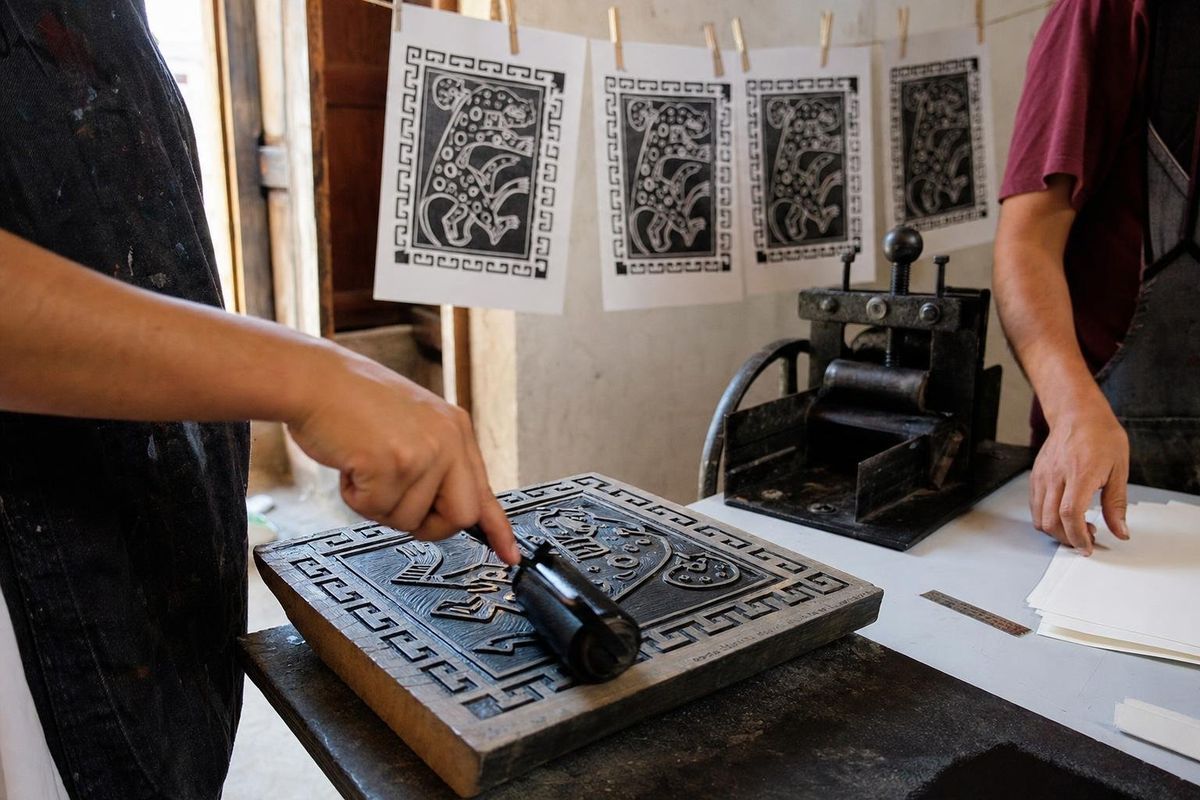
A day in the valley can combine the ruins with the later Zapotec centre of Mitla and the craft villages, where a Zapotec artist or the wood carvers of San Martín Tilcajete carry on a much younger tradition. More iconography from across Mexico is collected under Maya Mysteries.
At Building L, the slabs closest to the ground are the ones easiest to read in the afternoon, when the sun drops low enough to throw shadows into the shallow carving.
Questions about the Danzantes and San José Mogote
What are the Danzantes of Monte Albán?
More than 300 carved stone slabs showing naked men in contorted poses, made by the early Zapotecs between roughly 500 and 100 BC. Most archaeologists interpret them as slain or sacrificed captives.
Why are they called dancers?
Nineteenth-century visitors thought the bent poses looked like dancing. The name stuck even though the dancing reading has been largely abandoned.
What is San José Mogote known for?
It was the largest early village in the Valley of Oaxaca before Monte Albán, and its Monument 3 is one of the oldest carved stones in the region, with what may be an early calendar name.
Who were the main Zapotec gods?
Cocijo, the rain and lightning god, is the best known and appears on many effigy urns. Other deities governed maize, death and the ancestors, though their identification on ancient objects is not always certain.
Are the Danzantes at Monte Albán originals?
Many slabs on the wall are replicas. Several originals are kept in the site museum to protect them from weathering.
Nearby on the map
AI-generated image Maya Ruins · Oaxaca
Monte Albán
AI-generated image People of Mexico · Oaxaca
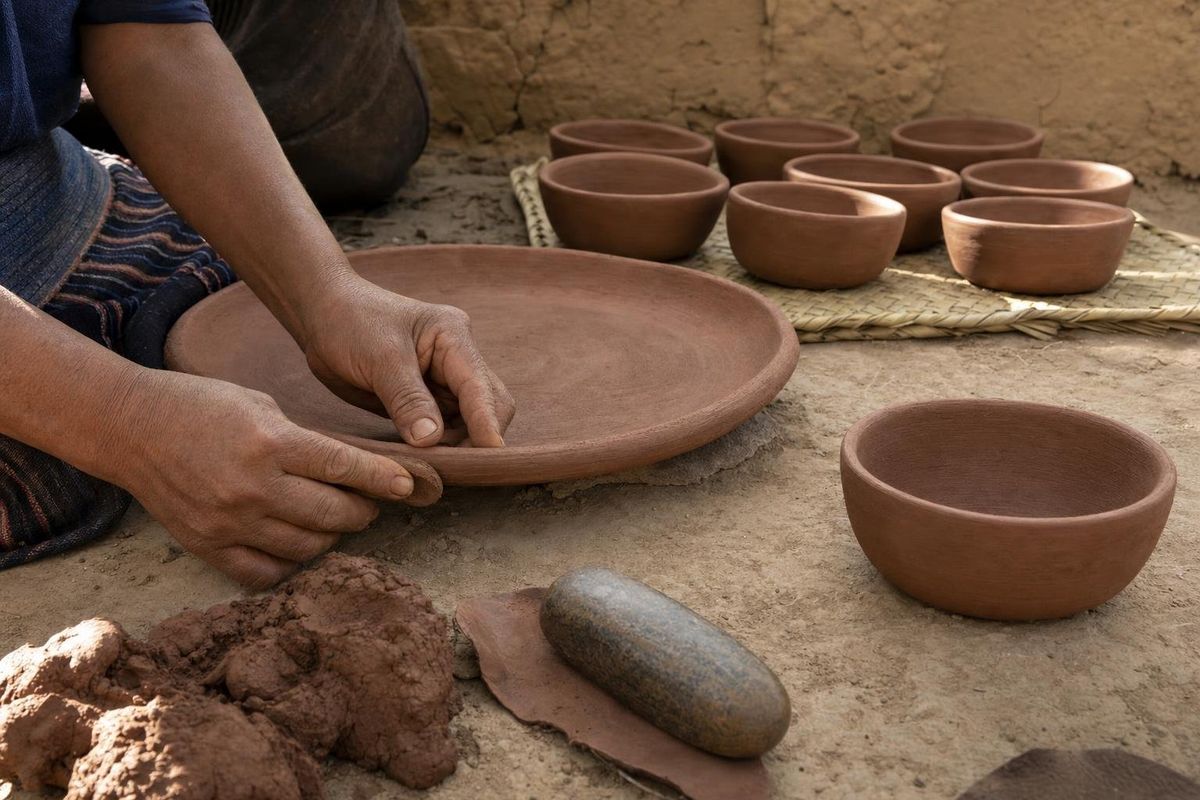
Zapotec pottery
AI-generated image People of Mexico · Oaxaca
Zapotec art
AI-generated image Towns & Villages · Oaxaca
San Bartolo Coyotepec