
+15 m · Canopy · Jungles
Jungles of Yucatán: Biosphere Reserves, Caves and Forest Wildlife
Most of the peninsula is covered in low tropical forest rather than towering rainforest. It hides caves, ruined cities and a wildlife population that is easier to hear than to see.
Every guide in Jungles
AI-generated image Jungles · Yucatán
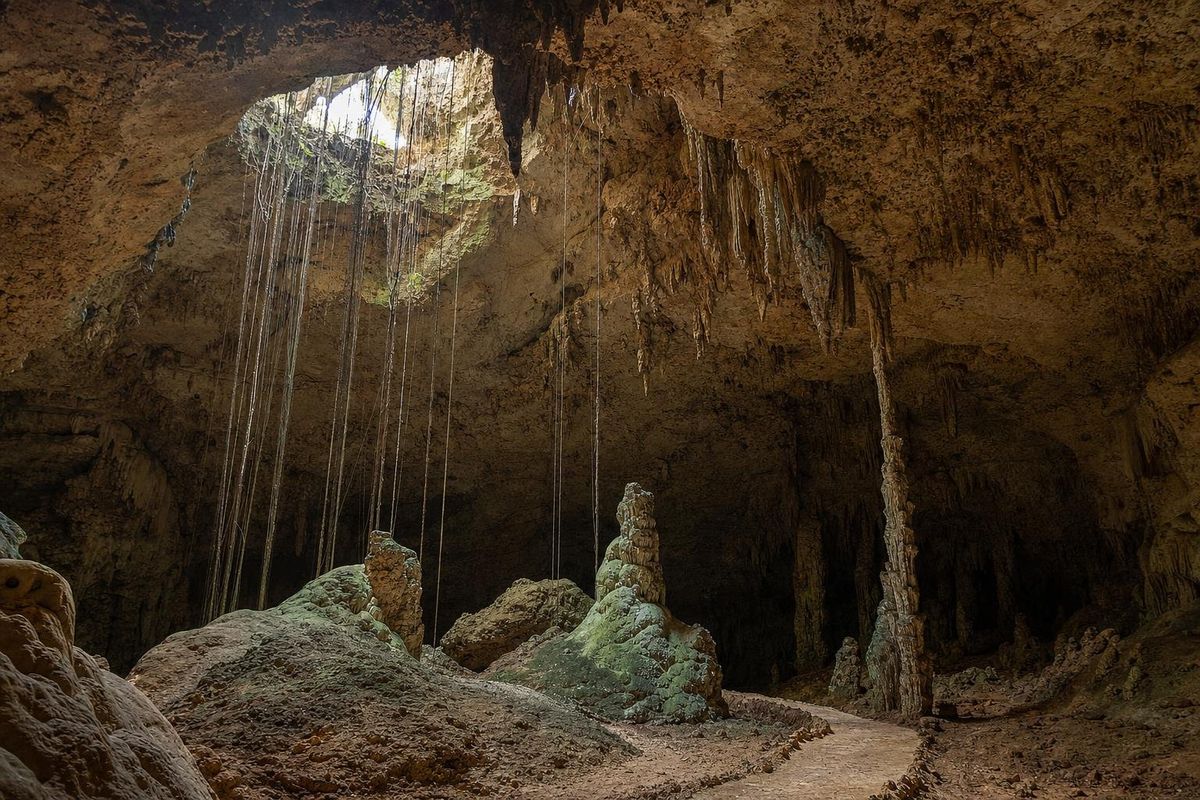
Loltún Caves
AI-generated image Jungles · Quintana Roo
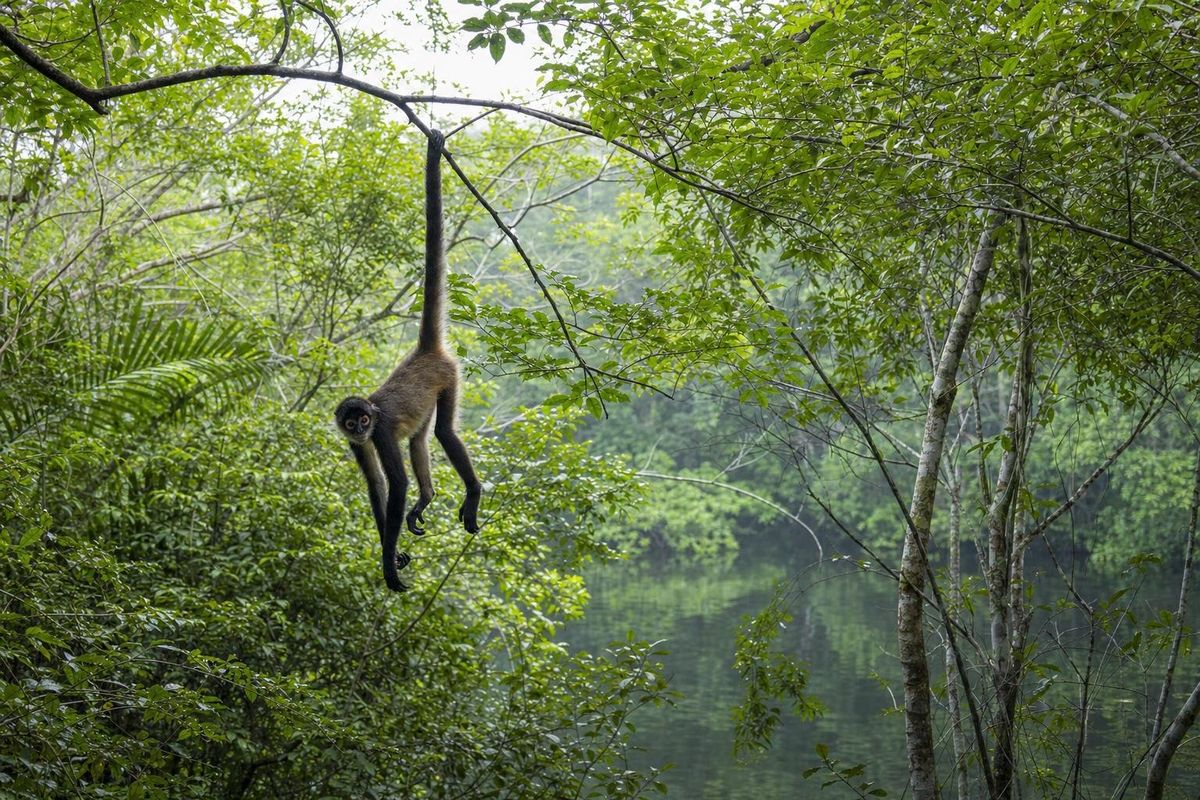
Punta Laguna
AI-generated image Jungles · Quintana Roo
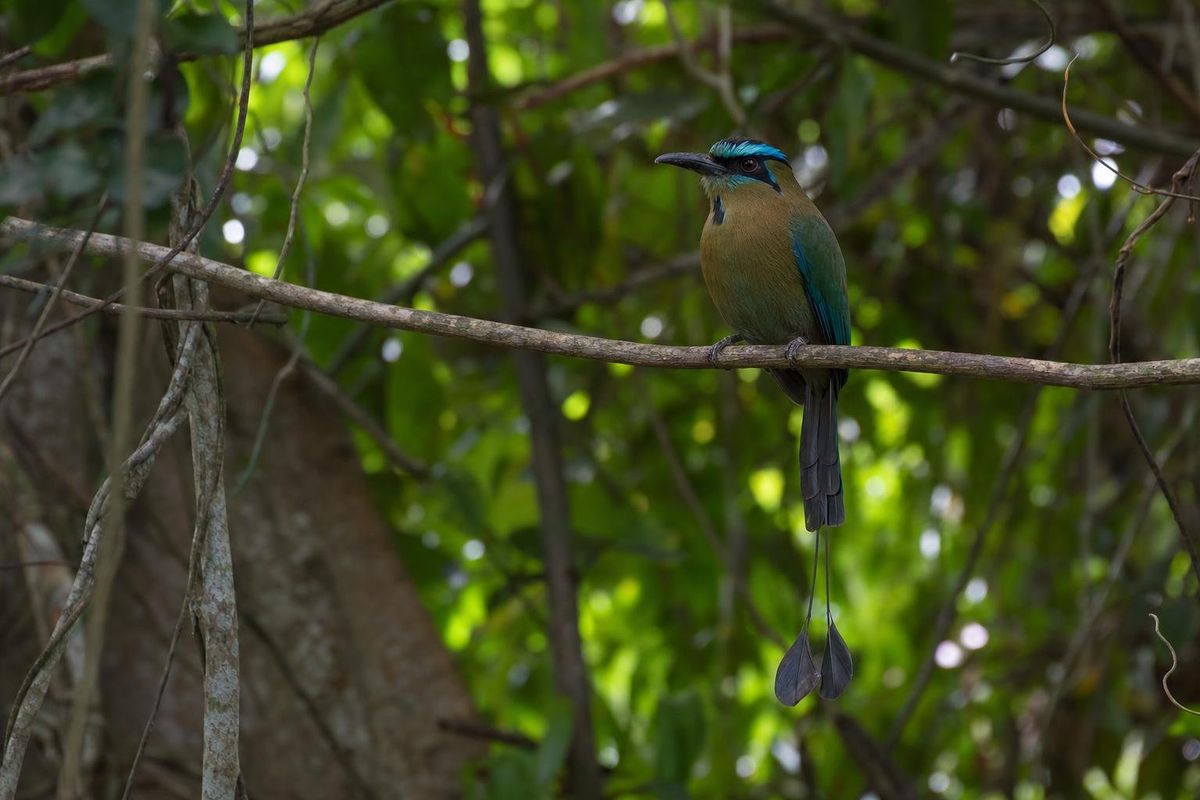
Reserva Toh
What the forest is like
Visitors expecting a rainforest of giant trees find something different in the north: a dense, dry forest of trees rarely much taller than a house, many of which drop their leaves in the dry season. Rainfall rises toward the south, and with it the canopy, so that around Calakmul and the border with Guatemala the forest grows tall and humid. In between lie patches of savanna, seasonally flooded lowland forest called bajo, and along the coasts a belt of mangrove that serves as a nursery for fish and a roost for birds. Much of what looks like untouched jungle is in fact regrown; the ancient Maya cleared, farmed and built across large parts of the peninsula, and the trees returned after the cities emptied.
Old-growth trees such as the ceiba, sacred to the Maya as the tree linking the underworld, the earth and the sky, are often left standing in villages and fields. The sapodilla, tapped for chicle, the original base of chewing gum, shaped the economy of the southern forest well into the twentieth century.
Biosphere reserves
Mexico protects its largest wild areas as biosphere reserves, managed by CONANP, the national commission for protected areas. Three matter most on the peninsula. Calakmul in southern Campeche covers a vast block of forest around the ruined city of the same name and is part of a mixed natural and cultural World Heritage site. Sian Ka'an, south of Tulum, combines forest, wetlands, lagoons and reef and has been on the UNESCO list since 1987. Ría Celestún on the Gulf coast protects mangroves and the lagoon where flamingos feed, described in the Celestún biosphere page.
Smaller community reserves also exist. Around Punta Laguna, between Valladolid and Cobá, local families protect a patch of forest with resident spider monkeys and offer guided walks. More information on the federal reserves is published by CONANP.
Caves under the forest
The same limestone that holds the cenotes is riddled with dry caves. The Loltún caves in the Puuc hills are among the largest, with chambers that held evidence of Ice Age animals and long human use, along with carvings and handprints from Maya times. Balankanché, close to Chichén Itzá, contains offerings left around a stalagmite shaped like a tree. Most caves open to the public can only be entered with a guide, and the cave ecosystems, including bat colonies, are fragile. Touching formations leaves oils that stop them growing, which is why guides keep groups on the paths.
Wildlife and how to see it
The forests shelter spider monkeys and howler monkeys, coatis, agoutis, white-tailed deer, peccaries and five species of wild cat, the jaguar among them. Sightings of jaguars are rare, but tracks on muddy roads are not. Birds are easier: toucans, parrots, motmots, the ocellated turkey of the southern forest, and in the wetlands herons, ibises and flamingos. Early morning and late afternoon are the most active times, and the dry season concentrates animals around water. Long sleeves and repellent help against mosquitoes, especially after rain.
Questions about the jungles
Is the Yucatán a rainforest?
Only in the south. The north is covered by lower, seasonally dry forest; taller humid forest grows around Calakmul and toward Guatemala.
Can you see jaguars in Calakmul?
It is possible but uncommon. Calakmul has one of Mexico's larger jaguar populations, but the animals avoid people and are more often detected by tracks or camera traps.
Where are monkeys easiest to see?
Community reserves such as Punta Laguna and the forest around Calakmul are reliable for spider and howler monkeys, especially early in the morning.
Do you need a guide in the reserves?
For caves and for many trails inside reserves, yes. Rules vary by reserve and change, so check on arrival.