
−5 m · Shallows · Jungles · Quintana Roo
Reserva Toh: Morning Birdwatching in the Jungle Near Puerto Morelos
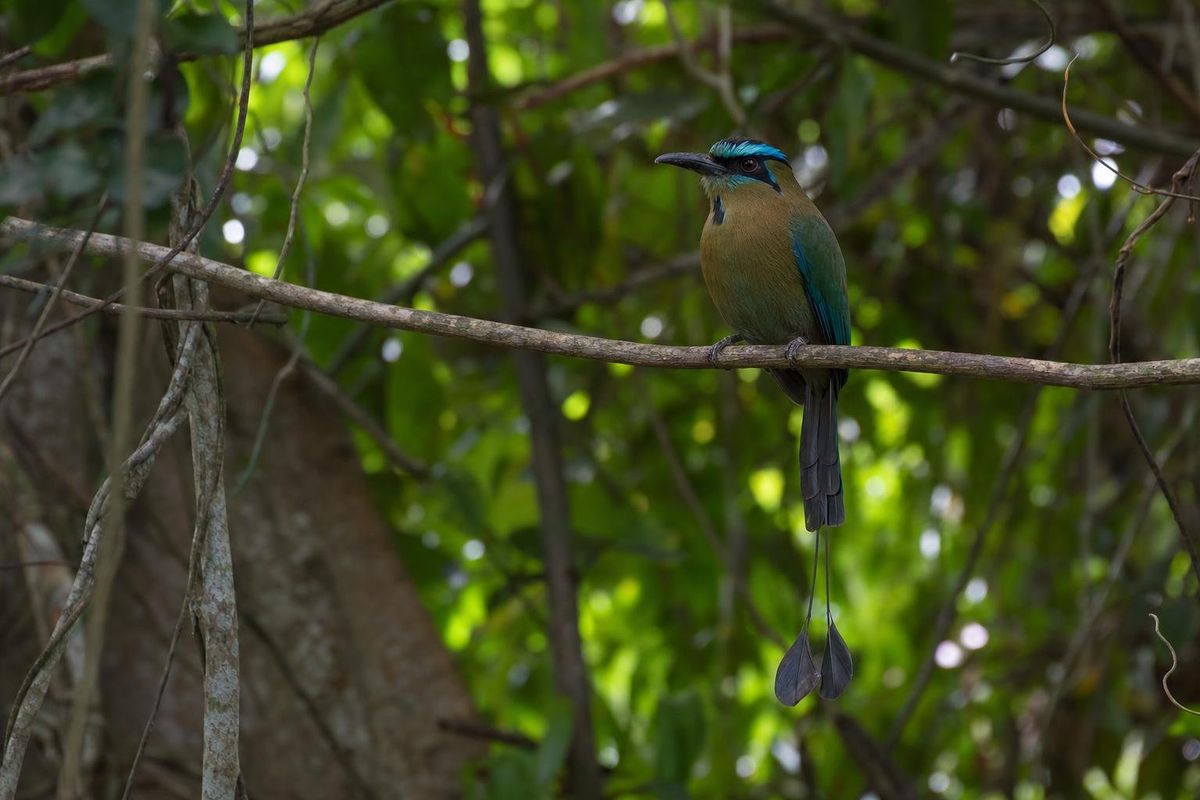
Reserva Toh is a small private nature reserve in the forest along the Ruta de los Cenotes, the road that runs inland from Puerto Morelos in Quintana Roo. It offers guided walks focused on birds and on the plants the Maya have long used for food and medicine, and it takes its name from the toh, the turquoise-browed motmot. Visits are by arrangement, and the best ones start soon after dawn.
A forest left to grow back
The Caribbean coast between Cancún and Tulum is lined with eco-parks built around zip lines, rivers and crowds. Reserva Toh is a different idea: a piece of selva, the low and medium tropical forest that covers most of the Yucatán peninsula, being restored rather than developed. The land was damaged by fire after a hurricane, and instead of being farmed it has been replanted with native trees and allowed to recover.
Restoration here means slow work. Mahogany, Spanish cedar and breadnut (ramón) trees grow for decades before they shade out the scrub, and a recovering forest is noisier with birds than an old one, because the edges and clearings suit many species.
The reserve presents itself as a place for conservation, environmental education and quiet walking. It is not a theme park, and that is exactly why people come.
The forest in this part of Quintana Roo is a medium-height tropical forest that keeps much of its foliage through the year, with drier, lower patches where the soil is thin over the limestone. Many trees drop some leaves in the dry spring, which opens the canopy and, conveniently, makes birds easier to see. In the rainy months the undergrowth fills in fast and the air goes still and humid.
The road itself is named for the cenotes along it. Several are open for swimming, run by local families or ejidos, and they make a natural pairing with a morning walk; conditions and access vary, so ask locally.
The toh and other birds of the selva
The toh is the turquoise-browed motmot, a bird with a bright blue eyebrow, a rufous back and a long tail that ends in two bare-shafted rackets. It sits still on a branch and swings the tail like a pendulum. It nests in burrows dug into earth banks and the soft walls of cenotes, which is why it is so often seen near sinkholes, and it is one of the emblematic birds of the Yucatán peninsula.
A morning walk in this kind of forest can turn up a good list. Birds commonly reported in the selva near Puerto Morelos include:
- Trogons, such as the gartered trogon with its yellow belly and the black-headed trogon.
- Yucatán jay, a blue-and-black jay found only on the peninsula and neighboring areas, usually in noisy groups.
- Flycatchers, including the piratic flycatcher, which takes over other birds' nests rather than building its own.
- Woodpeckers, among them the golden-fronted woodpecker in its Yucatán form.
- Toucans and aracaris, more often heard than seen, with croaking calls that carry through the canopy.
Birds are most active in the first two or three hours of daylight. By late morning most of them have gone quiet in the heat, so an early start makes a real difference.
Plants with uses
A second theme of the walks is the knowledge held in the forest. Guides point out trees and plants with traditional uses, many of them shared across the peninsula:
- Ceiba, the sacred tree of the Maya, whose roots, trunk and branches were seen as linking the underworld, the earth and the sky.
- Copal, whose aromatic resin has been burned as incense in Mesoamerica for millennia.
- Sapodilla (chicozapote), tapped for chicle, the natural latex that was the original base of chewing gum.
- Bauhinia, the "cow's foot" with split leaves, used in folk medicine.
Garden beds may hold Mexican kitchen plants such as jícama, cilantro and epazote. The details of traditional remedies vary from one guide and village to another, and they are folk knowledge, not medical advice.
Getting to Reserva Toh
The reserve is on the Ruta de los Cenotes, the road that leaves Highway 307 at Puerto Morelos, about half an hour south of Cancún, and runs west through the forest towards Leona Vicario. The entrance is a little under 20 kilometers along that road, signposted from the roadside; distances along the route are marked by kilometer posts. A car or a taxi from Puerto Morelos is the practical way in, as there is no reliable public transport to the gate.
Because guides are not always on site, contact the reserve in advance to arrange a walk. Whether walks are running, and on what terms, can change, so confirm close to the date.
When to go
Any time of year works for birds, but the seasons differ. From about November to March, migrants from North America join the resident species, and the mornings are cooler. Spring is dry and hot, and many residents are nesting. The rainy season, roughly June to October, brings green forest, more insects and heavier mosquitoes, and the hurricane season can close roads and paths after storms.
Plan to arrive around 7 a.m. if the reserve allows it.
Practical notes
- Wear closed shoes and long, light trousers; forest paths are rocky and uneven.
- Bring water and insect repellent. There are no shops on site.
- Binoculars matter more than a camera. A field guide or a bird app helps you put names to what you see.
- Keep voices low and stay with the guide. Do not pick plants or leave the paths.
- After the walk, the beaches of Puerto Morelos and nearby Bahía Petempich are close.
For forest of a different kind, with spider monkeys and a lake, see Punta Laguna; for coastal birds such as flamingos and spoonbills, the Celestún reserve on the Gulf coast is the classic choice. More forest walks are collected under Jungles.
Reserva Toh questions
What does toh mean?
Toh is the local name for the turquoise-browed motmot, a colorful bird with a long racket-tipped tail that nests in earth banks and cenote walls across the Yucatán peninsula.
Where is Reserva Toh?
On the Ruta de los Cenotes, the road that runs inland from Puerto Morelos towards Leona Vicario in Quintana Roo, a little under 20 kilometers from the coast.
Do you need to book a visit?
Yes, arranging a walk in advance is strongly advised, since guides are not always on site. Check current conditions with the reserve before going.
What is the best time for birdwatching?
Early morning, from first light to mid-morning. In winter, migrants from North America add to the resident species.
Nearby on the map
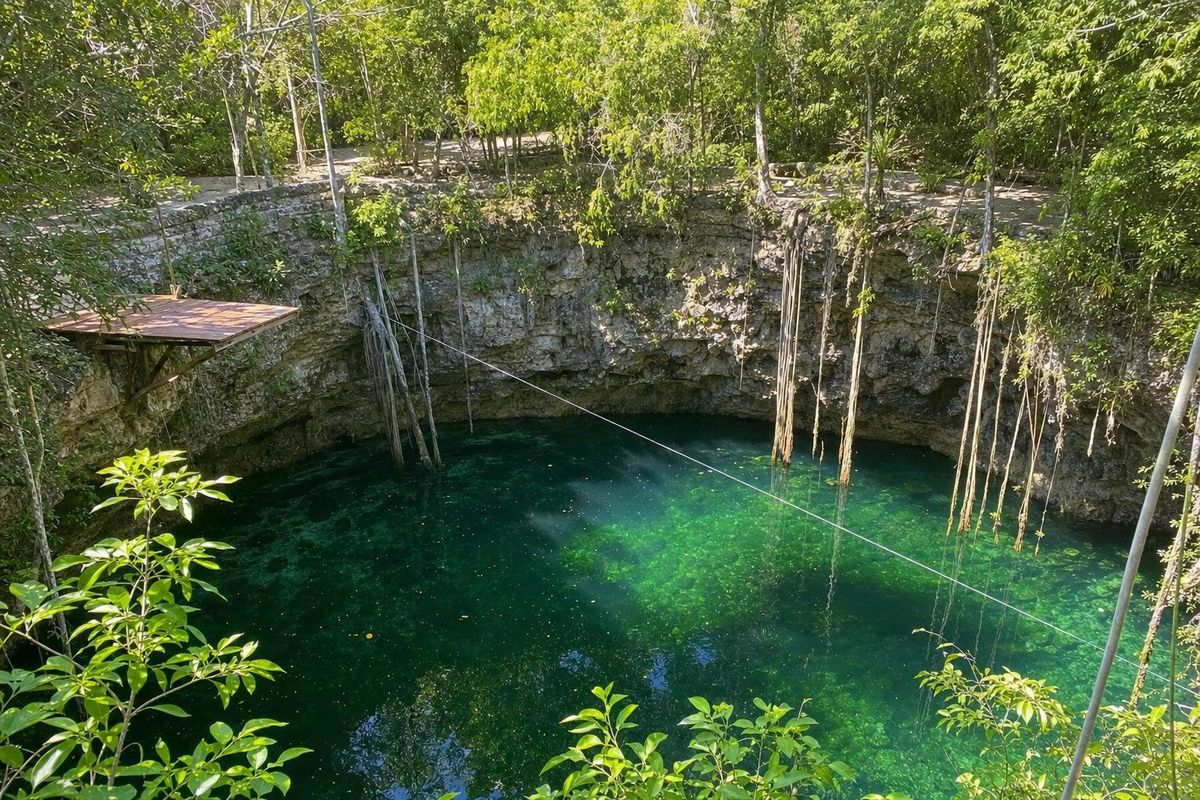
AI-generated image Cenotes · Quintana Roo
Verde Lucero
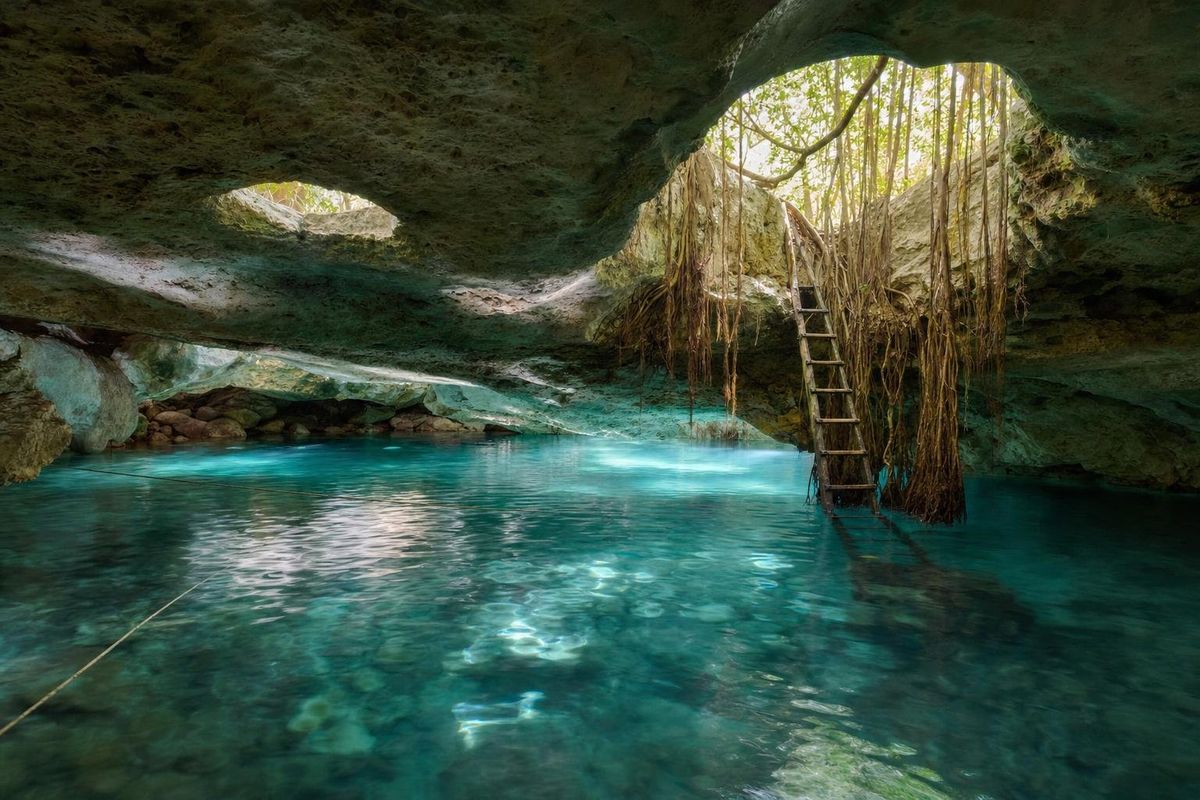
AI-generated image Cenotes · Quintana Roo
7 Bocas
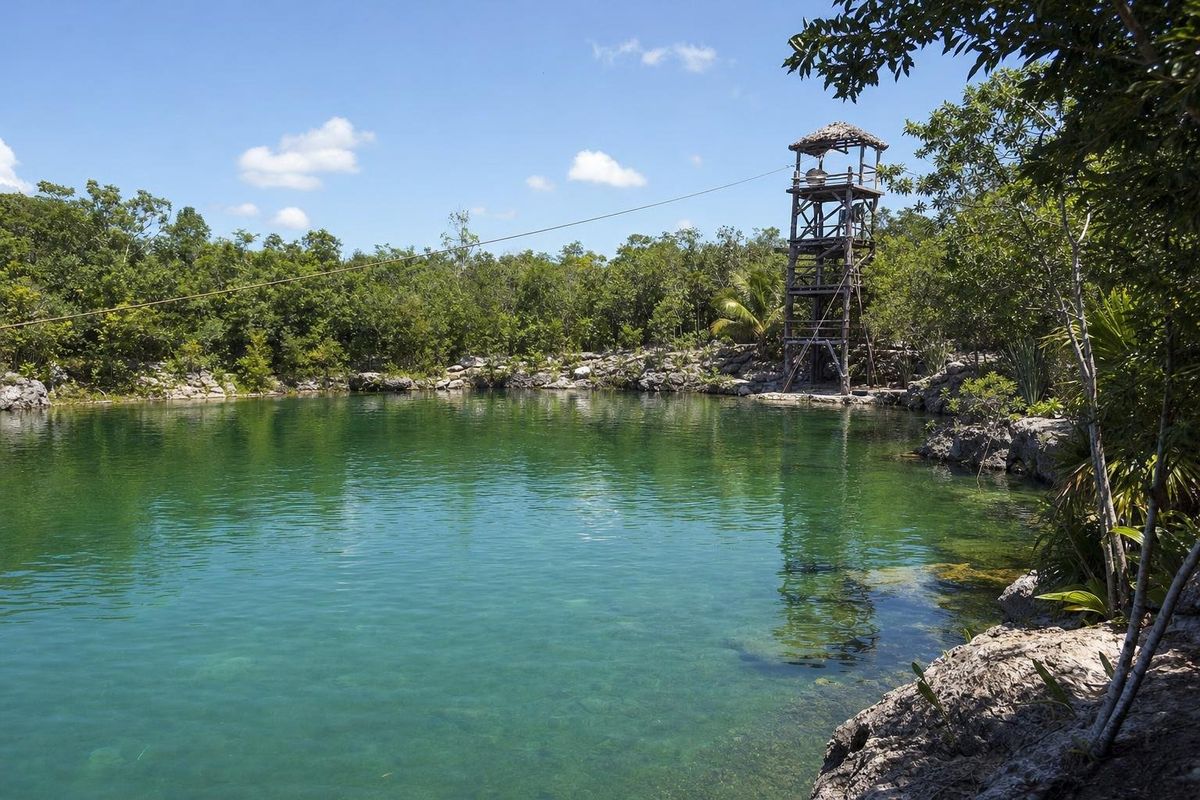
AI-generated image Cenotes · Quintana Roo
Las Mojarras
AI-generated image Beaches · Quintana Roo
Punta Maroma