
−5 m · Shallows · Beaches · Quintana Roo
Punta Nizuc: Snorkeling the Reef at the Southern Tip of Cancun
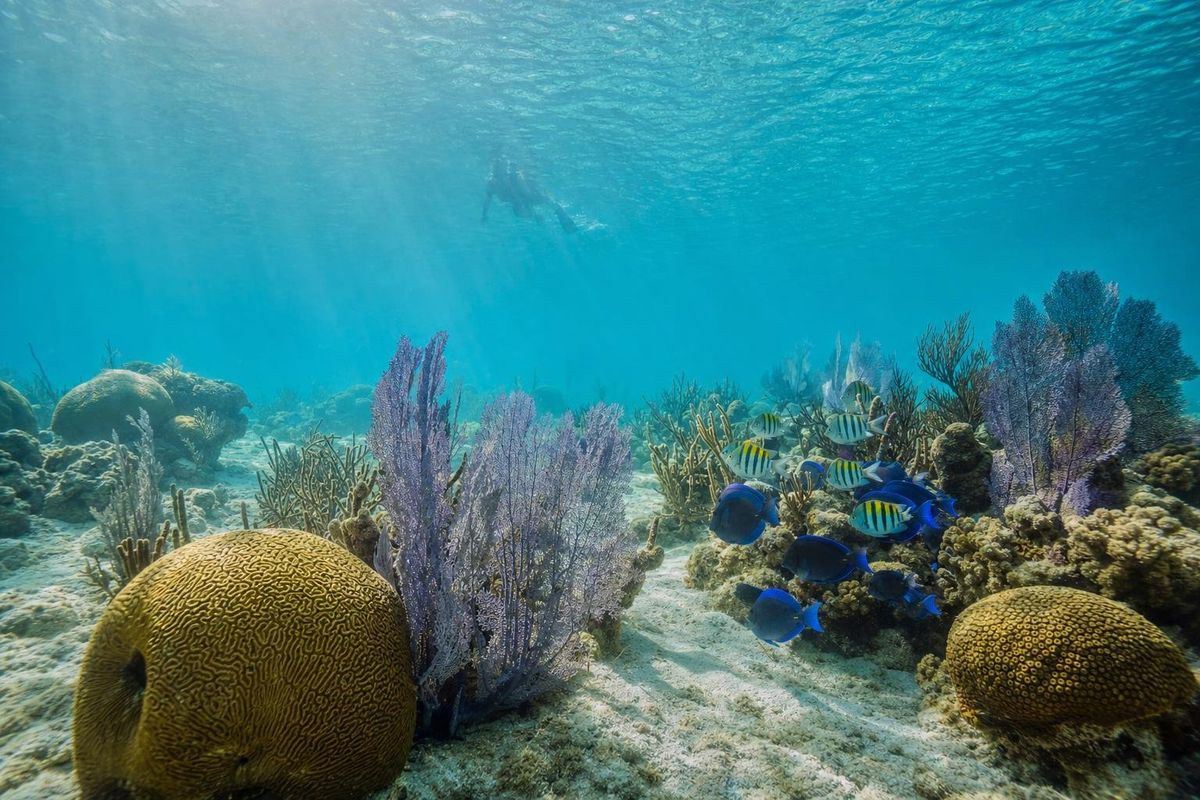
Punta Nizuc is the southern tip of Cancun's hotel zone, the point where the long sand bar ends and the Nichupté lagoon drains into the Caribbean through a narrow channel. Offshore lies one of the shallowest and most accessible reefs in the Cancun area, protected within a marine national park and usually visited on licensed snorkeling tours. The point is best known for exactly that: an hour in the water among reef fish, a short boat ride from the hotels.
Where the sand bar ends
The hotel zone is a barrier of sand that encloses a system of lagoons, and Punta Nizuc is where it stops. Here the lagoon water flows out to sea and the sea flows back in with the tide, through a channel crossed by the boulevard bridge. That exchange carries nutrients and larvae between the mangroves and the reef, and it is one reason the area holds so much life. It also creates currents strong enough to make the channel itself no place for a swim.
The land at the point is largely taken up by resort property, so this is not a public beach in the usual sense. The interest lies in the water. A little to the north along the boulevard are the El Rey ruins and the public sand of Playa Delfines; to the south the road leaves the hotel zone and heads for the airport.
Punta Nizuc snorkeling: the reef
The reef off Punta Nizuc sits in water from about one to a few metres deep, which means snorkelers can see it clearly without diving. It forms part of the reef system that runs along the Caribbean coast of the Yucatán peninsula and on toward Belize and Honduras, usually called the Mesoamerican Reef.
The reef here is made up of patches of hard coral (brain corals and other boulder corals among them) with sea fans, sea rods and sponges between them, and sandy channels running through. The fish are the usual cast of a shallow Caribbean reef, and plentiful: sergeant majors, blue tangs, parrotfish, grunts and snappers, with the occasional barracuda hanging motionless in mid-water. Southern stingrays rest on the sand, and green turtles feed in seagrass areas nearby.
Like most reefs in the Caribbean, this one has suffered from storms, warm-water bleaching and disease. Stony coral tissue loss disease, which spread through the Mexican Caribbean from 2018, hit several of the region's coral species hard. The reef is still well worth seeing, but much of the coral cover is thinner than older photographs suggest, and part of the colour now comes from soft corals and fish rather than from living hard coral.
The underwater sculptures
The waters off Cancun and Isla Mujeres also hold the Underwater Museum of Art (MUSA), a set of concrete sculptures placed on the sea floor from around 2009 onward. One of its main groups lies off Punta Nizuc, the other closer to Isla Mujeres. The figures, many of them life-size human forms, were made from materials meant to host coral and other marine growth, and they were placed partly to draw visitors away from the natural reef. Over the years they have become crusted with algae, sponges and young coral. Some of the shallower pieces can be seen while snorkeling, while others lie deep enough that they are better seen by divers or from glass-bottom boats.
How visits work
The reef and the sculptures lie within the Parque Nacional Costa Occidental de Isla Mujeres, Punta Cancún y Punta Nizuc, a marine national park created in the 1990s and managed by Mexico's protected areas commission, CONANP. Most visitors reach the reef on licensed snorkeling tours, either by boat from the hotel zone marinas or on small speedboats that run through the lagoon mangroves before going out to the reef. Tours include a guide, flotation vests and the park's access fee, which is collected for every visitor; prices and inclusions vary and change over time.
Swimming out from shore is not a good idea. The currents around the channel are strong, boat traffic is heavy, and the snorkeling areas are marked and managed for guided groups. Within the park, guides set limits on where groups can go and how long they stay.
When to go
Visibility and calm water decide a good day. Mornings are often calmer than afternoons, when the wind picks up. The dry season, roughly November to April, has fewer storms, but winter cold fronts from the north can churn up the water and cancel trips for a day or two. Summer often brings calmer seas and warmer water, with the risk of tropical storms during the hurricane season from June to November. Sargassum can affect the surface in heavy years, mostly between spring and late summer, although it tends to be worse on the beaches than on the reef itself.
Practical notes for the reef
- Use only reef-safe sunscreen, or better, cover up with a rash guard and hat; in Mexican marine parks guides often ask snorkelers to skip sunscreen entirely.
- Never stand on, touch or kick the coral. Practise floating with the vest before reaching the reef.
- Do not feed the fish, and do not take shells, coral or sand.
- Weak swimmers should say so before entering the water; guides can keep them close.
- Bring a dry layer for the boat ride back: the wind feels cold after an hour in the water.
For a calmer, more sheltered swim without a boat, the bay beaches on the northern arm of the hotel zone, such as Playa Tortugas, are a better fit. The beaches section covers more of this coast.
Punta Nizuc: frequently asked
Where is Punta Nizuc?
At the southern end of Cancun's hotel zone, where the sand bar ends and the Nichupté lagoon opens to the Caribbean.
Can you snorkel at Punta Nizuc from the beach?
Not in practice. The land at the point is mostly private, the channel has strong currents and boat traffic, and the reef is visited on licensed boat tours.
Is the Punta Nizuc reef protected?
Yes. It lies within a marine national park managed by CONANP, and every visitor pays the park's access fee, usually through the tour.
Can you see the underwater sculptures at Punta Nizuc?
One of the main groups of the Underwater Museum of Art lies off Punta Nizuc. Shallower pieces are visible to snorkelers; others are better seen by divers.
Is Punta Nizuc good for beginners?
Yes, with a guided tour. The reef is shallow and life vests are standard, so non-swimmers and beginners can usually take part.
Nearby on the map
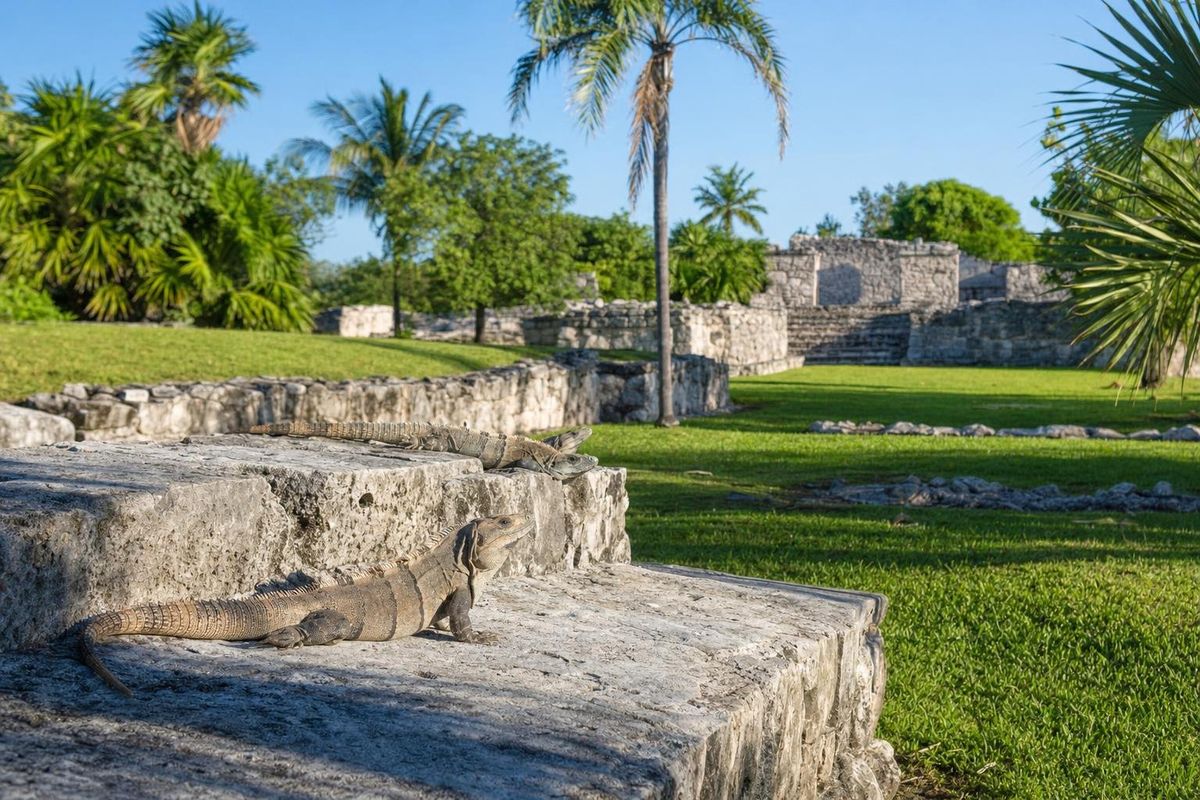
AI-generated image Maya Ruins · Quintana Roo
El Rey
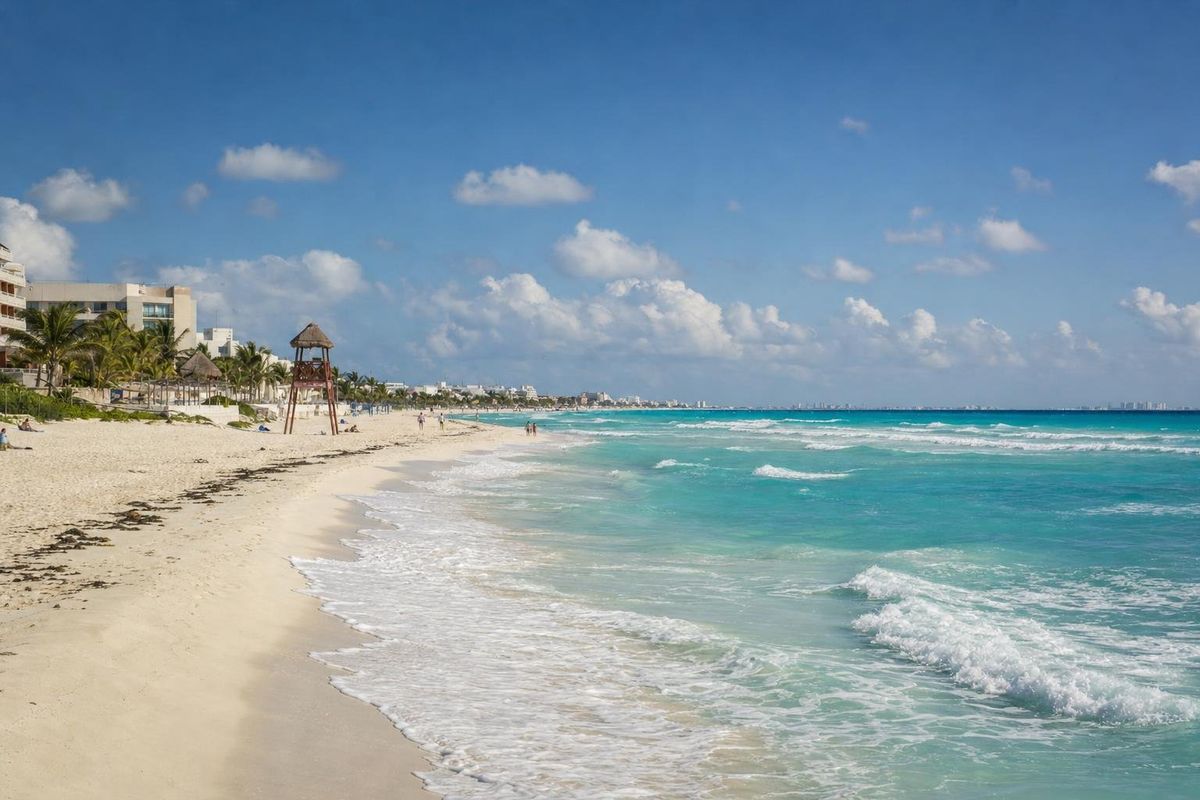
AI-generated image Beaches · Quintana Roo
Playa Ballenas
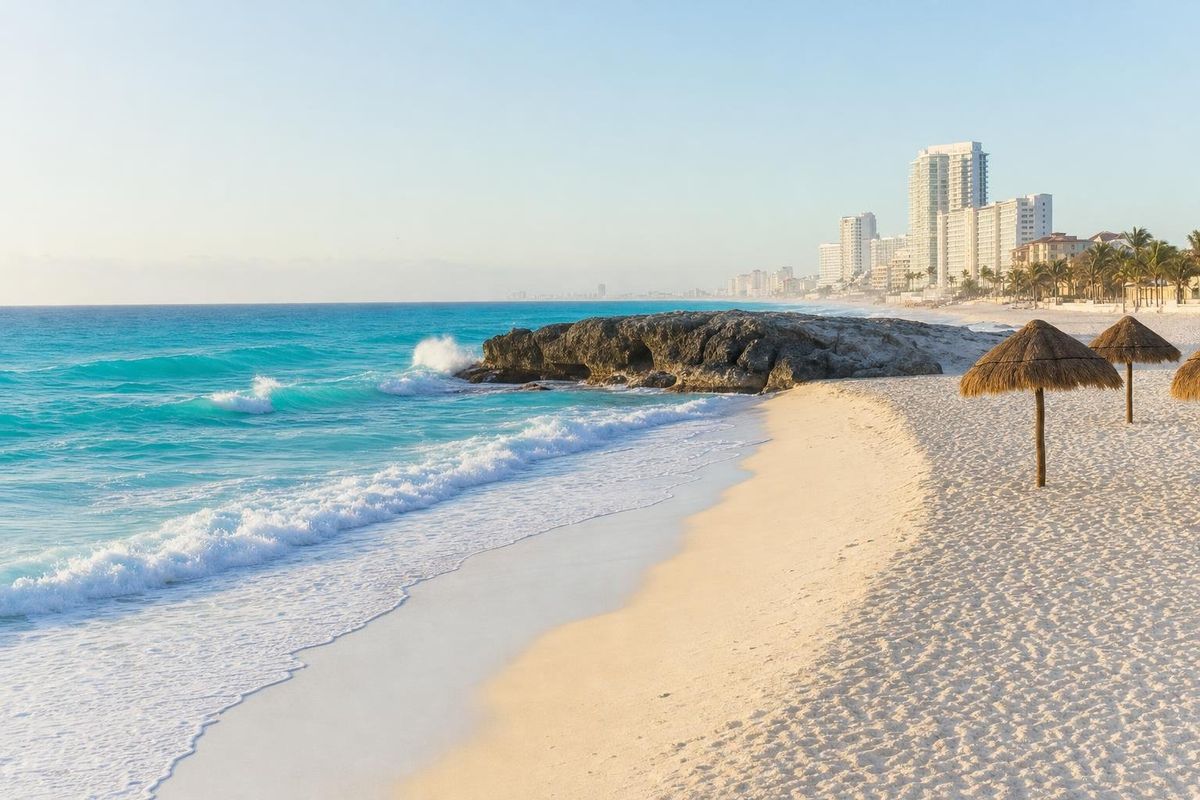
AI-generated image Beaches · Quintana Roo
Playa Chac Mool
AI-generated image Beaches · Quintana Roo
Playa Tortugas