
−5 m · Shallows · Towns & Villages · Yucatán
Where Is Mérida, Mexico? Yucatán's Capital and Its Hammock Tradition
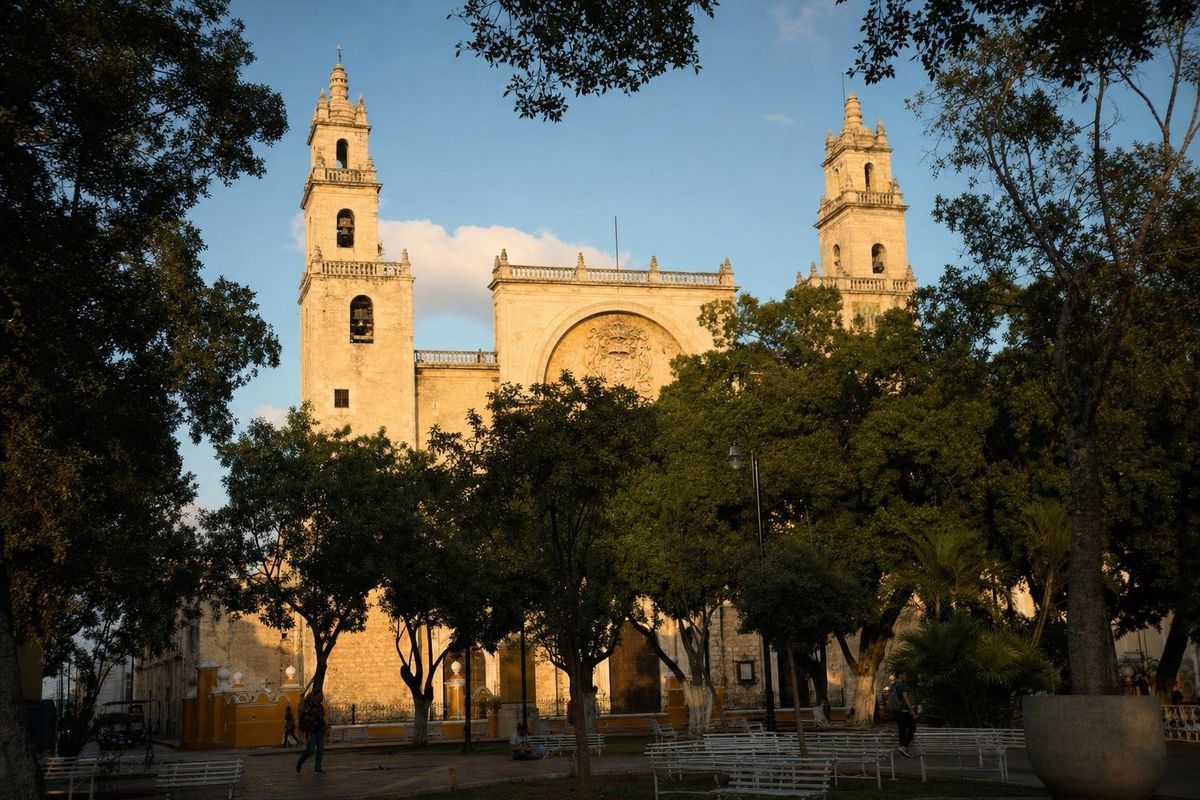
Where is Mérida? The Mexican city of that name is the capital of the state of Yucatán, in the north-west of the Yucatán peninsula, about 35 kilometers inland from the Gulf of Mexico at Progreso and roughly four hours by road west of Cancún. It was founded by the Spanish in 1542 on top of the Maya city of T'Hó, and it is the natural base for the ruins, cenotes, haciendas and Gulf coast of the region, as well as the best place in Mexico to buy a hammock.
Where is Mérida on the map?
The Yucatán peninsula is the thumb of land that separates the Gulf of Mexico from the Caribbean. It is divided between three Mexican states: Yucatán in the north, Campeche in the west and Quintana Roo, with Cancún and Tulum, on the Caribbean side. Mérida sits in the flat north-western corner, on limestone with no rivers and countless cenotes beneath it.
Rough distances by road from the city:
- Progreso and the Gulf beaches: about 35 kilometers, around half an hour.
- Celestún and its flamingos: roughly 95 kilometers to the west.
- Uxmal and the Puuc hills: about 80 kilometers to the south.
- Chichén Itzá: around 120 kilometers east, close to two hours.
- Valladolid: about two and a half hours east; Cancún: roughly four hours on the toll highway.
Mérida has an international airport with direct flights from a few cities in the United States and from Mexico City, and a long-distance bus station with services across the peninsula.
Not the only Mérida
The name is shared. The original Mérida is in Extremadura in western Spain, a city founded by the Romans as Emerita Augusta, and still full of Roman remains; the Spanish named the Yucatán city after it, apparently because the Maya stone buildings they found reminded them of Roman ruins. There is also a Mérida in the Andes of western Venezuela, a university city and the capital of a state of the same name. And the Philippines has a town called Mérida on the island of Leyte. On this site, Mérida always means the Yucatán capital.
A city built from a Maya one
When Francisco de Montejo the Younger founded the Spanish city in January 1542, T'Hó was a Maya settlement with large stone platforms and buildings. The conquerors laid out a grid of streets around a central square and took stone from the Maya structures to build churches and houses. Traces of that reuse can be found in the walls of some colonial buildings.
Around the main square, the Plaza Grande, stand the Cathedral of San Ildefonso, built in the second half of the sixteenth century and one of the oldest cathedrals on the American mainland; the Casa de Montejo, whose carved facade shows armored Spaniards standing on the heads of defeated enemies; and the Government Palace, with large murals by the Yucatecan painter Fernando Castro Pacheco on the history of the Maya and the conquest.
North of the center runs the Paseo de Montejo, a boulevard lined with mansions built during the henequén boom of the late nineteenth and early twentieth centuries, when agave fiber made the city's planters very rich. One of them, the Quinta Montes Molina, is still furnished as it was in the planters' era and can be visited. The Gran Museo del Mundo Maya, on the northern edge of the city, gives a good overview of Maya history before heading to the ruins. For something stranger, the small Museo Paranormal on the east side of the city collects several hundred objects that come with ghost stories attached, a private collection that has little to do with the colonial museums of the center.
Mérida's hammocks
Hammocks are part of everyday life in Yucatán. Many houses have hammock hooks in every room, and plenty of people sleep in one every night because it is cooler than a bed in the heat. The Yucatecan hammock is distinctive: a wide, open mesh woven from fine thread, meant to be lain in diagonally so that the body lies almost flat.
Mérida is the main market for them. The hammocks are mostly woven in towns and villages around the city, Tixkokob among the best known, and sold in the center, in markets and in workshops.
How to choose one
- Material: cotton is soft and breathable but less durable outdoors; nylon lasts longer and dries faster; mixed threads exist too.
- Weave: a fine thread woven densely gives more comfort and lasts longer than a thick, loose weave. Count how many strands there are in each end loop; more is better.
- Size: sizes are sold under names like single, double and matrimonial, but labels are not standardized, so compare the actual width.
- Length: check that the woven body is long enough for your height, plus the cords at each end.
Prices depend heavily on thread, size and how much work went into it. A hammock sold on the street for very little is usually short, coarse and thin. Taking time to compare a few is worthwhile, and sellers expect some bargaining in markets.
Day trips from the city
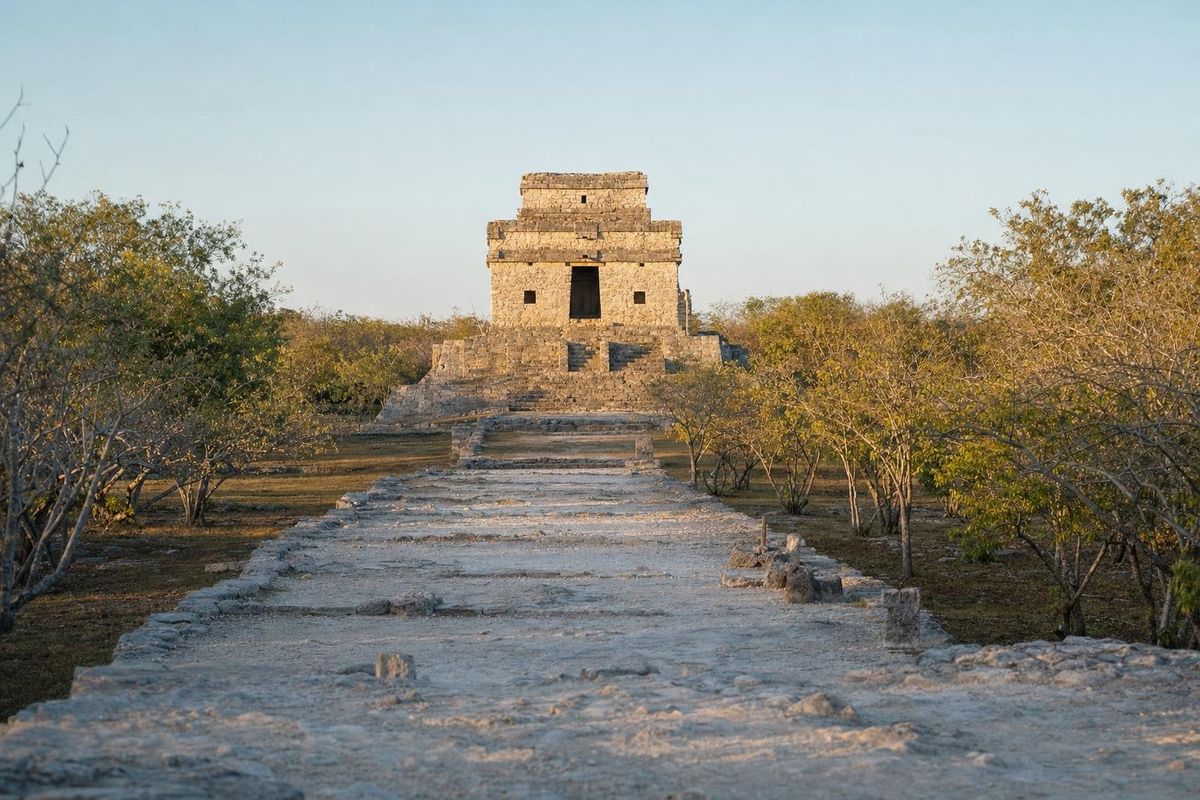
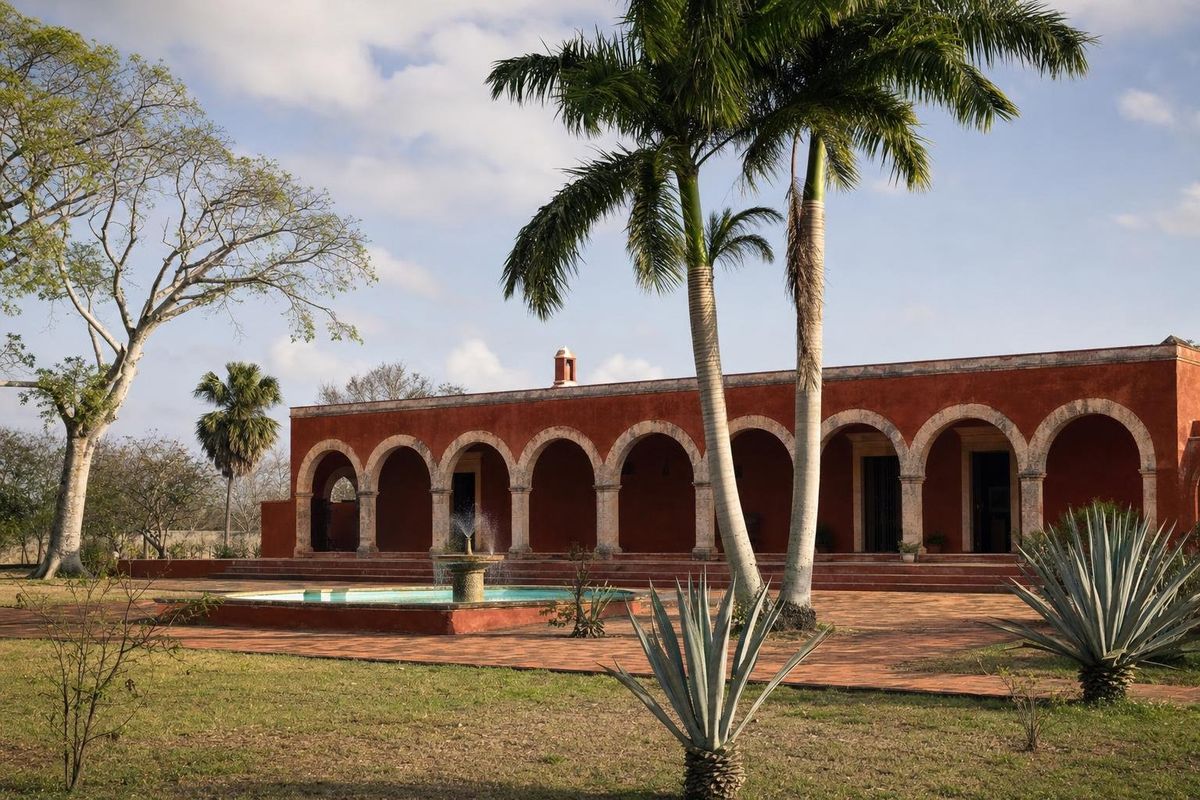
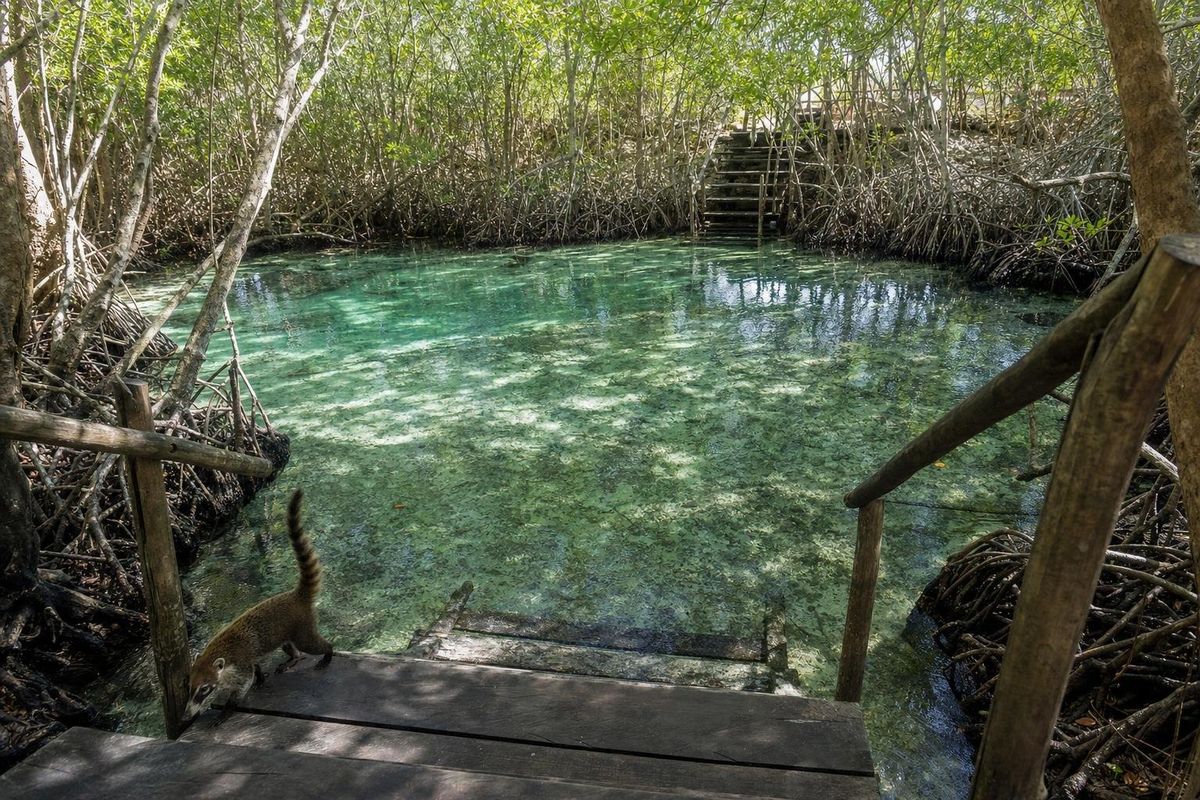
Mérida works as a hub for a week or more. The ruins of Dzibilchaltún are on the road to Progreso, with a cenote to swim in. To the south, the restored Hacienda Ochil sits on the way to Uxmal and the Puuc hills, covered in the Puuc hills trip. East of the city, Motul and Izamal make easy half days, and cenotes are scattered across the countryside; see the cenotes trip.
When to go
From about November to February the weather is warm and mostly dry, with cooler evenings when a cold front passes. April and May are the hottest months, with afternoons well over 35 °C. The rainy season, roughly June to October, brings short heavy afternoon storms, and the hurricane season extends into November. Sightseeing is easiest in the early morning and evening at any time of year, when the squares fill up.
Practical notes
- Streets in the center are numbered: even numbers run north to south, odd numbers east to west.
- Free cultural events, music and dancing take place in the squares on many evenings; programs change and are announced locally.
- Carry water and use the shady side of the street at midday.
- Many churches and museums close at midday or on Mondays; check hours before going.
More towns of the region are listed under Towns & Villages.
Mérida questions
What country and state is Mérida in?
Mérida is in Mexico, the capital of the state of Yucatán, on the Yucatán peninsula. Other cities of the same name are in Spain and Venezuela.
How far is Mérida from Cancún?
Roughly 300 kilometers, around four hours by the toll highway. Buses and domestic flights also link the two cities.
Is Mérida close to the beach?
Yes. Progreso, on the Gulf of Mexico, is about 35 kilometers north, around half an hour by car or bus.
What makes a good Yucatecan hammock?
Fine thread, a dense weave, a body long and wide enough for you, and many strands in each end loop. Compare several before buying.
Why is the city called Mérida?
The Spanish founders named it after Mérida in Spain, a city with Roman ruins, reportedly because the Maya stone buildings at T'Hó reminded them of it.
Nearby on the map
AI-generated image Maya Ruins · Yucatán
Dzibilchaltún
AI-generated image Maya Ruins · Yucatán
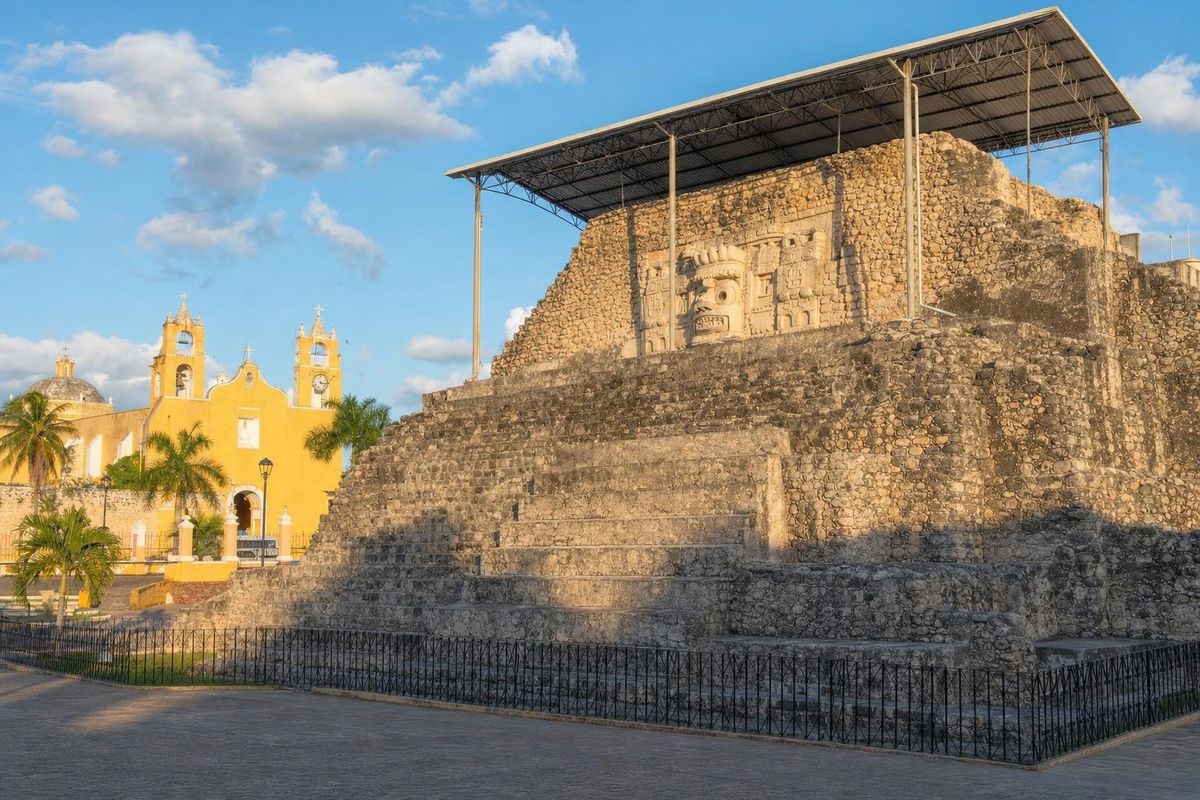
Acanceh
AI-generated image Haciendas · Yucatán
Hacienda Ochil
AI-generated image Cenotes · Yucatán
El Corchito