
−5 m · Shallows · Beaches · Quintana Roo
Grand Coral Beach, the Quieter Coast Just North of Playa del Carmen
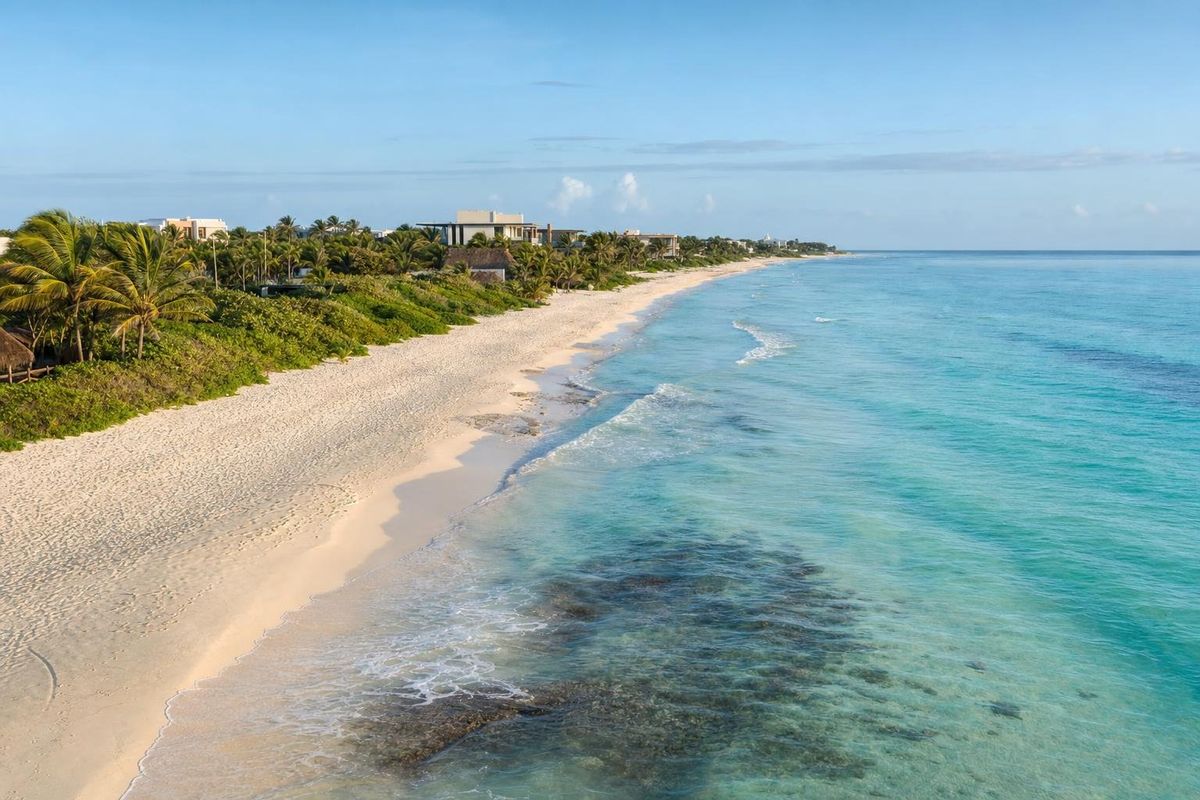
Grand Coral is the stretch of coast just north of Playa del Carmen where the town gives way to a golf course, residential lots and a long, mostly calm beach. Grand Coral beach sits between the local favorite Punta Esmeralda to the south and the coves of Xcalacoco to the north, and it is reached through a gated development off Highway 307.
Where the town ends
For decades, Playa del Carmen has been spreading north along the shore. The central blocks around Quinta Avenida filled first, then the neighborhoods beyond, and now the edge of the built-up area has reached the land between Punta Esmeralda and Xcalacoco. Grand Coral is part of that frontier: a planned development of golf fairways, villas and condominiums laid out over former coastal scrub and mangrove, with the beach at its seaward edge.
The result is a beach that feels noticeably calmer than central Playa del Carmen, even though it is only a few kilometers away. There are no rows of beach clubs and no street vendors. The development's beach club handles most day visitors, and long sections of sand are quiet, especially in the morning.
The sea and the reef
The shoreline here faces the Cozumel Channel, the deep strait that separates the mainland from the island of Cozumel. A section of the Mesoamerican Reef runs offshore, breaking the bigger waves, so the water close to the beach is usually calm enough for easy swimming. The bottom near shore is mostly sand, with patches of sea grass and the occasional rocky ledge.
On clear days, the low profile of Cozumel is visible across the channel. The island was a major Maya pilgrimage center, sacred to the goddess Ix Chel, and the remains of its shrines are described on the Cozumel ruins page.
Snorkelling from the beach is modest. The better reef lies further out and is reached by boat, usually from central Playa del Carmen.
The land behind the beach
Before development, this coast was a mix of low tropical forest, sea grape thickets and mangrove-fringed hollows, much like the stretch that still survives in places at Xcalacoco. Some of that vegetation remains along the golf course and in pockets near the beach. It is good habitat for birds: great-tailed grackles and tropical mockingbirds are everywhere, and herons, egrets and the occasional osprey turn up around the water features and the shore.
Iguanas bask along walls and paths. Coatis, with their long striped tails, sometimes wander out of the scrub looking for scraps. Do not feed them.
Access to Grand Coral beach
Mexican beaches are federal property, and anyone may use the sand itself. Reaching it is another matter. Grand Coral is a private, gated development, and day access by road has generally been through its beach club, which may require a reservation or a minimum spend. Rules and prices change, so check directly before going.
The alternative is to walk. From Punta Esmeralda, a public beach with free access, you can follow the shoreline north along the federal zone. It is an easy walk on firm sand near the waterline.
A short history of this stretch of coast
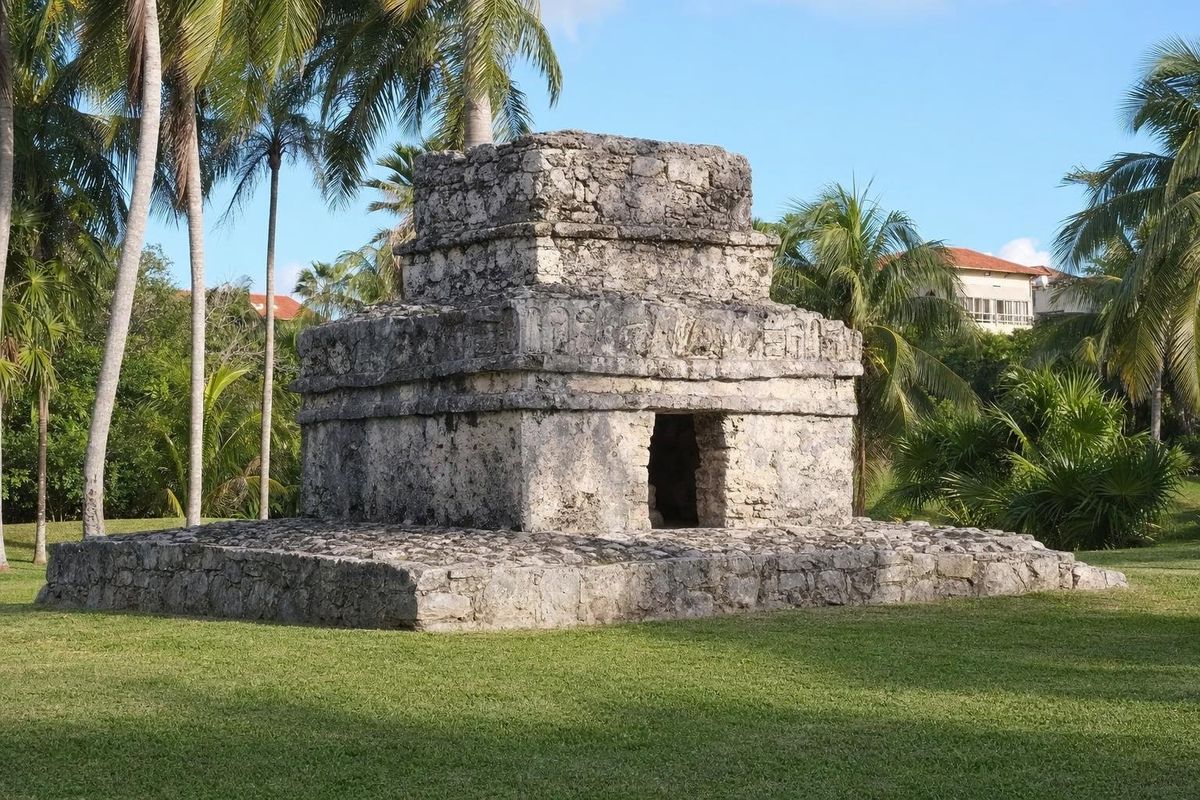
Like most of the shore north of Playa del Carmen, the land at Grand Coral was largely untouched until the late twentieth century. The Maya had lived along this coast for centuries, with small settlements and shrines spread between Xaman Ha, the port that stood where Playa del Carmen is today, and the sites further north. Small ruins still stand near the shore at Xcalacoco, a reminder that this was a populated coast long before it was a resort one.
After the Spanish conquest the coast emptied, and for most of the following centuries it was forest and coconut groves reached mainly by sea. Highway 307 opened the way in the 1970s, and as Playa del Carmen boomed from the 1990s on, the land north of town was parceled out for golf, villas and condominiums. The beach is the one part of it that remains, by law, open to everyone.
Getting there
The Grand Coral entrance is on Highway 307 at the northern edge of Playa del Carmen, on the seaward side, before the turn-off for Xcalacoco when heading north. From central Playa del Carmen it is a short taxi ride. Colectivos heading north toward Puerto Morelos and Cancún pass the entrance. Because the highway is divided, drivers coming from the north may need to continue to the next return point.
When to go
December to April is the most comfortable period, with dry weather and the clearest water. Summer is hotter and more humid, and afternoon storms become common. Sargassum can reach this coast between about April and October in heavy years; developments like Grand Coral often clear their own beaches each morning, but no stretch of the Riviera Maya is guaranteed seaweed-free. Hurricane season runs from June to November.
Practical notes
- Bring reef-safe sunscreen and water; shade on the open sand is limited.
- If walking from Punta Esmeralda, wear sandals that can get wet for rocky patches at the waterline.
- Respect private property: the federal zone covers the beach, not the gardens or terraces behind it.
- Sea turtles nest on this coast in summer. Keep away from any marked nests.
Grand Coral fits easily into a day on the north side of Playa del Carmen. Just south is Punta Esmeralda with its seaside cenote; to the north, Xcalacoco has small Maya ruins near the shore; and further on, the soft sand of Maroma Beach is about twenty minutes up the highway. For more, see the beaches section.
Early in the morning, the only tracks on the sand are often those of crabs and shorebirds.
Grand Coral: common questions
Where is Grand Coral?
On the northern edge of Playa del Carmen, between Punta Esmeralda and Xcalacoco, with its entrance on the seaward side of Highway 307.
Is the beach at Grand Coral public?
The sand is federal and public, but the land behind it is a private development. Day access by road has generally been through its beach club; walking along the shore from Punta Esmeralda is the free alternative.
Is the water calm at Grand Coral?
Usually. A section of the reef lies offshore, so the water near the beach is mostly calm with a sandy bottom.
Can you see Cozumel from Grand Coral?
Yes, on clear days the island is visible on the horizon across the Cozumel Channel.
What is near Grand Coral?
Punta Esmeralda and its small cenote to the south, the Xcalacoco coves and ruins to the north, and central Playa del Carmen a short taxi ride away.
Nearby on the map
AI-generated image Beaches · Quintana Roo
Xcalacoco
AI-generated image Beaches · Quintana Roo
Punta Esmeralda
AI-generated image Museums · Quintana Roo
Frida Kahlo Museum
AI-generated image Maya Ruins · Quintana Roo
Xaman Há