
−5 m · Shallows · Beaches · Quintana Roo
Playa Langosta in Cancún: A Calm, Shallow Bay Beach in the Hotel Zone
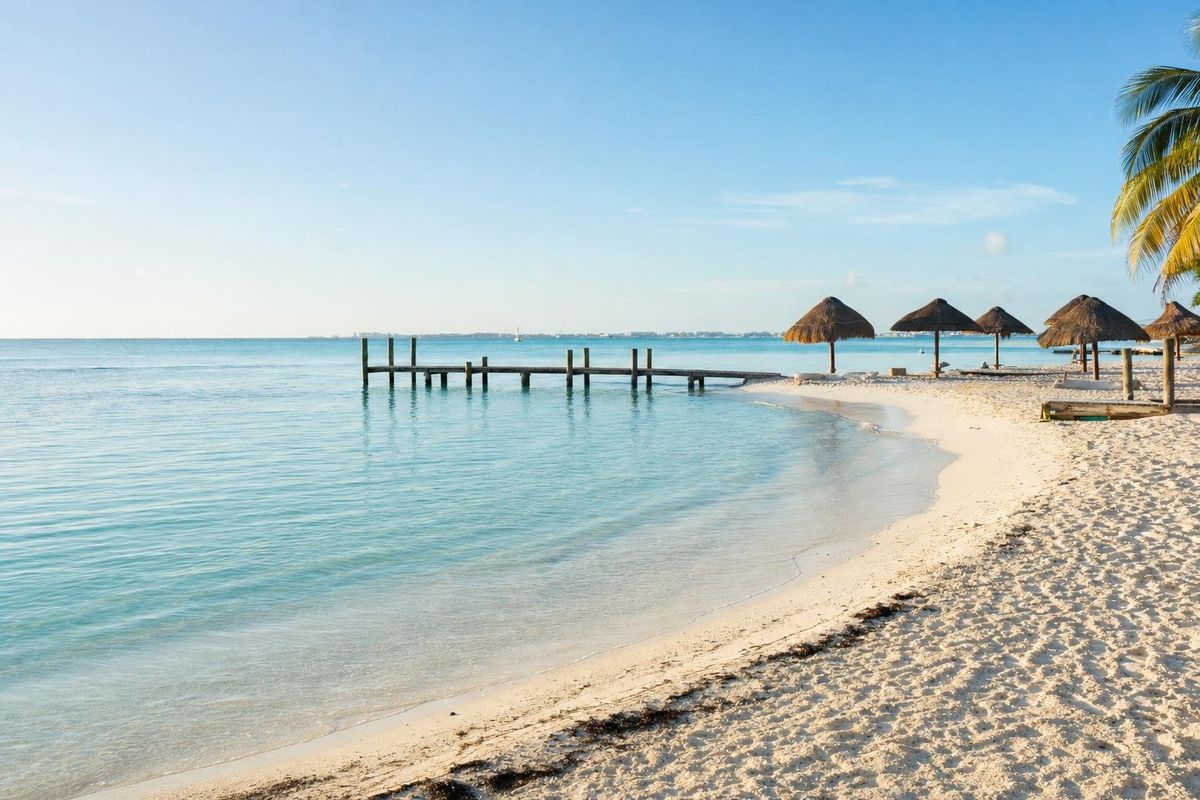
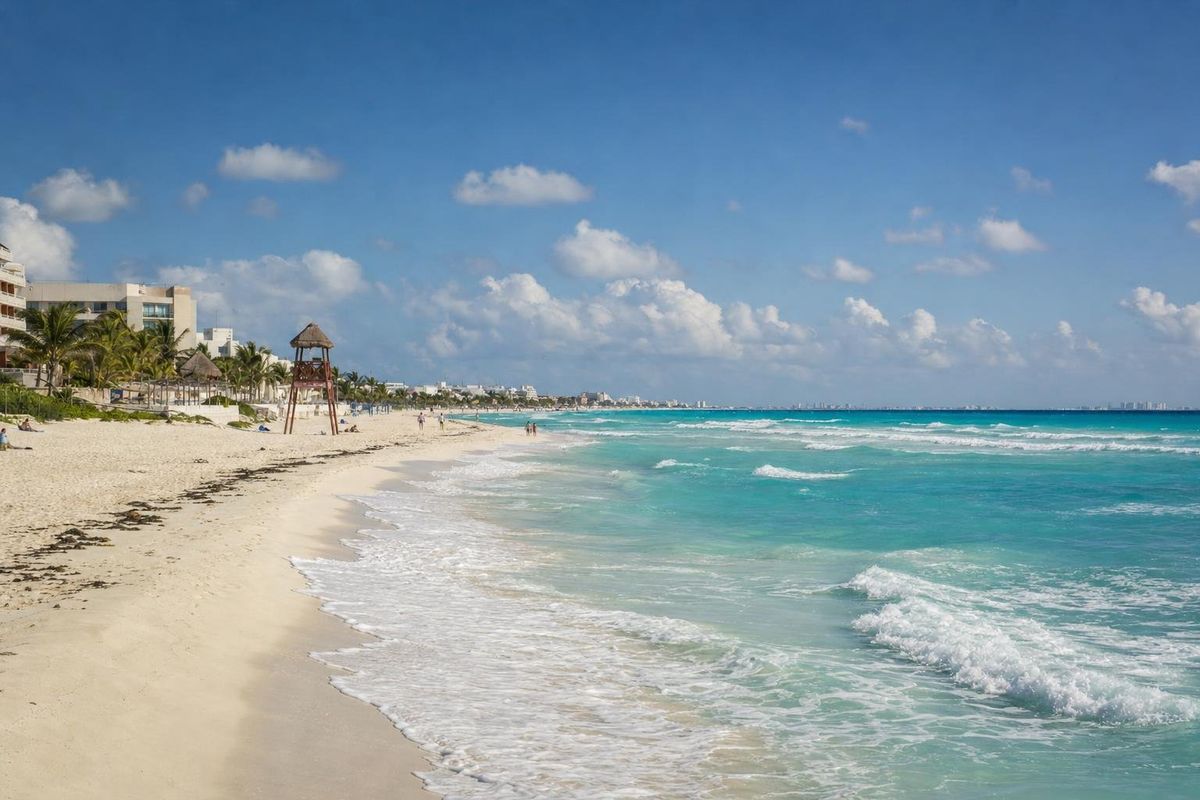
Playa Langosta is a public beach on the northern, bay-facing side of Cancún's Hotel Zone, at around kilometer 5 of Boulevard Kukulcán. Playa Langosta in Cancún faces the sheltered Bahía de Mujeres rather than the open Caribbean, so the water is shallow and calm, which makes it one of the city's best beaches for small children and weak swimmers.
Why Playa Langosta stands apart
Cancún's Hotel Zone is shaped like a number seven. The upper bar runs east to west and faces the Bahía de Mujeres, the channel between the mainland and Isla Mujeres. The long downstroke faces the open Caribbean. The two coasts feel completely different. On the eastern side, the waves can be strong and the water drops off fast. Along the bay side, where Playa Langosta sits, the sea is usually flat and shallow far out from shore, with barely a ripple.
Langosta means lobster in Spanish, one of several Hotel Zone beaches named after sea creatures. Its neighbors include Playa Tortugas (turtles) a little to the east and Playa Caracol (snail) further on toward Punta Cancún.
The beach is modest in size, a strip of fine white sand between hotels, with palapa shades, a small pier and a view across the bay to the low silhouette of Isla Mujeres. On weekends it fills with local families; on weekday mornings it can be quiet.
Swimming and things to do
The appeal is easy, safe swimming. You can wade a long way out before the water reaches chest height, and lifeguards are usually posted on the beach. The color of the water, pale aquamarine over white sand, is close to what Cancún is known for, without the surf.
- Swimming and floating: the calm water makes this the obvious beach for young children.
- Stand-up paddleboarding and kayaking: the flat bay suits beginners.
- Watching boats: ferries, catamarans and sailboats bound for Isla Mujeres cross the bay throughout the day.
Snorkelling is limited. The bottom is mostly sand and sea grass, with few fish compared with the reefs off Punta Nizuc or around Isla Mujeres.
How the bay side came to be
The Hotel Zone is not a natural peninsula in the usual sense. Before the 1970s it was a long, narrow barrier island of dunes and scrub, separated from the mainland by the Nichupté lagoon system and joined to it only at its ends. When the Mexican government chose the site for a planned resort in the late 1960s, engineers built the road that is now Boulevard Kukulcán along the island's spine and bridged the gaps. Many of the early hotels went up along this northern, bay-facing stretch, close to the new downtown.
The bay side has always been the quieter half as a result. The beaches here are narrower, the hotels older and lower, and the shoreline is broken by small piers and marinas. Behind the boulevard, the lagoon reaches almost to the road in places, fringed with mangroves where herons and egrets feed at dawn.
Before the resort, the island was not empty of history either. Small Maya settlements stood along it, and the remains of one, El Meco, lie just north of downtown on the mainland shore of the same bay.
A jumping-off point for Isla Mujeres
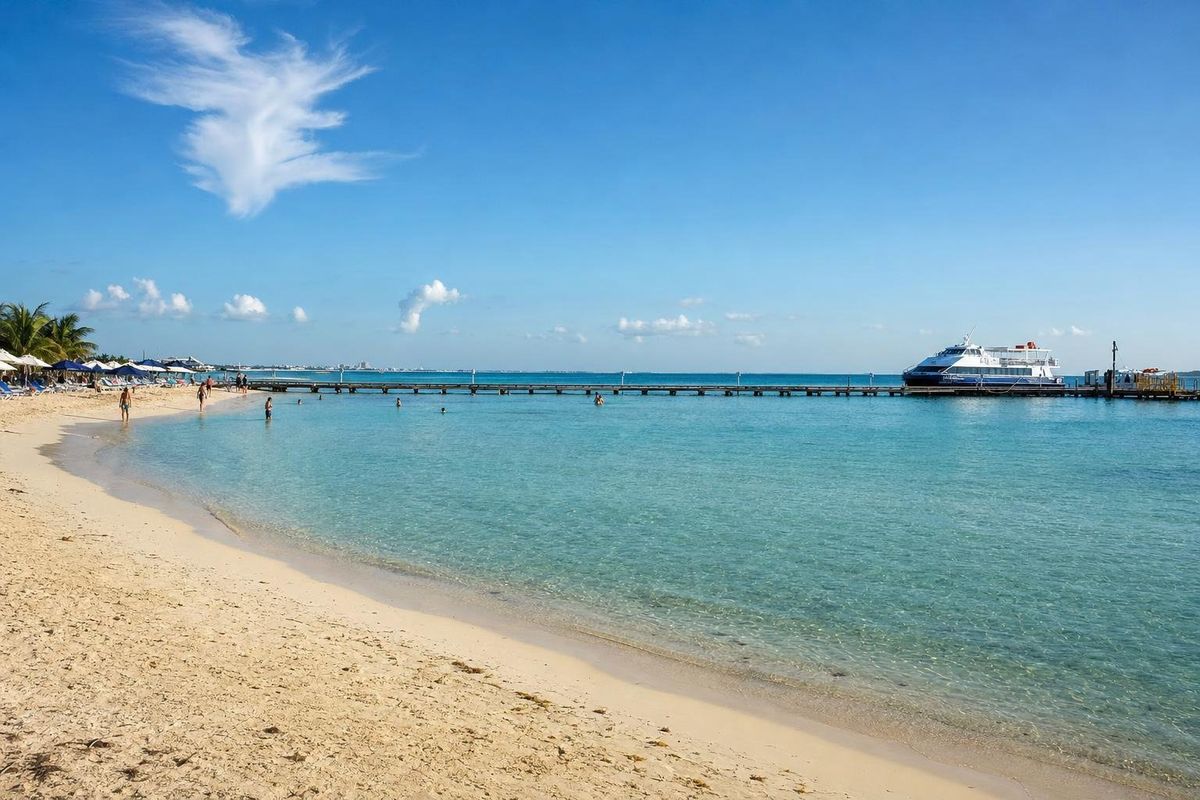
Several of the passenger ferries and catamarans to Isla Mujeres leave from docks on this side of the Hotel Zone, including one at Playa Tortugas, a short walk from Playa Langosta. The crossing takes roughly half an hour. Departure points, operators and timetables change, so check the current arrangements locally before planning a day trip. Isla Mujeres has its own beaches and a small Maya shrine at its southern tip, on a cliff facing the open sea.
Getting to Playa Langosta
The beach lies on the bay side of Boulevard Kukulcán at about kilometer 5, between the downtown end of the Hotel Zone and Punta Cancún. The R1 and R2 city buses run along the boulevard throughout the day and will stop nearby on request. A taxi from downtown Cancún takes about ten to fifteen minutes. There is a small public parking area, which fills early on weekends.
As with all Mexican beaches, the sand is federal property and open to everyone. Public access points are signed from the boulevard.
Langosta, Tortugas and the other bay beaches compared
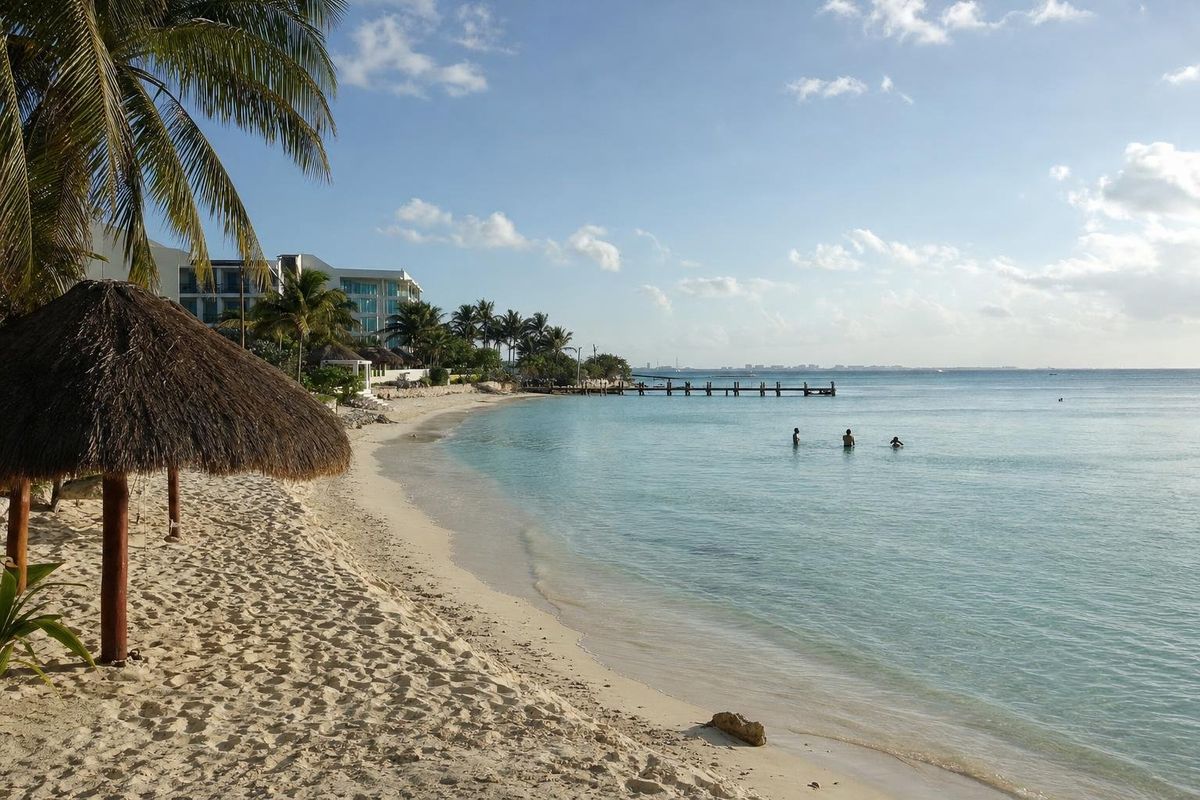
The bay-side beaches are similar enough to be confused. Playa Las Perlas, closest to downtown, is small and popular with residents. Playa Langosta is the calmest and best suited to children. Playa Tortugas, next door, is livelier, with the ferry dock, a pier for jumping and more bars nearby. Playa Caracol, toward Punta Cancún, sits where the bay meets the open sea, and the water begins to change character. If you want flat water and a quiet morning, Langosta is the one to choose.
When to go
Any time of year works for calm water here, which is the main point of this beach. The dry season, December to April, brings the most comfortable weather. Summer is hotter and busier with Mexican families during school holidays. Sargassum mostly affects the Caribbean-facing beaches; the bay side generally sees less, though it is not immune. Hurricane season runs from June to November.
Morning is the best time. The light is soft, the water at its calmest, and palapas are still free.
Practical notes
- Public facilities are basic: palapas, lifeguards and usually restrooms nearby. Restaurants and convenience stores are across the boulevard.
- Bring water and sun protection; shade is limited.
- Sea turtles nest on several Hotel Zone beaches in summer. Respect any marked nests.
- Do not leave valuables unattended.
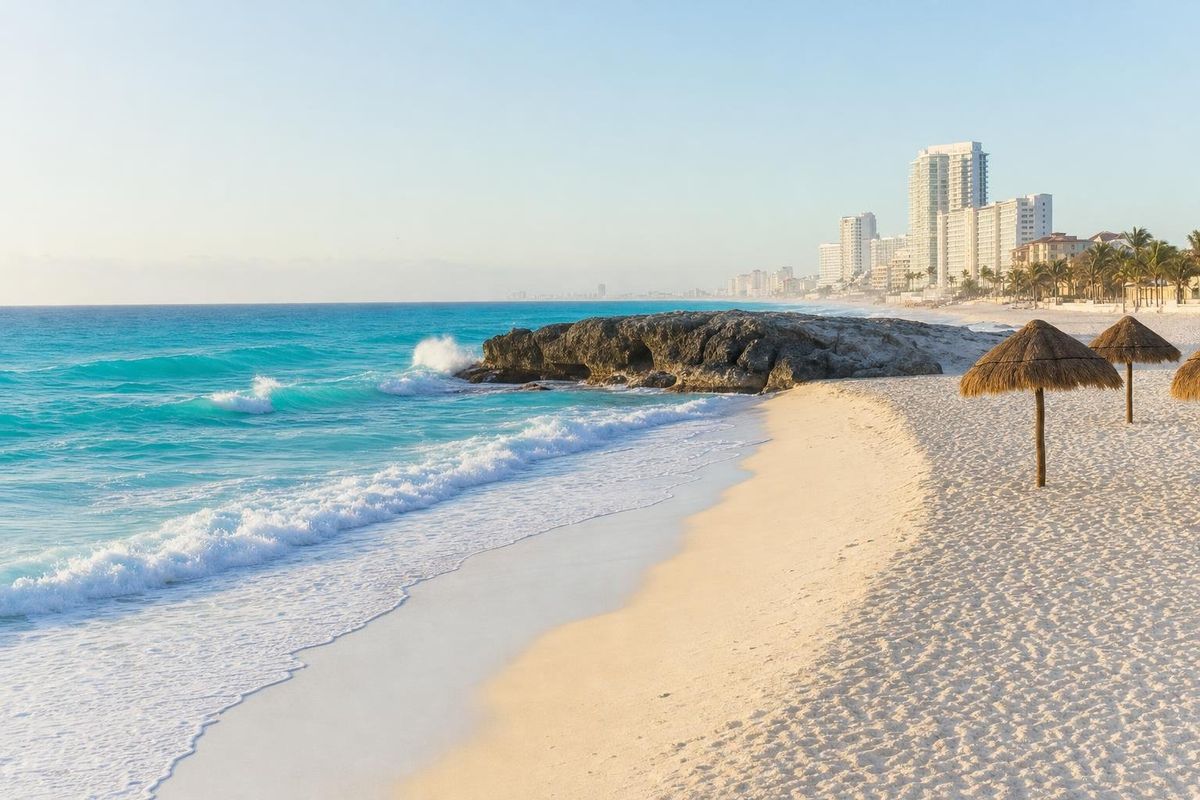
Playa Langosta pairs well with the neighboring bay beaches: Playa Tortugas next door, and Playa Las Perlas closer to downtown. For open-sea swimming, try Playa Chac Mool on the Caribbean side. All are in the beaches section.
From the end of the pier, the water is clear enough to count the ridges in the sand below.
Playa Langosta questions
Where is Playa Langosta in Cancún?
On the bay side of the Hotel Zone, at around kilometer 5 of Boulevard Kukulcán, between downtown Cancún and Punta Cancún.
Is Playa Langosta good for children?
Yes. It faces the sheltered Bahía de Mujeres, so the water is shallow and calm, and lifeguards are usually on duty.
Is Playa Langosta a public beach?
Yes. All beaches in Mexico are federal property, and Playa Langosta has signed public access from the boulevard.
Can you snorkel at Playa Langosta?
Only a little. The bottom is mostly sand and sea grass. For reefs, head to Punta Nizuc or take a boat to Isla Mujeres.
Which buses stop near Playa Langosta?
The R1 and R2 Hotel Zone buses run along Boulevard Kukulcán and stop near the beach on request.
Nearby on the map
AI-generated image Beaches · Quintana Roo
Playa Tortugas
AI-generated image Beaches · Quintana Roo
Las Perlas
AI-generated image Beaches · Quintana Roo
Playa Chac Mool
AI-generated image Beaches · Quintana Roo
Playa Ballenas