
−5 m · Shallows · Beaches · Quintana Roo
Xcacel Beach: a Sea Turtle Sanctuary Between Akumal and Tulum
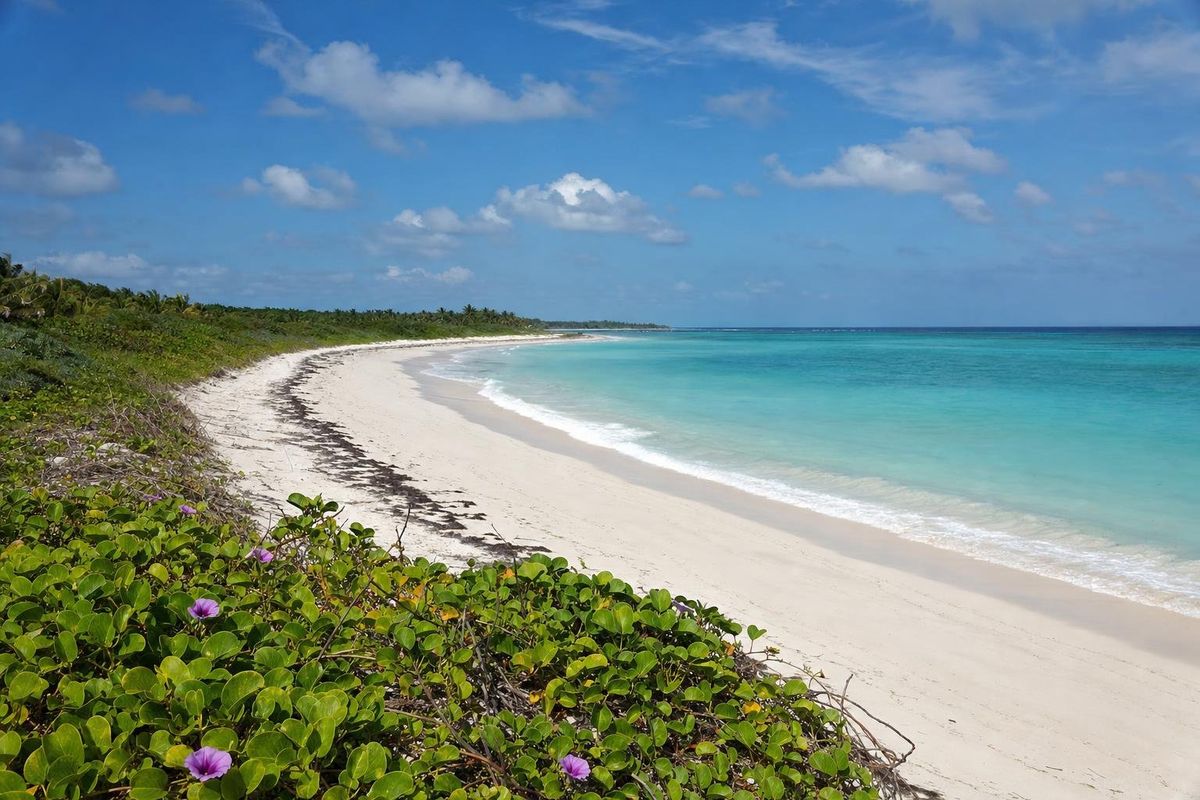
Xcacel is a protected turtle-nesting beach on the Riviera Maya, roughly halfway between Akumal and Tulum, and one of the few long stretches of this coast with no hotel on it. The Xcacel beach is a sanctuary for loggerhead and green turtles, open to day visitors under simple rules, with a small freshwater cenote in the forest at its southern end.
Why Xcacel matters
Drive Highway 307 between Playa del Carmen and Tulum, and most of the coast is either built on or walled off. Xcacel (pronounced roughly "ish-ka-SEL") is an exception: a wide arc of white sand, a natural dune covered in sea grape and creeping vines, and behind it low jungle with no buildings beyond a small entrance and a turtle camp.
That emptiness was not guaranteed. In the late 1990s the state of Quintana Roo declared Xcacel and the small neighboring cove of Xcacelito a sea turtle sanctuary, yet a large resort development was still planned for the site. Mexican environmental groups, local residents and international organizations campaigned against it for several years, and the project was eventually stopped. The beach became one of the best-known conservation fights on the Mexican Caribbean, and it remains a reference point whenever new building is proposed on a nesting beach.
The turtles of Xcacel
Xcacel is among the most important nesting beaches for loggerhead turtles on Mexico's Caribbean coast, and green turtles also nest here in large numbers. Hawksbills turn up occasionally. Females come ashore at night, mainly from about May to September, haul themselves above the tideline, dig a nest chamber with their rear flippers and lay a clutch of around a hundred eggs. Hatchlings emerge roughly two months later, which puts the hatching season through the summer and into autumn.
Conservation teams and volunteers patrol the beach at night during the season, record each nest and, where needed, move eggs to protected hatcheries above the reach of storm surges. Daytime visitors will see marked nests and fenced areas; respect them, and do not walk on the dune.
Two basic rules carry extra weight here: no lights on the beach at night, since hatchlings navigate toward the brightest horizon, and leave nothing behind, because trash and holes in the sand are hazards to nesting females.
Swimming, snorkelling and the cenote
The sea at Xcacel is more exposed than at sheltered coves such as Akumal. Waves can roll in, and currents along the beach can be strong, especially when the wind blows from the east. On calm days the swimming is excellent; on rough days, stay close to shore or stay out. There is no lifeguard.
At the northern end, the tiny inlet of Xcacelito has rocky reef close to the beach and is the usual spot for snorkelling when the sea allows. Expect small reef fish, sea fans and sometimes a ray.
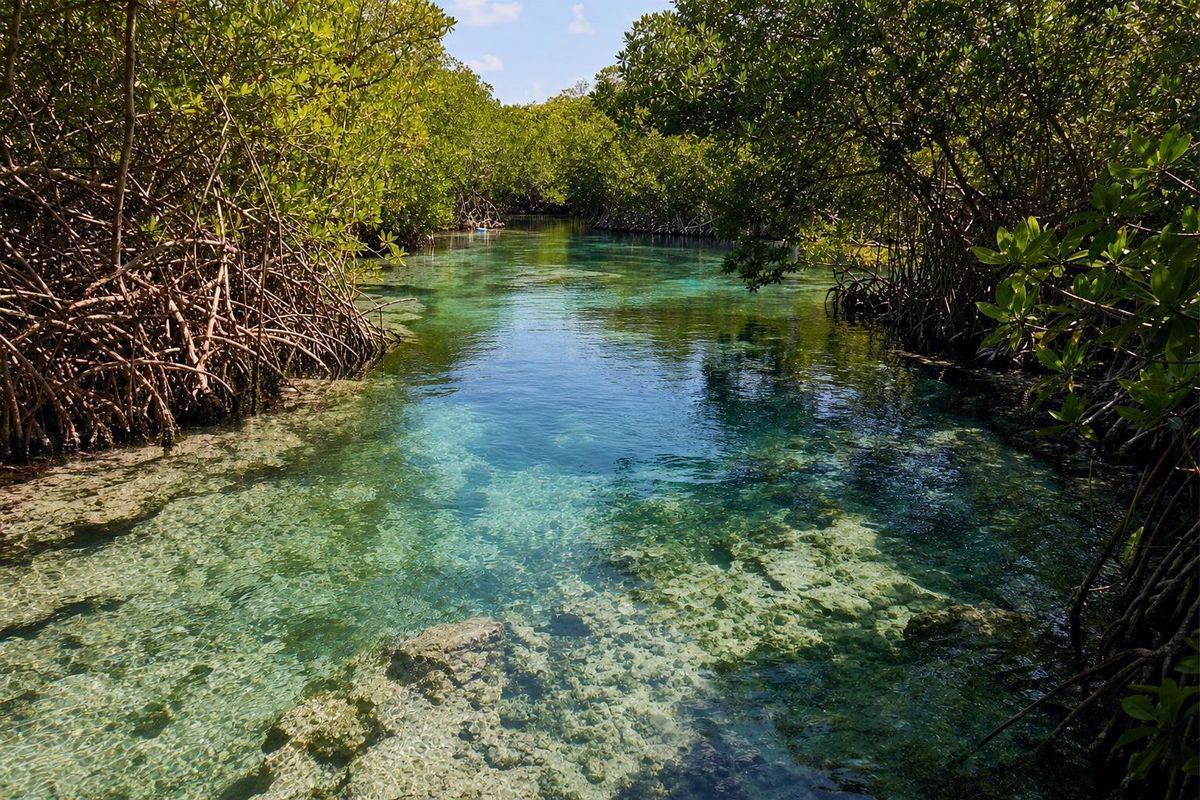
At the southern end, a short path through the trees leads to a small cenote, a pool of cool fresh water among the roots and rocks. It is a pleasant contrast after the salt. Rinse off sunscreen and repellent before you get in, and keep the noise down; the cenote is part of the same protected area.
A beach that stayed wild
What sets Xcacel apart is not only the turtles but the dune itself. On most of the Riviera Maya, the natural dune has been leveled for hotels, pools and lawns. At Xcacel it remains: a low ridge of sand held together by sea grape, beach morning glory and other salt-tolerant plants, with the forest behind it. This is the habitat turtles depend on. Females need dry, stable sand above the reach of the waves, and hatchlings need a dark horizon over the land so that they head for the brighter sea.
Walking along the shore gives a clear idea of what the whole coast once looked like. The only sounds are the waves, the wind in the vegetation and the calls of the birds.
Getting to Xcacel
Xcacel lies off Highway 307 on the seaward side, between Chemuyil and the Xel-Há area, roughly ten minutes south of Akumal and twenty minutes north of Tulum. The turn-off is signed but easy to overshoot; drivers coming from the south will need to pass it and turn back at the next return point. A short dirt road leads to a small parking area and the entrance.
Colectivos between Playa del Carmen and Tulum will drop passengers at the highway. The walk in is short.
An entrance fee is usually collected to support the sanctuary, and the beach opens only during daytime hours. Both the fee and the hours change, so check them locally. Facilities are minimal: basic bathrooms at most, and no food or drink for sale on the beach.
When to go
For calm water and dry weather, December to April is the most dependable period. For turtles, the nesting season runs from about May into the early autumn, though actual nesting is at night and off-limits to casual visitors. Sargassum can arrive in quantity on this exposed beach between about April and October in heavy years, and because the sanctuary avoids heavy machinery on the sand, cleanup is limited. Hurricane season runs from June to November.
Practical notes
- Bring everything: water, food, shade and a bag for your trash.
- Use reef-safe sunscreen, and wash it off before the cenote.
- Do not climb or sit on the dune; its plants hold the sand and protect the nests.
- Leave shells, coral and driftwood where they are.
- Pets, music and drones are generally not welcome on a protected nesting beach.
Xcacel fits naturally with the turtle bays of Akumal, a few minutes north, and with Soliman Bay and Tankah Bay toward Tulum. Further north, Paamul is another nesting beach. The full list of coastal stops is in the beaches section.
At the edge of the dune, the trails of the previous night's turtles sometimes still show in the sand early in the morning, two lines of flipper marks running up from the water.
Xcacel beach FAQ
Where is Xcacel beach?
On the Riviera Maya in Quintana Roo, off Highway 307 between Akumal and Tulum, near Chemuyil and the Xel-Há area.
Is there an entrance fee at Xcacel?
Usually yes, a modest fee that supports the turtle sanctuary. The amount and opening hours change, so check on arrival.
Can you see turtles at Xcacel?
Nesting happens at night between about May and September and the beach is closed to the public after dark, so day visitors usually see only marked nests.
Is there a cenote at Xcacel?
Yes, a small freshwater cenote reached by a short path through the forest at the southern end of the beach.
Is Xcacel safe for swimming?
On calm days it is lovely, but the beach is exposed, currents can be strong and there is no lifeguard. Check conditions before going in.
Are there facilities at Xcacel?
Very few. Expect basic bathrooms at most and nothing for sale, so bring water, food and shade.
Nearby on the map
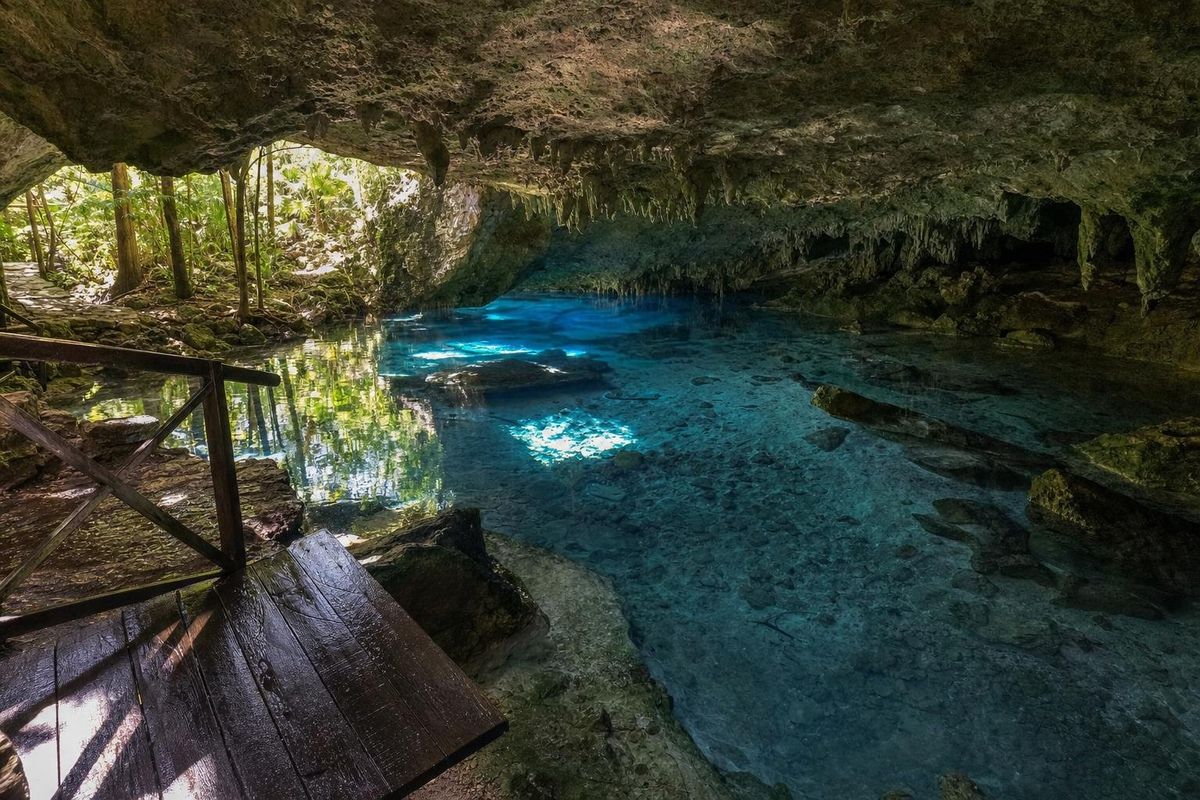
AI-generated image Cenotes · Quintana Roo
Dos Ojos
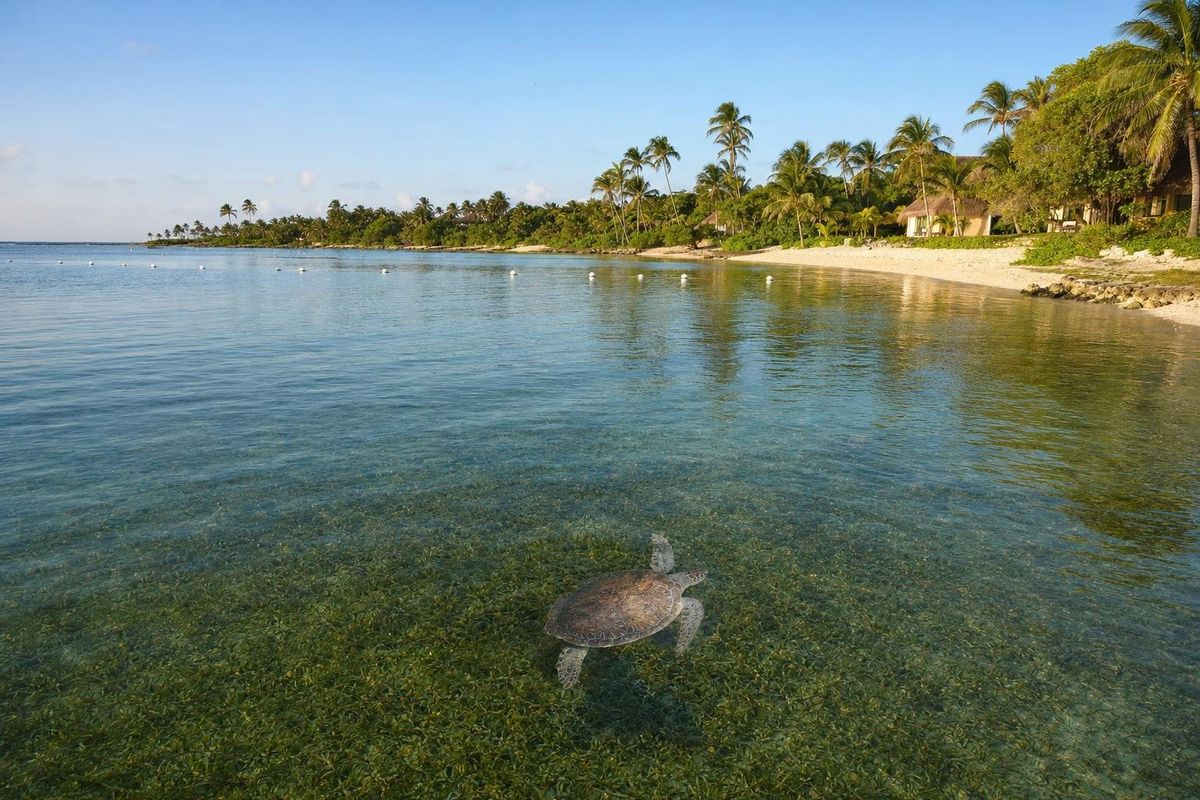
AI-generated image Towns & Villages · Quintana Roo
Akumal
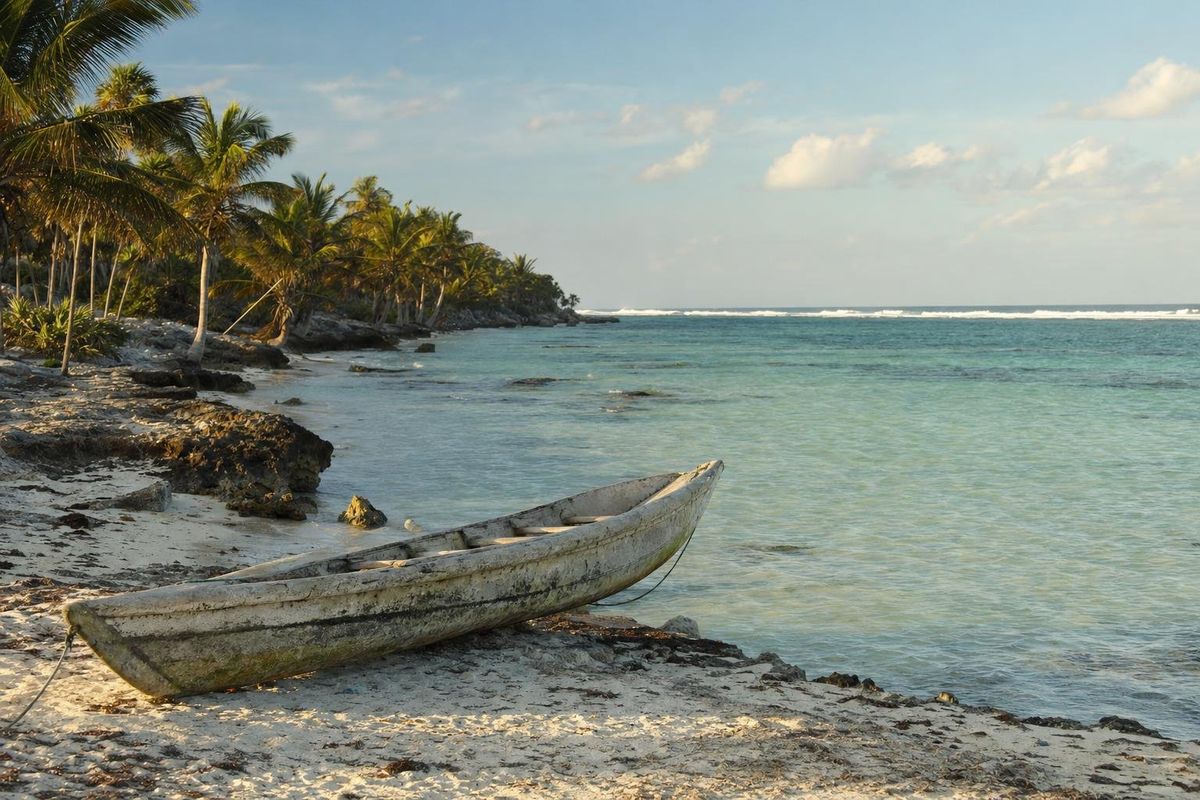
AI-generated image Beaches · Quintana Roo
Soliman Bay
AI-generated image Cenotes · Quintana Roo
Casa Cenote