−5 m · Shallows · Museums · Campeche
Calakmul, Mexico: Museums, Jade Masks and Murals of the Snake Kings
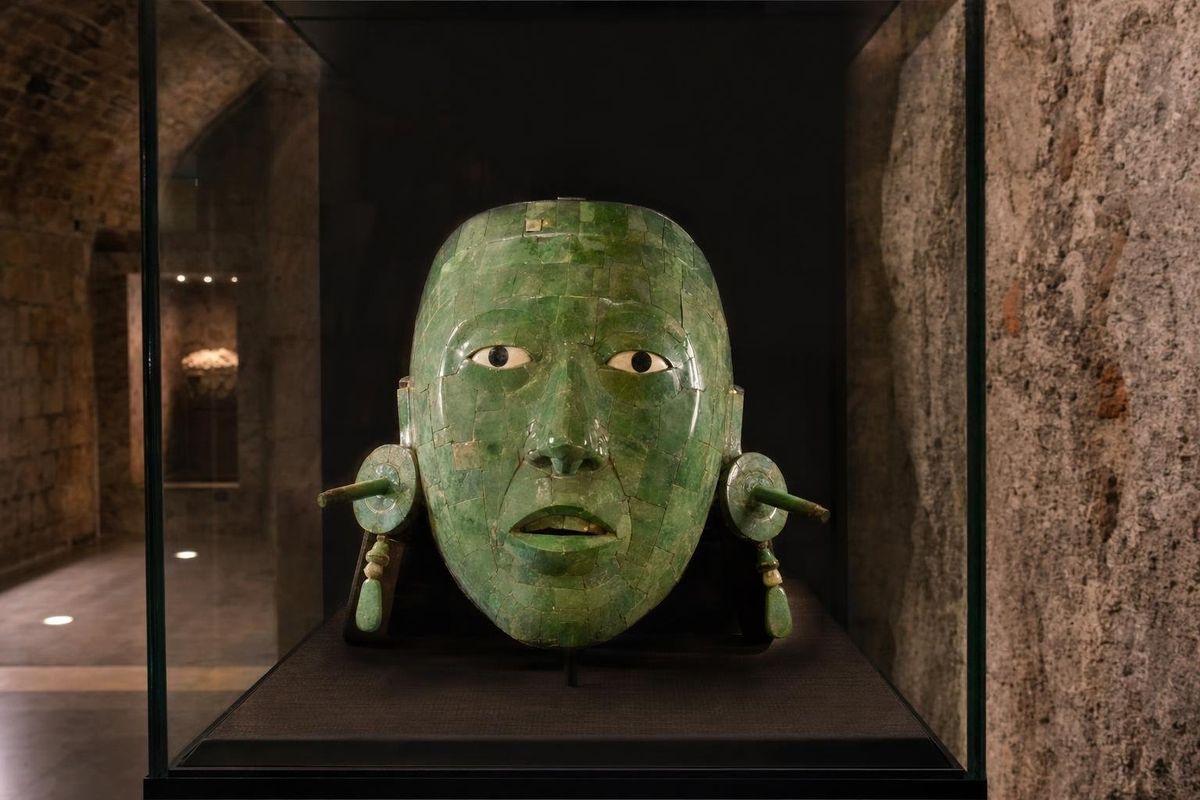
Calakmul, Mexico, is best known for its pyramids in the Campeche forest, but its most striking objects are kept elsewhere: jade mosaic masks from royal tombs, painted ceramics and fragments of rare murals. A small museum on the road into the Calakmul reserve introduces the forest and the site, and the finest finds are displayed in a colonial fort in Campeche city, a long drive to the northwest.
Why the museums matter for a visit to Calakmul, Mexico
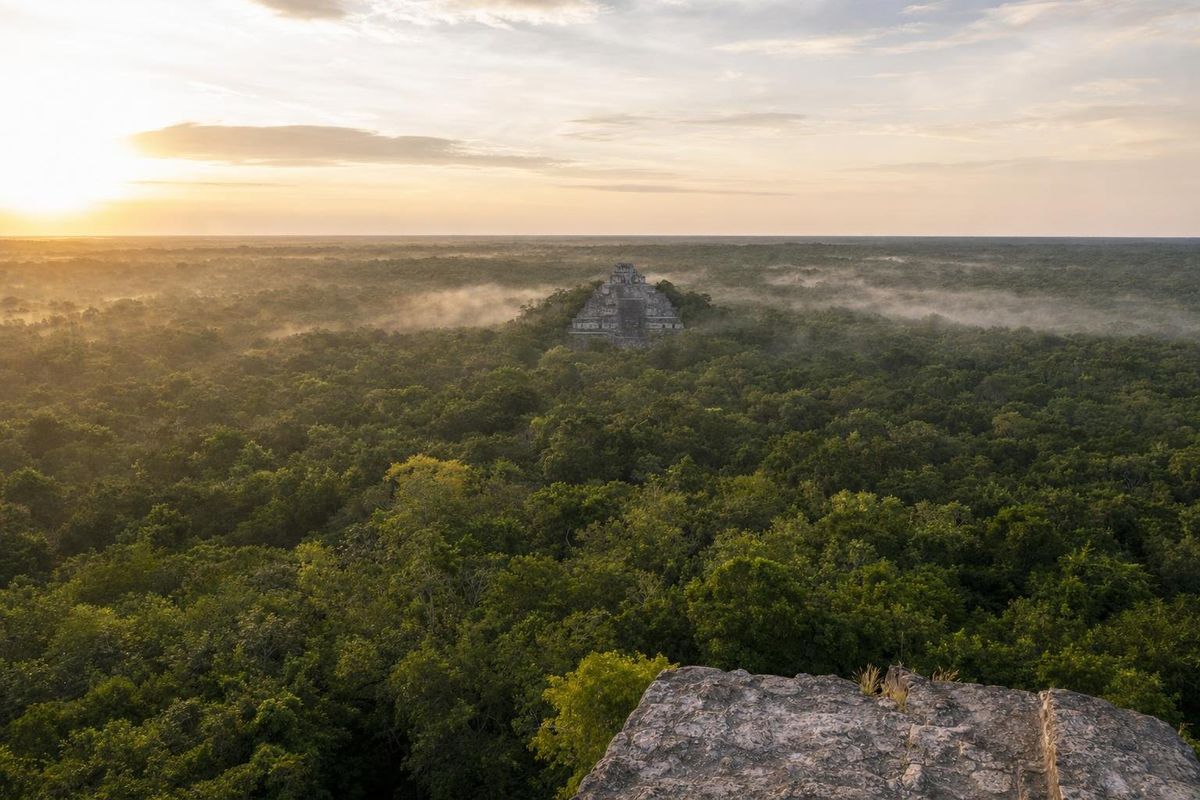
Standing on top of Structure II at Calakmul, it is hard to picture who lived in the city. The stelae are badly eroded, the palaces are bare stone, and the tombs were emptied by archaeologists for safekeeping. The objects in the museums fill that gap. They show what the Snake dynasty's kings wore, what they were buried with and, thanks to a set of paintings found in the 2000s, how ordinary people in the city bought and sold food.
For the ruins themselves, their history and the practical details of the visit, see the main page on Calakmul and the Snake Kings.
The museum on the access road
The road into the Calakmul Biosphere Reserve leaves Highway 186 and runs about 60 km south to the archaeological zone. Partway along it stands a small nature and archaeology museum. It is modest, but useful as an introduction: displays cover the ecology of the forest, the animals that live in it, and the history of the site and its excavation.
It works best as a stop on the way in, when there is time to stretch your legs before the last part of the drive. Opening days and hours change, so ask at the reserve gate.
Jade masks in Campeche city
The most famous objects from Calakmul are the jade mosaic masks found in royal tombs. Each is assembled from dozens of small, carefully shaped pieces of green jade, with eyes of shell and obsidian. The Maya placed such masks over the faces of dead rulers. Jade, for them, stood for maize, water and the breath of life, and a king buried in a jade face was being prepared for rebirth.
The best-known example comes from a tomb inside Structure II, which many researchers link to Yuknoom Yich'aak K'ahk', the Snake king defeated by Tikal in 695. Other masks, ear ornaments, pectorals and painted vessels come from other tombs at the site.
These objects are displayed at the archaeological museum in the Fuerte de San Miguel, an eighteenth-century fort on a hill above Campeche city, built to defend the port against pirates. The fort itself is worth the visit for the views over the Gulf of Mexico. The museum also holds finds from Jaina Island, famous for its small clay figurines, and from other sites in the state. Hours and exhibits change, so check with INAH before going.
The Chiik Nahb murals
The Calakmul murals are among the most unusual Maya paintings known. In the early 2000s, excavations in the Chiik Nahb complex, north of the main plaza, uncovered a pyramid whose outer walls were painted with scenes of daily life. Men and women serve and receive food and goods: maize gruel, tamales, salt, tobacco, pots and cloth. Glyph captions name the products and describe the people by what they handle, such as "the salt person" or "the maize gruel person".
Archaeologists including Ramón Carrasco and Simon Martin have read the paintings as evidence of a marketplace, or of feasting and redistribution in a public space. Either way, they are among the very few Maya images of commerce and everyday food, in a tradition that otherwise focuses on kings and gods. The originals are protected at the site and are generally not shown to visitors, but published photographs and reproductions appear in exhibitions and books.
Maya headdresses at Calakmul
The carved stelae of Calakmul, worn as they are, still show rulers in towering headdresses. A Maya headdress was not a hat but a piece of identity: a wooden or woven frame covered in feathers, jade, shell and textile, often built around the head of a deity or an animal, with long quetzal feathers sweeping back. Specific headdresses marked specific roles, from war leader to dancer.
The best way to understand them at Calakmul is in pairs of stelae that show a king and a queen facing each other, each in full regalia. In museums, look for painted vessels from the region, where colors survive and headdresses can be studied in detail. Royal headdresses also appear, in full color, in the Bonampak murals in Chiapas, and the page on Maya warriors covers the battle versions.
How to get to Calakmul and its museums
The access road begins at a turnoff on Highway 186 between Escárcega and Chetumal, roughly an hour west of Xpujil. Most visitors base themselves in Xpujil or at lodges along the highway and drive in early. The site museum is on the way. Campeche city, with the Fuerte de San Miguel, lies several hours to the northwest by road.
A practical order is to see the ruins first and visit the Campeche museum later, when you can match the masks with the pyramid that held them. Travelers heading east can continue to Kohunlich, known for its own stucco masks, and on to Chetumal.
Practical notes
- There is no public transport to Calakmul; you need a car or a tour.
- Fill up with fuel before leaving the highway.
- Bring water, food and insect repellent; services in the reserve are limited.
- Museum hours, fees and exhibits change. Confirm locally.
For more museums in the region, see the museums section. In the Fuerte de San Miguel, the masks are displayed in a dark room; give your eyes a minute to adjust before looking at the fine joins between the jade plates.
Calakmul museum questions
Where are the jade masks from Calakmul?
The best-known masks are displayed at the archaeological museum in the Fuerte de San Miguel in Campeche city, along with other finds from the site.
Is there a museum at Calakmul?
Yes, a small nature and archaeology museum stands along the access road through the reserve. Opening days vary, so ask at the reserve gate.
Can you see the Calakmul murals?
The Chiik Nahb murals are protected at the site and are generally not open to visitors. They are known mainly through published photographs and reproductions.
How do you get to Calakmul?
By car or with a tour. Leave Highway 186 at the signed turnoff west of Xpujil and follow the access road about 60 km south to the site.
What did a Maya headdress represent?
Rank and role. Headdresses combined feathers, jade and textiles, often around the image of a deity or animal, and told viewers who the wearer was and what part he or she played.