
−5 m · Shallows · Cenotes · Yucatán
Cenote Zazil Tunich: a Lit Cave Walk to a Pool near Valladolid
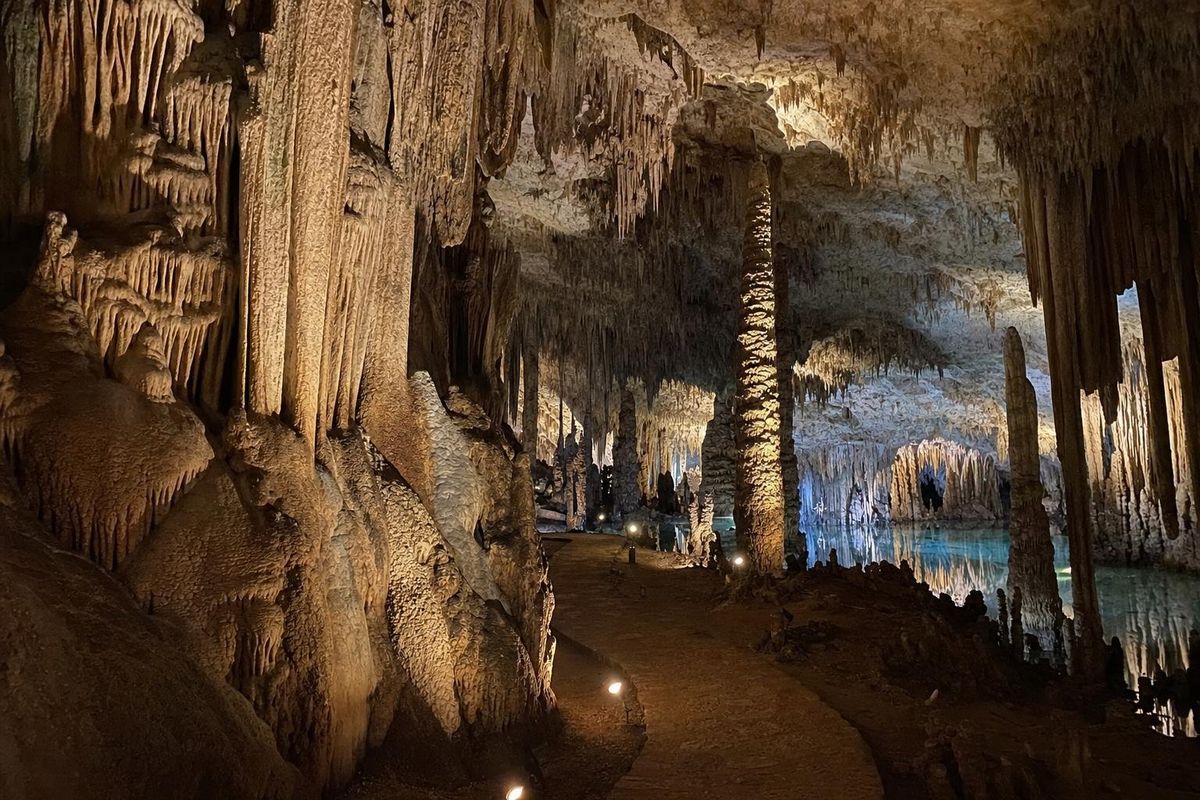
Zazil Tunich is a cave cenote in the countryside northeast of Valladolid, in Yucatán, presented less as a swimming hole than as a show cave. A path of roughly 200 m leads about 20 m underground past large lit stalactites, stalagmites and columns to a shallow pool at the end, and the guided version of the visit tells the Maya story of Xibalbá, the underworld, along the way. The cenote Zazil Tunich works best for anyone more curious about caves and mythology than about a long swim.
A cave of formations
Most cenotes around Valladolid are known for their water. Zazil Tunich is known for its rock. The cavern is large and richly decorated, with formations that took many thousands of years to grow: hanging stalactites, stalagmites rising from the floor, columns where the two have met, curtains and flowstone along the walls. The operators claim one of the longest stalactites in the state; whether or not that is measured, the scale of several formations is striking.
Every one of those shapes records a slow chemical process. Rainwater picks up carbon dioxide from the soil and dissolves a little limestone on its way down; when a drop reaches the open air of a cave, it releases that gas and leaves a film of calcite behind. Growth rates are tiny, often a fraction of a millimeter a year, and most of the decoration here formed when the cave stood dry during the ice ages, when sea levels and the water table were far lower than today.
The cave is lit with electric lamps placed low among the rocks, which throw shadows upward and pick out the shapes. The effect is theatrical, and the site has leaned into it: it describes itself as a "cenote museum" of living natural art, and the main chamber has been used for events such as concerts and dinners.
The name is usually explained from Yucatec Maya: tunich means stone, and zazil (often written sáasil today) relates to light or clarity. A loose rendering is "stone of light", which suits a cave lit from within.
The underworld tour
The guided visit is structured as a passage through Xibalbá, the Maya underworld known best from the K'iche' Maya book the Popol Vuh, in which the Hero Twins descend to face the lords of death. Guides walk visitors through the cave in stages and connect the formations and chambers to episodes and ideas from Maya cosmology, including the idea of an underworld of several levels. Near the end a short ritual of purification is offered by a local practitioner, and the walk finishes at the pool.
How literally to take the presentation is a matter of taste. It is a modern interpretation built for visitors, not an archaeological reconstruction, but it is rooted in a real belief: across the Maya world, caves and cenotes were understood as entrances to the underworld and places to communicate with ancestors and gods, especially the rain god Chaak. Archaeologists have found offerings, pottery and altars in caves across the peninsula, from Balankanché near Chichén Itzá to the caves of the Puuc hills such as Loltún.
Tours have run at set times of the day, with self-guided visits possible at other times. Schedules change, so it is best to check them before driving out.
Swimming at the end of the path
The pool at the bottom of the cave is shallow and clear, more a place to wade, sit and float than to swim laps. After the walk, the cool water is welcome. Visitors should bring a swimsuit under their clothes and a towel, and leave sunscreen and repellent off entirely, since this is a closed cave pool with little exchange of water.
The path is uneven and damp in places, with steps and low sections. It is not accessible for wheelchairs, and anyone uneasy with enclosed spaces should know that the walk goes well underground. Children usually enjoy it, especially with the story told along the way.
Getting there from Valladolid
The cave lies northeast of Valladolid, around km 6 of the rural road between the villages of Yalcobá and X'tut. From Valladolid the drive usually takes about 40 minutes: head north toward the toll motorway, then turn off toward Yalcobá and continue on smaller roads. Signs are sparse until close to the site, so set the route on a map app before leaving town and download it offline in case the signal drops.
There is no public transport to the cave. A rental car or a taxi from Valladolid (with an agreed waiting time or pick-up) are the realistic options. Some tours from Valladolid and the Riviera Maya include it.
When to visit and what to bring
Because the cave is lit artificially and lies underground, the time of day and the season barely matter. That makes Zazil Tunich a good choice for a rainy afternoon, or for the hottest hours of a summer day, when the open-air ruins are hard work. The dry season from about November to April is the easiest time to drive the rural roads.
- Swimsuit, towel and water shoes or sandals with grip.
- No sunscreen, repellent or lotion before entering the water.
- Cash in pesos; fees and tour times change and should be confirmed with the site or the Yucatán state tourism board.
- A light layer can help in the damp cave air after swimming.
Nearby around Valladolid
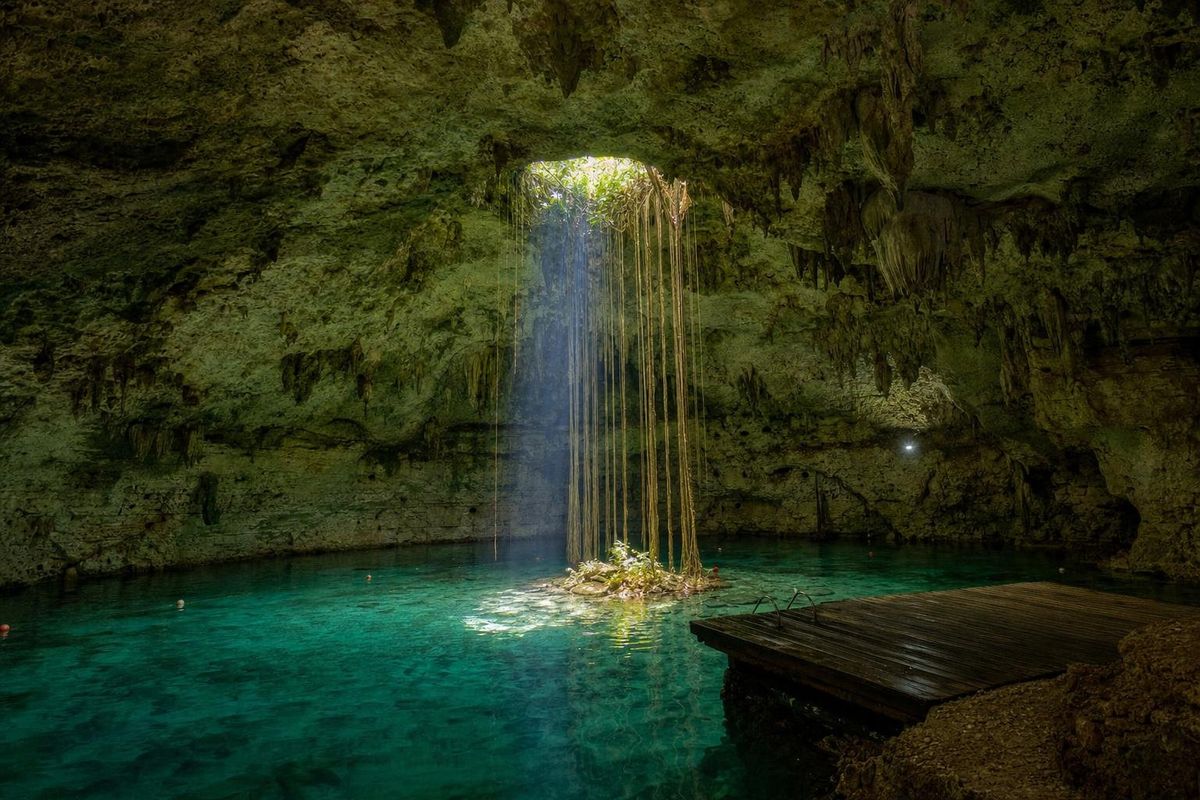
Valladolid is the base for a whole ring of cenotes. North on the Tizimín road, Hubiku is a cavern with a single shaft of light and plenty of catfish; west toward Chichén Itzá, Cenote Xcajum is a deep open sinkhole. The Valladolid trip notes cover the town and its surroundings, and all the swimming holes are gathered on the cenotes page.
On the drive back, the villages along the road still keep the oval thatched houses, or nah, that Maya families in Yucatán have built for centuries.
Zazil Tunich: questions
Where is Zazil Tunich?
Northeast of Valladolid in Yucatán, on the rural road between Yalcobá and X'tut, roughly 40 minutes' drive from town.
Can you swim at Zazil Tunich?
Yes, in a shallow, clear pool at the end of the cave path. It is a place for a dip rather than a long swim.
What does Zazil Tunich mean?
Tunich is Yucatec Maya for stone, and zazil relates to light or clarity, so a loose translation is "stone of light".
Is the cave suitable for children?
Generally yes, with supervision on the uneven, damp path. It is not wheelchair accessible.
Do you need a guide?
Guided underworld tours run at set times, and self-guided visits have been possible outside them. Check current times before going.
Nearby on the map
AI-generated image Maya Ruins · Yucatán
Ek Balam
AI-generated image Cenotes · Yucatán
Hubiku
AI-generated image Maya Ruins · Yucatán
Kulubá
AI-generated image Trips · Yucatán
Around Valladolid