
−5 m · Shallows · Museums · Guanajuato
The Diego Rivera Museum in Guanajuato: His Birthplace and His Family
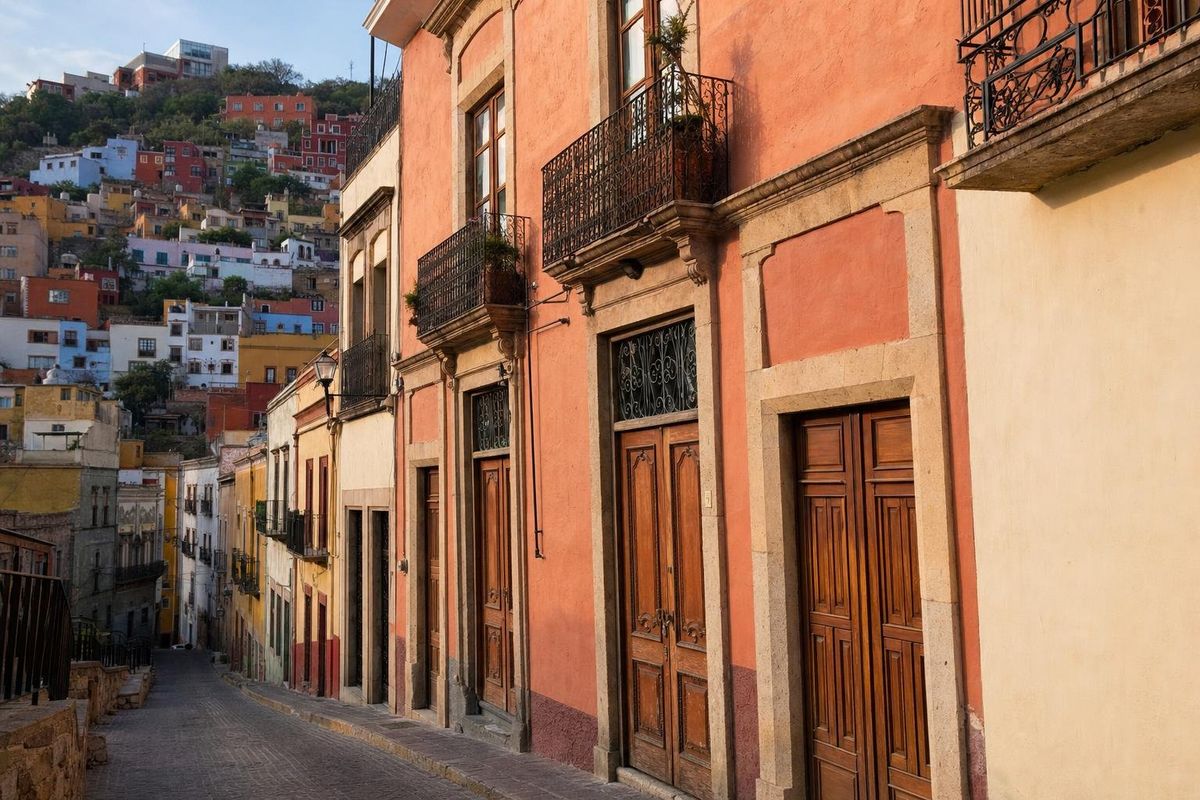
The Diego Rivera Museum in Guanajuato, officially the Museo Casa Diego Rivera, occupies the house on Calle Positos where the painter was born in December 1886. It sits a short walk uphill from the city's central squares, and an hour inside covers both the family rooms and the galleries of early work above them. It is the best place in Mexico to see what Rivera painted before the murals made him famous.
Guanajuato's most famous son
Guanajuato was a silver town, built in a narrow ravine and rich enough by the 18th century to fill it with churches and mansions. Its historic centre and mines are a UNESCO World Heritage Site. Rivera spent only his first years here. The family moved to Mexico City in 1892, when he was about six, and he never lived in Guanajuato again. His outspoken atheism and communist politics did not endear him to a devout, conservative city, and recognition at home came late. The house was eventually acquired by public authorities and opened as a museum, long after his reputation was settled elsewhere.
The building is tall and narrow, organised around a small central patio that lets light and air down through the floors. From the street it looks modest. Inside it turns out to be larger than expected, partly because a modern addition with glass panels and an open staircase connects the old rooms with the upper galleries.
What is inside the house
The family rooms
The ground floor recreates a comfortable middle-class home of the 1880s, with a parlour, dining room and bedroom furnished in period style. The furniture is not the family's own; it was gathered to show how a household of teachers and civil servants lived in a provincial capital at that time. Family photographs, including images of the infant twins, hang alongside.
The galleries
The upper floors hold the real reason to come: a collection of Rivera's own works spanning his student years, his long stay in Europe and his return to Mexico. There are academic drawings, landscapes, portraits and pieces from his cubist period in Paris, plus sketches and studies connected with murals. Nothing here matches the scale of the great public walls in Mexico City, but the progression is clear, from a precocious academy student to a painter testing every European style before turning firmly to Mexican subjects. A floor for temporary exhibitions often shows contemporary artists.
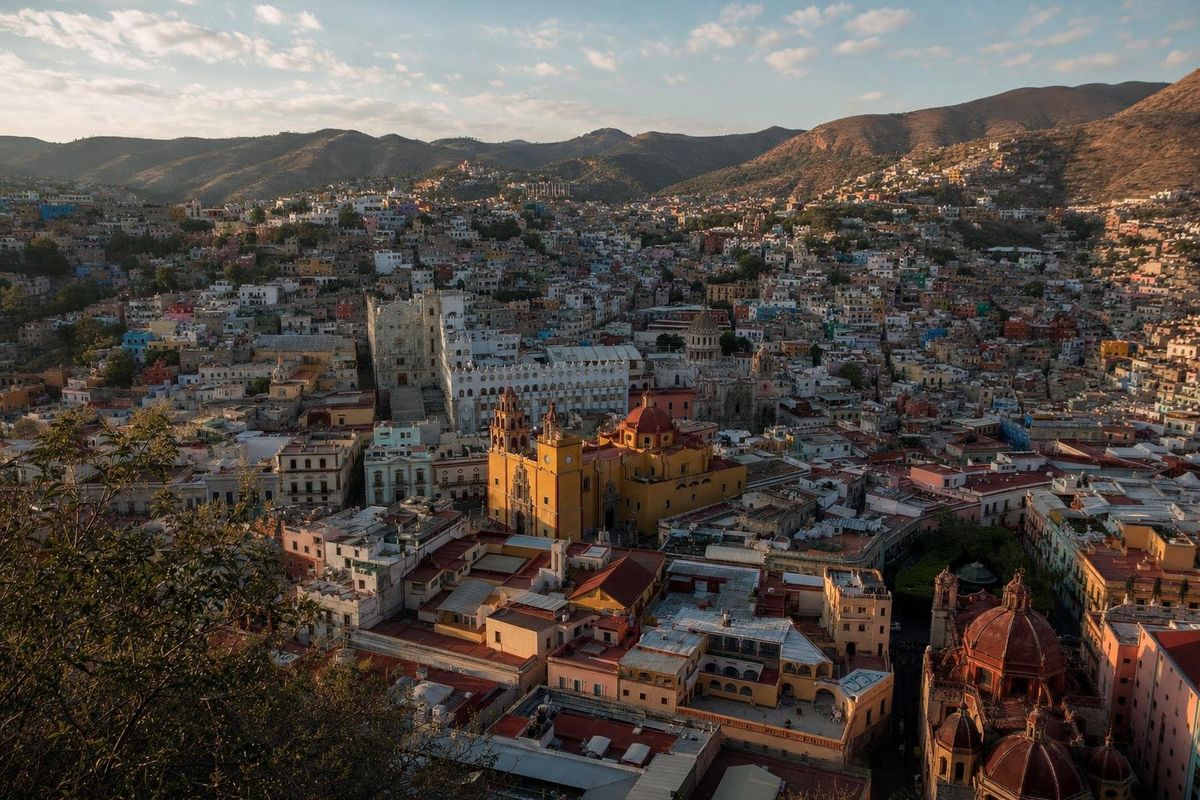
The roof terrace has a view over the domes and the coloured houses on the hills, which is worth the extra flight of stairs.
The Diego Rivera family
Diego María Rivera was born on 8 December 1886, one of twins. His parents were Diego Rivera Acosta, a teacher who became an inspector of rural schools and was active in liberal politics, and María del Pilar Barrientos. His twin brother, Carlos María, died before the age of two. Biographers describe the young Diego being sent for a time to the countryside with an Indigenous nurse, Antonia, and he later spoke of her with great affection; how much of that story he embellished is impossible to say, because Rivera was a famous self-mythologiser.
He was drawing almost as soon as he could hold a pencil, and in Mexico City he entered the Academy of San Carlos as a boy. A state grant took him to Europe in 1907, where he stayed, mostly in Paris, until 1921.
Diego Rivera's son and daughters
Rivera had one son. With the Russian painter Angelina Beloff, his partner in Paris, he had a boy, also named Diego, born in 1916; the child died in infancy during the hard Paris winter at the end of the First World War. Rivera also had a daughter, Marika, with the artist Marevna, though he never acknowledged her publicly. In Mexico he married Guadalupe (Lupe) Marín, and they had two daughters, Guadalupe and Ruth; Ruth Rivera Marín later became an architect. His marriages to Frida Kahlo, from 1929 (with a divorce and remarriage in 1939 and 1940), produced no children. His last wife was Emma Hurtado, whom he married in 1955.
Other Diego Rivera museums in Mexico City
Travellers looking for a Diego Rivera museum in Mexico City have several choices, each showing a different side of him:
- The Museo Mural Diego Rivera, beside the Alameda Central, was built to hold a single work, Dream of a Sunday Afternoon in the Alameda Central, moved there after the 1985 earthquake damaged its original hotel home.
- The Anahuacalli in Coyoacán is a dark volcanic-stone building Rivera designed to house his enormous collection of pre-Hispanic objects. It opened after his death.
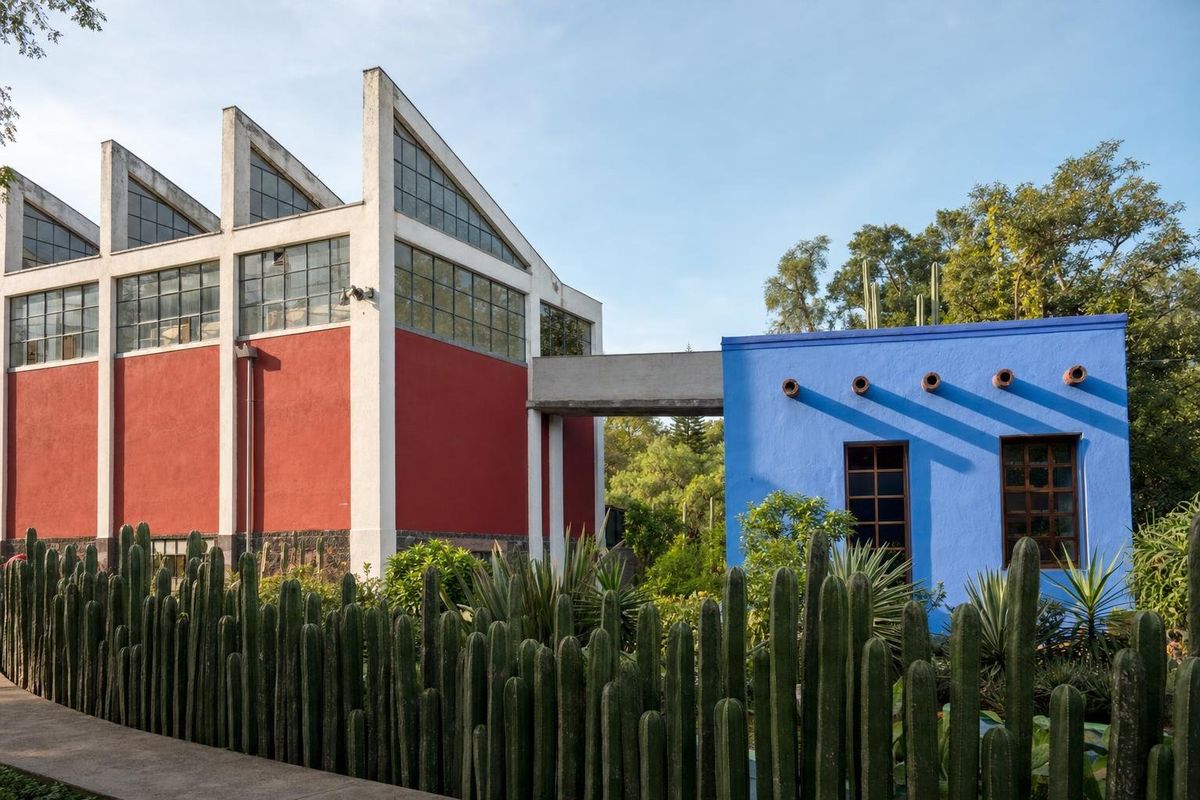
- The studio-house of Diego Rivera and Frida Kahlo in San Ángel is where he worked for most of his later life and where he died in 1957.
- His best-known murals are not in museums at all: the staircase and corridors of the National Palace and the courtyards of the Ministry of Education carry hundreds of square metres of his painting.
Seeing the Guanajuato house first, then the murals, gives a fair picture of the whole arc.
Visiting the museum
Guanajuato's centre is compact and best explored on foot; many of its streets run through tunnels under the old town, which confuses drivers more than walkers. Calle Positos is close to the Plaza de la Paz and the university steps, so the museum fits easily between other sights. It is commonly closed one day a week, and hours change, so check locally. Photography inside has been restricted in the past.
Guanajuato lies roughly five hours by bus northwest of Mexico City, and it is the last stop on the northern loop of the trip around Mexico City, after Querétaro and San Miguel de Allende; most people on that route start with a day at the pyramids of Teotihuacán. A first day in town usually includes the Alhóndiga de Granaditas, the granary where an early battle of the War of Independence was fought in 1810, and the Mummy Museum with its bodies preserved naturally in the local cemetery. More house-museums and galleries are collected under museums.
In the evenings, groups of student minstrels known as estudiantinas, dressed in Spanish Renaissance costume, lead singing walks through the alleys. On the street outside the Rivera house, the sound carries up from the plazas below.
Questions about the Diego Rivera Museum
Was Diego Rivera really born in this house?
Yes. The museum on Calle Positos is the house where he and his twin brother were born in 1886. The family left for Mexico City in 1892.
Are there murals in the Guanajuato museum?
No large murals. The collection focuses on drawings, easel paintings and studies, many from his early and European years.
Did Diego Rivera have a son?
Yes, one son, Diego, born in Paris in 1916 to Angelina Beloff. He died as a baby. Rivera's other children were daughters.
Is the furniture original?
No. The ground-floor rooms are furnished with period pieces to show how a family of their class lived in the 1880s.
Which Diego Rivera museum in Mexico City should I see?
For murals, the Museo Mural Diego Rivera and the National Palace. For his life and studio, the San Ángel studio-house. For his collection of ancient art, the Anahuacalli.
Nearby on the map
AI-generated image Maya Mysteries · Mexico City
Dress and Ahuianime
AI-generated image Trips · Central Mexico
Around Mexico City
AI-generated image Museums · Mexico City
Diego & Frida Studio-House
AI-generated image Maya Mysteries · Estado de México
Goggles