
−5 m · Shallows · Towns & Villages · Oaxaca
Santiago Matatlán, Mezcal Town of Oaxaca, and Its Mezcalerías
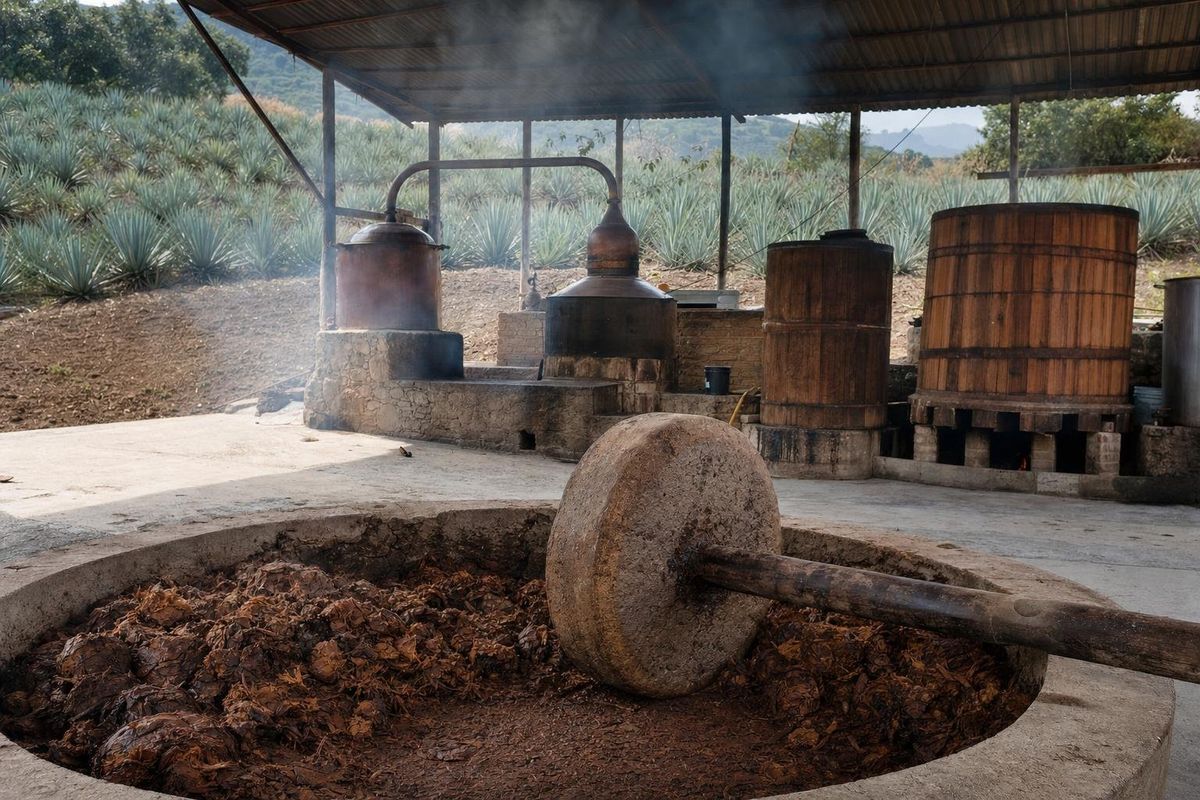
Santiago Matatlán lies about 50 km southeast of Oaxaca city on Highway 190, and a large share of Oaxaca's mezcal is made in and around it. Dozens of small distilleries, called palenques, line the highway and the side streets, and many let visitors watch the agave being roasted, crushed and distilled. It is the best place in the state to understand what is in the glass before ordering at a mezcalería in Oaxaca city.
A town built on agave
The road into Matatlán runs between hillsides planted with rows of agave, most of it espadín, the cultivated species behind the majority of Oaxacan mezcal. An arch over the highway welcomes travelers to the self-styled world capital of mezcal, and the claim is not idle: the municipality is one of the most important producers within the mezcal designation of origin, which Mexico established in 1994 and which covers Oaxaca along with several other states.
Production here is mostly in family hands. A palenque can be a single roof sheltering an oven pit, a stone mill, a few wooden vats and a pair of stills, with the family house next door. Larger operations exist too, some bottling for export, but the method in most of them follows the same sequence.
How mezcal is made in a palenque
Harvest and roasting
An espadín plant takes roughly seven years or more to mature; wild species can take far longer. At harvest the leaves are cut away to leave the heart, the piña, which can weigh as much as a person. The piñas are split and roasted in a conical pit lined with stones heated by a wood fire, covered with agave fibers and earth, and left for several days. The roasting turns starches into fermentable sugars and gives mezcal its smoke.
Milling, fermenting and distilling
The cooked agave is crushed, traditionally in a circular stone trough by a heavy stone wheel, the tahona, pulled by a horse or mule. The mashed fibers go into wooden vats with water and ferment with wild yeasts for days to weeks, depending on the weather. The fermented mash is then distilled, usually twice, in copper stills or, in some palenques, in small clay pots. The distiller tests strength by pouring the spirit and watching the beads of bubbles, the perlas, that form on the surface.
Espadín and the wild agaves
Espadín (Agave angustifolia) is the reliable workhorse. Mezcals from wild or semi-wild species are rarer and usually cost more, because the plants grow slowly and must be gathered from the hills. Names that turn up on menus include tobalá, a small agave that grows in rocky places at altitude; tepeztate, one of the slowest growing; madrecuixe; and arroqueño. Ensambles blend more than one species.
Labels also carry production categories. Under the official standard, ancestral mezcal must be distilled in clay pots, artisanal mezcal allows copper stills alongside the traditional steps, and plain mezcal may use industrial methods. The categories are a useful starting point; the palenque and the agave tell more.
Mezcal, pulque and the tlachiquero
Matatlán's agaves are distilled, but the same plant family gives Mexico an older drink. Pulque is the fermented sap of large maguey species, collected without cooking or distilling. A worker called a tlachiquero (also spelled tlaquichero) scrapes out a hollow in the center of a mature plant and draws off the sweet sap, aguamiel, once or twice a day with a long gourd or a tube. Left to ferment, it becomes pulque.
The taste surprises many first-timers: milky white, slightly viscous, mildly sour and yeasty, with low alcohol. Curados, pulque blended with fruit, nuts or oats, soften it. Pulque is more at home in central Mexico, around Tlaxcala, Hidalgo and the State of Mexico, than in the Oaxaca valleys, but some markets and roadside stalls in Oaxaca sell it. It spoils within a day or so, which is why it never traveled the way mezcal does.
One note on names: Matatlán is a Nahuatl-derived place name, and similar names turn up elsewhere in Mexico. The mezcal town is Santiago Matatlán, in the Tlacolula district of Oaxaca.
Visiting the palenques
Many palenques along the highway welcome walk-in visitors, show the oven, mill and stills, and offer a tasting. Some ask for a small charge, others expect a purchase; it varies and changes, so ask first. Mornings tend to be more active, when roasting, milling or distilling may be under way.
Taste slowly. Mezcal is sipped, not shot, often from a small clay cup or a half gourd, with orange slices and sal de gusano, a salt mixed with ground toasted agave larvae and chile. A worm in the bottle is a marketing habit, not a mark of quality.
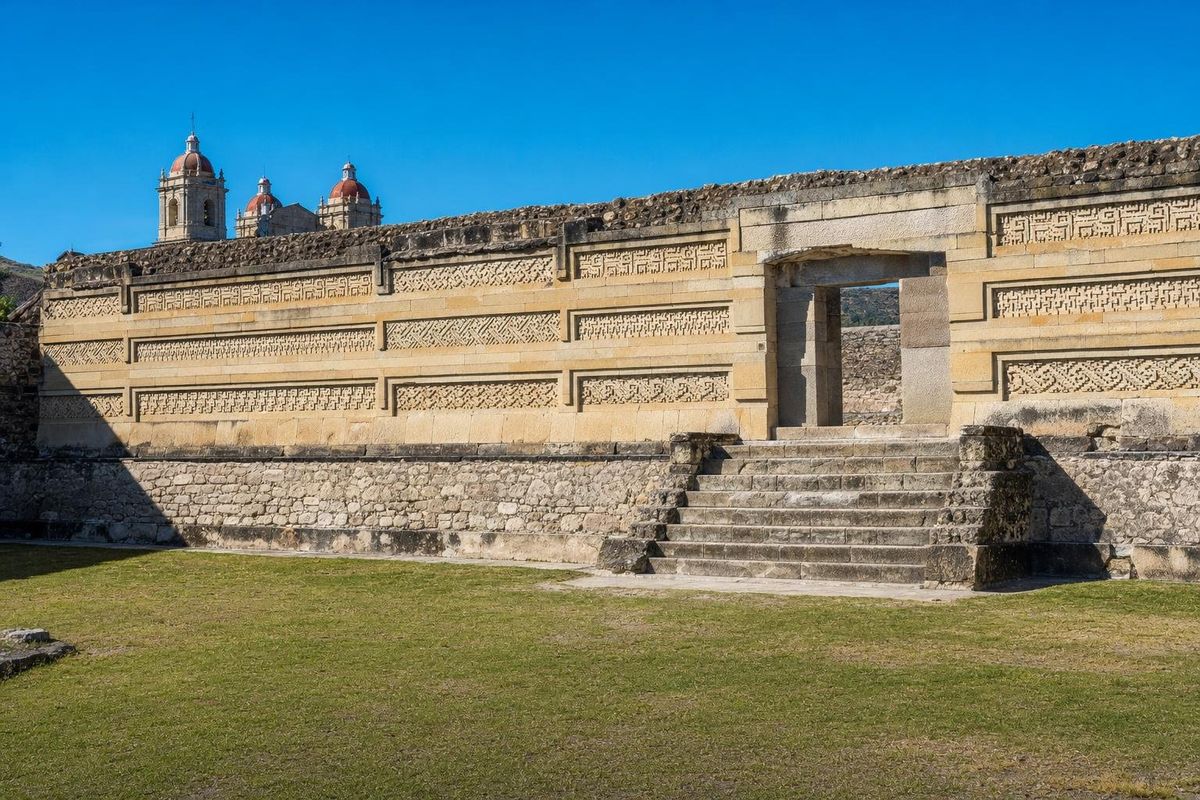
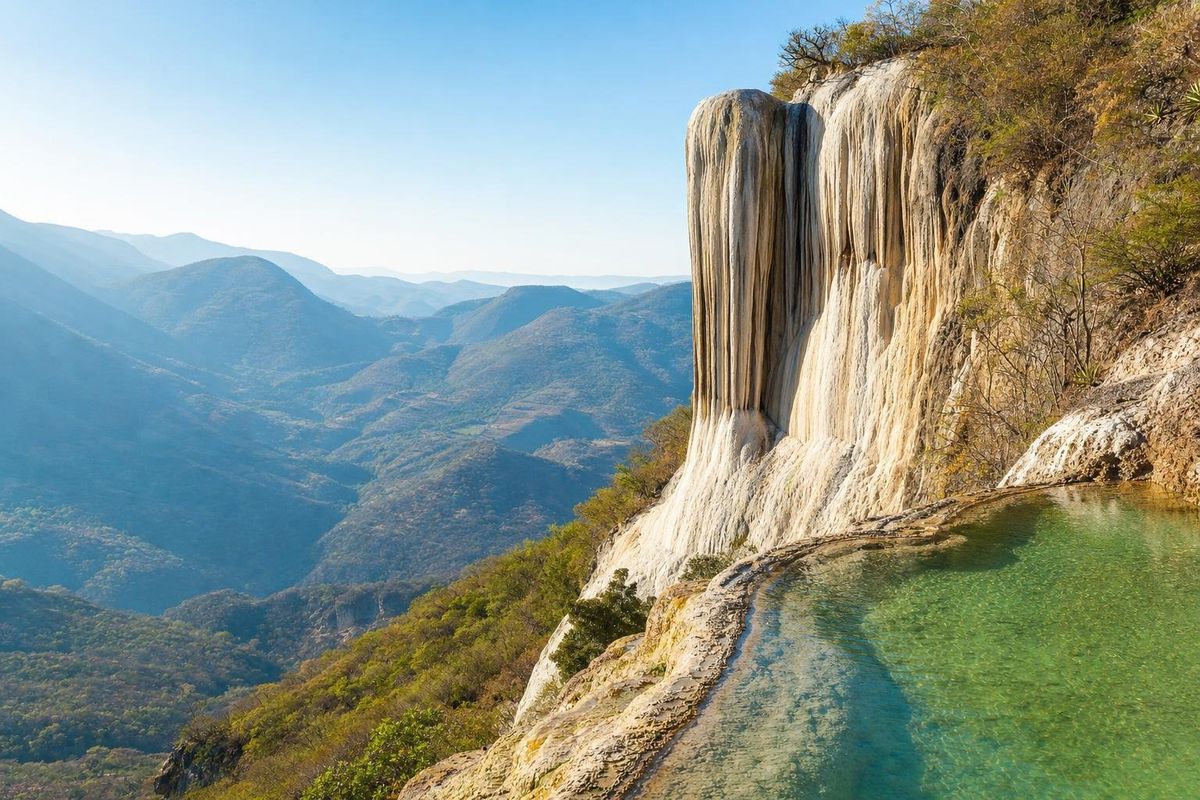
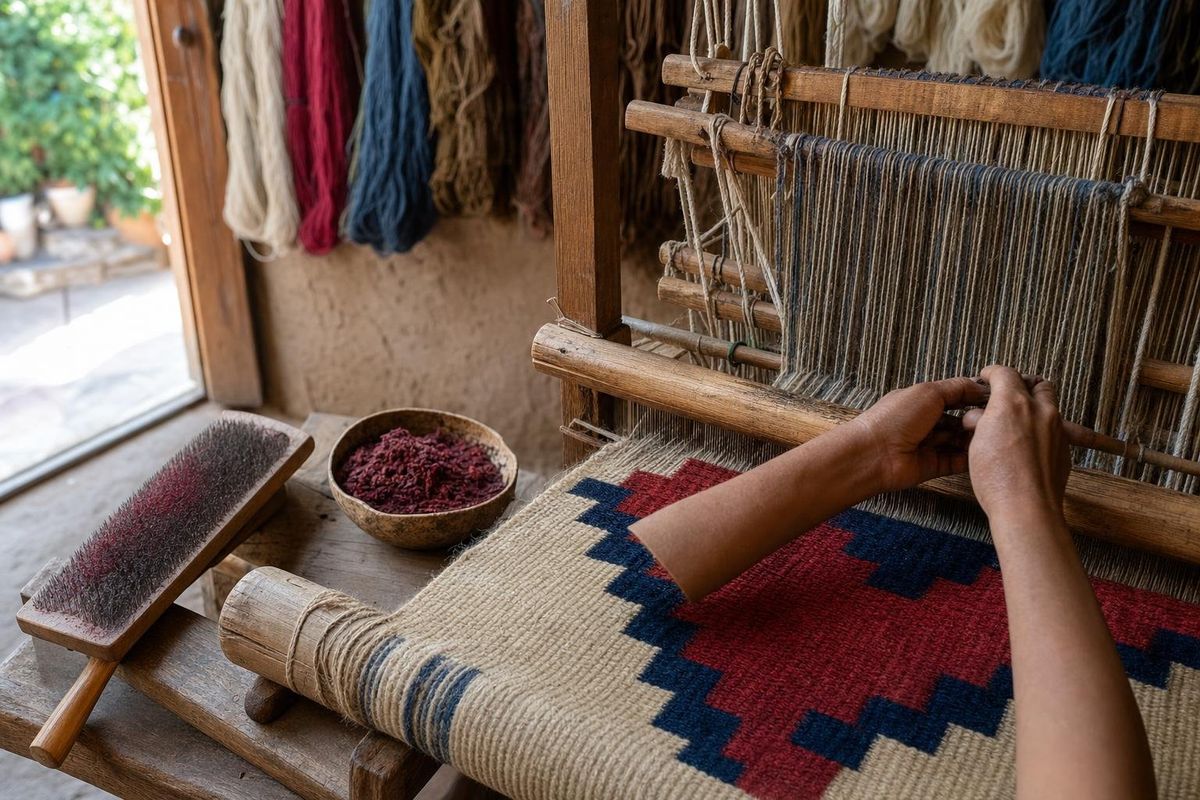
The same road leads to several other stops: the weaving village of Teotitlán del Valle (see the page on Zapotec rug weaving), the Sunday market in Tlacolula, the ruins of Mitla and the mineral springs of Hierve el Agua, which are farther along past Mitla.
Getting to Matatlán
From Oaxaca city, take Highway 190 east toward Tlacolula and Mitla, then continue south past the Mitla turn-off toward Tehuantepec. The drive takes roughly an hour. Buses and colectivos run along the highway, and many tours from the city include a palenque stop. If tasting, do not drive; arrange transport or a driver before setting out.
Choosing a mezcalería in Oaxaca city
Back in Oaxaca city, mezcalerías range from tiny bars with a few bottles to rooms lined with hundreds of labels. A good one will tell you the agave species, the village and often the name of the producer for each pour, and will happily suggest a flight of three or four that compares, say, an espadín with a tobalá. Bottles without any of that information are harder to judge. Prices and bar names change quickly, so ask locally for current recommendations.
See more villages around Oaxaca in the towns and villages section.
Matatlán and mezcal: questions answered
Where is Santiago Matatlán?
In the Tlacolula district of Oaxaca, about 50 km southeast of Oaxaca city on Highway 190, roughly an hour's drive.
What is the difference between mezcal and tequila?
Tequila is a type of mezcal made from blue agave in a protected zone centered on Jalisco, usually with steam ovens. Oaxacan mezcal can use many agave species and is typically roasted in earth pits, which gives it its smoke.
What does pulque taste like?
Milky, slightly thick, mildly sour and low in alcohol. Fruit-flavored curados are sweeter and easier for first-timers.
What is a tlachiquero?
The worker who collects aguamiel, the sap of the maguey, which is fermented into pulque. The word is also spelled tlaquichero.
Is it possible to visit a palenque without a tour?
Yes. Many palenques along the highway in Matatlán welcome walk-in visitors. Ask whether there is a charge for the visit or tasting before starting.
Nearby on the map
AI-generated image Maya Ruins · Oaxaca
Mitla
AI-generated image Lakes & Rivers · Oaxaca
Hierve el Agua
AI-generated image People of Mexico · Oaxaca
Zapotec rugs
AI-generated image Towns & Villages · Oaxaca
San Martín Tilcajete