
−5 m · Shallows · Towns & Villages · Chiapas
Zinacantán: Tzotzil Maya Town of Flowers in Highland Chiapas
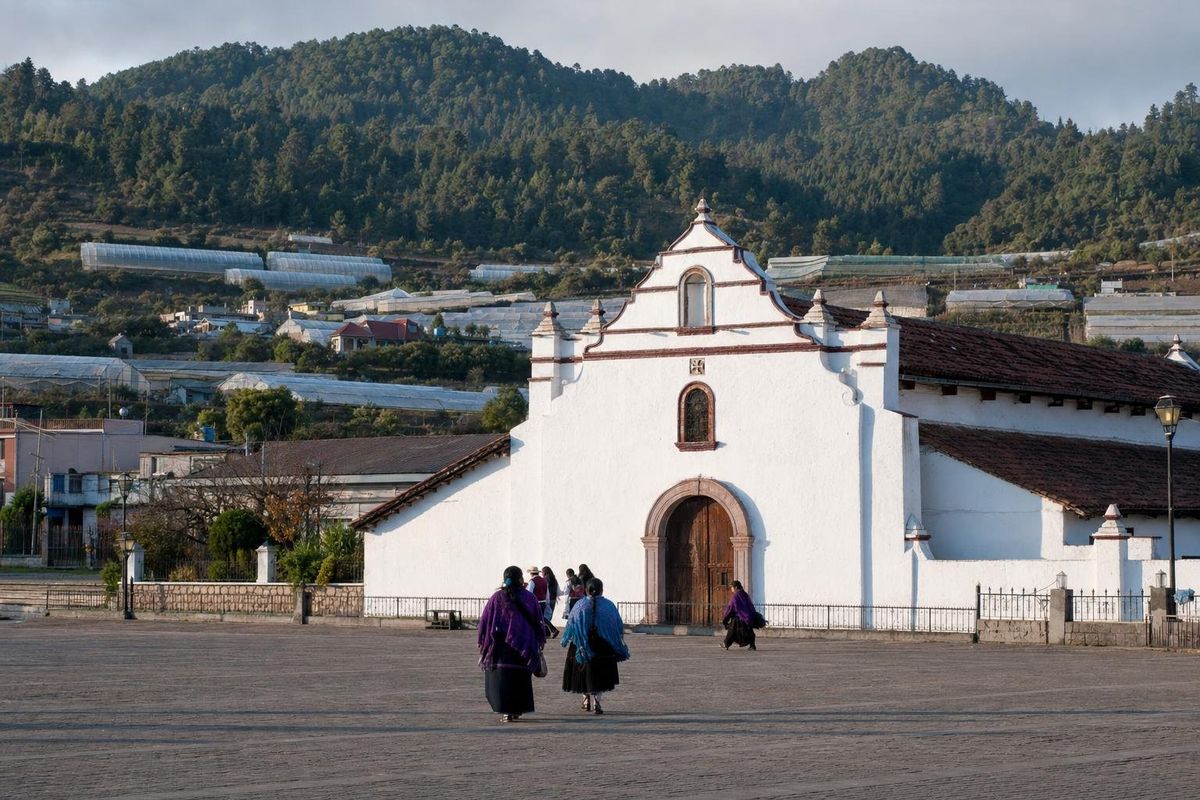
Zinacantán is a Tzotzil Maya town in the highlands of Chiapas, about 10 km west of San Cristóbal de las Casas. It is known for its flower greenhouses, for the floral embroidery that covers its clothing, and for a religious life that blends Catholic saints with Maya beliefs about mountains, ancestors and souls. A visit takes half a day or less and works well alongside nearby San Juan Chamula.
Zinacantán in the Chiapas highlands
The town sits in a high valley at roughly 2,500 m, surrounded by pine and oak hills. Its name comes from Nahuatl and is usually translated as "place of bats"; in Tzotzil it is Sots'leb, with a similar meaning. Before the Spanish conquest it was a trading center that dealt in salt and controlled routes between the highlands and the lowlands, and Aztec merchants knew it.
The municipality has some tens of thousands of inhabitants spread across the main town and many hamlets, called parajes, in the surrounding hills. Almost everyone speaks Tzotzil, a Maya language closely related to Tzeltal. Community life is organized around the town center, where religious and civic office holders serve for a year at a time.
Zinacantán is one of the most studied communities in Mesoamerica. The Harvard anthropologist Evon Z. Vogt led a long research project here from the late 1950s, and his books, including Zinacantan: A Maya Community in the Highlands of Chiapas (1969), remain the standard description of its religion and social life.
Flowers and embroidery
Drive into the valley and the first thing you see are greenhouses. Over recent decades Zinacantán has become a major flower grower, supplying carnations, chrysanthemums, roses and other blooms to markets across Chiapas and beyond. The trade has changed the local economy, and it has also changed the clothes.
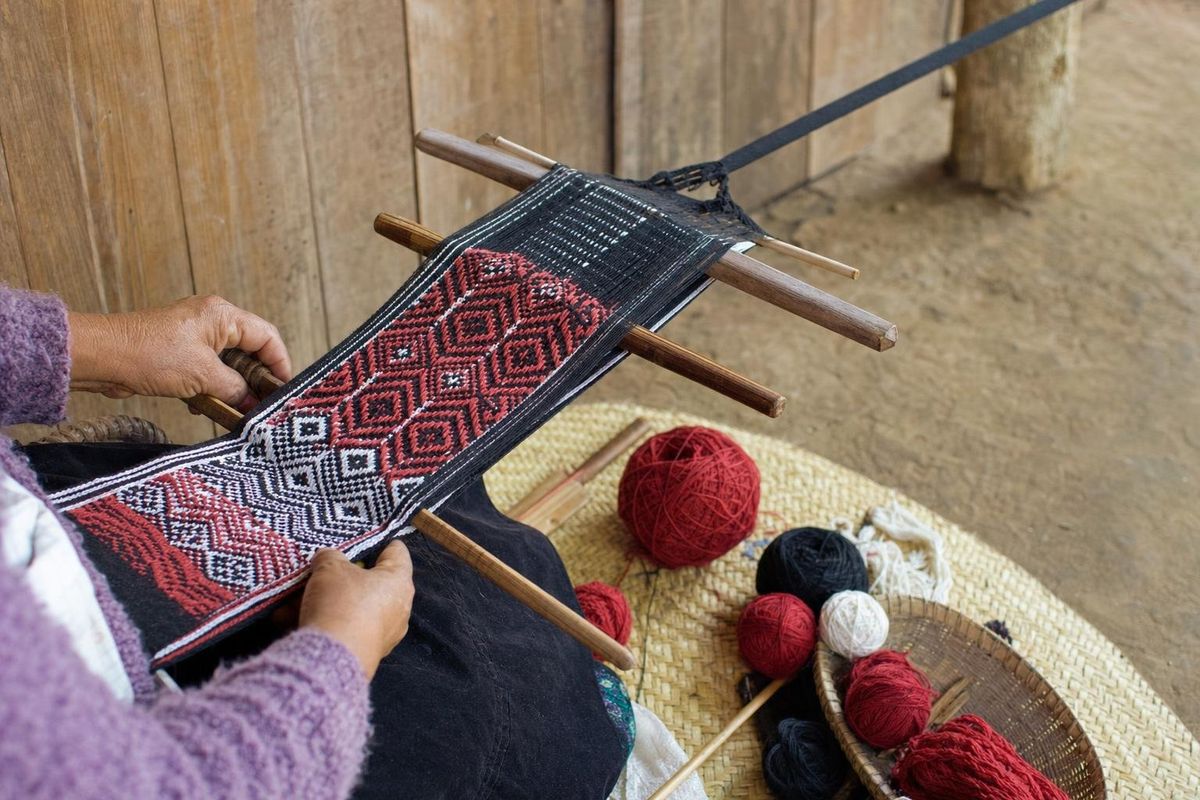
Zinacanteco dress is easy to recognize. Men wear a short poncho-like garment and women a shawl, both woven on backstrap looms and embroidered with large flowers. The base color shifts with fashion. Older photographs show red and white stripes, later decades favored blue and purple, and newer pieces often use black, purple or shimmering threads with sequins. Families in the town weave and embroider at home, often several generations working side by side, and some open their courtyards to visitors to show the backstrap loom at work.
For more on the craft, see the page on the Tzotzil Maya weaver.
Tzotzil religion and the church of San Lorenzo
The religious life of Zinacantán mixes Catholic and Maya elements in a way that is its own. The town's patron is San Lorenzo, and his church on the main square is the center of the ritual year, along with the chapel of San Sebastián. Inside, images of saints are dressed in clothes and mirrors, the floor is often strewn with pine needles, and candles, flowers and incense fill the air.
Vogt and others described how Zinacantecos think of the surrounding mountains as homes of the ancestral gods, the totilme'iletik, who watch over the living. Each person is believed to have an inner soul, the ch'ulel, which can be frightened out of the body, and an animal companion spirit that lives in a sacred mountain. Illness is often understood as a disturbance of these relationships, and healers known as h'iloletik, "seers", perform curing ceremonies with candles, prayer, chickens and posh, the local cane liquor, at household altars and at crosses on hillsides and by waterholes.
The cargo system ties all this together. Men, with their wives, take on religious offices for a year, sponsoring fiestas and caring for the saints. The posts are costly and carry prestige, and passing through a series of them has long been the path to standing in the community.
Fiestas
The biggest celebration honors San Lorenzo around 10 August, with processions, music and costumed dancers. Other important dates fall around Christmas and Carnival. Visiting during a fiesta is memorable, but expect crowds of local families and stricter attitudes toward cameras.
Visiting Zinacantán respectfully
Photography inside the churches is forbidden, and taking pictures during ceremonies or of people without asking is resented. Rules are enforced by local authorities and should be taken seriously. Ask before photographing anyone, and accept a no.
- Dress modestly and keep your voice down in the churches.
- Buy textiles directly from the families who make them; prices are part of a conversation, not a fixed list.
- Do not enter courtyards or homes unless invited.
- If you take part in a household visit, a tasting of tortillas or posh may be offered. Accepting a little is polite.
Getting there and when to go
Colectivos run from San Cristóbal de las Casas to Zinacantán throughout the day, and the ride is short. Many visitors join a guided tour that combines Zinacantán with San Juan Chamula, the neighboring Tzotzil town known for its church filled with candles and pine needles. A guide who knows the communities helps explain what you are seeing and how to behave.
The highlands are cool. Mornings can be cold, especially from November to February, when frost is possible. The rainy season, roughly May to October, brings afternoon showers and fog. Sunday is market day in many highland towns, and mornings are generally the liveliest time to visit. Bring a warm layer even on sunny days: once a cloud covers the valley, the temperature drops quickly, and the churches are cold inside.
For more towns and villages in Chiapas and the Yucatán, see the towns and villages section. Down in the hot river valley, Chiapa de Corzo makes a contrast, and the rainforest town of Frontera Corozal lies far to the east. Look for small crosses on the hillsides as you drive in: they mark sacred places where the ancestral gods are addressed.
Zinacantán questions
Where is Zinacantán?
In the highlands of Chiapas, Mexico, about 10 km west of San Cristóbal de las Casas. The trip by colectivo or car is short.
Can you take photos in Zinacantán?
Not inside the churches, and not of people or ceremonies without permission. These rules are enforced locally, so always ask first.
What language is spoken in Zinacantán?
Tzotzil, a Maya language. Many people also speak Spanish, especially younger people and those who work in trade.
What is Zinacantán known for?
For flower growing in greenhouses, for clothing embroidered with large flowers, and for its religious traditions that blend Catholic saints with Tzotzil beliefs.
Is it Zinacantán or Sinacantán?
The official spelling is Zinacantán. Sinacantán is a common misspelling of the same town.
Nearby on the map
AI-generated image People of Mexico · Chiapas
Tzotzil weaving
AI-generated image Towns & Villages · Chiapas
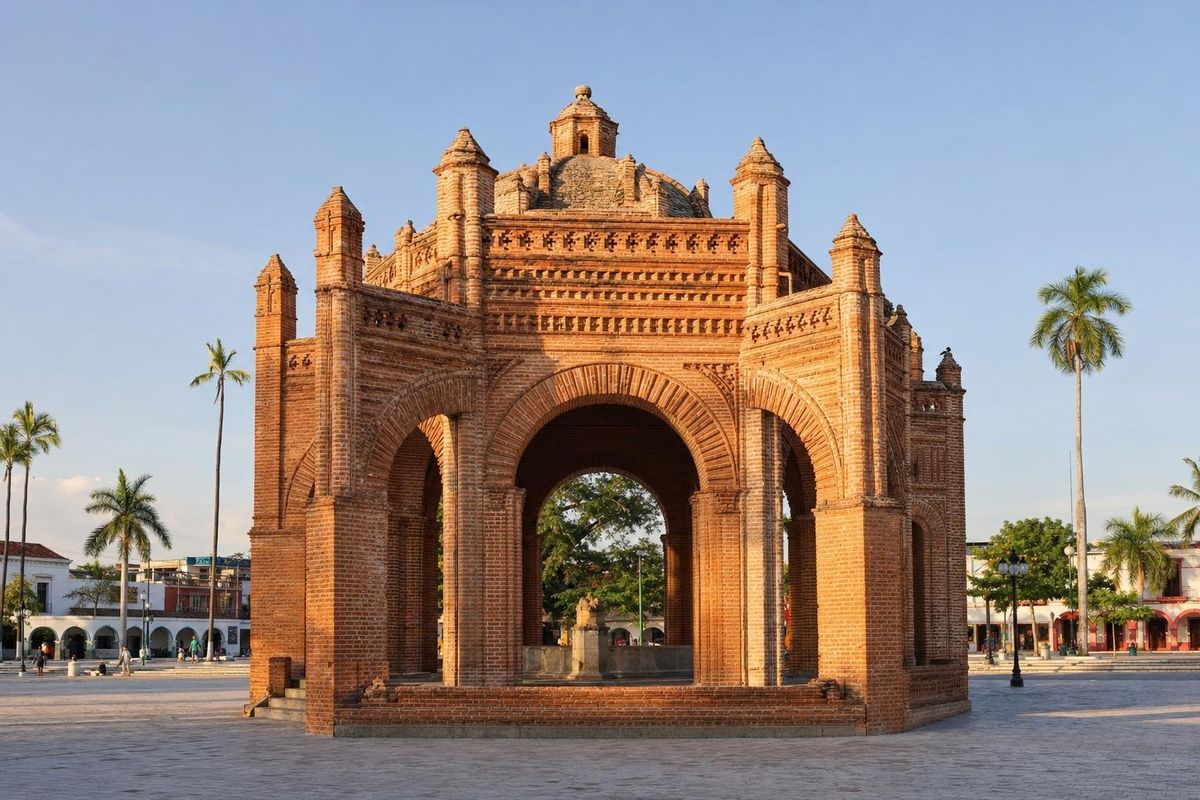
Chiapa de Corzo
AI-generated image Lakes & Rivers · Chiapas
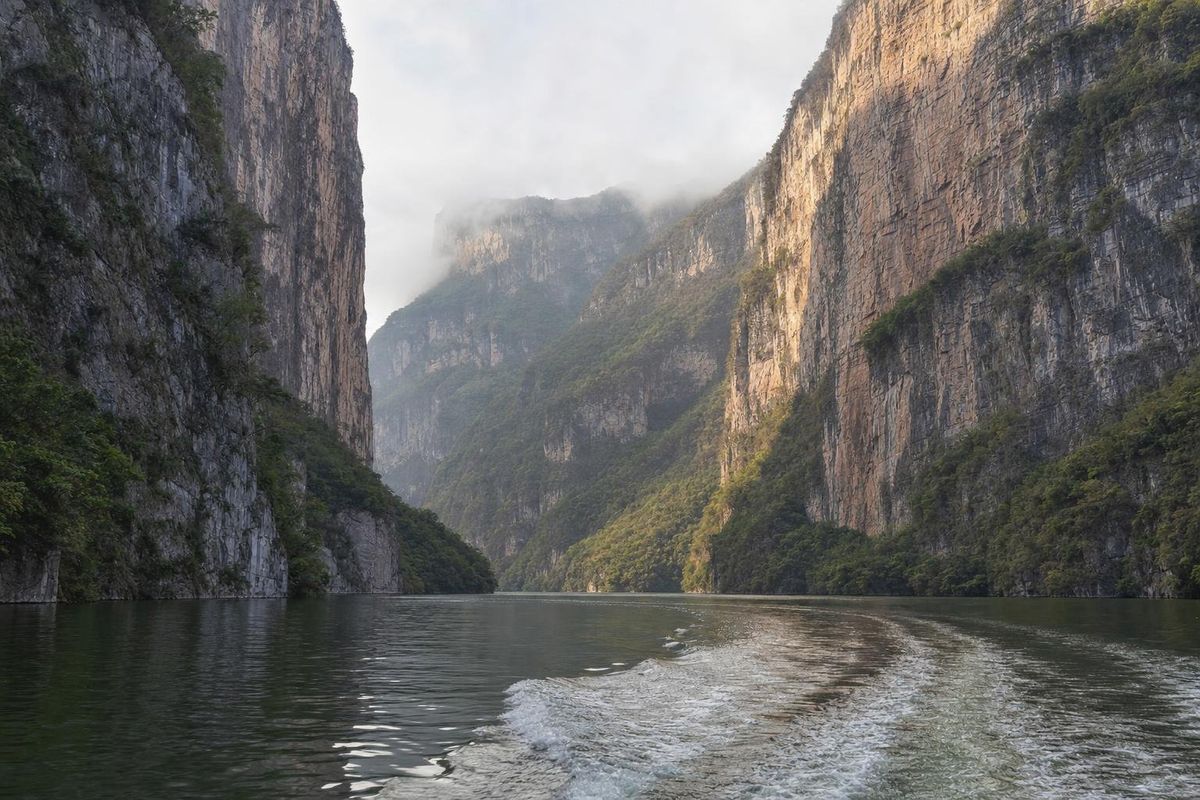
Sumidero Canyon
AI-generated image Lakes & Rivers · Chiapas
Agua Azul