
−5 m · Shallows · Museums · Tabasco
La Venta Olmec Heads and Altars: the Parque-Museo in Villahermosa
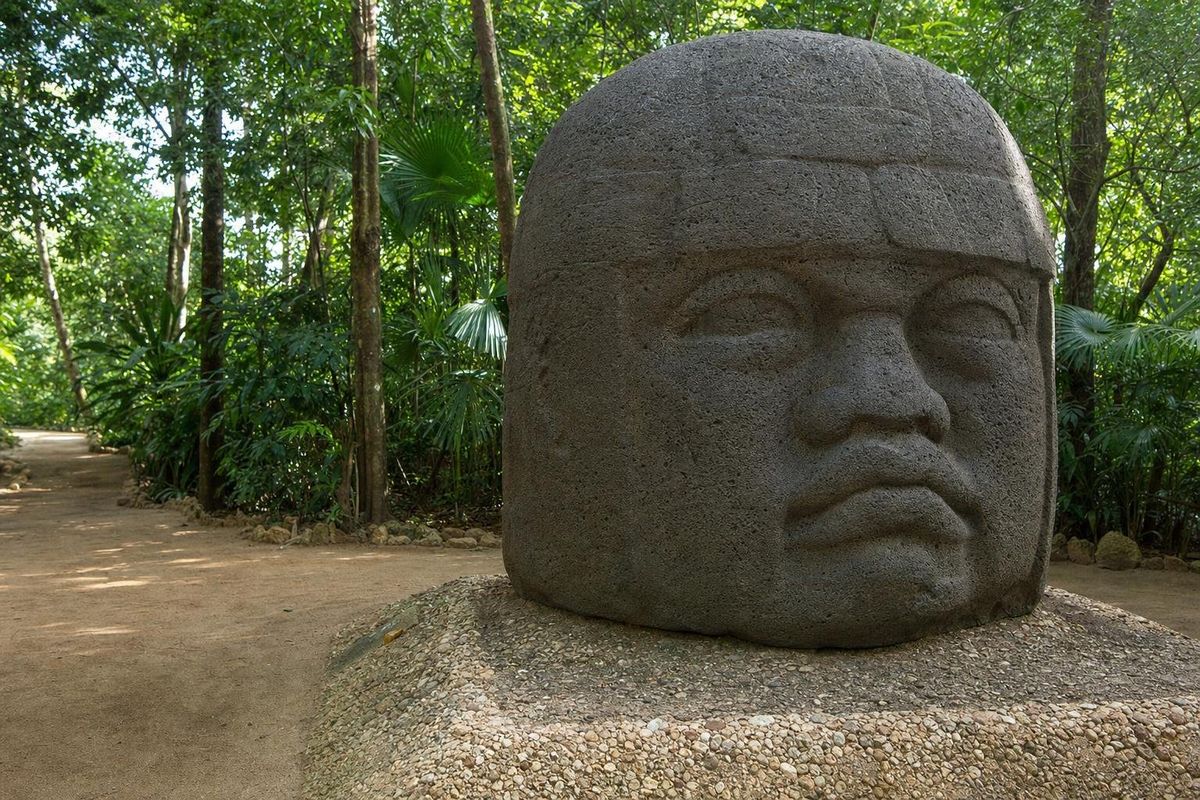
La Venta was one of the great Olmec centers, a ceremonial city on the Gulf coast of Tabasco that flourished roughly between 900 and 400 BC. Its most famous monuments, including colossal stone heads, carved altars and stelae, now stand along a forest trail in the Parque-Museo La Venta in Villahermosa, the state capital. It is the most direct way to see the Olmec, the culture many scholars place at the root of later Mesoamerican civilizations, the Maya among them.
La Venta and the Olmec
The Olmec lived in the hot, wet lowlands of southern Veracruz and western Tabasco from around 1500 BC. San Lorenzo was their first major center; after its decline, La Venta became the leading one. It stood on a low island of dry ground among swamps near the Tonalá River, close to the Gulf of Mexico.
The city was planned along a north to south axis. At its heart rises the Great Pyramid, a mound of packed clay more than 30 meters high, one of the largest structures of its time in the Americas. North of it lay Complex A, a set of plazas and platforms where excavators found tombs, jade offerings and buried pavements made of hundreds of serpentine blocks arranged into stylized masks. These were covered over soon after they were laid, meant for the gods rather than for human eyes.
Matthew Stirling led the first major excavations at La Venta in the early 1940s, followed by Philip Drucker and Robert Heizer in the 1950s. By then, oil exploration in the area was causing serious damage to the site. The poet and museum founder Carlos Pellicer Cámara campaigned to rescue the monuments, and in 1958 the largest pieces were moved to Villahermosa and set up in a new park designed to suggest their original jungle setting.
The colossal heads
Seventeen Olmec colossal heads are known, from San Lorenzo, La Venta, Tres Zapotes and one other site. La Venta produced four. Each was carved from a single block of basalt brought from the Tuxtla Mountains, well over 100 km away, presumably by river and raft, and each weighs several tons.
The heads all wear close-fitting helmets or headgear, but no two are alike. Their faces differ in shape, expression and ornament, and the headdresses carry individual motifs. Most archaeologists read them as portraits of rulers, and some suggest the helmets show protective gear for the ballgame or for battle. Over the years, claims have been made that the broad features prove African or Asian origins for the Olmec. Researchers reject these: the faces match the people of the region, and the style follows Olmec conventions seen in many smaller sculptures.
Colossal heads from La Venta stand in the Parque-Museo, one of them close to the entrance. Seen up close, the scale is the surprise: the top of the head is well above an adult's eye level.
Altars, stelae and other monuments in the park
The trail through the park runs for about a kilometer and leads past more than thirty monuments. The heads draw the crowds, but the altars and stelae say more about Olmec beliefs.
| Monument | What it shows | Common reading |
|---|---|---|
| Altar 4 | A seated figure in a niche beneath a stylized jaguar or earth-monster face, holding a rope that runs to figures carved on the side | A throne; the ruler emerges from a cave, the entrance to the underworld, and the rope may show ties to captives or ancestors |
| Altar 5 | A figure in a niche holding a limp infant with "were-jaguar" features; on the sides, adults hold more infants | Linked to rulership and to rain or fertility rites; some scholars see a reference to child sacrifice, which remains debated |
| Stela 3 | Two standing figures facing each other, one with a prominent beard, and small figures floating above | A meeting of two important personages; the floating figures are often read as ancestors or supernatural beings |
| Seated and kneeling figures | Smaller sculptures of humans and animals, including a seated monkey-like figure | Part of the wider Olmec repertoire of rulers, deities and animals |
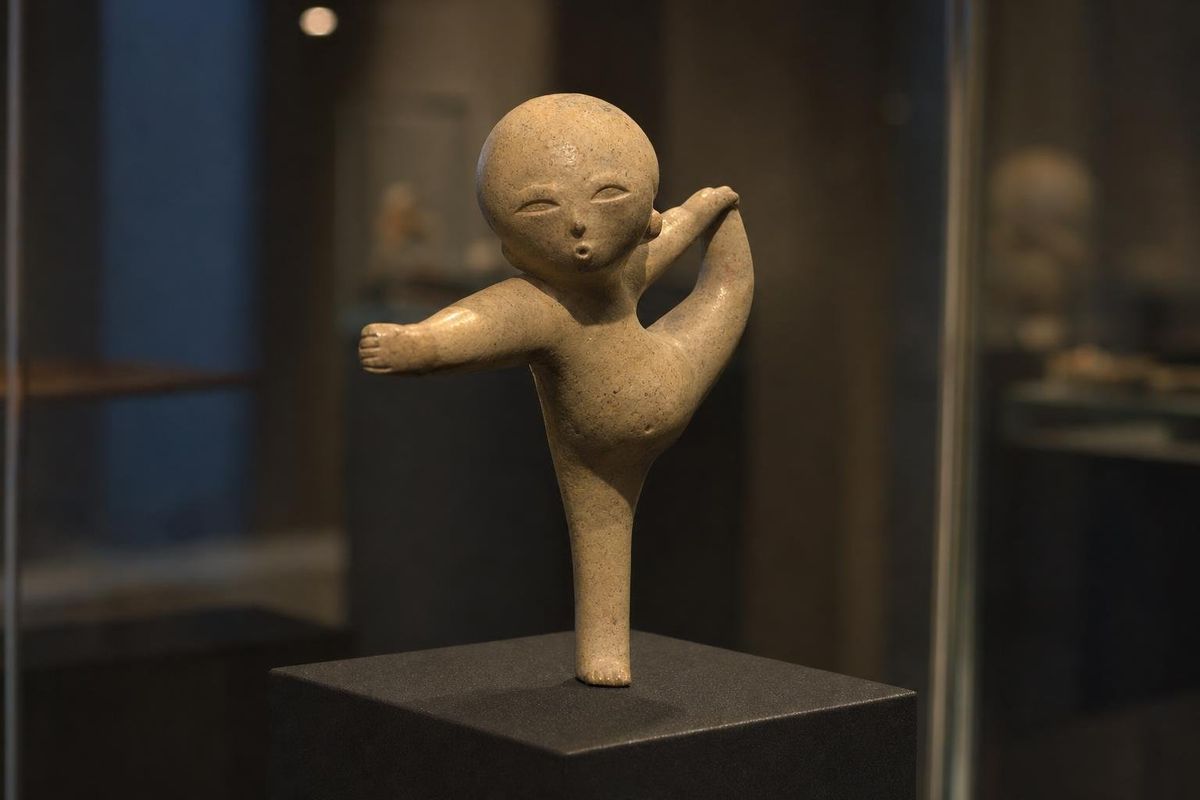
The cave niche of Altar 4 and Altar 5 is one of the motifs that links the Olmec to the later Maya, whose rulers were also shown emerging from openings in the earth. The were-jaguar face, with its downturned mouth and slanted eyes, is a defining feature of Olmec art. One La Venta relief shows a figure framed by a crested serpent, often cited as an early form of the feathered serpent. Similar threads run to Olmec figures of acrobats and to the ballgame, which the Olmec played centuries before the Maya.
From the Olmec to the Maya
Scholars still argue about how directly the Olmec shaped later cultures. Some describe the Olmec as a "mother culture"; others see several regions developing in parallel and trading ideas. Either way, much of what is familiar from the Maya world appears early in the Olmec region: monumental pyramids, jade as a sacred material, rulers shown with the attributes of gods, and early forms of writing and calendar notation. Some of the earliest Long Count dates known come from sites in this wider region, such as Chiapa de Corzo.
Visiting the Parque-Museo La Venta
The park lies on the edge of the Laguna de las Ilusiones, a lake in the northwest of Villahermosa, and combines the Olmec trail with a zoo of animals native to Tabasco. Coatis, agoutis and squirrels move freely across the paths. Allow two to three hours for the trail and the zoo together. Opening hours and fees change, so check them on arrival.
Go in the morning: Villahermosa is hot and humid for most of the year, and by early afternoon the heat under the trees is heavy. Bring insect repellent and water. The driest months are roughly March to May, though they are also the hottest; the rainy season runs from about June to November and brings heavy downpours.
The original archaeological site of La Venta can also be visited. It lies in the west of Tabasco near the border with Veracruz, roughly two hours by road from Villahermosa, and is managed by INAH. A small site museum displays further finds and replicas, and the Great Pyramid still stands, though most of the complex is now grassy mounds. Villahermosa is also the natural starting point for the road south to Palenque. More museums are listed on the museums page.
La Venta: questions about the Olmec heads
Where are the La Venta Olmec heads?
The best-known pieces from La Venta are in the Parque-Museo La Venta in Villahermosa, Tabasco. Other finds are in the site museum at La Venta and in national collections.
How old is La Venta?
The city flourished roughly between 900 and 400 BC, when it was the leading Olmec center.
Why were the monuments moved to Villahermosa?
Oil exploration in the 1950s was damaging the site. The poet Carlos Pellicer Cámara led the effort to move the monuments, and the park opened in 1958.
Who do the colossal heads show?
Most archaeologists read them as portraits of Olmec rulers, each with an individual face and headdress.
Can you visit the La Venta archaeological site?
Yes. It lies in western Tabasco, about two hours by road from Villahermosa, with a small site museum and the clay Great Pyramid.
Were the Olmec the ancestors of the Maya?
Not directly in a simple line, but many ideas found in Maya culture, from rulership imagery to calendar notation, appear earlier in the Olmec world. How much was inherited is still debated.
Nearby on the map
AI-generated image Maya Ruins · Chiapas
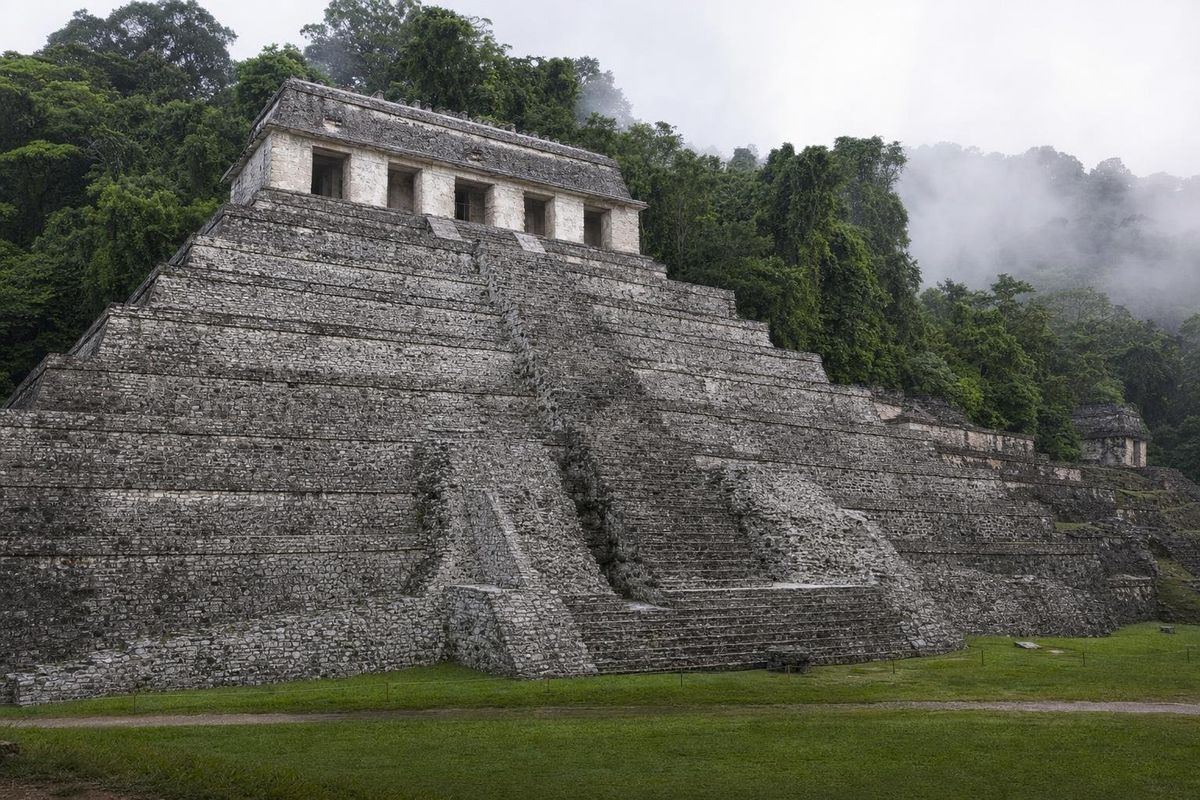
Palenque
AI-generated image Towns & Villages · Chiapas
Palenque town
AI-generated image Maya Mysteries · Tabasco
Acrobats
AI-generated image Lakes & Rivers · Chiapas
Agua Azul